Why is a queen snake called a queen snake?
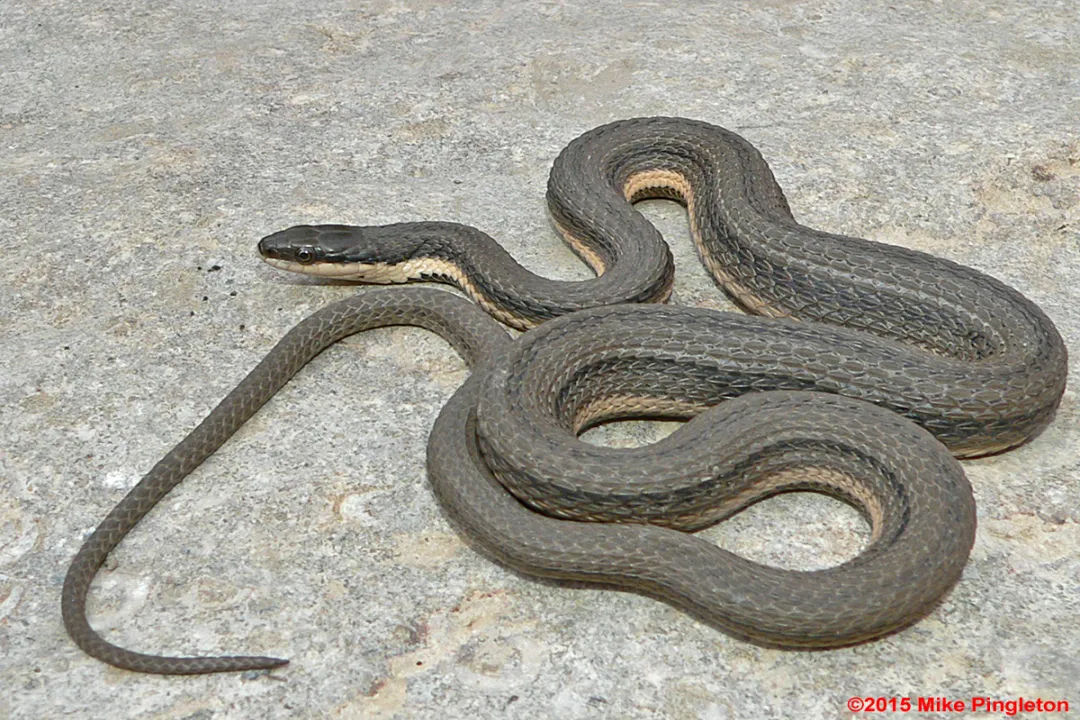
The name Queen Snake carries a certain weight, suggesting majesty or perhaps a distinct physical attribute that sets it apart from its serpentine counterparts. Unlike many animals whose common names have clear, intuitive origins, tracing the lineage of the Queen Snake’s title involves a bit of historical detective work through taxonomy and some educated guesswork based on the animal’s habits. The simple answer, often repeated by those familiar with the scientific classification, is that the snake is named for its genus, Regina, which is the Latin word for "Queen". [1] However, this explanation only pushes the mystery back a step: why did the scientists choose Regina in the first place, and when did the common name stick?
# Royal Nomenclature
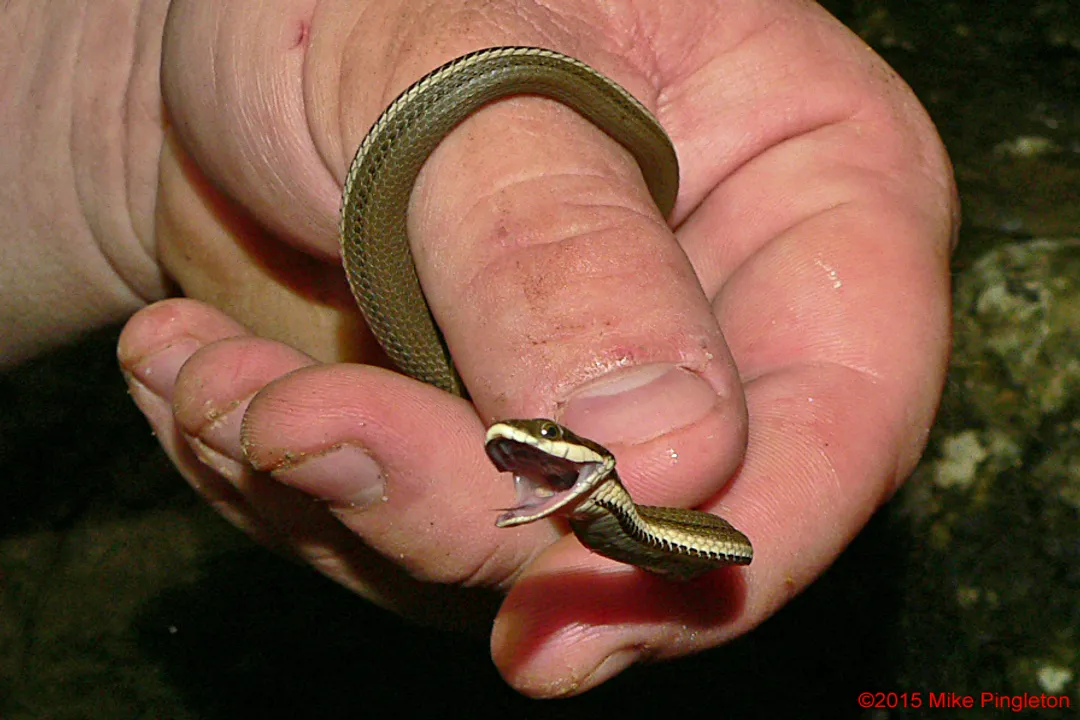
The path to the current designation, Regina septemvittata, is marked by several taxonomic shifts and, unfortunately, a lack of explicit explanation from the original describers. [1] The snake was first formally described by Thomas Say in 1825 under the name Coluber septemvittatus, referencing its seven lines, but Say offered no common name. [1] Early handlers of the species used descriptive but less evocative common names, such as the 'seven-lined snake,' 'leather snake,' or even the somewhat romantic 'moon snake'. [1]
The first hint of royalty appears in 1853 when Spencer Fullerton Baird and Charles Girard erected the genus Regina based on descriptions they believed referred to the snake, designating Regina leberis as the type representative. [1] Crucially, in their description published in the Smithsonian's Catalogue of North American Reptiles, Baird and Girard left future naturalists without clarification as to their choice of the regal genus name. [1] Some speculate that a connection to Queen Victoria, whose reign was very prominent around that time, might have been the inspiration, but this remains unconfirmed speculation. [1]
Since the genus name Regina was formally established, the common name Queen Snake seems to have followed naturally, likely adopted by the herpetological community as a direct translation of the scientific designation. [1] While the official taxonomic lineage remains silent on the why, some observers suggest the snake’s highly specialized, refined eating habits make the royal title quite fitting—it demands a feast fit for a sovereign. [1] In contrast, other snakes, like the King Snake, often receive their titles based on their ability to prey on other snakes, a more aggressive claim to royalty; the Queen Snake's claim seems rooted in refinement rather than dominance. [1]
# Patterned Beauty
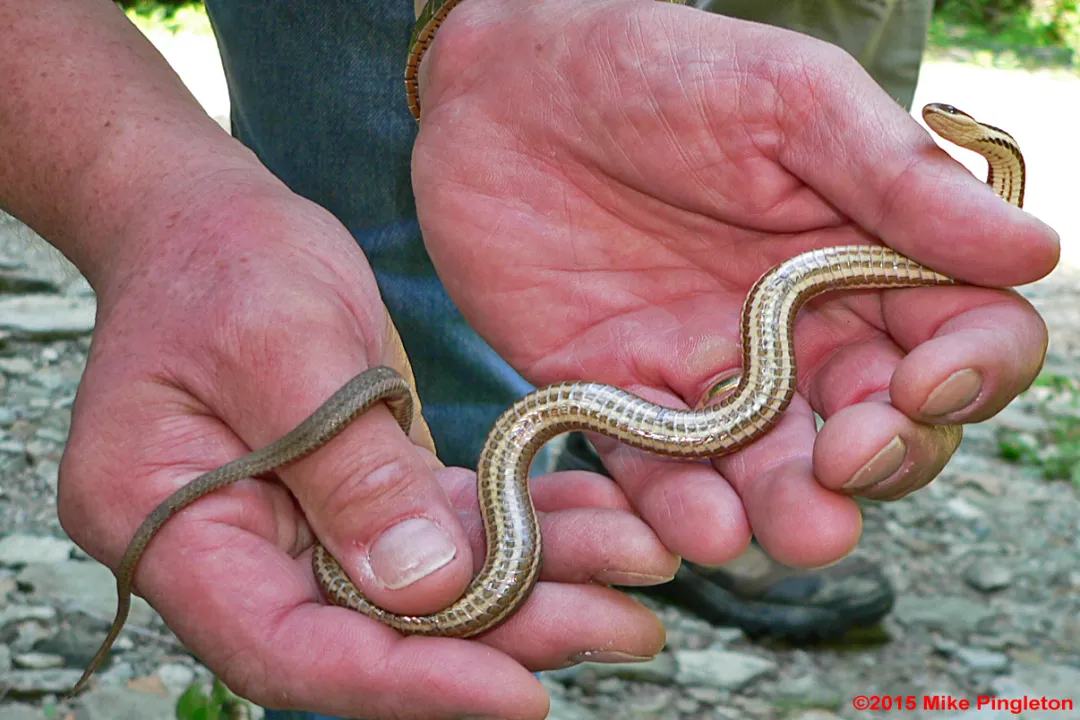
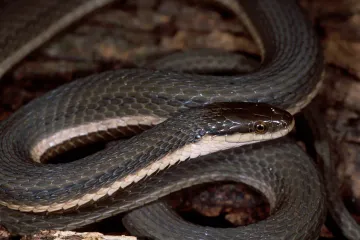
If the name implies a certain elegance, the Queen Snake's physical appearance offers some justification, though it is far from the flashy reptile one might immediately associate with a crown. It is generally a small to medium-sized snake, often appearing rather slender. The dorsal coloration typically ranges from dark brown or olive to nearly black. What draws the eye, and what likely contributed to the early common name 'seven-lined snake,' are the distinct longitudinal stripes running down its body. [1]
These stripes are usually yellowish or cream-colored and contrast against the darker background. The scales themselves are noteworthy; they are keeled, meaning they have a ridge running down the center, which gives the skin a slightly rough texture rather than the smooth sheen seen on some aquatic relatives. [1] This combination of dark ground color and bright striping provides excellent camouflage near the shaded, debris-strewn banks of its preferred waterways. While it may lack the bright oranges and reds of some coexisting species, its defined pattern speaks to a quiet, reserved sort of beauty, perhaps better suited to a subtle courtly presence than a glaring display of dominance. [1]
# Specialized Diet

The most compelling argument for the snake’s royal title, as noted by observers, lies in its highly particular feeding regimen, making its culinary demands exceptionally narrow. [1] The Queen Snake is almost entirely dependent on crayfish, making it an obligate crayfish predator. This dependence is so strong that the presence or absence of healthy crayfish populations directly dictates whether Queen Snakes can thrive in a given stream system.
This preference is not simply for any crayfish, however. The Queen Snake specifically targets recently molted individuals. [1] When a crayfish sheds its hard exoskeleton to grow, it is temporarily soft and vulnerable. This soft-shelled state presents the perfect opportunity for the Queen Snake, whose jaws may struggle against a fully hardened carapace. [1] This highly selective predation—only consuming the freshest, softest catches—is presented as the quintessential royal standard: an exclusive meal not bothered with by the common water snakes that readily consume minnows and frogs. [1]
To better illustrate this dietary specialization, one can contrast the Queen Snake's approach with that of a generalist feeder found in similar habitats:
| Feature | Queen Snake (Regina septemvittata) | Common Water Snake (e.g., Nerodia spp.) |
|---|---|---|
| Primary Prey | Crayfish only | Fish, frogs, amphibians [1] |
| Prey Condition | Must be freshly molted/soft-shelled [1] | No specific condition required |
| Hunting Style | Highly specialized foraging [1] | Opportunistic generalist [1] |
| Survival Viability if Crayfish Vanish | Very low/Non-existent | Moderate, can switch prey items |
This level of dietary restriction suggests an organism that has evolved under very specific conditions, where such high selectivity was, perhaps, initially rewarding enough to cement as a defining trait of its "court". [1]
# Kingdom Boundaries
The Queen Snake's chosen domain is intrinsically linked to its diet. Its "kingdom" is defined by permanent, flowing water sources across its range in eastern and central North America. They are creatures of the aquatic margins, typically found near streams, rivers, and creeks that maintain stable water levels and support healthy crayfish populations. You will often find them basking on logs, rocks, or low-hanging vegetation that overhangs the water, ready to drop in if disturbed or to hunt.
In regions like Virginia, their habitat is closely tied to these specific water features, showing a clear preference for the riparian zone. While sightings in other areas, such as Illinois, confirm their presence across a broad swath of the eastern United States, the prerequisite of good water quality remains constant. Their presence is, therefore, an excellent bio-indicator; if you find a healthy population of Queen Snakes, you can be fairly certain the local crayfish population is doing well, too. They are secretive, preferring to hide under rocks or debris along the bank when not foraging or basking, suggesting a need to avoid predation from larger birds or mammals, perhaps explaining why they avoid the more open, sun-drenched areas favored by some other snake species.
# Temperament and Rule
Despite the lofty title, the Queen Snake possesses a notably gentle disposition, contrasting sharply with the fierce reputations sometimes associated with other North American reptiles. They are entirely non-venomous. When handled or feeling threatened, their primary defense mechanism is to flee into the water or seek cover. While any snake may bite if severely provoked, the Queen Snake is known for being particularly docile, making it less likely to strike than many of its neighbors. This reluctance to engage in confrontation aligns with the description of a dainty, smaller snake, as one commenter noted, suggesting a preference for quiet existence over aggressive territorial displays. [1] This peaceful nature contributes to the common understanding that these creatures are good-natured inhabitants of their watery realms.
# Other Titles
The lack of consensus on the name perhaps explains why several other common names have been applied to Regina septemvittata over the years. [1] The 'Yellow-Bellied Snake' was used by Baird himself in 1854. [1] The 'Leather Snake' and 'Willow Snake' also entered circulation, perhaps referencing its texture or typical habitat near willows along stream banks. [1] The 'Moon Snake' is another historical moniker that has faded but suggests a more poetic interpretation by early observers. [1] While Regina septemvittata is the accepted binomial today, these older common names serve as historical markers, showing that for a period, the snake's identity was unsettled, much like its scientific placement before it was fully separated from the broader Natrix water snakes. [1] The modern scientific name septemvittata remains a solid, descriptive anchor, meaning "seven-striped," which always remains true, unlike the fickle nature of common nomenclature. [1] A striking observation is how infrequently these older names are mentioned in contemporary field guides, suggesting that once the scientific genus Regina was solidified, the common name Queen Snake became the favored, almost inevitable, label, precisely because it was a direct, accessible translation of the formal classification that had been imposed upon it. [1]
Related Questions
#Citations
Who Made The Queen Snake Queen? - Field Herping