Where can you find a San Francisco garter snake?
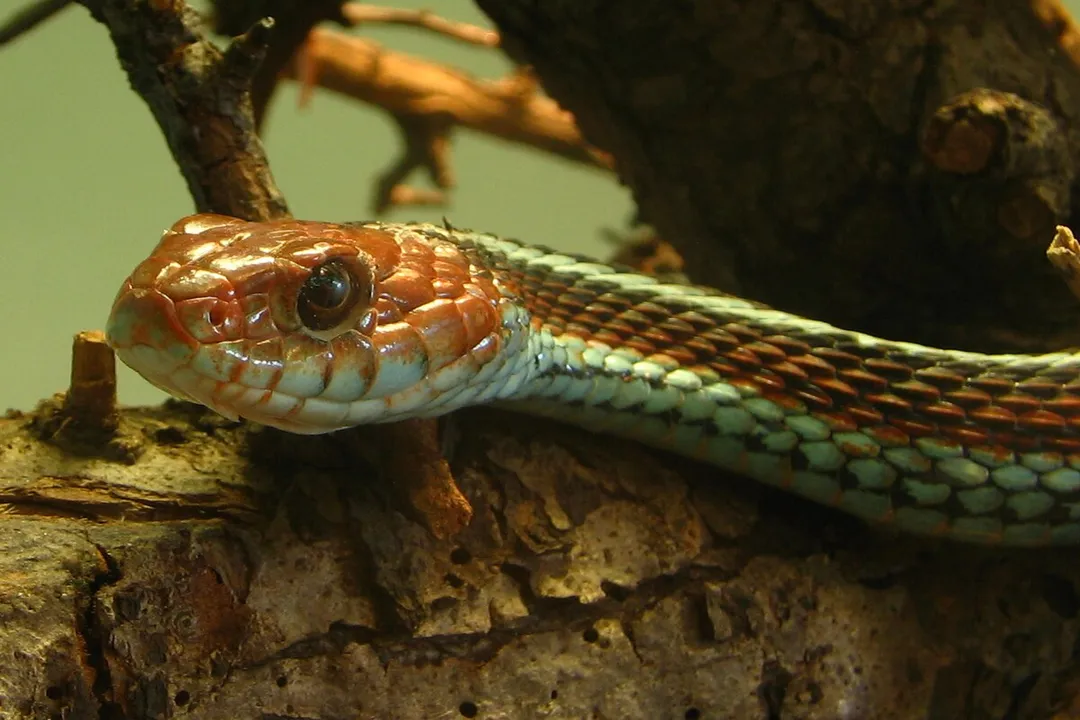
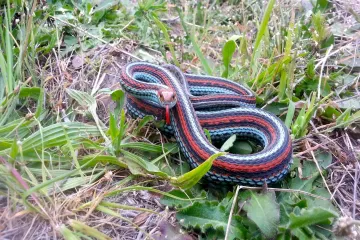
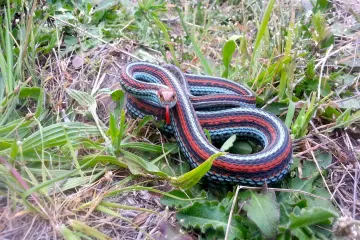
The San Francisco garter snake, Thamnophis sirtalis tetrataenia, is frequently cited as one of the most vividly colored snakes in North America, yet spotting one in the wild remains an exceptionally rare experience for nearly everyone outside of dedicated researchers. Their striking appearance—a red-orange stripe bordered by black and light blue or yellow lines running down a dark green or black body—makes them unmistakable, but their elusiveness is directly tied to their precarious conservation status and highly specific habitat requirements. [1][3] Understanding where to look requires moving past generalized maps and focusing instead on the precise ecological niches they require to survive.
# Protected Status

The primary reason these snakes are difficult to find is that they are exceedingly rare and legally protected. The San Francisco garter snake is listed as federally threatened under the Endangered Species Act and is also classified as endangered by the State of California. [1][8] This dual listing underscores the severity of the population decline they have experienced throughout their historical range. This conservation status means that encountering one is not just a lucky moment; it is an encounter with one of the most vulnerable reptile populations in the United States. [1]
When considering why they are so vulnerable, it is helpful to note that many other garter snake subspecies thrive across North America, often adapting well to suburban or agricultural areas. The San Francisco garter snake, conversely, has not shown this same plasticity. Its survival is intrinsically linked to specific, often undisturbed, coastal ecosystems. This lack of adaptability, combined with rapid habitat loss throughout the Bay Area, is the core driver of its endangered classification. [8] The pressures on this specific subspecies highlight a broader issue in California ecology: when a species relies on a small, high-value geographic area, the impacts of development become exponentially more severe compared to widespread species. [1]
# Geographic Limits
The distribution of the San Francisco garter snake is remarkably restricted, which immediately limits the areas where a person might successfully search for them. Their known historical and current range is concentrated in a narrow band along the coast, primarily encompassing portions of San Mateo, Santa Cruz, and Monterey counties in California. [1] While the snake's name suggests San Francisco itself, its presence is generally restricted to the southern part of the greater Bay Area peninsula and adjacent coastal regions. [1]
It is crucial to distinguish their range from that of the non-endangered common garter snake, which has a much broader distribution across the state. [3] If you are looking in areas far inland, such as the East Bay or areas significantly north of the peninsula (like Marin County, where other snakes might be common), [4] you are highly unlikely to find the federally threatened subspecies. The snake occupies fragmented coastal terraces, generally staying within a few miles of the ocean, often preferring areas with established wetlands or permanent water sources. [8]
# Ideal Setting
Finding a San Francisco garter snake is less about location coordinates and more about finding the perfect combination of environmental factors that meet its stringent life cycle requirements. They are highly dependent on both aquatic and terrestrial habitats, requiring both for different essential functions. [2]
# Water Needs
The snake is strongly associated with aquatic environments, particularly ponds, marshes, slow-moving streams, and creeks, especially those that retain water year-round or nearly year-round. [2][9] These aquatic areas are critical for thermoregulation—allowing the snake to cool down during hot periods—and, most importantly, for feeding. Their primary food source appears to be aquatic amphibians, notably the California Red-legged Frog (Rana draytonii). [8] In areas where these frogs are present, the habitat is a strong candidate for supporting the snakes. Therefore, searching near known or historic Red-legged Frog breeding sites offers a more targeted approach than simply looking near any body of water. [2]
# Terrestrial Requirements
While they hunt in water, they require adjacent terrestrial habitat for refuge, hibernation (brumation), and basking. This land component must provide adequate cover, such as dense, low-lying vegetation, tall grasses, or areas with ground cover that allows them to hide quickly from predators or excessive heat. [2] A key structural element in their preferred environment is the presence of gopher (or ground squirrel) burrows. [2] These subterranean retreats offer safe, temperature-stable havens from predators and harsh weather conditions. If a potential habitat area is too manicured, too dry, or lacks deep cover, it is functionally unsuitable for the snake, even if it possesses a pond. [2][9]
A good indicator of a quality habitat patch is the presence of a mosaic landscape—a mix of open, sunny basking spots near dense, wet marsh vegetation, bordered by upland areas with sufficient ground cover and burrow systems. Many areas within the habitat corridor managed by agencies like the Stanford Habitat Conservation Plan exemplify this necessary balance. [9]
If you are assessing a potential site, consider the seasonality. During the cooler, wetter winter months, the snakes will retreat deep into burrows or under cover to escape the cold. [2] Conversely, they are most visible during the warmer, drier months—typically late spring through early autumn—when they are actively basking to raise their body temperature for hunting and digestion. [2]
# Viewing Areas
Because of their protected status, specific public locations are often referenced in conservation literature, though one must always view them with extreme caution regarding disturbance. Public lands within the core range counties that maintain suitable wetland habitat are the most likely places to find them, provided human impact is minimized. [1][8]
While anecdotal reports surface on community forums, such as local social media groups discussing sightings along trails, [5][6] these should be used only to gauge the type of environment where recent activity has occurred, rather than serving as precise viewing coordinates. For instance, reports often mention trails that run adjacent to riparian corridors or seasonal wetlands in the Santa Cruz mountains or coastal San Mateo County. [6]
It is generally recommended that responsible observation focus on areas specifically managed for conservation, such as State Parks, County Open Space Preserves, or National Seashore lands within the restricted range, provided these areas allow public access for hiking or nature observation. [4] The key is proximity to the undisturbed aquatic resources described above. If a trail runs directly alongside a dense, reed-lined pond in San Mateo County, that specific stretch of trail is where a snake might cross or bask near the edge during peak activity hours.
When searching, look for signs of activity rather than expecting to see the snake itself. Look for slight disturbances in the mud near water, or observe basking spots along logs or rocks bordering the water's edge during midday sun exposure. Given their excellent camouflage, scanning the vegetation line where water meets land is far more effective than scanning open water or dry upland grass.
# Safe Distance
The most important aspect of searching for any federally threatened or endangered species is ensuring your presence does not negatively impact it. The legal protections surrounding the San Francisco garter snake mean that deliberately harassing, harming, or capturing them is strictly prohibited and carries serious penalties. [2]
For the observer, this translates into a clear code of conduct. If you are fortunate enough to spot one, the best practice is to stop immediately and maintain a significant distance—at least 10 to 15 feet—to avoid causing the snake stress or compelling it to retreat into its burrow, thereby wasting valuable basking time. [2][4] Never attempt to touch, handle, or capture the snake, even if you intend to move it from a dangerous location like a roadway. [2] If a snake is on a path, the best course of action is often to wait patiently for it to move on its own, or if necessary, backtrack and find an alternate route that avoids its immediate vicinity. [4]
In this region, the presence of garter snakes often overlaps with the presence of other protected wildlife, such as the California Red-legged Frog. [8] Any action that disrupts the habitat—such as trampling sensitive wetland edges, introducing non-native species, or blocking access to crucial burrows—can harm the entire dependent ecosystem. Maintaining a focus on quiet, respectful observation in known suitable habitats is the only way the public can contribute positively to the survival of this magnificent, rare reptile.
Related Questions
#Citations
San Francisco garter snake - Wikipedia
[PDF] San Francisco Garter Snake
San Francisco Gartersnake - Thamnophis sirtalis tetrataenia
Keeping up with: the San Francisco garter snake
San Francisco Garter Snake. When we were kids we used to find ...
Where to see garter snakes on trails? Owls? : r/bayarea - Reddit
Local Subspecies & the Endangered San Francisco Garter Snake
EndangerBus Feature: San Francisco Garter Snake - - Bay Nature
SAN FRANCISCO GARTER SNAKE Thamnophis sirtalis tetrataenia