Are sunbeam snakes immune to venom?
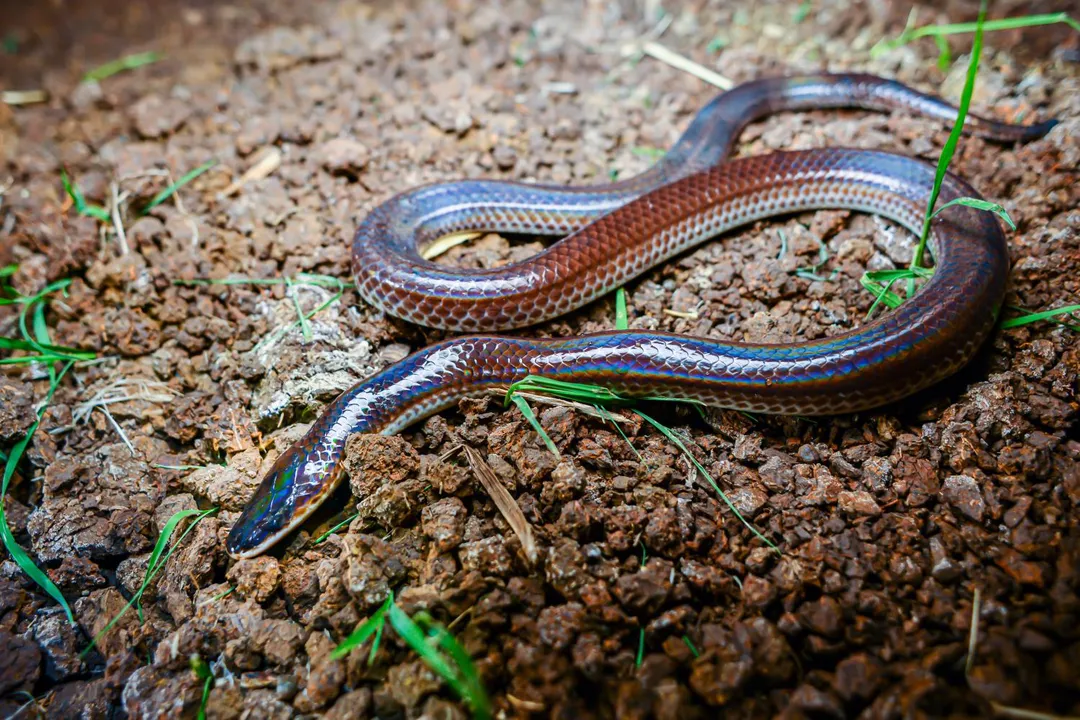
The striking visual display of a sunbeam snake often leads to immediate questions regarding its safety, specifically whether its mesmerizing sheen is a warning sign linked to venom. Rest assured for those encountering this reptile in its native habitat, the sunbeam snake, scientifically known as Xenopeltis unicolor, is not venomous. [1][2][3][5][6][9] This classification as a non-venomous species is consistent across various expert observations and regional guides. [2][5][9] The dramatic appearance, which gives the snake its common name, stems entirely from its physical structure, not from any toxic defense mechanism.
# Scale Structure
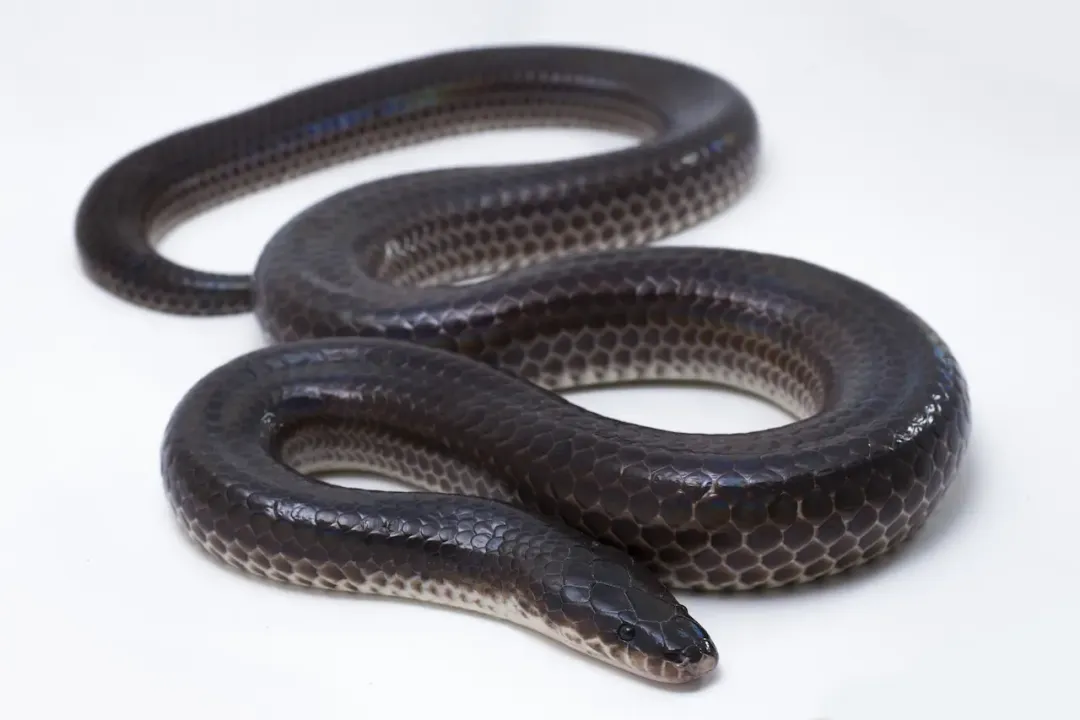
The most captivating feature of Xenopeltis unicolor is undoubtedly the brilliant, almost metallic iridescence of its scales. [1][2] This visual effect is so pronounced that it immediately sets the snake apart from many other subterranean or secretive species. [3] This sheen is a form of structural color, meaning the color is produced by the physical structure interacting with light, rather than by pigments alone. [3] Specifically, the iridescence arises from the structure of the outermost layer of the snake's scales. [3] When light hits these smooth, transparent scale surfaces at different angles, it is refracted and reflected in a way that creates the signature rainbow-like effect. [3] This is analogous to how a soap bubble or the surface of certain opals displays color, a purely optical phenomenon completely independent of biological toxicity. [3]
# Scientific Grouping

Sunbeam snakes belong to the family Xenopeltidae, [2] which places them in their own distinct taxonomic grouping separate from many of the well-known venomous elapids or common constrictors. [2][3] The genus is Xenopeltis, and the species is unicolor. [8][9] While they possess teeth and subdue their prey—typically soft-bodied invertebrates or small vertebrates—by constriction, they do not produce or inject venom. [1][3] This places them in a group of snakes that rely on purely physical methods of predation and defense. [1] It is a common natural history occurrence where the most visually arresting animals are automatically assumed to be dangerous, yet in this case, the visual spectacle is merely an evolutionary flourish on an otherwise harmless creature. [1][2][3]
# Range and Habitat

The sunbeam snake maintains a broad distribution across Southeast Asia. [1][2] Their range includes countries such as Thailand, [6][9] Laos, Cambodia, Vietnam, southern China, Myanmar, Malaysia, and Indonesia. [6] Specific sightings confirm their presence on islands like Bali [5] and in regions such as Chiang Mai. [4]
Their preference for habitat is closely tied to their lifestyle. They are generally described as being fossorial or semi-fossorial, meaning they spend a significant portion of their lives underground or buried in substrate. [3][6] This tendency to burrow means that encounters with them are generally infrequent for the casual observer. [3][6] They often frequent forest floors, less dense open areas, and locations near water sources. [3]
Thinking about this subterranean tendency offers some context for why they are sometimes mistaken for more dangerous species when found. If a sunbeam snake is found above ground, it is often during periods of heavy rain when the soil is saturated, forcing them to surface to avoid drowning or to hunt easier prey, or when they are actively moving between foraging grounds. [3][6] In environments where other, truly dangerous snakes exist, a fleeting glimpse of an unusually shiny, earth-toned snake emerging from the soil might trigger an immediate, fearful misidentification rather than a careful observation of its morphology. [1][2]
# Diet and Behavior
The diet of the sunbeam snake reflects its ground-dwelling nature. It primarily feeds on soft-bodied prey that is readily accessible in or just under the soil surface. [3] Key components of their diet include earthworms and slugs. [1][3] Beyond these invertebrates, their menu can extend to small vertebrates, such as frogs, lizards, and even other small snakes. [3]
Their method of capture is based on overwhelming the prey item. As constrictors, they wrap their bodies around the victim, inhibiting its ability to breathe or move, allowing the snake to consume it safely. [1] This predatory strategy is characteristic of many non-venomous snakes globally and requires a close physical engagement with the food source, a behavior that stands in contrast to the specialized delivery systems of venomous snakes. [1][2] For anyone keeping this species, knowing their diet is crucial; providing the right substrate that allows for natural burrowing behavior aids in reducing stress, which often manifests as a refusal to eat if the environment is too exposed or atypical. [3]

# Identifying the Sunbeam Snake
While the iridescence is the biggest giveaway, understanding other characteristics can help solidify identification, especially when the light is poor or the snake is coated in damp soil, momentarily dulling its shine.
| Feature | Description | Supporting Fact |
|---|---|---|
| Scales | Highly smooth, glossy, and iridescent | [1][3] |
| Color | Typically uniform dark brown or black (when not catching light) | [1] |
| Body Shape | Relatively slender body | [6] |
| Head | Small, slightly distinct from the neck | [3] |
Although they are not venomous, it is important to remember that any wild snake should be treated with respect and observed from a distance. [5] Even harmless species can bite if severely harassed or handled improperly. [5] However, given that the sunbeam snake's primary defense when threatened often involves retreating into the substrate rather than confronting a perceived threat, the likelihood of a defensive bite is significantly lower than with more terrestrial or overtly defensive species. [3]
# Contextualizing Non-Venomous Status
The absence of venom in Xenopeltis unicolor highlights an interesting point in snake evolution: not all spectacularly marked or powerful-looking snakes need specialized chemical weaponry. [2] Their survival strategy relies on their camouflage when not catching the light (being a uniform dark color) and their ability to disappear quickly into the ground. [3] The iridescence, perhaps surprisingly, might serve as an unexpected flash of "startle display" when they move rapidly under direct sunlight, momentarily confusing a predator before they vanish into the soil. [3]
If one were to consider the sheer diversity of life in Southeast Asia, it becomes clear that having a unique visual trick like structural iridescence is a relatively specialized evolutionary niche. [2][6] Many other snakes in the region are known for mimicry or actual toxicity. The sunbeam snake's path to survival, however, seems built around stealth and structural beauty rather than poison. [1][3] Observing one in its natural environment, perhaps after a tropical downpour has softened the earth, is a brief but memorable experience, allowing a glimpse of a creature perfectly adapted to its dark, damp domain, yet capable of flashing brilliance when the sun catches it just right. [2][3] This duality—the subterranean existence contrasted with the brilliant light display—makes the sunbeam snake a truly unique subject in herpetology. [1][9]
Related Questions
#Citations
Xenopeltis unicolor - Wikipedia
Sunbeam snake | Nocturnal, Venomous, Non-Aggressive - Britannica
[PDF] Sunbeam Snake (Xenopeltis unicolor)
Sunbeam snake. Mainly nocturnal. Non venomous and reluctant to ...
Sunbeam Snake - Non-Venomous Snake in Bali - Ular Pelangi
Sunbeam Snake (Xenopeltis unicolor) - Thailand Snakes
What do you think? - Instagram
Asian Sunbeam Snake (Xenopeltis unicolor) - iNaturalist
Common sunbeam snake (Xenopeltis unicolor) - Thai National Parks