What is the classification of a cichlid?
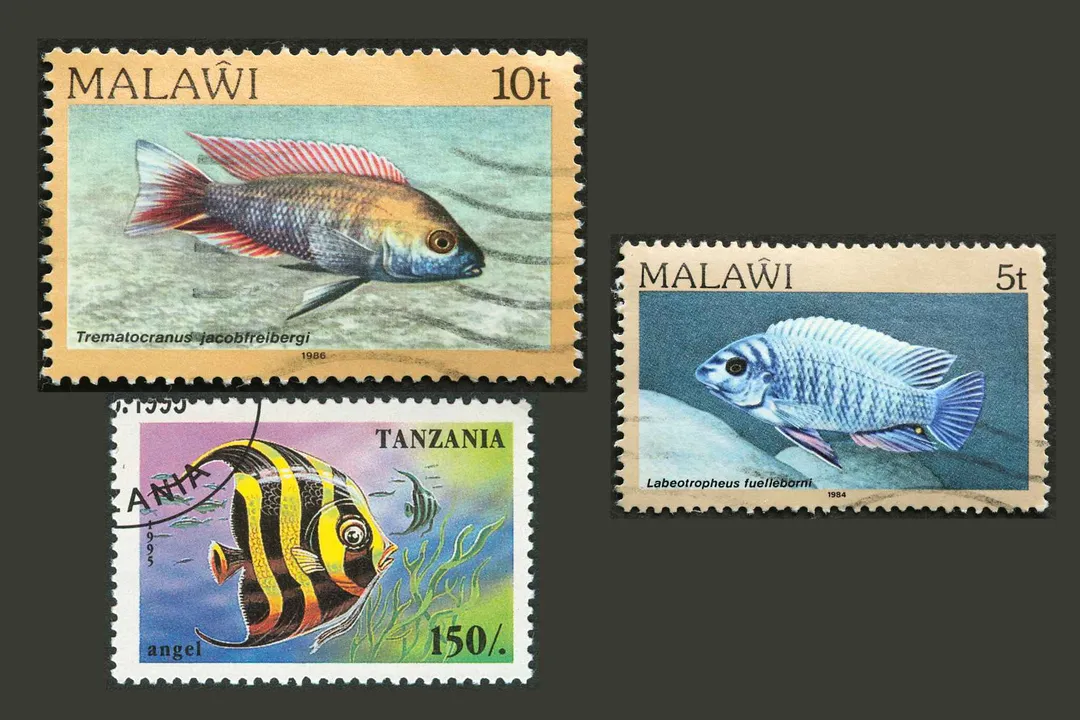
The world of freshwater fishkeeping is rich with vibrant colors and fascinating behaviors, much of which can be traced back to one remarkably successful family: the Cichlidae. [1][2] To truly appreciate what a cichlid is, we must look past the aquarium glass and delve into the structured world of biological classification. Understanding this classification places the cichlid within the grand tree of life, showing us their nearest relatives and revealing clues about their evolution and global distribution. [4]
# Core Placement
At the most fundamental level of family identification, cichlids are grouped into the family Cichlidae. [1][2][5][7] This family represents a significant lineage within the bony fishes, specifically the ray-finned fishes, or Actinopterygii. [1][7] They are not an ancient, primitive group in the context of all fish, but rather a highly specialized and relatively modern success story in terms of speciation. [1] Their placement within the hierarchy confirms they possess the skeletal and anatomical characteristics common to their larger groupings, such as having specific fin ray structures and jaw mechanics characteristic of their order. [9]
# Order Placement
The order to which cichlids belong is Perciformes, often referred to as the perch-like fishes. [1][2][4][5][7] This is an enormous and diverse order that includes many familiar groups, though cichlids themselves represent one of its most spectacular radiations. [1] Being classified within Perciformes immediately links them to other well-known groups, setting a baseline for their general body plan, fin structure, and often, their development. [4] However, taxonomic research frequently refines these groupings, and while the order Perciformes has long been the traditional classification, the internal relationships within this large group are continually being scrutinized by ichthyologists. [4]
# Higher Groups
Tracing the lineage upwards reveals their broader context. Cichlids are confirmed members of the suborder Percoidei. [1][4][6] In some modern or detailed classifications, they are further placed within the infraorder Labroidei. [4] This places them in a grouping that includes other fish known for specific jaw structures or parental behaviors, suggesting shared ancestry for these traits. [4] As teleosts, they are part of the highly derived group of bony fishes that possess a fully developed vertebral column and specialized jaw apparatus, which is fundamental to their success as an incredibly adaptable family. [9] The superorder level places them within Acanthopterygii, which encompasses many spiny-rayed fishes. [1]
# Family Scope
The family Cichlidae itself is defined by a suite of morphological characteristics, though these can be subtle enough that identifying a specific species often requires examination of fin ray counts or skull structure. [1] What truly sets them apart, however, is their evolutionary success and behavioral repertoire. The family is currently recognized as containing around 1,650 described species, though experts widely believe the actual number of species existing in nature is significantly higher, potentially exceeding 2,000. [1] This massive number of species arising from a single family within the vast Perciformes order is an exceptional biological phenomenon. [1]
This immense speciation rate offers an excellent case study in adaptive radiation. When we consider that the entire order Perciformes contains thousands of species across numerous families, the sheer concentration of diversity within Cichlidae, particularly in specific geographic areas, points to intense, localized evolutionary pressure leading to rapid specialization. [1] For instance, the endemic cichlids of the East African Rift Valley lakes—Victoria, Tanganyika, and Malawi—represent one of the planet's most dramatic examples of this process, where hundreds of species evolved from a few ancestors in geologically recent times. [1]
# Geographic Split
One of the most significant—and historically debated—aspects of cichlid classification is the broad division between their New World and Old World representatives. [4]
- New World Cichlids: These are primarily found in Central and South America, as well as parts of North America. [1]
- Old World Cichlids: These inhabit waters in Africa, Madagascar, and parts of the Middle East and South Asia. [1]
Taxonomically, this division is critical. While all belong to Cichlidae, molecular and morphological data strongly support this geographical split, often reflected in the names given to their various subfamilies or tribes. [4] Analyzing this separation is more than just noting where they live; it speaks to deep biogeographical history, suggesting that the common ancestor of all cichlids likely existed before the complete breakup of the supercontinent Gondwana, or that subsequent dispersal events were highly successful but geographically isolated. [4] For the hobbyist or student of ichthyology, recognizing this split—often correlated with differences in spawning behavior, mouth brooding habits, or color patterns—is the first step in understanding the specific evolutionary path a fish has taken. [4]
# Species Count
The sheer quantity of species within Cichlidae is often a focal point when discussing their classification. Having over 1,650 named species puts them among the largest vertebrate families. [1] If we were to look at just the freshwater fish fauna of the world, cichlids would rank near the very top in terms of family richness. [1] This volume is why continuous taxonomic work is necessary; as new species are discovered, or as molecular techniques reveal that what was thought to be one widespread species is actually several distinct, reproductively isolated ones, the classification must adapt. [4] The classification system, therefore, is not static; it is a dynamic record of ongoing scientific discovery regarding these fish. [4]
For example, imagine a scenario where a recent study re-examines the Haplochromis complex in Lake Victoria. Through genetic sequencing, researchers might find three distinct populations previously lumped together. The classification must then reflect this by potentially splitting one species into three, increasing the total count and refining the understanding of local diversity—a direct impact of modern taxonomy on the traditional family structure. [1]
# Habitat Link
While classification is based on shared ancestry inferred from morphology and genetics, the distribution of cichlids strongly reflects their ecological adaptation. Their presence across tropical and subtropical freshwaters in the Americas, Africa, and Asia [1] contrasts sharply with many other large fish families that are restricted to one continent. [1] Although they are predominantly freshwater dwellers, their classification within the Perciformes (which includes many marine species) hints at an ancestral history that may have involved brackish or even marine environments, even if the modern Cichlidae family is overwhelmingly freshwater adapted. [2] The exception to this general rule might be certain rare or recently discovered brackish-water species, but the vast majority thrive where salinity is near zero. [1]
# Taxonomy Summary
To summarize the established taxonomic position of a typical cichlid, we can place it firmly within the established hierarchy:
| Rank | Classification | Key Takeaway |
|---|---|---|
| Kingdom | Animalia | Animal life [7] |
| Phylum | Chordata | Possesses a notochord/spinal cord [7] |
| Class | Actinopterygii | Ray-finned fish [1][7] |
| Order | Perciformes | Perch-like group [1][2][5] |
| Suborder | Percoidei | Part of the spiny-rayed fish complex [4][6] |
| Family | Cichlidae | The cichlid family [1][2][5] |
This nested system ensures that every cichlid, whether a small South American dwarf or a massive African predator, shares a specific, verifiable evolutionary history defined by these groupings. [4] The classification is the map by which scientists navigate the staggering biodiversity this family presents. [1]
Related Questions
#Citations
Cichlid - Wikipedia
Cichlids Facts and Information | United Parks & Resorts - Seaworld.org
Cichlids - Taxonomy and evolution | ForAquarist.com
FAMILY Details for Cichlidae - Cichlids - FishBase
What is a cichlid?
Cichlidae (cichlids) - PubChem - NIH
Where Do All These Cichlid Species Come From?
Cichlids - Fish Necropsy Manual
Cichlid - San Diego Zoo Animals & Plants