What are some facts about gold finches?

The little bird painted in brilliant yellow and black is one of the easiest to spot at a backyard feeder, yet the Goldfinch holds secrets that go far beyond its sunny disposition. While many birdwatchers recognize the vibrant male during the warmer months, a closer look at this species—particularly the widespread American Goldfinch (Spinus tristis)—reveals fascinating adaptations for survival, unique social structures, and surprising contrasts between the sexes and the seasons. [2][4] It is worth noting that across the globe, there are primarily three species: the American, the Lesser, and the Lawrence’s Goldfinch in North America, alongside the European Goldfinch (Carduelis carduelis) found across the Atlantic. [3][6]
# Appearance Contrast
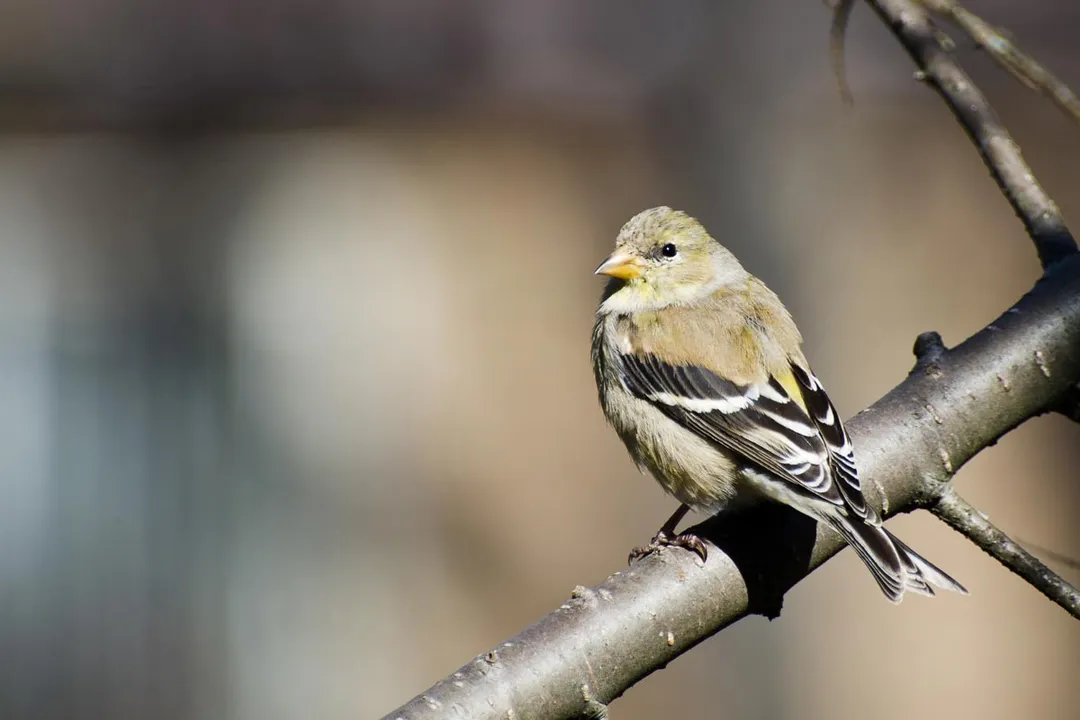
The striking difference between the sexes is a defining feature of the American Goldfinch. The breeding male showcases brilliant yellow plumage complemented by a shiny black cap and black wings tipped with white. [2][4] Females, by contrast, are much duller in color, presenting a drabber brown and mustard tone, although they retain the identifiable black and white wingbars. [2][4] This dramatic seasonal shift is tied to their unique molting pattern. American Goldfinches are unusual among their family because they molt their body feathers twice annually: once in late winter to gain their spring breeding colors, and again in late summer/early fall. [2][4][7] This twice-yearly change means that the very same bird can look entirely different depending on the time of year. [4] Furthermore, even non-feathered features change with the molt. In winter plumage, their legs, feet, and bill are a dark grayish-brown, but by the time breeding season arrives, these areas shift to a buffy yellow-orange color. [5] Juvenile Goldfinches, particularly those of the European variety, also lack the strong adult facial markings, presenting instead with a streaky brown body and head. [1]
# Dietary Specifics
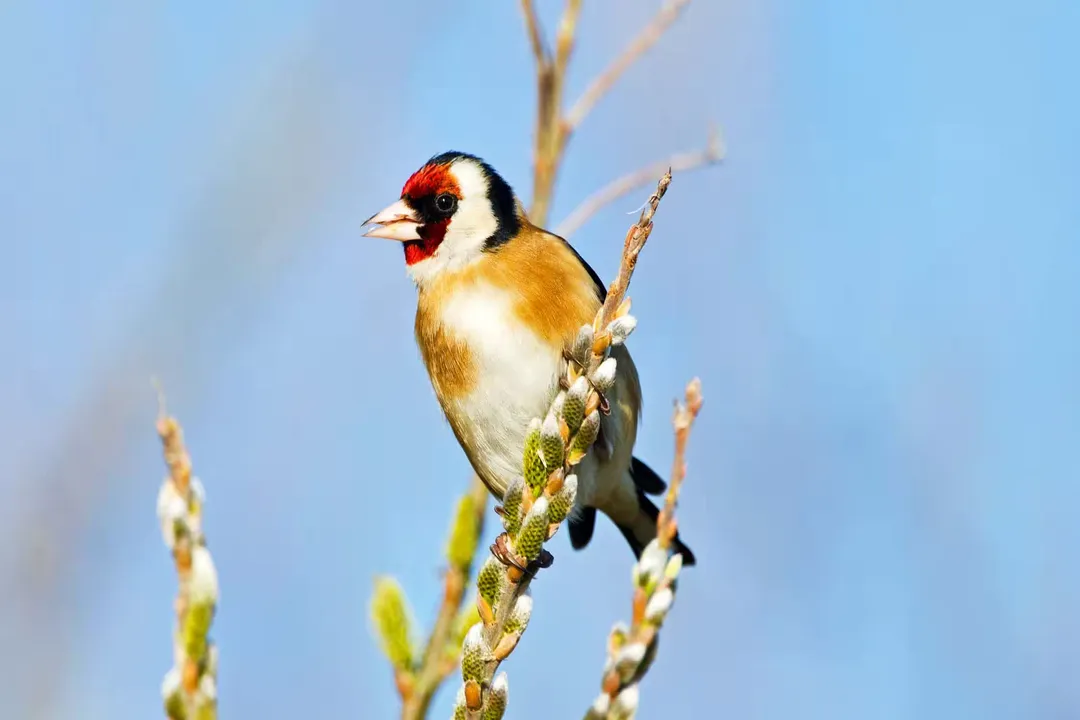
When it comes to what fuels these energetic birds, the American Goldfinch holds the title of one of the strictest vegetarians in the avian world. [2] Their diet is almost entirely composed of seeds; they will only inadvertently consume an occasional insect. [2] This seed specialization is reflected in their Latin heritage, as the genus name for the European species, Carduelis, derives from Carduus, the Latin word for thistle. [1][3] Thistles, sunflowers, milkweed, and ragweed are among their favored food sources, making these plants crucial for backyard feeding stations. [4][7] The fine, conical bill, perfect for hulling seeds, is an adaptation that defines their feeding strategy. [2][6] For the European Goldfinch, this specialization is so pronounced that the male possesses a longer beak than the female, which allows him to extract seeds from teasels that the female seldom attempts to tackle. [1][3]
This commitment to a seed-only diet creates a significant vulnerability when facing brood parasites. When Brown-headed Cowbirds lay eggs in an American Goldfinch nest, the cowbird nestling may hatch, but it seldom survives longer than a few days. [2][7] The reason is stark: the all-seed diet provided by the goldfinch parents simply lacks the protein necessary to sustain the rapidly growing cowbird chick. [2][5] This biological incompatibility acts as a surprisingly effective, if accidental, defense mechanism against brood parasitism. [7]
# Breeding Schedule
The Goldfinch’s strict vegetarianism also dictates its highly unusual breeding schedule. While many North American birds nest early in the season, American Goldfinches wait until mid-to-late summer—typically June or July—until seed-bearing plants like thistle and milkweed have matured and produced their fibrous seeds. [2][7] This timing ensures a plentiful supply of both food for the young and the downy material needed for nest lining. [2][7] Considering the incubation period is around 12 to 14 days, followed by 12 to 17 days in the nest before fledging, this reproductive window is quite compressed. [7] If we consider the time required for the young to become independent post-fledging, this late start limits the time available to raise a second brood when compared to species that start nesting in the early spring. [7] Veteran females may attempt a second nesting, sometimes by leaving the first mate to care for the initial brood while she finds a new partner. [5] In terms of labor, the female selects the nest site and constructs the entire nest structure, a process taking about six days, while the male often remains nearby. [5][7] During incubation, the male diligently feeds the female on the nest, and as the nestlings grow, his role shifts to providing the majority of the food in the later stages of chick-rearing. [5] Population studies hint at an interesting imbalance, suggesting there may be three males for every two females, perhaps because males live longer than their female counterparts. [5]
# Range Movement
American Goldfinches are distributed across much of North America, though they generally avoid the deep southern states during winter unless conditions are mild. [2][6] Their migratory patterns are irregular, often coinciding with food availability and temperature thresholds. [4] Northern populations typically move south if the minimum average January temperature drops below F or F. [2][4] Banding data has shown significant north-to-south movements, with some individuals traveling over a thousand miles from Ontario down to Louisiana. [5] Intriguingly, there is a sex difference in winter location; females tend to remain further south than the males, with adult males wintering further north than younger males. [5] To cope with the chilling effects of winter, these birds display impressive hardiness, sometimes burrowing under the snow to create small, insulated sleeping cavities, or roosting together in dense coniferous trees. [5] Their flight is also quite distinctive, marked by an undulating, roller-coaster-like pattern, often accompanied by their recognizable po-ta-to-chip flight call that alerts observers to their presence. [2][5][7]
# Cultural Echoes
Goldfinches have held a special place in human culture for centuries, sometimes reflected in economics and art. The European Goldfinch, for example, has a rich, if tragic, history related to the cage bird trade; in Victorian Britain, massive numbers were trapped, with reports suggesting 132,000 were taken in Worthing alone in one year, causing the population to crash. [3] The halting of this practice became an early goal for the organization that would become the RSPB. [3] Symbolically, the bird appears frequently in medieval depictions of the Madonna and Child, serving as a symbol of resurrection and fertility. [3] Furthermore, the word “goldfinch” took on a surprising social meaning in the early 18th century, when it was used as slang to describe a very wealthy person. [3] Old rural names for the bird also reflect its favorite food, with terms like thistle finch, goldie, and redcap still in use in some areas. [3] The collective noun for a group of goldfinches is a charm, thought to derive from the Old English word cirm, meant to describe their twittering song. [3]
The skewed 3:2 male-to-female ratio, coupled with females being dominant in summer but subservient to males in winter, suggests that winter feeding stations might become surprisingly competitive environments where social hierarchies shift depending on the season and breeding stress. [5] While the American Goldfinch is easily attracted by sunflower and Nyjer seed, their acrobatic nature means they will often hang upside down to feed, though studies suggest they prefer sitting upright on perches above head height when available. [4][5] If you are setting up your yard, planting native thistles and composite plants is an excellent way to invite these seed specialists, but remember that keeping the ground raked is vital to prevent the spread of diseases like salmonellosis, which can affect finches disproportionately. [2]
Related Questions
#Citations
10 Fascinating Facts: The American Goldfinch | Lyric Wild Bird Food
Fun Facts About American Goldfinches - HERE Year-roud
Living with Birds 21 Facts on Goldfinch Tweetapedia
American Goldfinch - All About Birds
Birdist Rule #97: Get to Know Your Goldfinches | Audubon
10 Things That May Surprise You about Goldfinches
Goldfinch Bird Facts - RSPB