Wattled Jacana Facts
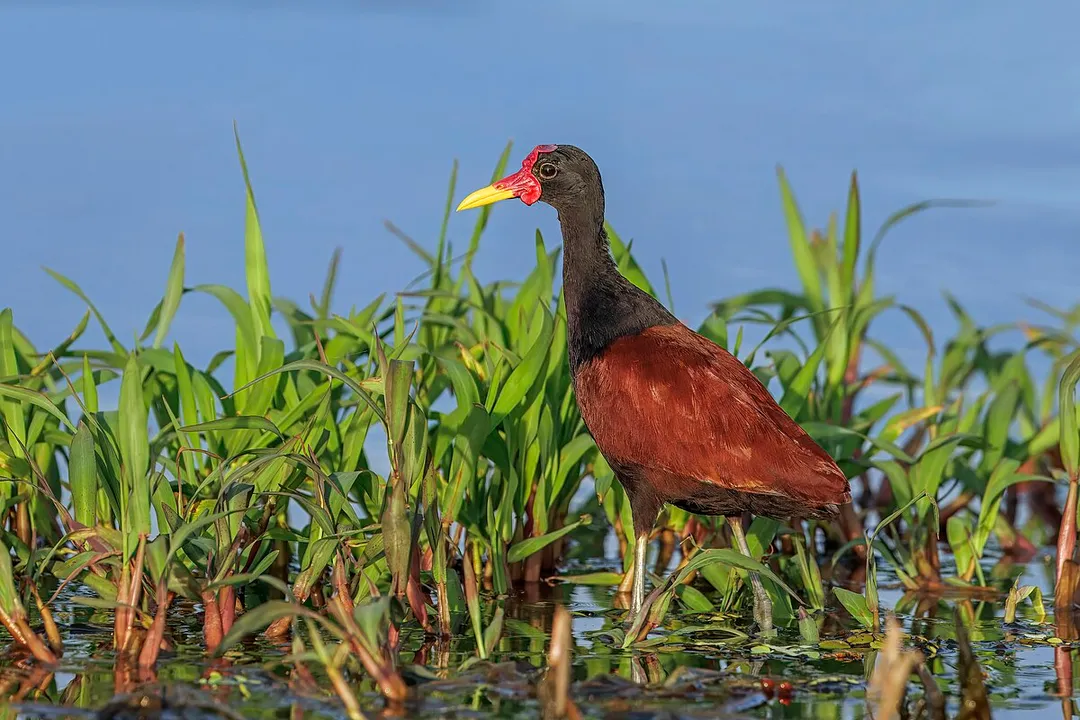
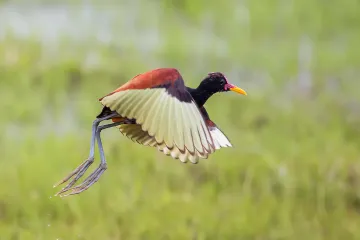
The Wattled Jacana, often called the "Jesus Bird" due to its habit of seemingly walking on water, presents one of nature's most remarkable examples of structural adaptation applied to a specific aquatic niche. [5] This large, striking African bird is instantly recognizable by its elongated toes and the brilliant, fleshy yellow structure adorning its head, making it stand out dramatically against the green backdrop of its wetland home. [1][2][3] Unlike many shorebirds that probe mud or wade in shallow water, the jacana opts for a life spent almost entirely on the surface of floating flora. [5]
# Physical Traits

The adult Wattled Jacana is the largest of the world’s jacana species. [1] They typically measure between 28 to 35 centimeters in length. [3] The body plumage is generally a deep, dark brown or blackish color, which helps them blend into the shadows cast by dense aquatic vegetation. [1][2] Distinguishing features are concentrated on the head and face. The most prominent is the large, fleshy, bright yellow wattle which extends from the base of the bill up onto the forehead. [1][2] This is complemented by a corresponding yellow frontal shield. [3] The bill itself is pale yellow to greenish-yellow. [2] In contrast, the legs and feet are blackish-gray. [2] While both sexes look similar, females are often slightly larger than the males. [1][6] Juvenile jacanas present a duller appearance; they lack the conspicuous wattle and shield, sporting a more mottled brown plumage overall. [2][3]
# Giant Feet
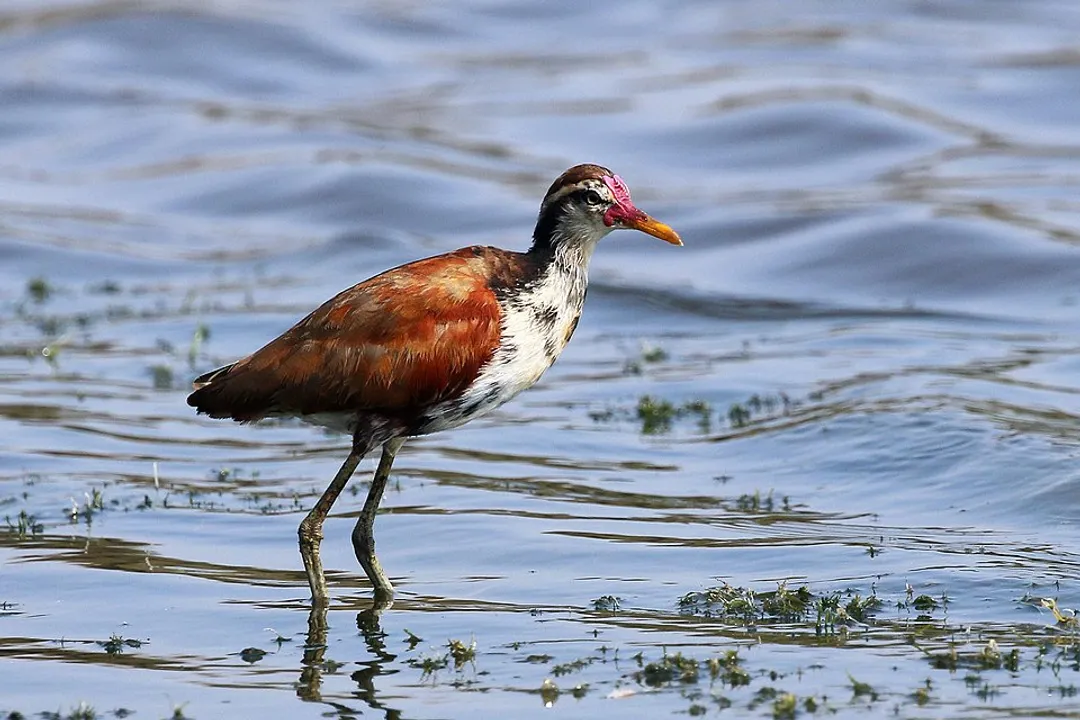
The reason this bird gains its nickname is entirely due to its disproportionately large feet. [1][4] The toes are exceedingly long and slender, equipped with sharp claws, allowing the bird to distribute its weight widely across floating surfaces like water lily pads, water hyacinth, and other aquatic mats. [1][5] This engineering marvel permits them to move across what appears to be liquid support as if it were solid ground. [5] However, this incredible specialization comes with a trade-off in terrestrial mobility. While perfectly adapted for traversing unstable aquatic vegetation, the Wattled Jacana is somewhat awkward and slow when forced to walk on dry land or firm banks, relying on these large appendages for balance rather than propulsion. [4] This physical characteristic mandates their presence in environments where water surfaces are thickly carpeted by vegetation, restricting them from open water or barren shorelines. [2]
# African Wetlands
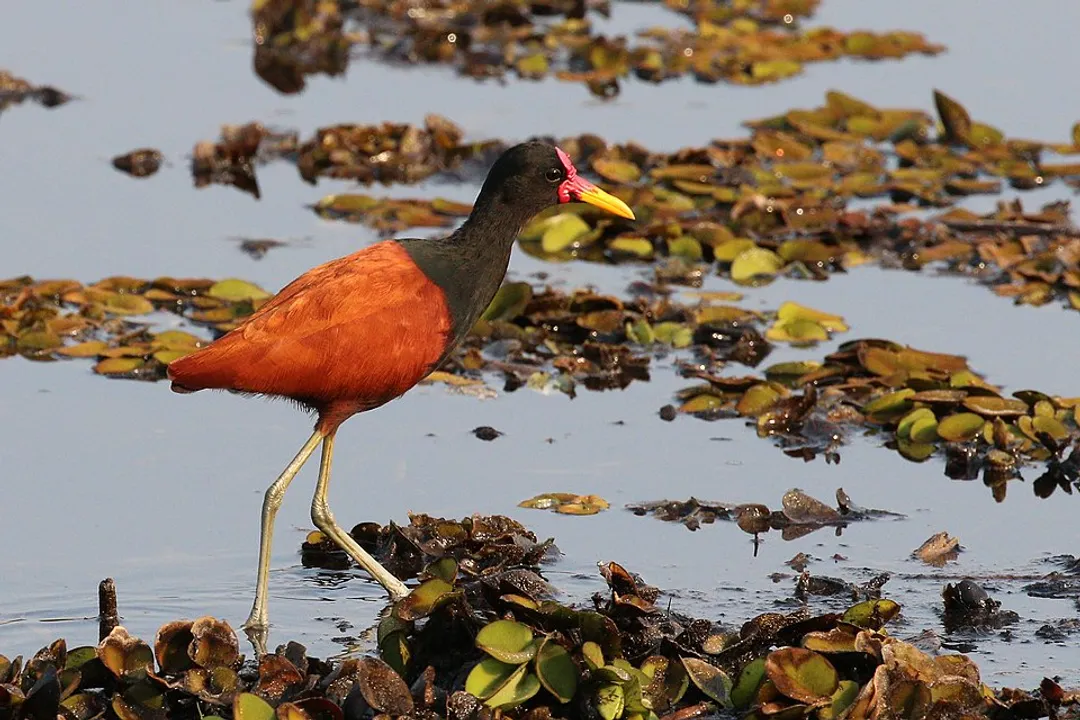
The Wattled Jacana has a wide distribution across Sub-Saharan Africa. [1][6] Their geographical range spans from Mauritania in the west, across to Sudan and Ethiopia in the east, and southwards across central and southern Africa. [1] They are strongly associated with permanent or semi-permanent freshwater bodies. [6] Ideal habitats include marshes, swamps, floodplains, and the shores of lakes and large ponds that support significant amounts of floating vegetation. [2][5] The density and stability of this floating plant life are direct indicators of suitable foraging territory for the species. [6] They are sometimes observed in temporary pools following heavy rains, but their commitment remains tied to water bodies offering continuous surface cover.
# Eating Habits
The diet of the Wattled Jacana is heavily based on what it can find resting on or just beneath the surface of the water plants it walks upon. [2][3] They are primarily insectivorous, consuming a variety of aquatic insects, their larvae, spiders, and small mollusks. [2][5] Occasionally, they will also eat seeds and other plant matter encountered while foraging. [3] Their foraging technique involves a delicate, measured walk, probing gently with their bills into the vegetation or the water film immediately surrounding their feet. [5] This reliance on surface invertebrates means their foraging success is directly linked to the health and productivity of the floating plant communities they inhabit. [6]
# Breeding System
One of the most fascinating aspects of the Wattled Jacana's life history is its mating system, which is distinctly polygynous. [1][2] The female establishes a territory and then mates with multiple males within that area. [1][6] This division of labor is highly pronounced: the female’s role is largely focused on securing and defending the best feeding territory and securing multiple breeding opportunities. [6] Once eggs are laid, the responsibility for incubation and chick-rearing falls almost entirely upon the male. [1][2][6] A typical clutch consists of three or four eggs, which are usually laid in a sparse nest constructed from a slight scrape or small platform of emergent vegetation just above the water level, or sometimes directly on a large floating raft of plants. [1][6]
The extreme divergence in parental duties hints at an evolutionary strategy where the unpredictable nature of wetland resources makes the male's commitment to rearing the small brood a necessary guarantee of offspring survival, while the female maximizes her fitness by spreading her genetic contribution across several nests. [6] This places significant developmental and protective pressure on the father bird.
# Male Duties
The dedicated role of the male jacana involves sitting on the eggs for the incubation period, which lasts around two to three weeks. [1][6] Once the chicks hatch, the male continues to feed and guard them diligently. [1] When danger approaches—perhaps a terrestrial predator like a mongoose or a larger avian hunter—the male employs a unique defense mechanism: he tucks the downy chicks beneath his wings, often carrying one or two while running across the water surface or swimming away to safety. [1][6] This behavior requires immense stamina and alertness from the male, who must balance foraging for himself with the constant need to protect his vulnerable young, often managing to ferry them to different lily pads until the threat passes. [6]
# Status Notes
Globally, the Wattled Jacana is currently classified as a species of Least Concern by conservation organizations. [1] This status reflects its relatively large range across Africa and a population that, although locally threatened by habitat loss, remains numerous overall. [2] Nevertheless, localized pressures pose ongoing risks. The drainage of wetlands for agriculture or urban development directly eliminates their specialized habitat. [2] Furthermore, increased water pollution can reduce the invertebrate food sources they depend upon, or harm the floating vegetation itself, making the ecosystem unstable for their unique lifestyle. [2] Monitoring the health of large, vegetated freshwater systems remains key to ensuring the long-term viability of this distinctive bird across its extensive range. [6]
Related Questions
#Citations
Wattled jacana - Wikipedia
Wattled jacana - Facts, Diet, Habitat & Pictures on Animalia.bio
Wattled Jacana Bird Facts - A-Z Animals
Wattled jacana - The Dallas World Aquarium
Jacana | San Diego Zoo Animals & Plants
Wattled Jacana - Birds of the World
Wattled Jacana - Curassow Amazon Lodge
Wattled Jacana
Wattled jacana Facts for Kids