Wattled Jacana Scientific Classification
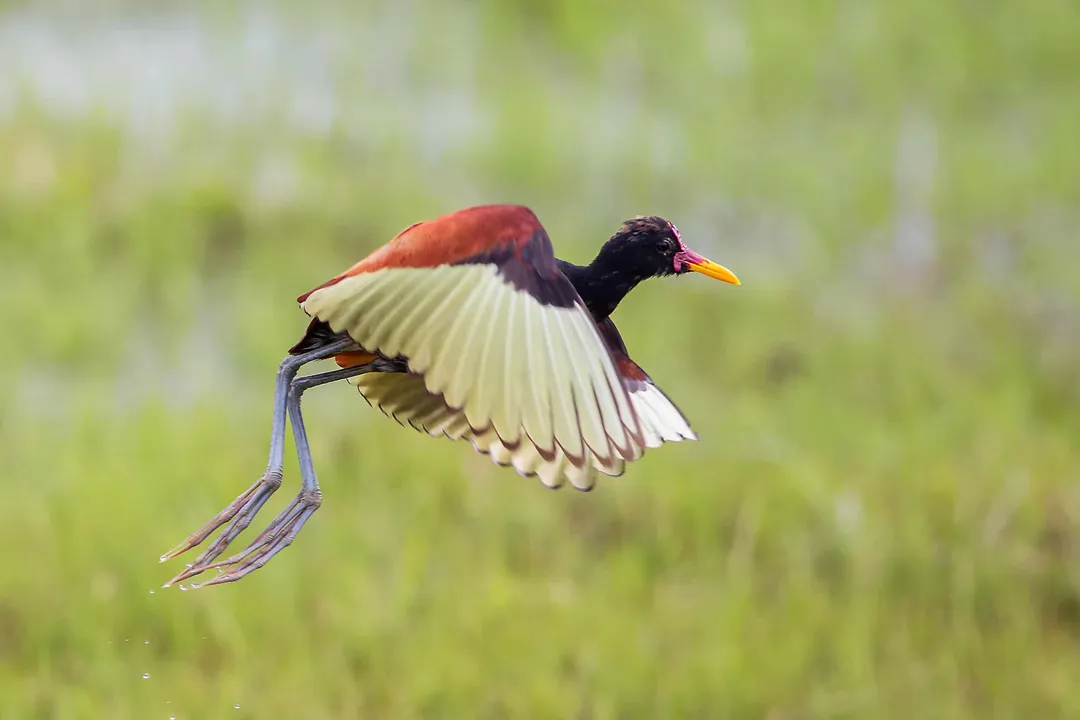
The formal scientific classification of the Wattled Jacana, Jacana jacana, provides a precise map of its evolutionary position within the tree of life, tracing its lineage from the broadest categories down to the specific species designation. [3][8] Understanding this taxonomy is essential for ornithologists and naturalists seeking to place this unique bird—often recognizable by its extraordinarily long toes—within its proper biological context. [6] The accepted scientific name, Jacana jacana, follows the Linnaean system established by Carl Linnaeus in 1766. [8]
# Hierarchical Ranks
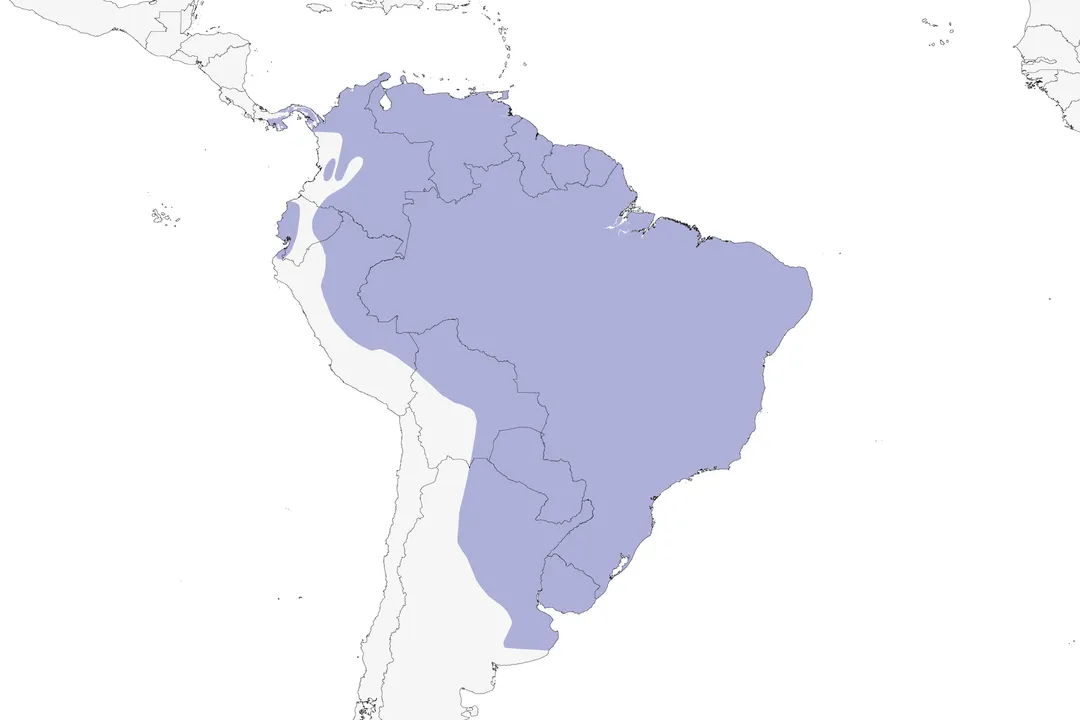
The Linnaean hierarchy places the Wattled Jacana through several nested ranks, moving from the most general grouping to the most specific. [2] This structure confirms its identity as a bird and its close relation to other wading and shorebirds, despite its distinct appearance. [3]
The classification breakdown looks something like this:
| Rank | Classification | Implication for the Jacana |
|---|---|---|
| Kingdom | Animalia | It is multicellular, heterotrophic, and mobile. [2] |
| Phylum | Chordata | It possesses a notochord (or backbone/spinal column). [2] |
| Class | Aves | It is definitively a bird, characterized by feathers and beaks. [2][5] |
| Order | Charadriiformes | It belongs to the large order that includes gulls, terns, and plovers. [2][3] |
| Family | Jacanidae | This places it specifically among the jacanas, distinguished by their unique foot structure. [2][3] |
| Genus | Jacana | It shares this genus with other jacana species. [2][3] |
| Species | J. jacana | This specific designation identifies the Wattled Jacana. [2][3] |
It is worth noting that while Jacana jacana is the widely accepted current binomial nomenclature, historical records sometimes list synonyms. For instance, some older systems or databases might reference Parra jacana. [2] The shift in classification reflects ongoing taxonomic revision based on morphology, behavior, and increasingly, genetic data. [3]
When we examine the Order, Charadriiformes, we see the Wattled Jacana grouped with shorebirds. [3] While many Charadriiformes are found on open mudflats or sandy coasts, the Jacanidae family has adapted specifically to freshwater, vegetated wetlands. This evolutionary divergence within the order is a key point of interest; while its ancient relatives might favor beaches, the Jacana’s specialized feet allow it to walk across floating vegetation on ponds and marshes. [6]
# Family Grouping
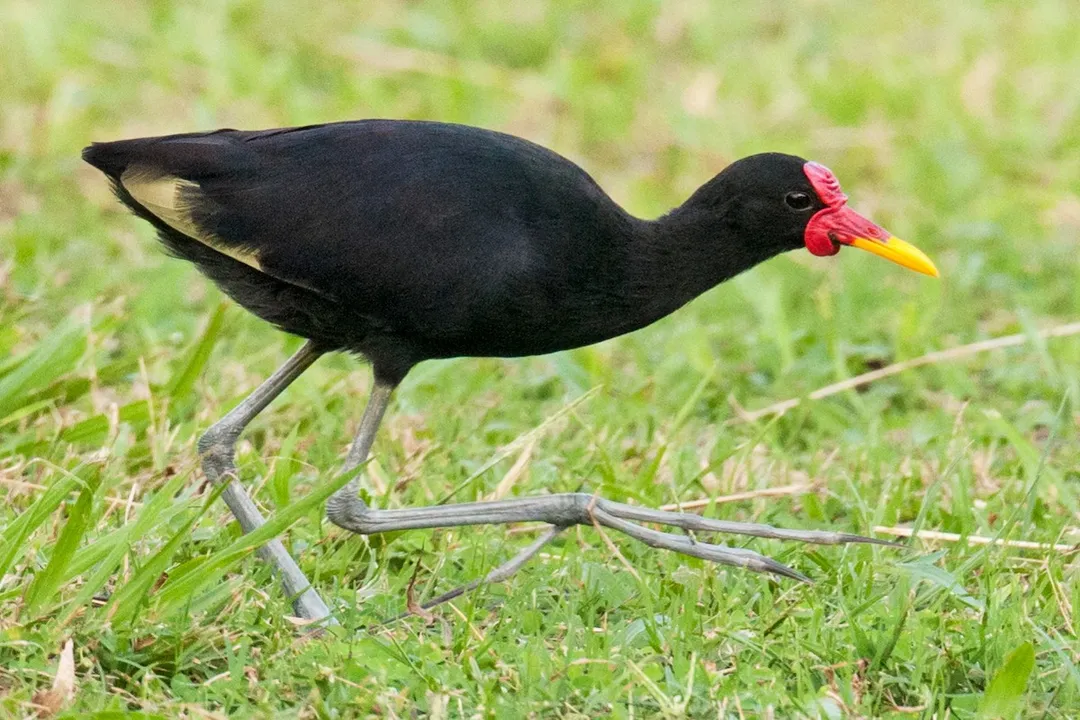
The family Jacanidae is what truly sets this bird apart, making its placement here vital for understanding its physical adaptations. [2][3] This small family contains all the world's jacanas, birds famous for their disproportionately long toes and claws. [6] These specialized feet spread the bird’s weight over a large surface area, acting like snowshoes on floating lily pads and aquatic plants. [6]
In many classification guides, Jacana jacana is considered the type species for the genus Jacana, or at least one of the most widespread members of that genus. [5] While the sources provide the formal Linnaean placement, considering the family context offers insight into why the classification matters functionally. The structure of the Jacanidae family is defined by this shared physical characteristic, separating them clearly from other long-legged waders like stilts or avocets, which possess traditionally proportioned feet. This shared family trait suggests a common ancestor that made the unique adaptation to floating vegetation a defining characteristic of the group. [3]
# Nomenclature History
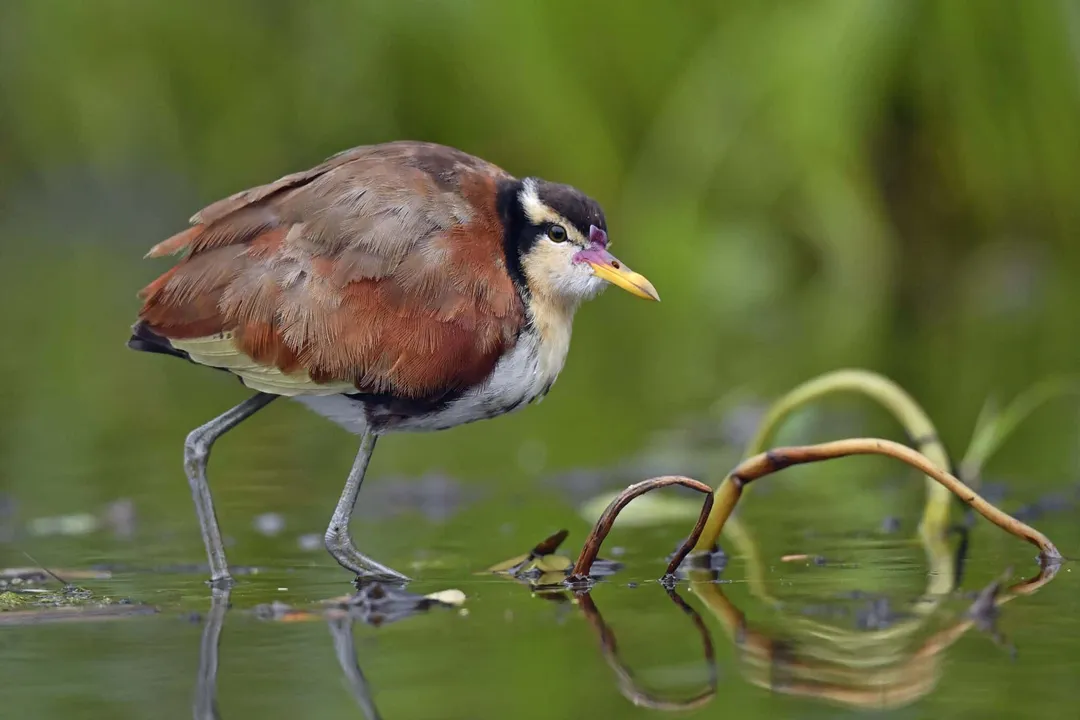
The specific name jacana was assigned by Linnaeus in 1766. [8] Linnaeus, the father of modern taxonomy, based his initial groupings on readily observable physical traits, and the name Jacana itself may derive from a local or vernacular name for the bird. [8] The repetition in the full binomial—Jacana jacana—is an example of tautonymy, where the genus and species epithets are the same. [2] While often used, this construct is not universal across all scientific names and usually signifies a very close relationship within the genus or an early assignment before extensive diversification was fully understood.
The historical synonym Parra jacana suggests that at one point, the Wattled Jacana was placed in a genus called Parra. [2] This synonymy is a tangible example of taxonomic revision in action. Classification systems are dynamic; as scientists gain deeper knowledge—whether through comparing bill structures, analyzing breeding habits, or running DNA sequencing—the relationships between species are refined. A bird might be moved from one genus to another if it is found to be more closely related to a different group than originally thought, even if the species epithet (jacana) remains consistent. [3] The presence of Parra as an older name highlights the continuous refinement process inherent in establishing biological authority.
# Distributional Context
While scientific classification focuses on relationship, the bird’s distribution often informs where and how those classifications are tested or observed. [1] The Wattled Jacana is widespread across large parts of tropical South America. [1] Understanding its classification as a Jacana belonging to the family Jacanidae is immediately relevant when looking at its habitat across this range. Whether observed in the wetlands of Brazil or the marshes of the Dutch Caribbean—where it is sometimes noted as a vagrant or rare visitor [4]—its classification dictates that it should be sought in environments rich with floating aquatic flora, not on open shorelines like its Charadriiform cousins. [3]
To illustrate the practical application of this taxonomy, consider a field guide focused on South American shorebirds. A reader seeking wading birds might first look under the groups containing sandpipers and plovers (the broader Charadriiformes order). However, realizing the Jacana belongs to the unique Jacanidae family means they should specifically search sections dedicated to wetland specialists, confirming that the physical adaptations (the long toes) are the primary evolutionary trait that separates this taxonomic branch from others in the same Order. [6] This confirms that classification isn't just an academic exercise; it is a predictive tool for habitat and morphological expectation.
# Genus Specifics
The genus Jacana currently encompasses several species, all sharing the characteristic foot structure but differing geographically or in minor plumage details. When Jacana jacana is designated as such, it implies that while it shares a recent common ancestor with, say, the Northern Jacana (Jacana spinosa), there are enough distinguishing features—often relating to the size or color of the wattle, the specific coloration of the iris, or subtle body size differences—to warrant separate species status. [5]
If we were to create a quick comparative reference based on the recognized names:
| Feature | Jacana jacana (Wattled Jacana) | Jacana spinosa (Northern Jacana) |
|---|---|---|
| Range | Widespread South America | Central America, extending into Mexico |
| Classification Status | Currently accepted species [3] | Currently accepted species [5] |
| Wattle/Head Features | Specific characteristics defining J. jacana | Distinct features separating it taxonomically from J. jacana |
This intra-genus differentiation demonstrates the precision required at the species level. Two birds might look similar, but the scientific classification demands recognition of the distinct evolutionary lines that lead to J. jacana versus J. spinosa, reinforcing the authority of the binomial system in global ornithology. [3][5]
# Authority and Trust in Naming
The reliance on Linnaeus's 1766 designation for Jacana jacana speaks to the established authority of foundational taxonomic works. [8] In modern biology, however, the validity of this naming is constantly reinforced or occasionally challenged by newer genetic analyses. When organizations like Avibase list the classifications, they are aggregating these established, peer-reviewed findings. [2][7] The continuous presence of Jacana jacana across multiple authoritative databases—from specialized regional checklists to global bird guides—establishes a high degree of trust in its current scientific standing. [1][5] The consensus on the Order (Charadriiformes) and Family (Jacanidae) provides a stable foundation, while the species name grounds the identification to the specific South American bird described by Linnaeus. [3]
Related Questions
#Citations
Wattled jacana - The Dallas World Aquarium
Wattled or Northern Jacana - Avibase
Wattled Jacana - Birds of the World
Wattled Jacana Jacana jacana subsp. intermedia
Details : Wattled Jacana - BirdGuides
Wattled Jacana Bird Facts - A-Z Animals
Wattled Jacana (Jacana jacana) - Peru Aves
Wattled Jacana The wattled jacana (Jacana jacana) is a wader