Wattled Jacana Diet
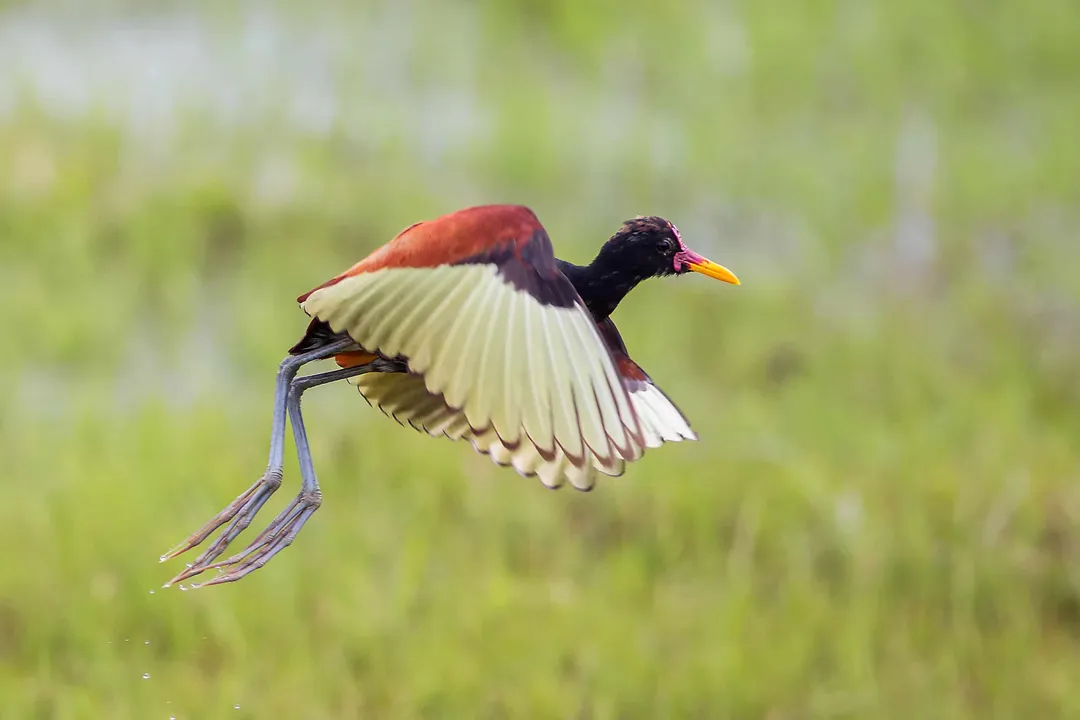
The Wattled Jacana, with its incredibly long toes that allow it to distribute its weight across floating aquatic vegetation, is often referred to as the "Jesus bird" because of this remarkable ability to walk on water. This unique adaptation is not just for show; it fundamentally shapes what the jacana eats and how it acquires its meals. Their entire foraging strategy centers around exploiting the resources suspended just above or right at the water surface of ponds, marshes, and slow-moving rivers. They are adept at navigating lily pads and mats of emergent growth, stepping carefully to maintain balance while searching for sustenance.
# Surface Foraging

The primary method by which the Wattled Jacana secures its diet involves traversing the water surface. They are not diving birds, nor do they typically wade in deep water like many other shorebirds. Instead, their preferred habitat is characterized by calm, productive waters covered in floating or semi-submerged plants, such as water lilies or grasses. By walking across these natural rafts, they gain access to food sources unavailable to many competitors.
When foraging, the jacana walks deliberately, often probing or picking items directly from the surface of the pads or the water immediately surrounding them. This behavior gives them an advantage in accessing insects and small invertebrates that live on the undersides of leaves or are trapped at the air-water interface. It is a specialized technique that requires both excellent balance and keen eyesight to spot tiny prey against the complex, moving backdrop of the water surface.
# Core Provisions
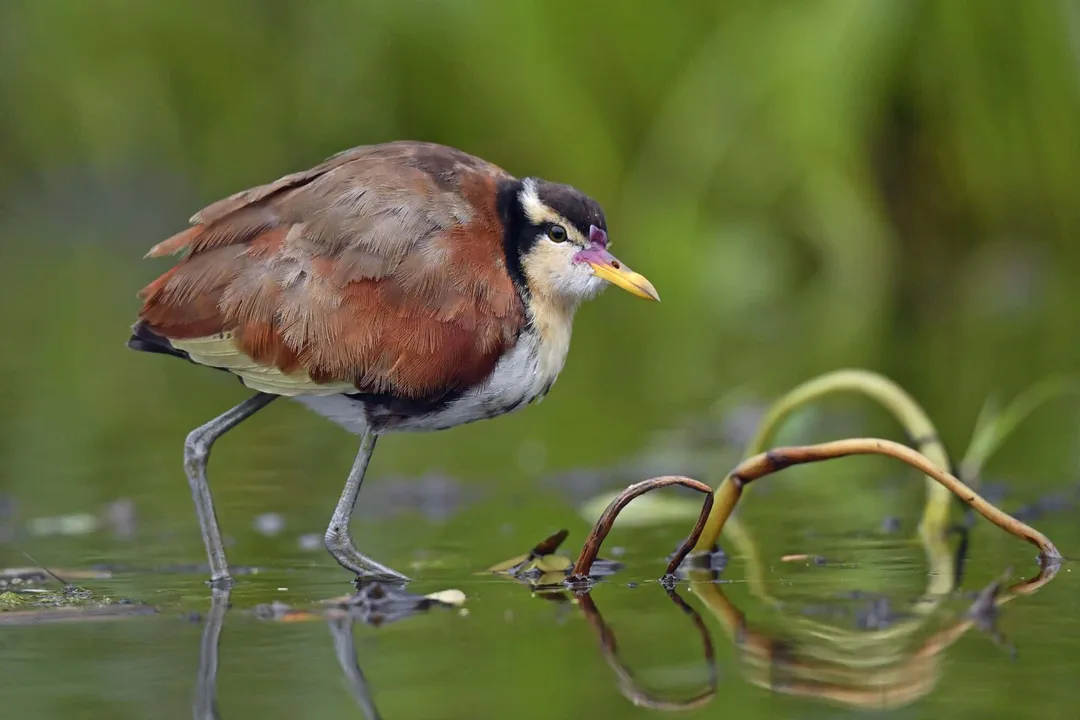
The Wattled Jacana maintains a diet that qualifies it as omnivorous. While the exact composition can shift based on location and season, the bulk of their intake generally consists of insects and other small invertebrates, supplemented by plant matter.
Insects form a major component of their menu. This includes terrestrial insects that happen to land on the water or vegetation, as well as aquatic insects and their larvae that live near the surface. Spiders are also frequently consumed when encountered during their treks across the floating foliage. Beyond insects and arachnids, they actively seek out other small aquatic life forms. Sources indicate they consume small mollusks and crustaceans encountered in the shallows or on the plant matter itself.
The plant portion of their diet is equally significant, particularly during times when invertebrate prey might be scarcer. Wattled Jacanas feed on the seeds produced by various aquatic plants. In systems rich with water lilies, for example, they target the seeds that the plants release, effectively gleaning resources that might otherwise sink to the bottom, inaccessible to them.
A summary of common food items includes:
- Invertebrates: Insects (adults and larvae), spiders, aquatic invertebrates.
- Other Fauna: Small fish, mollusks, and crustaceans.
- Flora: Seeds from aquatic plants.
It is worth noting that they are also known to consume snails, indicating a willingness to tackle slightly larger, hard-shelled prey when the opportunity arises.
# Dietary Variation
While the basic structure of their diet—insects and seeds—remains consistent across their range, the specific reliance on either category can change quite dramatically. This flexibility is key to their survival across diverse wetland environments throughout Sub-Saharan Africa.
For instance, in a habitat where aquatic insect populations are booming due to warm weather or recent rains, the jacanas may heavily skew their intake toward protein-rich insects, potentially consuming fewer seeds temporarily. Conversely, during drier periods when surface insect activity declines, or perhaps during breeding when energy demands peak, they may rely more heavily on the readily available, high-energy seeds of the water plants. This ability to switch focus between animal and plant matter, often within the same day depending on foraging success, speaks to a high degree of dietary opportunism within their specialized niche. They are not obligate insectivores or granivores; rather, they are opportunistic feeders whose success hinges on exploiting whatever is easiest to grab while maintaining their footing on the water surface.
The environment plays a huge role in dictating what is available for them to eat. For observers or conservationists focusing on these birds, understanding the local flora is as important as tracking insect hatches. If a wetland is dominated by a dense monoculture of an invasive aquatic weed that lacks good seed production or does not support a diverse community of surface-dwelling insects, the jacana population in that area may struggle. Their entire foraging efficiency is tied to the health and diversity of the floating carpet beneath their feet. This dependence means that disturbances to aquatic plant life, whether natural (like severe drought) or human-induced (like pollution or invasive species), directly translate into dietary stress for the Wattled Jacana.
# Foraging Niche Insight
The Wattled Jacana effectively occupies a unique trophic layer in the wetland ecosystem: the floating surface grazer. Unlike ducks that dabble or moorhens that swim and dive, the jacana utilizes the plant matter as a stable platform from which to hunt and glean. This specialization allows them to avoid direct competition with many other wading birds, such as herons or storks, which hunt in deeper water, or pure terrestrial insectivores foraging along the muddy banks.
If we consider the energy budget required for their movement—constantly balancing on moving foliage—it suggests that the prey they target must provide a sufficient caloric return for the energy expended in locomotion. A large, slow-moving snail might be worth the effort, while very small, widely dispersed prey items that require rapid, unstable movements might be ignored in favor of static seeds found right beside their feet. This selective foraging based on the stability of their immediate substrate is a fascinating, unstated element of their feeding strategy; the act of walking is as crucial as the item being eaten.
For anyone trying to observe or document their diet, paying close attention to what they ignore between successful catches can be as informative as noting what they pick up. If they spend a long time stepping around a certain type of floating seed head without pecking, it might suggest that seed head is low in nutritional value or too difficult to process, even if other seeds are actively consumed nearby. Their foraging behavior is a dynamic calculation balancing risk (falling in) against reward (caloric intake) on a perpetually shifting stage.
# Conserving Food Sources
Understanding the diet leads directly to an appreciation for what these birds need to thrive. A healthy Wattled Jacana habitat must feature extensive areas of stable, interconnected floating vegetation capable of supporting a varied insect fauna and producing seeds.
When setting up or maintaining a constructed wetland environment intended to support wildlife, one actionable consideration is promoting native floating plants over bare water or overly dense single-species mats. For example, ensuring adequate coverage of water lilies or native floating grasses provides the structural integrity needed for the jacanas to feed safely and efficiently. If a local water body experiences nutrient overload leading to massive algal blooms without substantial floating macrophytes, the jacanas may depart, not because the water is inherently "polluted," but because their unique food-gathering platform has been removed or compromised. Therefore, habitat management that prioritizes structural diversity at the water surface acts as a direct subsidy to the jacana's food supply, supporting a broader range of invertebrate life that they rely upon. Their diet is intrinsically linked to the health of the floating flora.
Related Questions
#Citations
Wattled jacana - Facts, Diet, Habitat & Pictures on Animalia.bio
Wattled Jacana Bird Facts - A-Z Animals
Jacana | San Diego Zoo Animals & Plants
Wattled Jacana - Birds of the World
Wattled jacana bird of south america - Facebook
Wattled Jacana - Georgia Aquarium
[PDF] Breeding Behavior and Food Habits of the Wattled Jacana
Food and feeding habits of the wattled Jacana jacana ...
Wattled jacana - Wikipedia