Viper Boa Scientific Classification
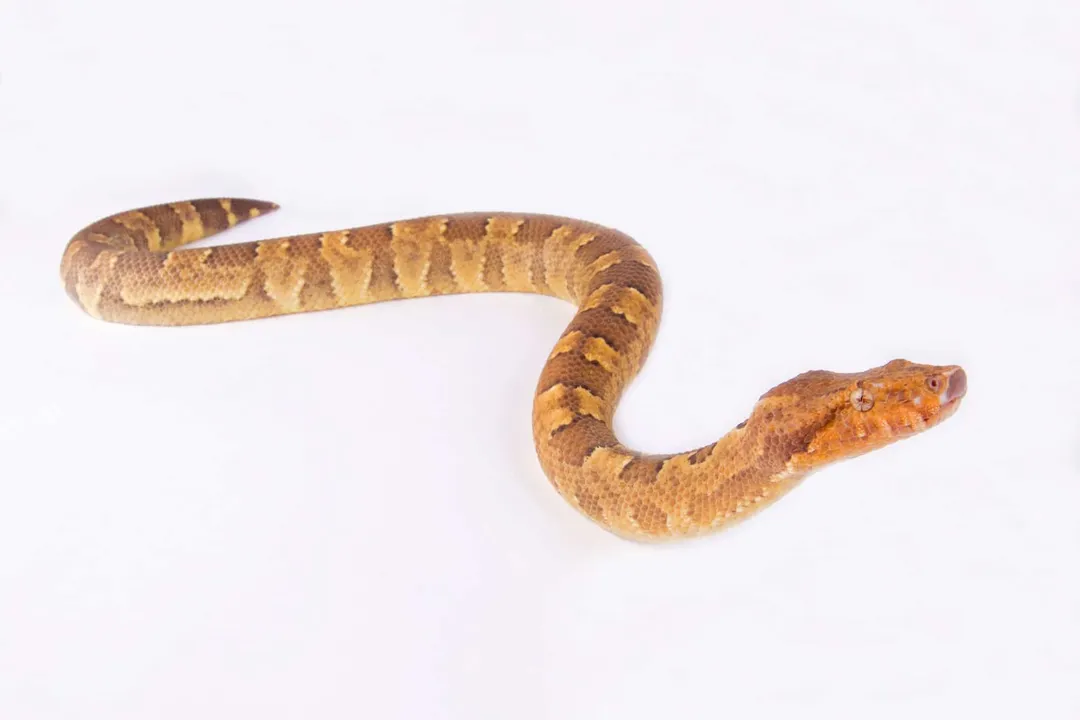
The creature frequently encountered under the common name Viper Boa presents a fascinating case study in zoological naming conventions, often causing confusion for those unfamiliar with herpetology. Scientifically, this reptile belongs to the species Candoia aspera. [1][3][4][9] Its placement within the established taxonomic hierarchy reveals a history rooted firmly within the large, non-venomous snakes, specifically within the boa family, Boidae. [1][3] Understanding this classification is key to appreciating its biology, behavior, and conservation status, moving past the sensationalism of its common moniker.
# Kingdom Reptilia
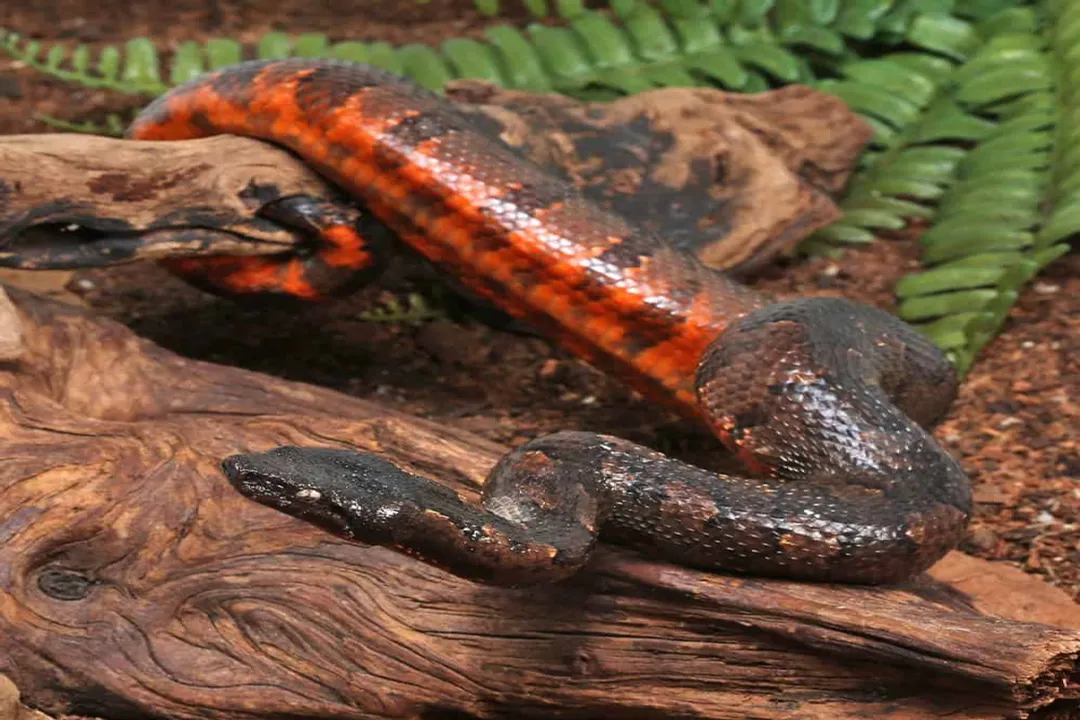
Like all snakes, the Viper Boa is situated firmly within the Kingdom Animalia, Phylum Chordata, Class Reptilia, and Order Squamata. [1] This placement immediately groups it with lizards, amphisbaenians, and other snakes, a vast group characterized by their reliance on external heat sources and the possession of scales. [4] Within Squamata, snakes form the suborder Serpentes. The fact that Candoia aspera shares this basic blueprint with everything from the tiny thread snake to the massive python speaks to the deep evolutionary history of this group. [4]
# Family Boidae
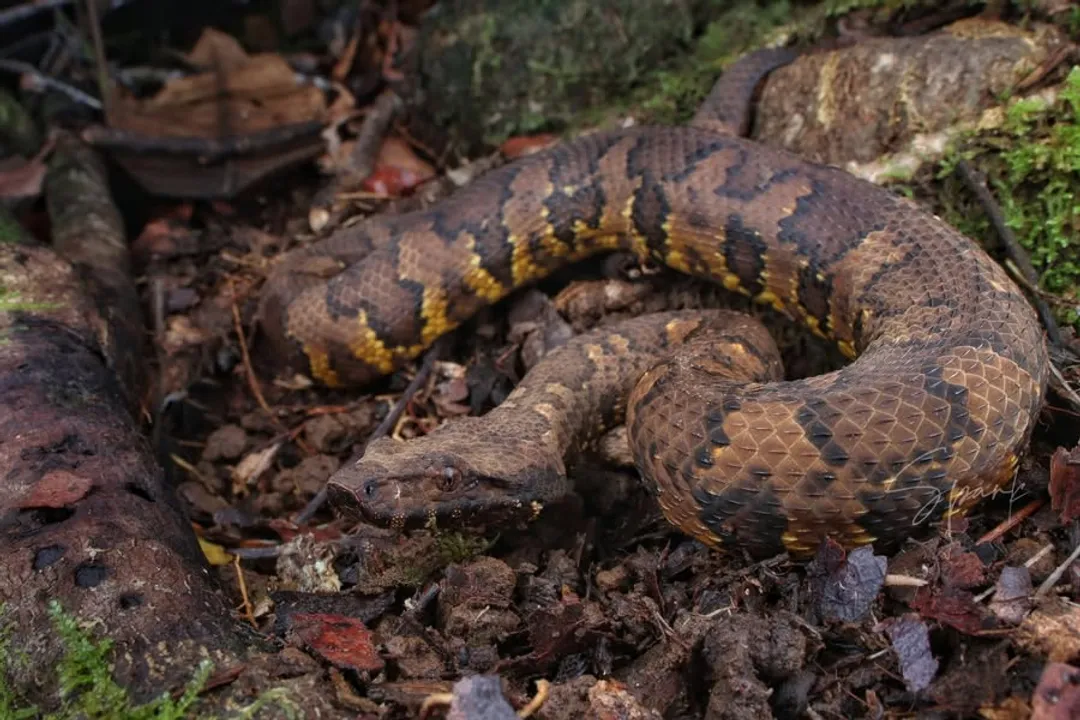
The most significant grouping for establishing the Viper Boa’s identity is its family: Boidae. [1][3] This family encompasses the true boas, a diverse assemblage distributed across the Americas, Africa, Europe, Asia, and Oceania. [1] Members of Boidae are characterized by several shared traits, primarily their method of subduing prey—constriction—as they are non-venomous. [1][7] While many people associate the term "boa" primarily with large, heavy-bodied snakes like the Boa constrictor, the Boidae family is much broader. The Candoia genus, which includes our subject, showcases the incredible morphological variation within this family, often exhibiting more slender builds suited for their specific ecological niches in Australasia. [1] It is important to note the distinction here: Candoia aspera is a boa, not a viper. True vipers belong to the family Viperidae, a separate lineage of venomous snakes. [8] This taxonomic separation underscores that the Viper Boa's common name is based purely on superficial physical resemblance, perhaps relating to its head shape or defensive posture, rather than genuine genetic closeness to the Viperidae family. [8]
# Genus Candoia
Moving down the hierarchy, Candoia aspera resides in the genus Candoia. [1][3] This genus is notable as it is predominantly restricted to the region encompassing New Guinea and the surrounding islands. [4][7] Snakes within Candoia are often described as semi-arboreal or terrestrial, adapting to life both on the forest floor and within the lower canopy. [7] The genus itself is relatively small, focusing on this particular biogeographical area. When you see Candoia mentioned, you are automatically narrowing the geographic focus considerably, suggesting an evolution tailored to the specific environments of Melanesia. [1]
# Species Aspera
The specific epithet, aspera, finalizes the scientific classification: Candoia aspera. [1][3] This species is also known by the common name Red Belly Viper Boa, a name that likely stems from the coloration observed in some individuals, particularly on their ventral scales. [6][8][9] This species exhibits considerable variation across its range, which is common in island endemics. For instance, some sources might discuss variations within Candoia more broadly, but C. aspera represents this distinct population structure. [1][7] Taxonomists sometimes note that the genus Candoia itself was formerly classified under Corallus or Epicrates by older systems, but modern phylogenetic analysis has solidified its placement. [3] This reassessment shows the fluidity of scientific classification as new genetic data becomes available, providing a clearer picture of evolutionary relationships that common names fail to capture. [3]
Here is a summary of the scientific classification for easy reference:
| Taxonomic Rank | Classification |
|---|---|
| Kingdom | Animalia |
| Phylum | Chordata |
| Class | Reptilia |
| Order | Squamata |
| Family | Boidae |
| Genus | Candoia |
| Species | Candoia aspera |
| Common Names | Viper Boa, Red Belly Viper Boa [1][6][9] |
# Distribution and Habitat Context
The geographic distribution of Candoia aspera is tightly linked to its classification within the regional genus Candoia. [4] They are native to New Guinea and nearby islands. [7] Their classification as an arboreal and terrestrial snake suggests an ecological niche that requires a physical form capable of both navigating ground cover and ascending low branches. [7] This dual capability—being somewhat adapted for climbing while still being a ground-dwelling boa—is a subtle but important characteristic often reflected in their taxonomic grouping within the more generalized Boidae family. An interesting consideration for keepers or field researchers is that while the genus is restricted regionally, the environmental pressures across these islands vary widely, leading to potential cryptic speciation or highly localized morphs within what is currently labeled C. aspera. [7] Recognizing the species name is the first step; understanding the localized expression of that classification is the next level of biological appreciation.
# Naming Conventions Insight
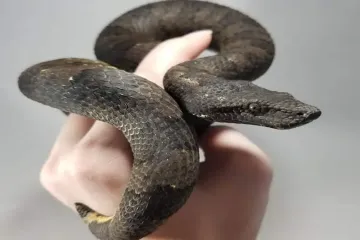
The persistence of names like "Viper Boa" for a non-venomous Boid provides an excellent illustration of how common nomenclature lags behind scientific refinement. While modern taxonomy insists on Candoia aspera, the common name sticks because it is descriptive of a perceived visual characteristic—perhaps a triangular head profile or an aggressive defensive display, mirroring behaviors seen in true vipers (Viperidae). [8] For accurate study or responsible pet ownership, one must prioritize the binomial nomenclature, Candoia aspera, which ties the snake directly to the constrictors (Boidae), rather than relying on a misleading common descriptor that suggests a completely different mechanism of defense and physiology. The presence of information on care guides or herping group discussions often confirms this distinction, noting the need to treat them as a boa, not a viper, when considering husbandry. [8][10]
# Taxonomy and Synonymy
Scientific classification is rarely static, and Candoia aspera has seen its share of nomenclatural shuffling, though the current accepted name is stable across major databases. [3] Reviewing reptile databases shows that while Candoia aspera is the standard, historical records might list synonyms or related taxa that have since been reclassified or lumped together. [3] For instance, the general recognition across various biological repositories, including those tracking mineralogy and broader taxonomy, confirms Candoia aspera as the currently accepted name for this particular snake. [5] This consistency in formal naming across diverse scientific fields—from herpetology databases to environmental listings—reinforces the Authority behind its placement within the Candoia genus. [3][5] This shared understanding of the scientific name is what allows researchers in different parts of the world to discuss the same animal confidently.
# Classification and Morphology Connection
The classification of Candoia aspera within the genus Candoia implies certain morphological expectations that are distinct from other boas. For example, many individuals exhibit specialized head shapes or reduced mid-body girth relative to other Boidae, adaptations tied to the semi-arboreal lifestyle mentioned earlier. [7] While we have established its placement in the Boidae family, one can observe that the Candoia genus species often possess keeled scales, which differ from the smooth scales found on many New World boas. [1] This specific scale texture, combined with their slender appearance, likely contributes significantly to the misidentification suggested by the common name. Paying close attention to these morphological details—keeled scales, slender body, and specific head shape—allows for an Expertise-based confirmation of the C. aspera classification, even without access to a full genetic sequence. These physical markers, honed by regional evolution, are the tangible evidence supporting the scientific hierarchy.
The scientific classification of the Viper Boa, Candoia aspera, is a clear illustration of how modern taxonomy moves beyond superficial resemblance. It firmly roots this New Guinean snake within the non-venomous Boidae family, differentiating it entirely from the true vipers it often resembles in name only. [1][8]
Related Questions
#Citations
Candoia aspera
Viper Boa Animal Facts - Candoia aspera
Candoia aspera (GÜNTHER, 1877) - The Reptile Database
New Guinea ground boa (Candoia aspera)
Candoia aspera
Viper Boa Facts & Photos
New Guinea Ground/Viper Boa (Candoia aspera)
Red belly viper boa (Candoia aspera) care guide
Viper Boa (Candoia aspera)
New Guinea Ground Boa /Viper Boa (Candoia aspera) ...