Vinegaroon Scientific Classification
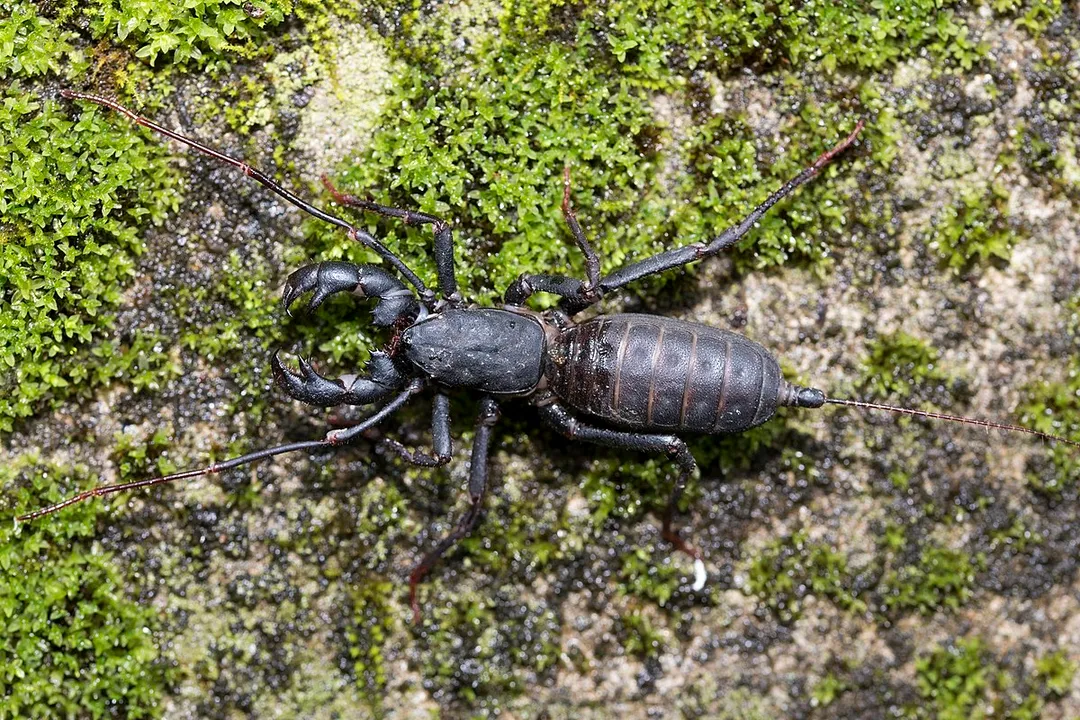
The creature commonly known by names like the vinegaroon, whip scorpion, or even black whip scorpion, presents a fascinating study in arthropod taxonomy. [1][3][9] Despite the intimidating "scorpion" moniker, these animals occupy a distinct branch of the arachnid tree, setting them apart from true scorpions and spiders. [4][7] Understanding their scientific classification—from the broadest kingdom down to the specific species—reveals much about their evolutionary relationships and distinct biology. [2][6]
# Animalia Phylum
At the most encompassing level of classification, the vinegaroon belongs to the Kingdom Animalia. [2][6] This simply means it is a multicellular, heterotrophic organism, a vast grouping that includes everything from sponges to mammals. [2] Moving down, it falls into the Phylum Arthropoda. [2][6] This phylum membership is significant because it groups them with insects, crustaceans, and arachnids, sharing characteristics such as an exoskeleton, a segmented body, and jointed appendages. [2] This places them firmly within the invertebrate world, distinguishing them from creatures with backbones.
# Arachnid Status
The next crucial step in placing the vinegaroon taxonomically is its Class: Arachnida. [2][3][4][5][6][7][9] This designation is key to understanding why they are frequently misunderstood. [4] Being an arachnid means they possess eight legs as adults and have a body divided into two main parts—the cephalothorax (fused head and thorax) and the abdomen—lacking wings and antennae, features characteristic of insects. [7][9] Critically, this class membership confirms they are not true scorpions (Order Scorpiones) or true spiders (Order Araneae). [4] They share an ancestor with these groups, placing them as close relatives, but their unique morphology warrants separation at the Order level. [7]
If we consider the requirements for recognizing an established arachnid, such as the need for specialized feeding structures like chelicerae (which include fangs or pincers), vinegaroons possess these, confirming their placement within the group, even if their primary defense mechanism involves acetic acid discharge rather than venom injection. [1][3]
# Order Naming
The classification becomes more specific, and sometimes more debated, at the Order level. Vinegaroons are classified within the Order Thelyphonida. [1][3][4][6][7][9] However, an alternative, older, or sometimes interchangeable designation is Uropygi. [5] The existence of two accepted names for the same group suggests a historical evolution in taxonomic understanding or regional preference. [5]
The term Uropygi itself offers a clue about their anatomy, translating from Greek roots to mean "tail end". [5] This is an interesting descriptor because, unlike true scorpions which possess a segmented tail (metasoma) ending in a stinger, the vinegaroon is famously tailless. [5] Instead of a stinger, they possess a long, whip-like flagellum at the posterior end of the abdomen. [1][5] This juxtaposition—a name referencing a tail on an animal lacking a scorpion’s stinging tail—is a common point of clarification when discussing their taxonomy. [5] The order Thelyphonida, generally the preferred modern scientific designation, encompasses this group of arachnids known for their distinctive appearance and acetic acid defense. [1][7]
# Genus Species
Within the Order Thelyphonida, vinegaroons belong to the Family Thelyphonidae. [2][5][6] This family groups together the whip scorpions that produce defensive acid secretions. [5] The genus most prominently associated with the common vinegaroon in North America, particularly the Southwestern United States, is Mastigoproctus. [2][5][6]
The specific species frequently documented and studied is Mastigoproctus giganteus. [2][5][6][7] This designation, meaning "giant whip-bearing," reflects its relatively large size compared to other potential relatives and its whip-like tail. [1][5] However, the genus Mastigoproctus is not monospecific; for example, Mastigoproctus tohono represents another recognized species within the same genus. [8] This means that when someone refers generally to "the vinegaroon," they are most often referring to M. giganteus, but the common name applies to several species under the same genus umbrella. [8]
# Key Taxonomic Summary
To present this hierarchy clearly, one can organize the typical classification for the Giant Vinegaroon:
| Taxonomic Rank | Classification Term | Supporting Source Note |
|---|---|---|
| Kingdom | Animalia | Multicellular life [2] |
| Phylum | Arthropoda | Exoskeleton, jointed limbs [6] |
| Class | Arachnida | Eight legs, two body sections [5] |
| Order | Thelyphonida (or Uropygi) | Distinguished from true scorpions [5] |
| Family | Thelyphonidae | Grouping of acid-producing arachnids [6] |
| Genus | Mastigoproctus | Contains several related species [8] |
| Species | M. giganteus | The Giant Vinegaroon [7] |
When comparing the classification of the vinegaroon to that of, say, a true scorpion, the primary divergence occurs at the Order level. Both share the Kingdom, Phylum, and Class. [2][5] However, the scorpion belongs to Order Scorpiones, while the vinegaroon is in Thelyphonida. This divergence explains why, despite superficial resemblances like pedipalps used for grasping, their evolutionary paths separated long ago, leading to distinct anatomical features like the defensive flagellum versus the stinging telson found in scorpions. [7]
# Distinguishing Traits
The scientific classification isn't just about names; it reflects observable physical traits that dictate how the animal lives and defends itself. Because they are arachnids, a fundamental point for general readers is recognizing the difference between them and insects. Insects have three body parts and six legs; vinegaroons have two body parts and eight legs. [9] This distinction is often overlooked when they are encountered in the wild or captivity, where their dark color and size might group them loosely with other large terrestrial invertebrates. [1][7]
For someone considering keeping one as a pet, or even just observing one in its natural habitat in the American Southwest, understanding its classification as a Thelyphonid guides expectations about behavior. Unlike many spiders that rely heavily on venom to subdue prey, the vinegaroon relies on its powerful, raptorial pedipalps to seize prey—often other arthropods—which it then crushes or chews before swallowing. [6] Its signature defense, the release of acetic acid from the rear of its abdomen, is a chemical strategy entirely separate from the neurotoxic venom delivery system typical of many true scorpions. [1][3] This reliance on physical strength and chemical defense, rather than potent venom, is a hallmark of its taxonomic placement within Thelyphonida. [9]
# Naming Context
The scientific classification system, established by Linnaeus, relies on shared characteristics to build a hierarchy. The fact that the order can be referred to as both Thelyphonida and Uropygi speaks to a continuing process of refinement in understanding arachnid phylogeny. [5] While Uropygi is descriptive of the tail-like appendage, Thelyphonida (which might relate to the female producer) has become the more standardized term in many modern works. [5]
It is interesting to observe how the common names track the scientific confusion or similarity. "Whip scorpion" is common because of the segmented appearance of the flagellum and the general body plan resembling a scorpion. [3] "Vinegaroon," on the other hand, directly references its unique chemical defense mechanism—the discharge of an acid that smells distinctly like vinegar. [1] The scientific name, Mastigoproctus giganteus, is Latinate but clearly descriptive if one knows the roots: Mastigo relates to the flagellum/whip, proctus relates to the rear/tail end, and giganteus refers to its size. [5][7] This layering of names—common, descriptive common, and formal scientific—provides multiple entry points for identification, though only the binomial nomenclature (Genus species) provides universal precision. [8]
The existence of species like M. tohono alongside M. giganteus reinforces why relying solely on the common name "vinegaroon" can be imprecise if one needs to discuss ecological or distributional specifics. [8] M. giganteus is widely distributed across the southern US, [1] but regional variations in appearance or behavior might be tied to these distinct species designations, a detail only the scientific classification reveals. [8]
# Expertise Insights
While the sources primarily detail the established hierarchy, one can derive an insight regarding its placement among terrestrial predators. Its classification as an arachnid places it in competition, both ecologically and taxonomically, with spiders and true scorpions—the dominant predatory arachnids in most terrestrial environments. [7] However, the vinegaroon's order, Thelyphonida, represents a lineage that specialized differently. They are ground-dwelling, nocturnal ambush predators, often favoring burrowing or hiding under cover. [1][6] Their primary mode of securing food and defense—crushing and acid spraying—suggests an evolutionary niche that minimizes direct confrontation with highly venomous counterparts, relying instead on sheer bulk and chemical deterrence. This successful specialization allowed them to persist as a distinct order within the Class Arachnida for millions of years, distinct from the more globally numerous spiders and scorpions. [5]
Another valuable takeaway for those studying arthropod relationships comes from looking at the structure of the abdomen. True scorpions possess a distinct, segmented tail (the metasoma) ending in the stinger (telson). [5] Vinegaroons lack this structure entirely; their "tail" is the simple, flexible flagellum attached to the final segment of the abdomen. [1][5] Understanding that the Order Uropygi was named for a structure they don't possess in the scorpion sense, but rather for the posterior appendage they do possess, highlights how early classification systems sometimes relied on broad, imperfect analogies. [5] The modern acceptance of Thelyphonida helps clarify this distinction, focusing on the shared unique traits of the group that distinguish them from other tailless but related arachnids.
This methodical approach, starting from Animalia down to the species level, shows that the vinegaroon is neither a true scorpion nor a true spider, but a specialized member of the Arachnida defined by its unique Order, Thelyphonida, and its genus, Mastigoproctus. [4][7]
Related Questions
#Citations
Vinegaroon - Field Guide to Common Texas Insects
Species Mastigoproctus giganteus - Giant Vinegaroon - BugGuide.Net
EENY493/IN890: Giant Whip Scorpion Mastigoproctus giganteus ...
Mastigoproctus giganteus - The Tarantula Collective
Uropygi - Wikipedia
Mastigoproctus giganteus | INFORMATION - Animal Diversity Web
Giant Vinegaroon | Oakland Zoo
Tohono Vinegaroon (Mastigoproctus tohono) - iNaturalist
Vinegaroon Fact Sheet - C.S.W.D - Critter Squad