How strong was Thylacoleo's bite?
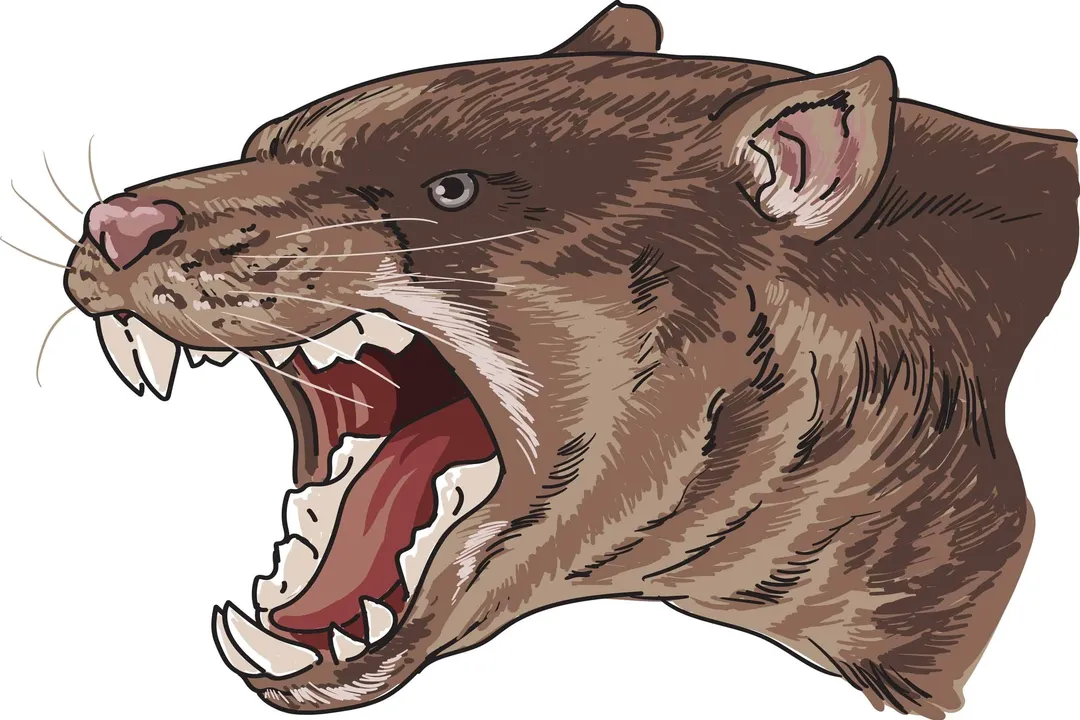
The sheer power contained within the jaws of Thylacoleo carnifex remains one of the most fascinating aspects of Australian megafauna. This extinct apex predator, often nicknamed the marsupial lion, possessed a bite force that challenged, and perhaps even surpassed, any mammal known to science, relative to its body size. [4] Understanding just how formidable this bite was requires looking beyond simple measurements and examining the skeletal evidence and the results of its predatory actions.
# Skull Structure
The anatomy of the Thylacoleo skull provides the first clue to its crushing power. Unlike modern cats which rely on long, slicing canines, Thylacoleo featured relatively short canines but possessed incredibly massive, specialized premolars. [1] These teeth, sometimes described as blade-like or shearing teeth, were reinforced and adapted for delivering immense pressure. [5] The architecture of the skull itself suggests a unique mechanical advantage, allowing the animal to channel significant muscular force directly into the bone. [1] The structure hints at an evolutionary specialization focused purely on securing and dispatching prey with overwhelming crushing power, rather than the quick, deep puncture bites typical of the Felidae family. [7]
# Bite Force Estimates
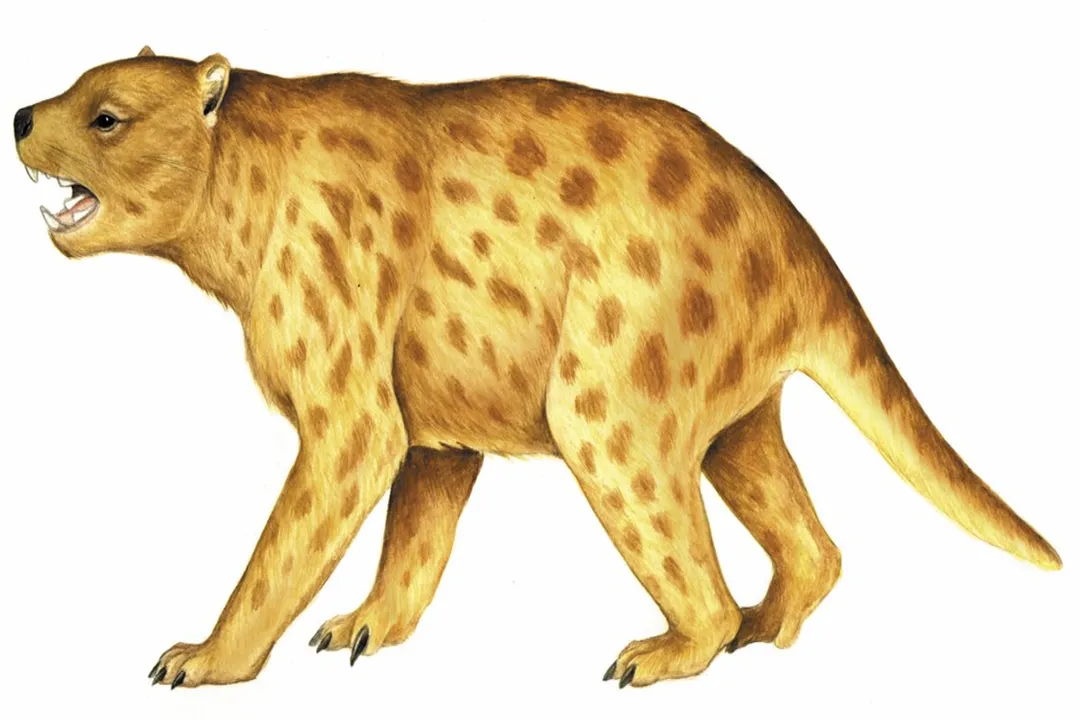
Quantifying prehistoric bite force is challenging, relying on biomechanical modeling based on fossil remains and comparisons with living relatives. Despite these hurdles, estimates for Thylacoleo place its bite force among the strongest ever recorded for a terrestrial mammal. [4] Some analyses suggest a bite force far exceeding that of a modern lion, perhaps even rivaling the bone-crushing capabilities often attributed only to hyenas. [4]
When these estimated forces are scaled against the animal's size—Thylacoleo was roughly the size of a jaguar or a large leopard, weighing perhaps up to 130 kilograms—the resulting bite pressure becomes extraordinary. [2][7] The ratio of bite force to body mass is a critical metric, and it is here that Thylacoleo truly sets itself apart. [4] While a lion might generate impressive sheer force, Thylacoleo's bite, delivered through its specialized jaw mechanics, exerted a significantly higher relative pressure on its target. [7] Imagine an animal the size of a jaguar delivering a bite measured against an animal three times its weight—that is the level of mechanical efficiency suggested by the fossil record. [4]
# Predatory Implications
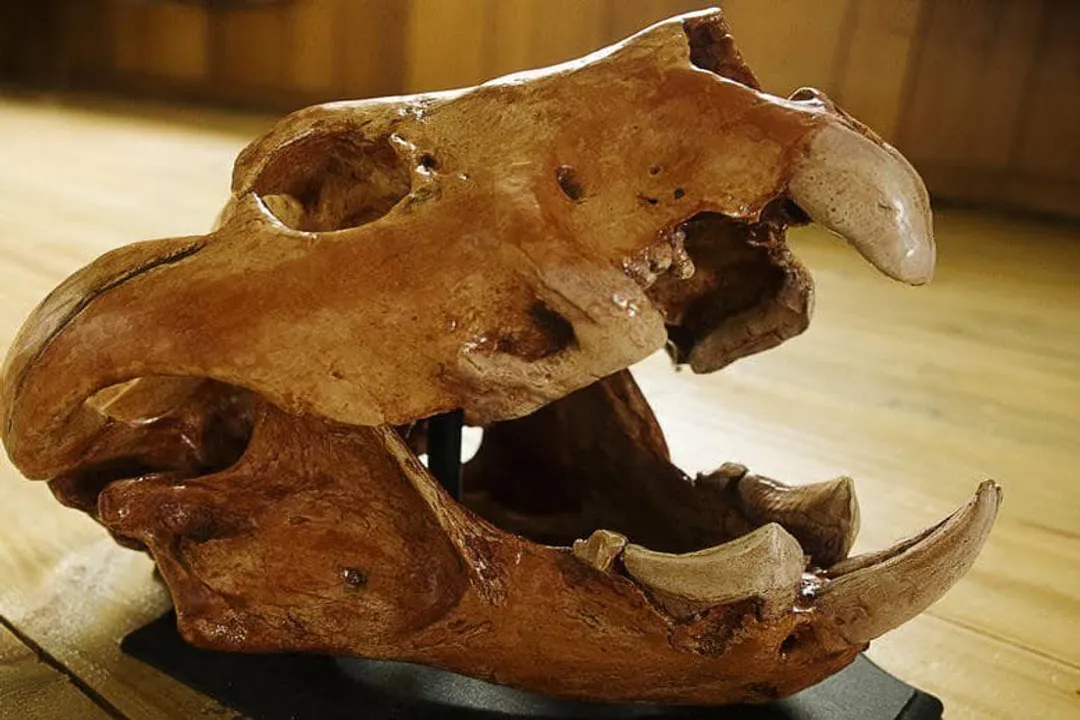
The nature of this bite dictates what Thylacoleo could consume and how it killed. The specialized, robust teeth were not merely for shearing meat; they were designed for fracture and puncture of dense material. [1] Evidence from the fossil record strongly supports this interpretation.
Trace fossils—actual bite marks preserved on fossilized bones—offer undeniable proof of this capability. [6] For instance, damage found on the calcaneus (heel bone) of a Macropus species (a large kangaroo or wallaby relative) shows clear evidence of being crushed by a Thylacoleo bite. [6] A bite mark indicating bone was shattered or deeply indented speaks to a force level far exceeding what is required just to sever muscle and skin. [6] This suggests Thylacoleo could likely access nutritious marrow by breaking into the thick limb bones of its prey, a behavior uncommon in many contemporary carnivores that focus on softer tissues. [6] This ability to exploit the entire carcass provides a significant dietary advantage, especially when facing large, powerful herbivores like giant wombats or juvenile diprotodontids. [2]
# Comparative Strength
To place the Thylacoleo bite in context, one must compare it to other powerful mammals, both extant and extinct. While specific figures vary between studies, the recurring theme is that Thylacoleo punched above its weight class. [7]
If we consider a hypothetical comparison where the bite force is normalized by mass, Thylacoleo appears to sit at the extreme upper end of mammalian biting performance. [4] For example, if a modern male lion weighs around 190 kg and exerts a certain force, Thylacoleo, weighing perhaps half that, could potentially match or exceed that force, leading to a vastly superior force-to-mass ratio. [2] This is analogous to comparing the acceleration of a small sports car to a large truck; both might reach impressive speeds, but the smaller vehicle achieves it with far greater efficiency relative to its engine size. [7]
The comparison often extends to apex predators across the globe, including bears and large felids, confirming that this marsupial was built to dominate the Miocene and Pleistocene Australian environment. [2][5] Some research even suggests its bite was the most powerful ever recorded among mammals, period, highlighting its unique evolutionary path. [4]
One interesting way to visualize this is by considering the material it targeted. A typical modern predator might struggle to pierce the thick scapula or pelvis of a large macropod. [6] Thylacoleo's bite, however, seems calibrated precisely to defeat such defenses, perhaps indicating that its typical prey was heavily built and relied on dense skeletal structure for protection. [2]
# Calculating Relative Pressure
While exact force figures are modeled, we can establish a conceptual comparison. If we assign a relative bite force unit (BFU) of 100 to a large modern predator of similar skull architecture (ignoring true scaling laws for a moment to illustrate the point), Thylacoleo is consistently modeled to have a BFU of well over 100 relative to its smaller mass. [7] This implies that the mechanical advantage gained through its jaw musculature and the fulcrum provided by its skull structure translated an average muscle contraction into exceptional output force at the teeth. This required an unusually dense bone structure in the lower jaw and skull to withstand the internal stresses generated during the strike. [1]
# Specialized Dentition
The specialized teeth are central to the bite's effectiveness. Thylacoleo did not rely on the puncturing and tearing associated with carnassial shearing in placental carnivores. [7] Instead, the massive, deeply rooted upper and lower premolars acted as bone-crushing shears or heavy-duty nutcrackers. [1][5]
These teeth were positioned to maximize the leverage created by the strong temporalis muscles attaching to the deep, prominent sagittal crest on the skull. [1] This setup allowed the animal to clamp down with devastating effect. [5] It is often thought that Thylacoleo used these specialized teeth to sever the spine or crush the skull of its prey, making a quick kill by destroying the central nervous system or stopping respiration instantly. [2][7] This contrasts sharply with the typical strategy of many large predators which subdue prey through prolonged grappling and exhaustion. [7] The bite itself was the primary weapon, designed for finality. [5]
# Evolutionary Context
The dominance of Thylacoleo in the Australian Pleistocene ecosystem is a testament to its specialized hunting method. [2] When examining the fossil record, it is clear that Australia's megafauna presented unique defensive challenges. [2] Large herbivores, such as the bulky diprotodontids or the heavily muscled kangaroos, required a predator capable of delivering lethal trauma quickly, without engaging in lengthy physical contests that might result in injury to the predator. [2]
The evolution of such a specialized bite in a marsupial highlights convergent evolution—where unrelated species develop similar traits to solve similar environmental pressures. [7] While placental carnivores like lions and hyenas evolved powerful bites and shearing carnassials, Thylacoleo evolved a marsupial solution using highly modified premolars, demonstrating parallel evolutionary success in securing the apex predator niche. [7] This entire structure, from crest to tooth, represents a specialized, high-pressure impact weapon, rather than a general-purpose gripping and tearing apparatus. [1]
The presence of these specialized killing tools suggests an environment where thick hides, dense muscle, or robust bone structure were the norm for prey items. [6] Thylacoleo's bite was not just strong; it was surgically powerful against the toughest available targets in its habitat. [2]
# Bite Mechanics Revisited
Analyzing the jaw mechanics reveals why the force was so concentrated. The jaw musculature, inferred from the large attachment sites on the skull, would have provided tremendous closing power. [1] However, the real advantage came from the leverage provided by the jaw articulation relative to the massive premolars. This configuration created a mechanical environment where the force delivered at the teeth was magnified considerably beyond the raw muscular output. [7]
This magnification means that while the absolute bite force might be statistically lower than, say, a massive extinct bear, the effective force applied to a specific area (like the base of the skull or a major limb bone) was probably higher than any other mammalian carnivore known, leading to that claim of having the strongest bite of any mammal ever recorded. [4] This is a crucial distinction: absolute maximum force versus targeted, pressure-based lethality. [7]
The fossilized bite marks, like those seen on the Macropus heel bone, show a deep impression indicative of crushing, not just scraping or slicing. [6] A mere slicing tooth would leave gouges; the Thylacoleo left craters, requiring pressure that implies the animal could punch through defense barriers that would stop a modern leopard cold. [6] If we consider the energy required to fracture a large kangaroo's tarsal bone, the required force, even delivered over a short distance, is enormous, perfectly matching the biomechanical models derived from the skull. [1][5] This confluence of morphological data and trace evidence solidifies the picture of an animal whose primary weapon was pure crushing impact. [6]
The sheer power of this bite cemented Thylacoleo carnifex not just as a fearsome predator, but as an extreme outlier in mammalian biting specialization, leaving behind a legacy written in fractured bone across the ancient Australian landscape. [2][6]
Related Questions
#Citations
The Marsupial Lion (Thylacoleo carnifex) skull, which was capable ...
Thylacoleo carnifex - The Australian Museum
This Animal Had the Strongest Bite Force of Any Mammal Ever
Thylacoleo | Dinopedia | Fandom
Thylacoleo carnifex - the "marsupial lion" | Domain Of The Bears
Thylacoleo, the Incredible Marsupial Lion - Tetrapod Zoology
One of my favourite prehistoric animals, Thylacoleo carnifex. Pound ...
Macropus sp. calcaneus bitten by Thylacoleo carnifex | VAMP