How strong was Gastornis' bite?
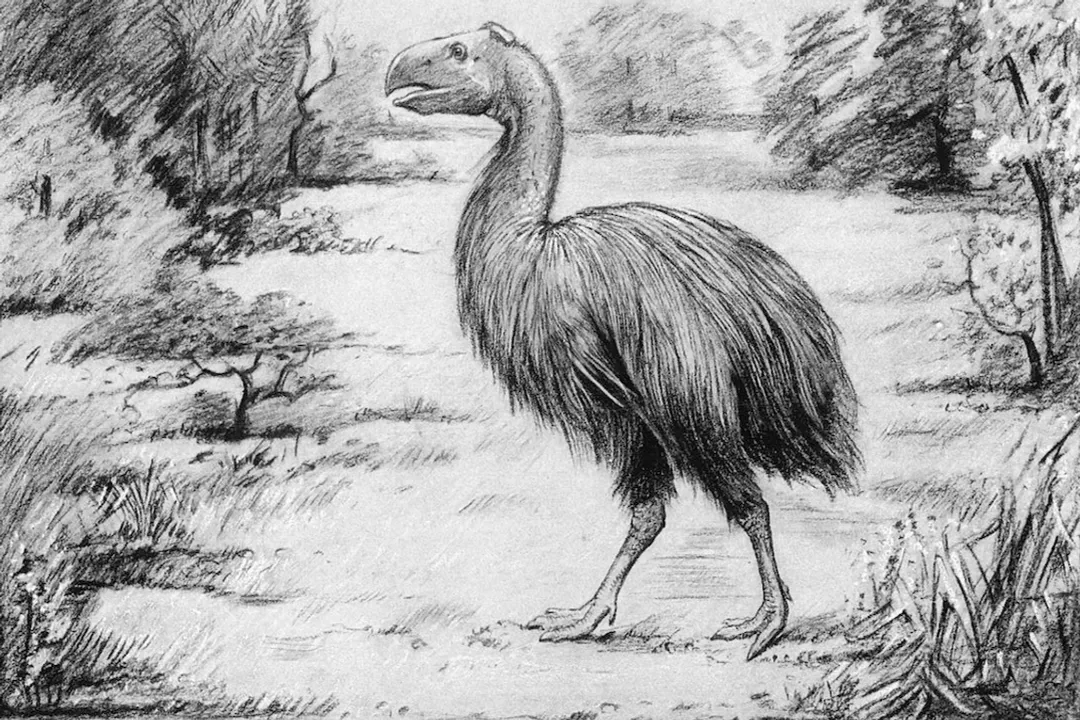
The imposing figure of Gastornis, often conjured with images of the fearsome Diatryma, immediately raises questions about its power, particularly concerning its massive, seemingly predatory beak. This extinct, flightless bird, roaming the Earth during the early Cenozoic Era, possessed a skull structure unlike anything alive today, leading paleontologists for decades to assume it wielded a devastating bite capable of crushing bone or dispatching small mammals. However, modern research into its morphology and the context of its environment paints a much more nuanced, and perhaps less violent, picture of its capabilities.
# Beak Structure
The most defining feature of Gastornis is undoubtedly its enormous beak, which could reach lengths exceeding 45 centimeters in some specimens. This structure was deep, tall, and curved downward at the tip, giving it an appearance reminiscent of a giant raptor or a powerful parrot. For a long time, this sheer size was taken as direct evidence of extreme crushing or tearing power, leading to its popular depiction as a terrifying ground predator, sometimes even suggested to have hunted the contemporary small horses.
When examining the fossil record, scientists look for clues about function imprinted on the bone itself. While mammals leave behind clear signs in tooth wear patterns, avian morphology relies on muscle attachment points and the shape of the keratin sheath that would have covered the bone. The large size suggested an equally large, powerful set of jaw muscles needed to operate it.
# Re-evaluating Function
The narrative surrounding Gastornis underwent a significant shift as paleontologists moved away from equating sheer size with predatory aggression in all prehistoric fauna. The initial assumption was based on analogy with modern carnivorous birds, but the internal structure of the beak suggests a different specialization.
Studies focusing on the biomechanics of the beak have indicated that its structure was less suited for the shearing or puncturing necessary for tearing flesh or crushing thick bone than its profile first suggested. Instead, the robust, deep nature of the beak appears to have been optimized for applying significant, sustained pressure across a broad surface area, a mechanism better suited for processing tough, fibrous, or hard-shelled food items. This understanding has led to a strong consensus among many researchers that Gastornis was primarily herbivorous or perhaps frugivorous.
The bird's teeth, or rather the lack thereof, further support this dietary change. As a bird, it possessed no true teeth, relying entirely on the beak and the gizzard for processing food. A diet consisting of softer vegetation, fruits, or large, hard seeds aligns much better with the observed morphology than a life spent actively hunting and killing large prey.
# Force Comparison
While direct, fossil-based measurements of the actual bite force for an extinct animal are almost impossible to obtain in the way one might measure a living crocodile, inferences must be drawn from known analogues and material science. If we consider the hypothetical scenario where the beak was used for cracking very hard nuts or seeds—a behavior seen in modern macaws or some large parrots—the required force is substantial but focused differently than in a predator. Seed crushing requires a high degree of compressive strength applied rapidly.
A predator’s bite, such as a theropod dinosaur or a large mammalian carnivore, is designed for penetrating hide, severing muscle, and potentially breaking bone, requiring shear strength and the ability to withstand tensile forces as the animal shakes its prey. The morphology of the Gastornis beak does not seem adapted for these shearing actions; the structure appears too blunt and deep for fine, slicing work.
If we were to estimate the necessary force to crack a truly enormous, tough Paleogene seed—perhaps one the size of a large grapefruit with a shell several millimeters thick—the localized pressure applied by that massive beak would have been formidable. While we lack the specific Newtons or pounds-force figure, the implication is that the maximum compressive load exerted by the jaw muscles would have been high, perhaps comparable to the maximum bite force generated by a very large modern bird of prey, but distributed over a much wider, blunter surface. This contrasts sharply with the concentrated, sharp force of a raptorial claw or tooth.
| Hypothetical Food Item | Primary Stress Required | Implied Bite Action | Supporting Evidence |
|---|---|---|---|
| Small Mammal (Old Theory) | Shear, Puncture | Tearing flesh, crushing bone | Beak Size (visual analogy) |
| Large, Hard Seed | High Compression | Crushing/Splitting | Beak depth and broad surface area |
| Soft Fruit/Leaves | Low Force, Grasping | Shearing/Stripping | Lack of sharp cutting edges |
The challenge in paleobiomechanics is often distinguishing between capability and necessity. Gastornis could likely generate a significant amount of force based on its muscle mass estimates and sheer size, but the fossil evidence now steers us toward interpreting that force as being directed toward phytophagy rather than zoophagy.
# Environmental Context
Understanding the food web of the early Cenozoic is crucial context for assessing bite strength. Following the extinction of the non-avian dinosaurs, the world opened up niche opportunities for birds and mammals. Gastornis occupied a world where vegetation was abundant, and while small mammals existed, the giant bird likely occupied an ecological role that did not require it to compete directly with specialized mammalian predators or seek out large, actively defensive prey.
The sheer metabolic cost of maintaining such a large body, estimated to weigh hundreds of kilograms, means that an inefficient, high-energy hunting lifestyle would have been difficult to sustain compared to a more reliable, plant-based diet. A creature relying on sporadic, high-risk hunts (like tackling early ungulates) would face significant risks of injury that a plant-eater could avoid. Furthermore, considering that the largest surviving flightless birds today, like ostriches and emus, are herbivores, the evolutionary precedent for a gigantic, ground-dwelling avian favors a vegetable-based diet when resources allow. The environment of the Paleogene provided ample flora to support this lifestyle.
This realization—that the most visible evidence of power (the beak) might have been repurposed for a "gentler" role—is a recurring theme in paleontology, where morphological signals can often be misleading when divorced from functional context. The strength was there, but the application was likely one of brute-force processing of plant matter rather than active predation on animals comparable to its own size.
# Analyzing Tool Use
When we look at the evolution of tools, we see a principle: the tool’s final form reflects its most common job. If Gastornis primarily ate seeds, its beak acted as a massive nutcracker. This is fundamentally different from the mechanical action of a hyena chewing bone or a hawk tearing meat. The compressive force would have been applied through a slow, powerful squeeze, ensuring the internal contents were accessed, rather than a quick, sharp strike designed to sever tissue.
This distinction highlights a critical analytic gap in paleontology: without direct fossil evidence of the keratin sheath or any preserved gut contents, we are forced to use the structure to reverse-engineer the type of force, not the absolute magnitude. We can say it was built for high compression but not high shear. It is the difference between using a hydraulic press to crack a walnut and using a pair of scissors to cut paper; both involve significant force application, but the mechanical geometry dictates their effective use. This is a key takeaway for anyone studying extinct megafauna: massive size doesn't automatically equate to the type of aggressive power we often ascribe to large animals based on modern, predatory archetypes.
# Conclusion
The question of how strong the Gastornis bite truly was remains answered by educated inference rather than direct measurement. The intimidating, enormous beak, once seen as the weapon of a dinosaur-era holdover predator, is now largely understood as a specialized tool for processing tough plant material, likely large seeds or fibrous vegetation. It possessed the bone structure to withstand substantial mechanical stress, but this stress was likely directed at crushing the tough exterior of plants rather than the sinew and bone of small horses. Therefore, while its bite was undoubtedly strong in terms of pure compressive power needed to process its diet, it was likely not the tearing, lethal bite previously imagined.
Related Questions
#Citations
Gastornis - Wikipedia
Research suggests terror bird's beak was worse than its bite - Phys.org
Gastornis | Dinopedia - Fandom
Remember time when gastornis was considered as scary & powerful ...
Gastornis - Prehistoric Wildlife
For decades, Diatryma's large beak led scientists to believe this 56 ...
Giant Prehistoric Bird Crushed Seeds, Not Little Horses
Terror bird's beak was worse than its bite - ScienceDaily
'Terror bird' was scary-looking vegetarian (ABC News in Science)
Quick Bite Field Guide: Terror Bird or Gentle Giant? - Past Time Paleo