What are the adaptations of a grey seal?
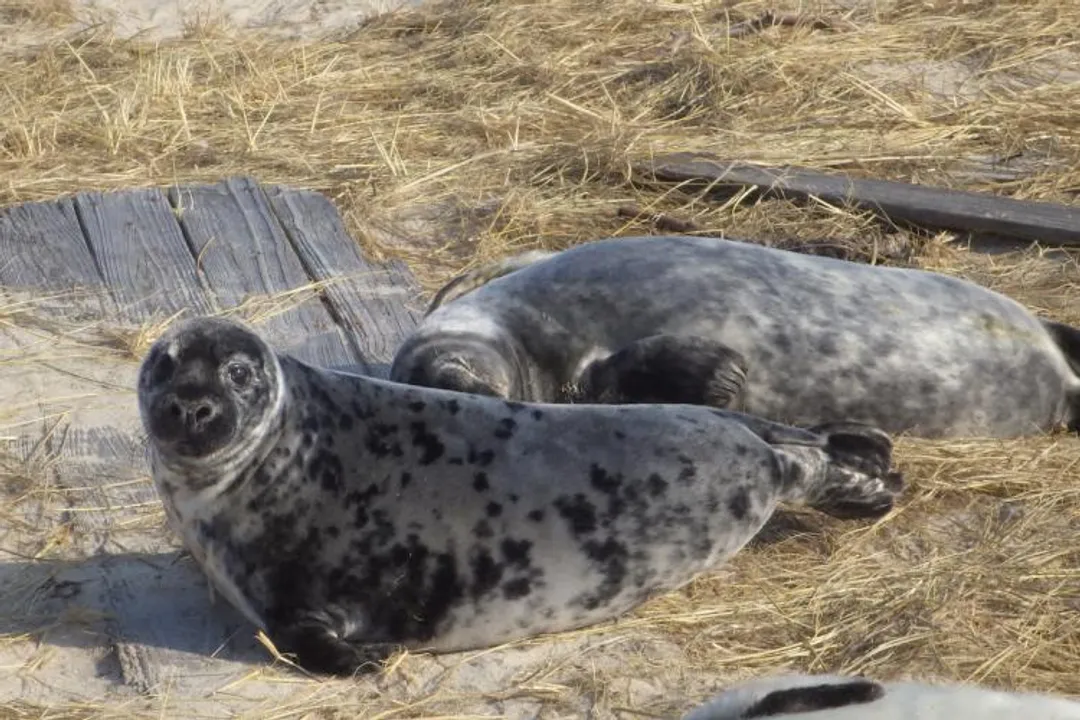
The grey seal, Halichoerus grypus, is a magnificent marine mammal whose very existence depends on a suite of remarkable physical and physiological adjustments allowing it to thrive across cold, often turbulent coastal waters of the North Atlantic. [1][7] These animals are equally at home resting on rocky shores or icy floes as they are foraging in the deep, dark ocean depths, presenting a fascinating study in dual-environment survival. [2][4] To manage this contrasting lifestyle, their bodies are equipped with specific engineering solutions for warmth, movement, and oxygen management. [5]
# Anatomy
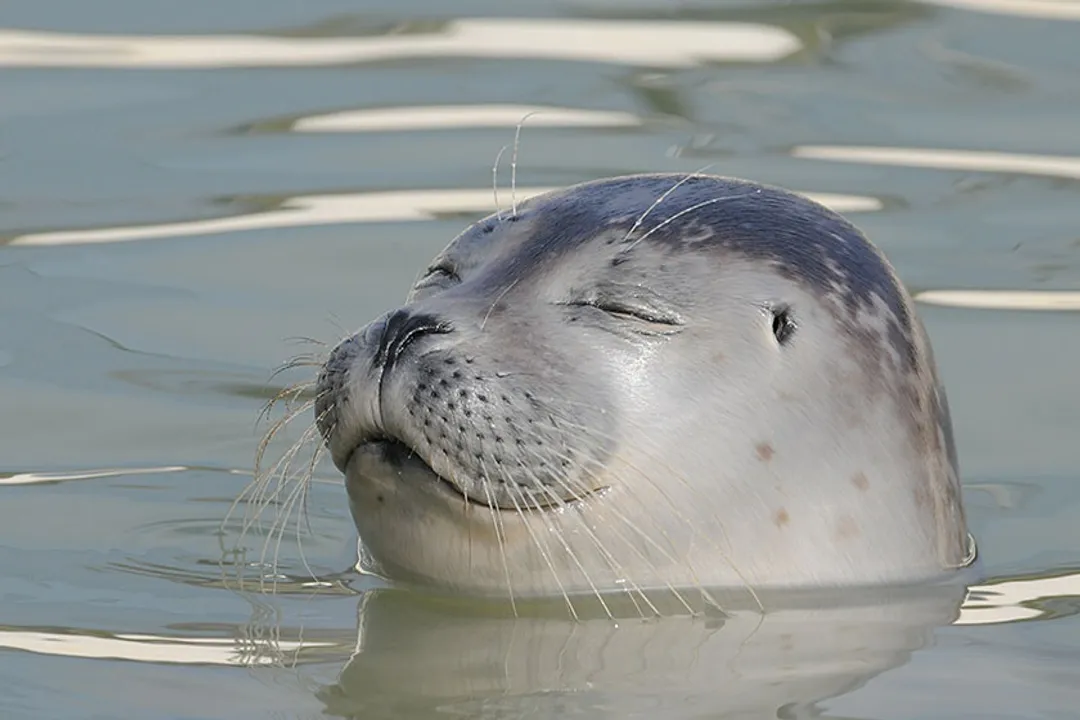
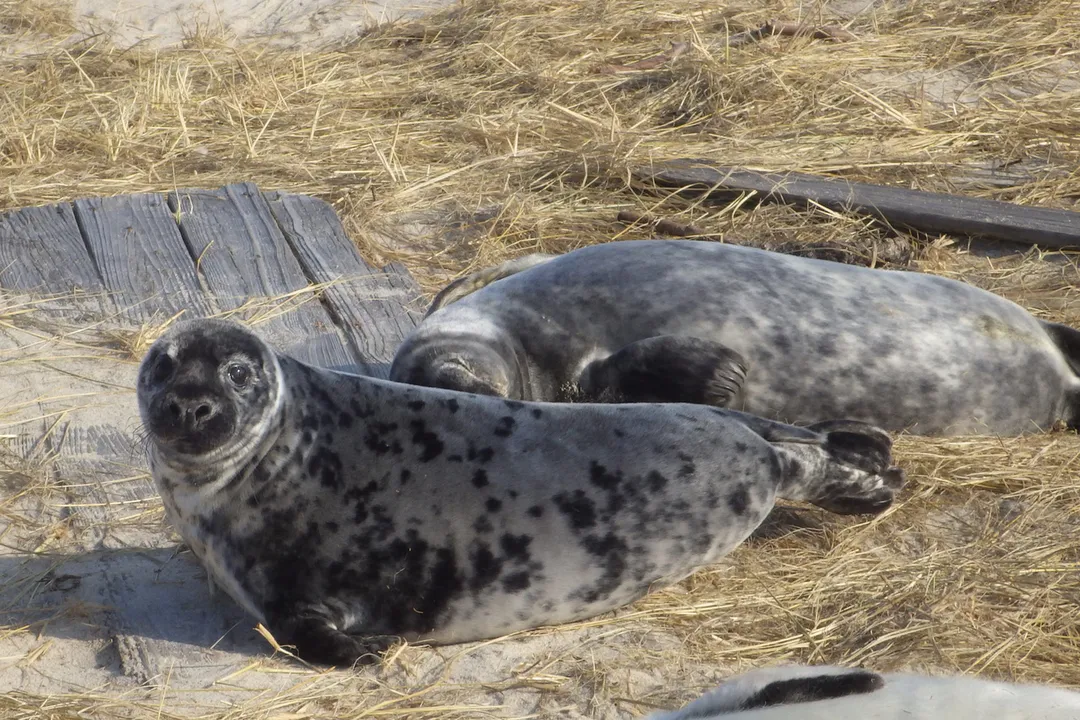
The physical structure of the grey seal immediately signals its aquatic nature. They possess a torpedo-shaped body, minimizing drag as they move through the water, supported by strong, paddle-like fore-flippers used primarily for steering, while the hind flippers work in tandem as the main propulsive force. [2] Adult males are noticeably larger than females, a trait known as sexual dimorphism, with bulls sometimes weighing over 300 kilograms and reaching lengths up to three meters, whereas females typically top out around 150 kilograms and two meters. [1][7] This size difference often becomes apparent during the breeding season when males compete fiercely. [7]
Their coat is dense and water-repellent, crucial for repelling the chilling sea spray and water when hauled out or swimming near the surface. [3] The coloration is usually a mottled pattern of grey, silver, or black, offering excellent camouflage against the complex backdrop of rocky coastlines, kelp beds, and sandy shores where they frequent haul-out sites. [7] Beneath this protective fur lies a thick layer of blubber, which serves two vital, interconnected purposes: insulation against the frigid water temperatures and energy storage for long fasting periods during breeding or migration. [1][3] If you consider a typical adult male, the sheer volume of this insulating fat layer is key to maintaining a stable core temperature, far exceeding what only fur could manage in near-freezing conditions. [6]
# Deep Dives
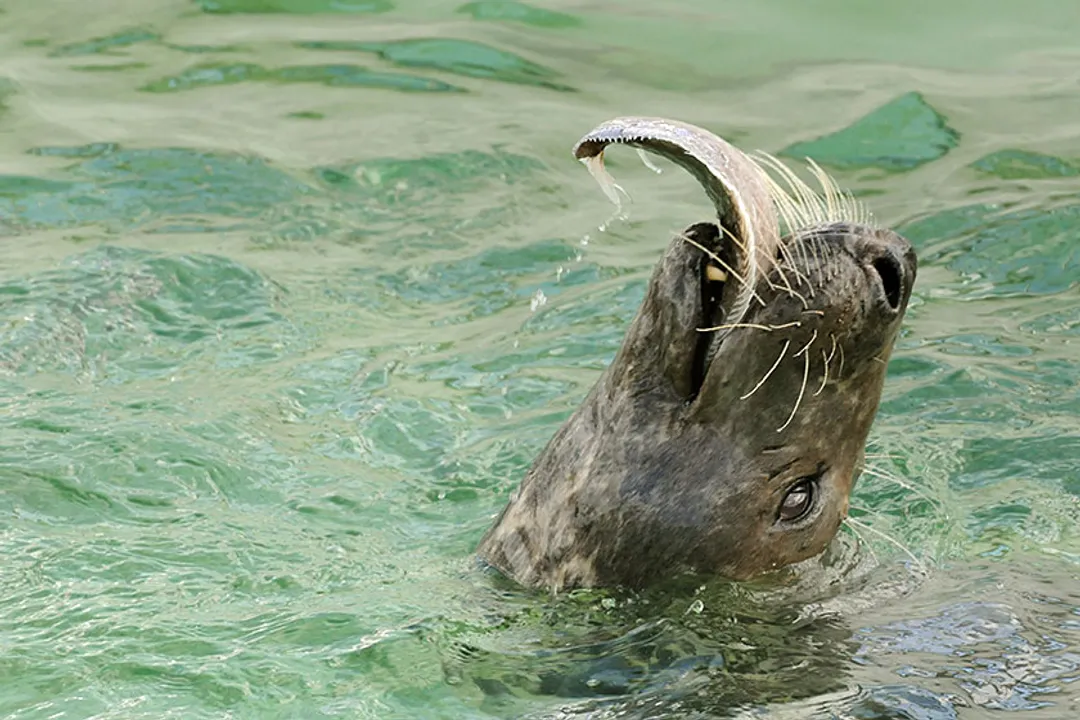
Perhaps the most dramatic adaptations relate to their ability to function without breathing while submerged. Grey seals are capable divers, routinely reaching depths exceeding 70 meters, though they are generally found foraging closer to the surface. [4] To maximize their time underwater, they rely on physiological tricks that conserve precious oxygen stores, which are surprisingly concentrated in their blood and muscles rather than their lungs. [5]
When a seal initiates a dive, an immediate and dramatic response occurs in the cardiovascular system. The heart rate slows significantly—a phenomenon called bradycardia—dropping from a typical resting rate of about 100 beats per minute down to perhaps fewer than 10 beats per minute. [5] Simultaneously, peripheral vasoconstriction kicks in, constricting blood vessels leading to the extremities and non-essential organs, such as the digestive tract and skin. [5][6] This shunts the oxygen-rich blood exclusively to the most vital areas: the brain and the heart itself. [5] This controlled rationing system is far more sophisticated than simply holding one's breath; it's a systematic shutdown of non-essential functions to guarantee survival until the next surfacing. For instance, while a human runner might experience a slight slowdown in heart rate under intense exertion, the seal’s controlled metabolic suppression during a dive is an active adaptation to an oxygen-deprived environment. [6]
# Sensory Tools
Life underwater, especially when hunting for fish and squid in low-light conditions, demands superior senses. While their large eyes are adapted for both air and water vision, they excel underwater. [8] Underwater, their pupils can open extremely wide, almost filling the eye, allowing maximum light capture in the gloom of deeper foraging zones. [8] Above water, they can contract their pupils into a distinctive, narrow slit shape, which protects the sensitive retina from the brighter conditions on land or near the surface. [8]
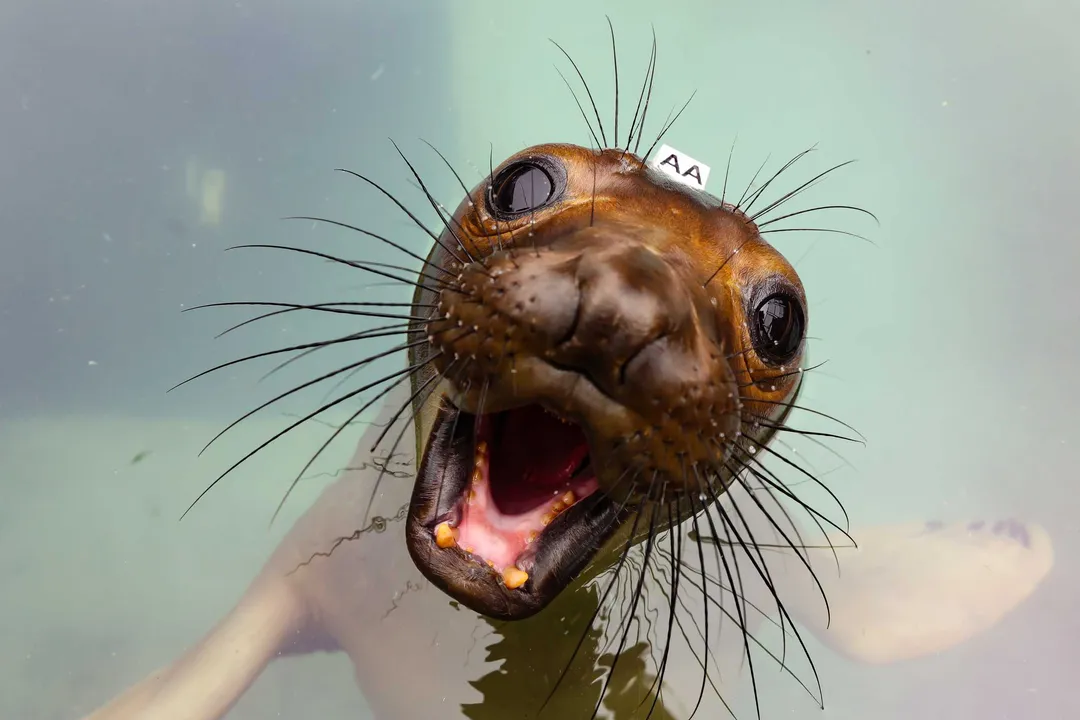
However, their tactile sense often proves more important than sight when actively hunting. Grey seals possess highly sensitive whiskers, or vibrissae, which are specialized hairs rooted deeply in their muzzle. [8] These whiskers are not just for feeling objects; they are incredibly adept at detecting subtle changes in water pressure and the minute turbulence created by the movement of nearby prey. [8][9] Studies suggest that a seal can detect a fish swimming several body lengths away purely by sensing the wake it leaves behind, even in pitch darkness or murky water, long before visual contact is made. [9] This whisker sensitivity effectively allows them to "see" the environment through water movement, offering a critical advantage over prey that rely on stealth. [8]
# Staying Warm
The northern latitudes where grey seals reside mean constant exposure to water temperatures that can hover just above freezing for much of the year. [1] Maintaining an internal temperature around 37 degrees Celsius is an energy-intensive process, which the blubber layer manages effectively. [3] The blubber acts as a thick, low-conductance barrier, slowing the rate at which body heat transfers to the surrounding cold water. [6]
While the dive response helps conserve core heat by restricting flow to the periphery during deep excursions, seals also have specialized counter-current heat exchange systems in their flippers—similar to those found in birds' legs. [6] This mechanism involves arteries carrying warm blood from the body core running immediately alongside veins returning cooler blood from the extremities. Heat is passively transferred from the warm arterial blood to the cool venous blood before it returns to the torso, ensuring that the core stays warm while allowing the flippers to remain cooler than the body, minimizing the overall thermal gradient and associated heat loss to the environment. [6]
# Land Use
Despite their aquatic mastery, grey seals must return to land or ice to rest, digest food, molt their fur, and give birth. [2][7] The haul-out sites chosen are critical for safety and energy conservation. Pups are born typically between September and November in the eastern Atlantic and between January and March in the western Atlantic, often on isolated beaches or rocky islands away from terrestrial predators. [2][7]
Newborn pups are covered in a thick, white, woolly coat called lanugo. [3] This coat is essential for insulation on land and ice, as the pups are not born with a thick layer of insulating blubber like adults. [2] They depend entirely on their mother's rich milk—which can contain over 60% fat—to rapidly build up their own blubber reserves over a period of just three to four weeks. [2][3] This intense period of maternal care highlights a key survival trade-off: the pups must gain mass quickly because once they shed the lanugo and enter the sea, they must rely solely on that developing blubber layer for warmth. The energetic demand on the mother during this nursing phase is enormous, requiring her to fast almost entirely while producing this high-fat sustenance. [3] A comparative observation is that many northern marine mammals delay reproduction or minimize litter size because the short window for pup development before harsh conditions set in does not allow for the luxury of slow growth common in many terrestrial mammals. [1]
Related Questions
#Citations
Gray seal | Smithsonian's National Zoo and Conservation Biology ...
Sea Wonder: Gray Seal | National Marine Sanctuary Foundation
THE CORNISH SEAL SANCTUARY - ADAPTATION
Gray Seal | NOAA Fisheries
Amazing Seal Adaptations - National Marine Life Center
Studying how seals adapt to extreme environments could lead to ...
Grey seal — Mammal Society
Adaptations of the Deep: Seal Whiskers and Eyes
Seals, life and facts | Ecomare Texel