Why are fur seals not sea lions?
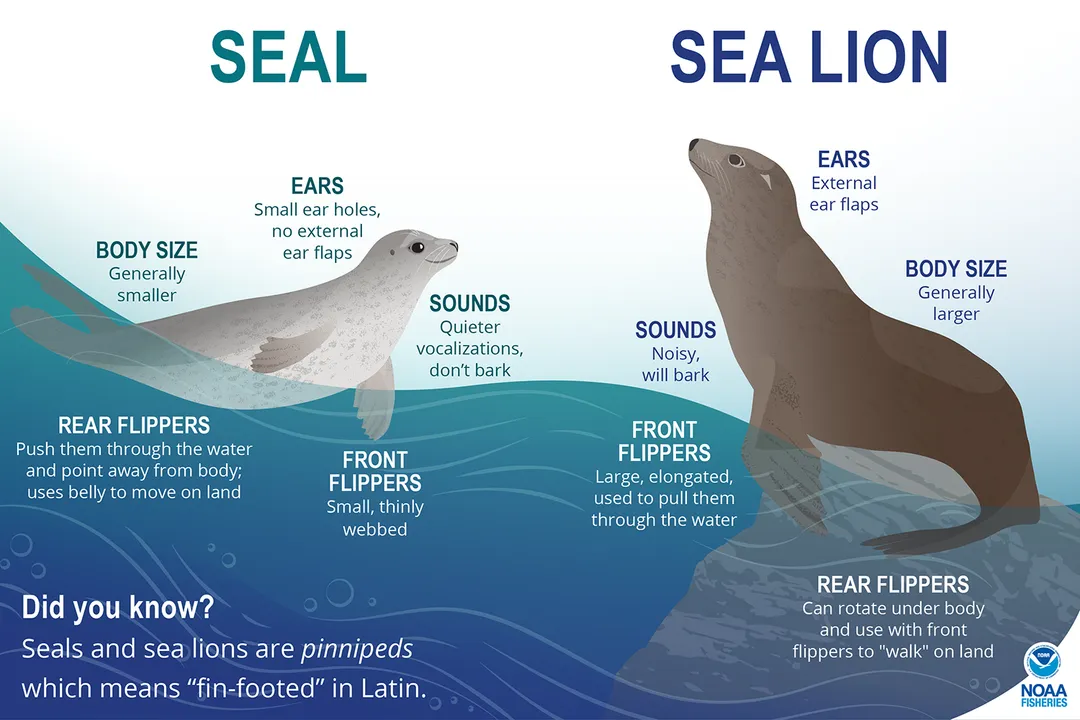
The persistent confusion surrounding pinnipeds—the group including seals, sea lions, and walruses—often leads people to incorrectly equate fur seals with sea lions. While it is true that fur seals share more characteristics with sea lions than they do with "true seals," they remain biologically distinct entities. [5][7] Both fur seals and sea lions belong to the family Otariidae, commonly known as the eared seals, which immediately separates them from the Phocidae, or true seals. [3] However, within this shared family, they occupy different evolutionary branches, marked by specific anatomical, behavioral, and historical differences that solidify their separate classification. [2]
# Eared Seals
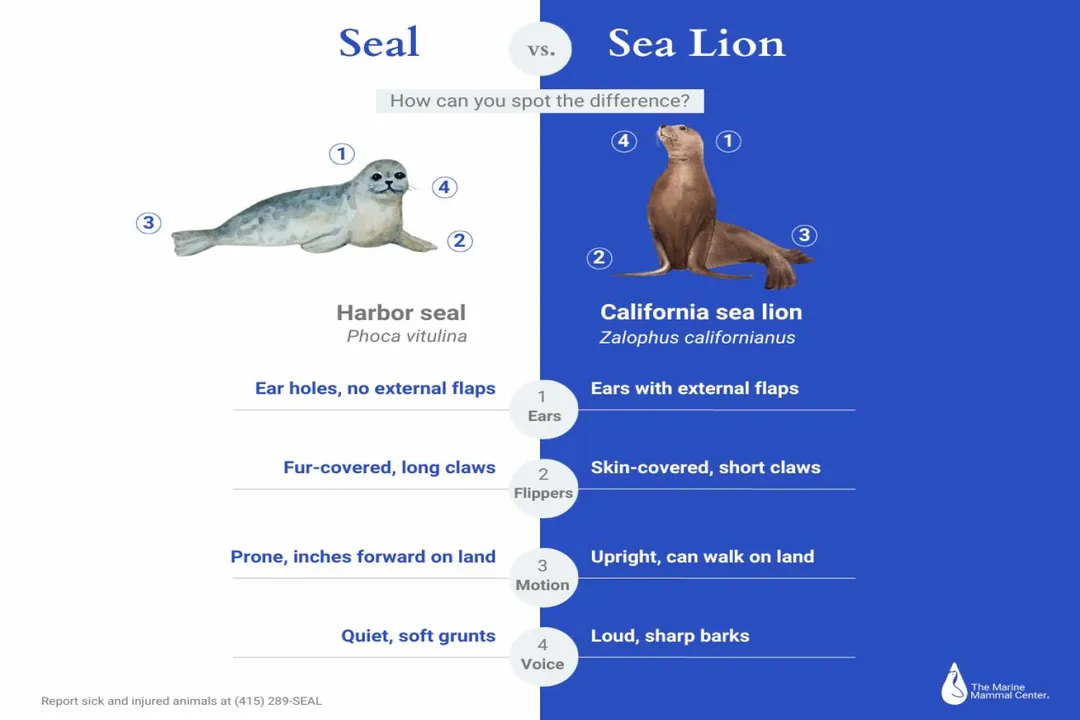
The broader classification helps situate the discussion. True seals, like harbor seals, lack external ear flaps and move awkwardly on land because they cannot rotate their hind flippers forward. [3][5] In contrast, both sea lions and fur seals possess small, visible external ear flaps—pinnae—and they can rotate their rear flippers underneath their bodies, allowing them to "walk" or gallop across land. [3][6] This shared ability to move efficiently on land is precisely why people often lump fur seals and sea lions together, mistakenly concluding that if a "seal" can walk like a sea lion, it must be a sea lion. [6] Yet, even within this walking group (Otariidae), the fur seals maintain their own distinct identity, separating them from the sea lions of the Otariinae subfamily. [2]
# Defining Coat
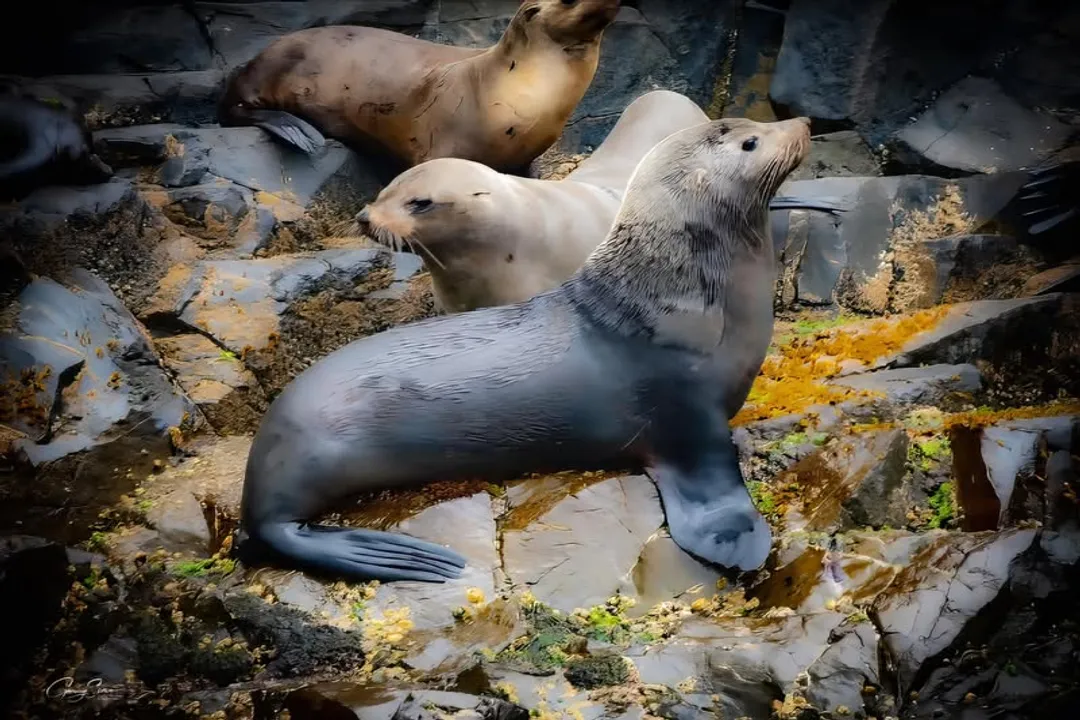
The most immediate and defining difference, giving the fur seal its name, lies in its coat. [2][5] Fur seals possess a thick, dense layer of underfur beneath their coarser guard hairs. [2] This underfur is incredibly insulating, enabling them to thrive in colder, more exposed environments compared to their sea lion cousins. [5] Sea lions, on the other hand, rely almost entirely on the blubber layer beneath their skin for insulation, lacking this specialized, dense fur. [2][5] This difference in pelage is not merely cosmetic; it reflects separate evolutionary adaptations to their respective niches. [1]
When observing them from a distance, the fur coat often looks like a dark, continuous blanket on the fur seal, whereas the skin of a sea lion often appears smoother or slicker, especially when wet. [4]
# Flipper Structure
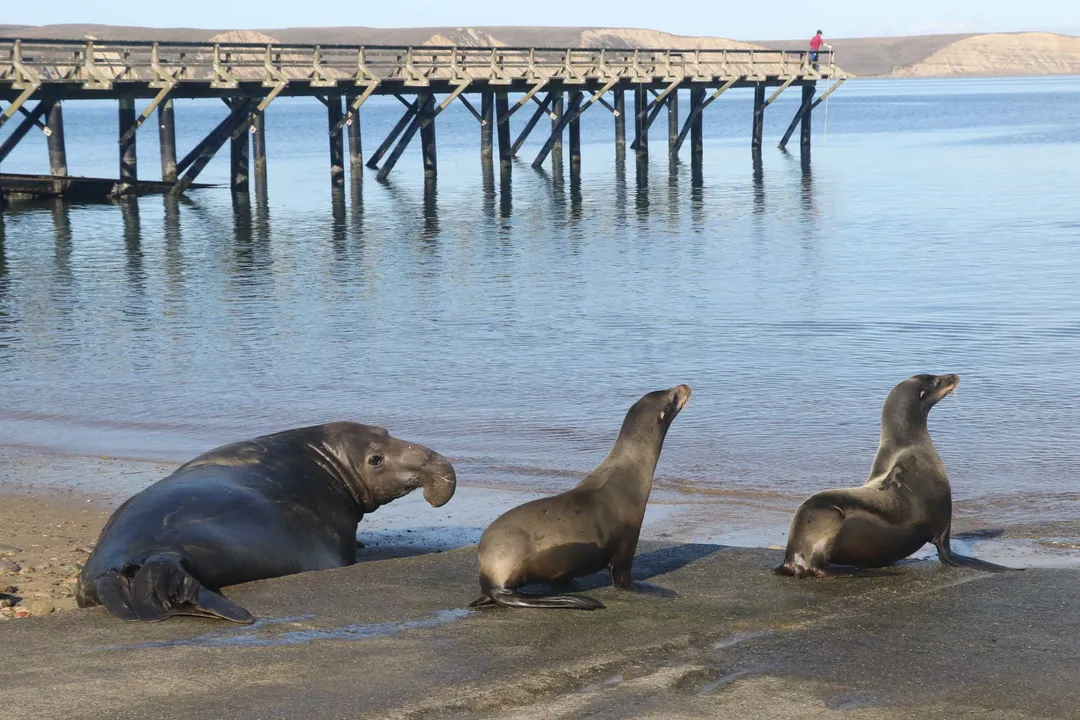
Diving deeper into anatomy reveals further separation between the two eared seal groups. While both use their front flippers for propulsion in the water, there are observable differences in size and function. [2] Sea lions are known for having relatively larger, more paddle-like front flippers compared to fur seals. [5] Sea lions primarily use these powerful front flippers for underwater thrust, essentially "flying" through the water, keeping their rear flippers relatively steady for steering. [2] Fur seals, while also strong swimmers, tend to use their hind flippers for more active propulsion, relying on a synchronized movement of all four limbs to some extent, making their swimming motion slightly different from the pure "flight" of a sea lion. [1] This distinction in flipper dominance affects their top speeds and maneuverability profiles.
# Vocalizations Heard
If you are close enough to hear them, their voices provide an excellent clue for identification. Sea lions are typically quite vocal, known for their characteristic loud barking or roaring sounds. [5][9] This boisterous communication style is often evident in their dense rookeries. Fur seals, however, tend to communicate using quieter, gentler sounds, often described as high-pitched chirps or muted cries. [5] This behavioral divergence suggests different social structures or tolerance levels for noise within their colonies, a difference potentially linked to the density of their respective breeding grounds or predator pressures. [1]

# Subfamily Separation
The scientific classification confirms the visual and anatomical distinctions. Fur seals belong to the subfamily Arctocephalinae, whereas sea lions are classified under the subfamily Otariinae. [2] This places them on different branches of the Otariidae family tree. For instance, the Northern fur seal (Callorhinus ursinus) is firmly in the Arctocephalinae group, distinct from the California sea lion (Zalophus californianus) in the Otariinae group. [2] This separation indicates that their last common ancestor lived far enough back in time for significant evolutionary divergence to occur, resulting in the physical traits we observe today, such as the specialized fur and the subtle differences in swimming mechanics. [2]
| Feature | Fur Seal | Sea Lion |
|---|---|---|
| Underfur | Present (Dense and insulating) [2][5] | Absent (Relies on blubber) [2] |
| Front Flippers | Relatively smaller; used in conjunction with rear flippers [2] | Relatively larger; primary source of propulsion [5] |
| Vocalization | Quieter chirps or muted cries [5] | Loud barking or roaring [5] |
| Subfamily | Arctocephalinae [2] | Otariinae [2] |
| Land Movement | Rotates hind flippers forward; capable walker [3][6] | Rotates hind flippers forward; capable walker [3][6] |
While their shared ability to rotate their hind flippers forward allows both groups to move surprisingly well on land—a trait that often confuses casual observers who associate this mobility only with sea lions—the fur seal’s defining characteristic remains its necessity for that insulating coat. [6] This unique adaptation speaks volumes about the environments they evolved to dominate. The extreme cold of some subarctic or subantarctic waters necessitates the fur for survival in a way that the thicker blubber layer of many sea lion species does not. [1]
# Historical Exploitation Context
Looking back at human interaction provides another layer to understanding why these groups developed differently. The dense, fine pelt of the fur seal made it an exceptionally valuable target for commercial hunting throughout the 18th, 19th, and early 20th centuries. [2] This intense, targeted exploitation drove many populations to the brink of extinction, fundamentally shaping their current distribution and cautious social behaviors on land. [8] Sea lions, lacking this highly desirable fur, did not face the same level of industrialized hunting pressure driven by the fur trade. [7] Consequently, the conservation and recovery story for fur seals is often intrinsically linked to the disastrous impact of the fur trade, differentiating their modern status from that of sea lions who faced different, though still significant, threats like entanglement or fishery interaction. [9] This historical divergence in primary threat profiles has certainly influenced subsequent management strategies for each group.
# Summary of Key Separation
In short, the answer to why a fur seal is not a sea lion rests on three main pillars: the presence of dense underfur, subtle but consistent differences in flipper use for swimming, and their placement in separate scientific subfamilies (Arctocephalinae vs. Otariinae). [2][5] They are cousins within the eared seal family, sharing the ability to walk on land, but they are not the same species or even the same subfamily. [3][7] Recognizing these differences moves beyond the simple dichotomy of seal versus sea lion and into the more nuanced world of pinniped taxonomy, where recognizing the type of eared seal is necessary for accurate identification. [9]
Related Questions
#Citations
Fur seal vs sea lion : r/marinebiology - Reddit
Fur seal - Wikipedia
Seals and Sea Lions, What is the Difference? - National Park Service
Why do we call them seals and not sea lions? Well, they ... - Instagram
Seal vs. Sea Lion: Your Guide to Knowing the Difference
Since fur seals can actually walk on land (like sea lions) are ... - Quora
Mistaken Identities: Seals vs. Sea Lions - National Aquarium
Fur seals: more closely related to sea lions than true seals - Facebook
Is It a Seal or a Sea Lion? - NOAA Fisheries