How do you identify a Canada warbler?
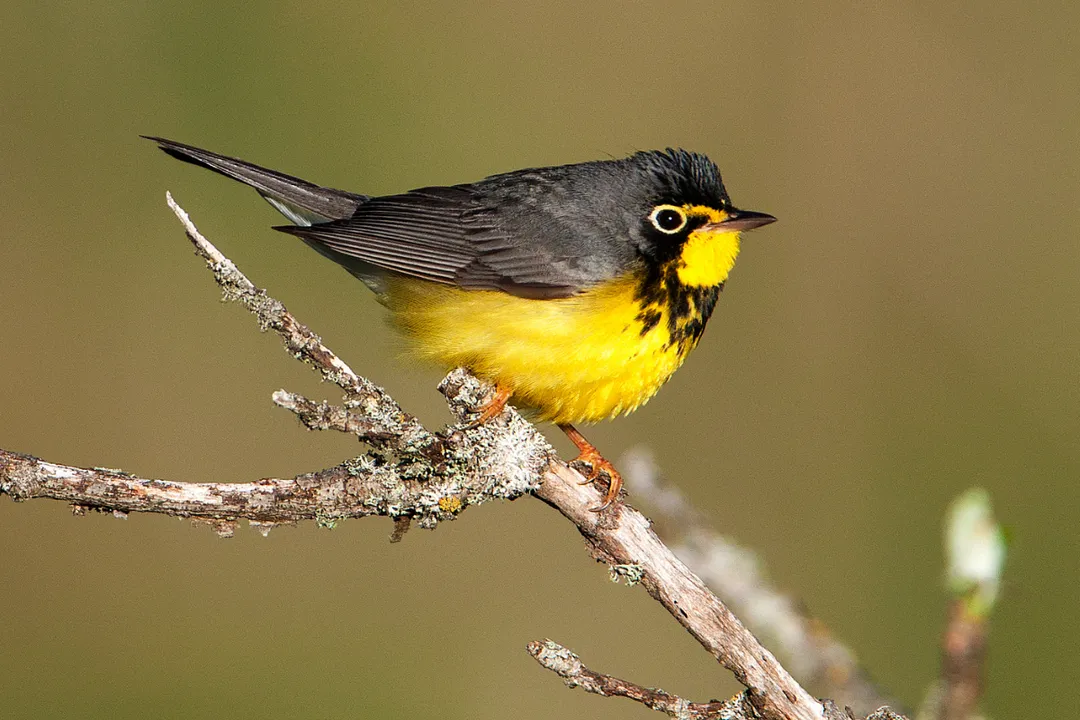
Catching sight of a Canada Warbler, Cardellina canadensis, is often a thrilling moment for birders, particularly because this vibrant species tends to favor dense, sometimes damp, undergrowth, making it a challenging bird to pin down visually. [1][2] This small, slender songbird is an active insectivore, and its identification relies on a keen eye for specific color patches and behavioral quirks rather than sheer size or loud, obvious calls. [1][2] At roughly five inches in length, it fits neatly into the general warbler size category, but its particular combination of yellow, gray, and black sets it apart from many of its relatives. [1][2] Successful identification often hinges on being in the right place—dense, brushy, damp woodland—and knowing exactly what small details to scan for as it flits through the lower branches. [1][4]
# Small Slender
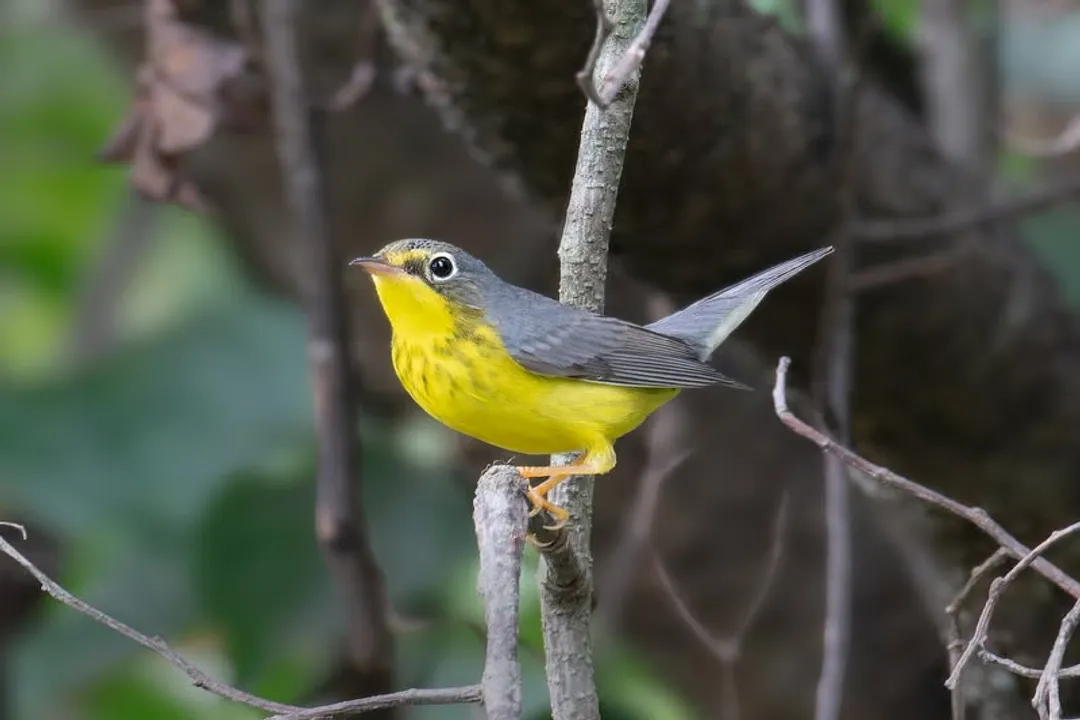
The general impression of the Canada Warbler is one of bright yellow plumage contrasted with a darker upper side. [2] It is a small warbler, typically measuring around five inches from bill to tail, possessing a relatively slender build. [1][2] While many eastern warblers share a bright yellow underside, the structure of the markings, especially on the male, serves as the quickest way to differentiate it once you locate the bird. [1] It is important to note that juveniles and females are considerably duller, which sometimes leads to misidentification as a different, less colorful species until one spots the critical facial markings. [2]
# Male Distinctions
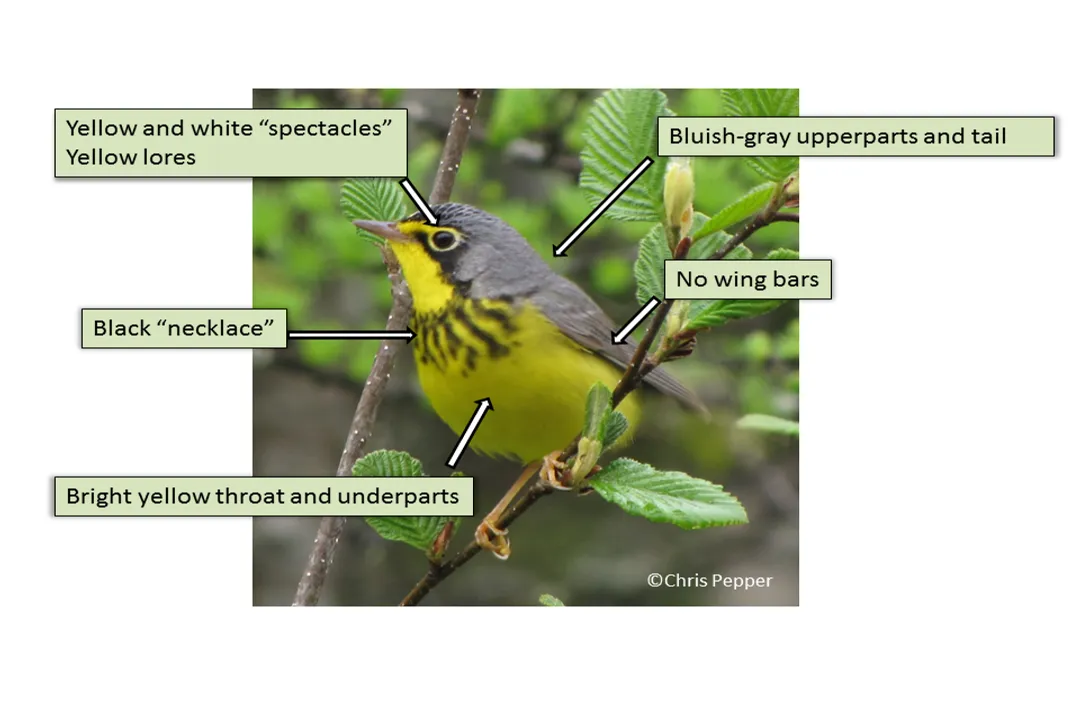
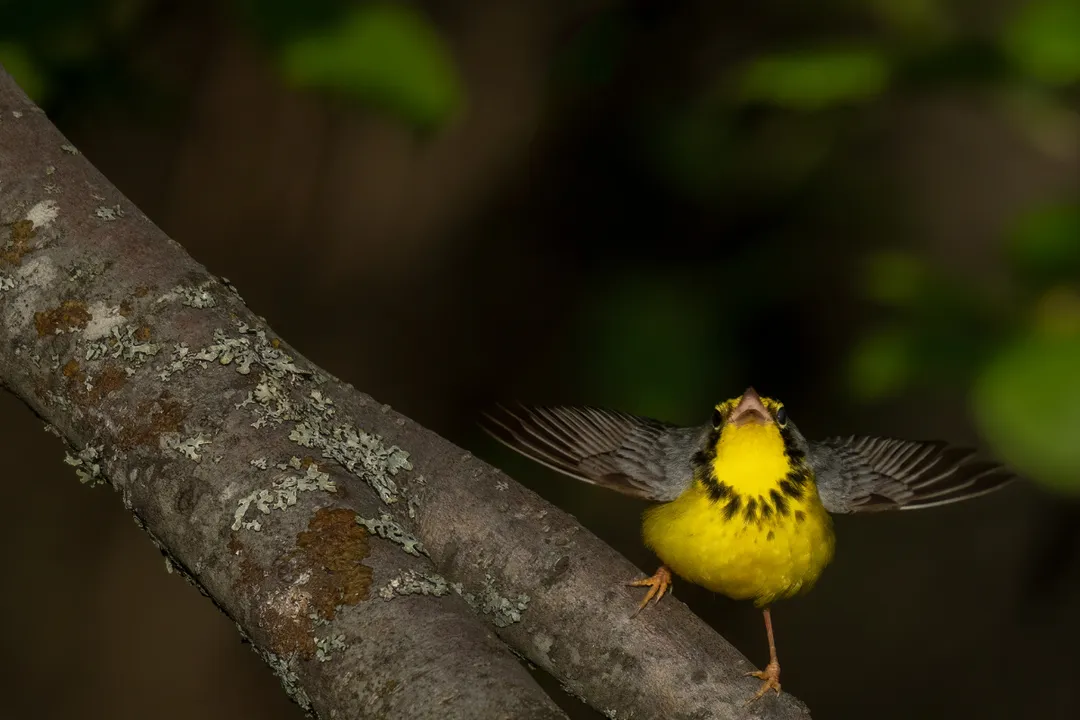
The breeding male is perhaps the most striking warbler of the genus, offering a pattern that is rarely confused with other species once seen clearly. [1] The defining characteristic is the bold, black streaking across the throat and upper breast, which often forms a complete or partial black bib or necklace that stands out sharply against the bright yellow belly. [1][2][4] Above this bright yellow undercarriage, the back, crown, and tail are a handsome blue-gray color. [1][2] The lower belly and undertail coverts are a clean white, providing a bright contrast underneath the yellow flanks. [2] This combination—blue-gray above, bright yellow below, bisected by a distinct black throat pattern—is the classic male ID marker. [2]
# Female Variation
Females and first-year birds present a more subdued palette, requiring closer observation to confirm the species. [2] A female Canada Warbler retains the yellowish underparts, but the bold black necklace of the male is replaced by much fainter markings. [2] Instead of solid black streaks, the female often exhibits a wash of yellowish wash on the throat and breast, sometimes with just a few gray or grayish-black smudges or faint streaks, or virtually none at all. [2] The back color is also muted compared to the male, often appearing more olive-gray or grayish rather than the distinct blue-gray. [2] Despite this dulling, the female usually retains the signature white spectacles, a feature crucial for separating her from other yellowish warblers. [3]
# Key Facial Marks
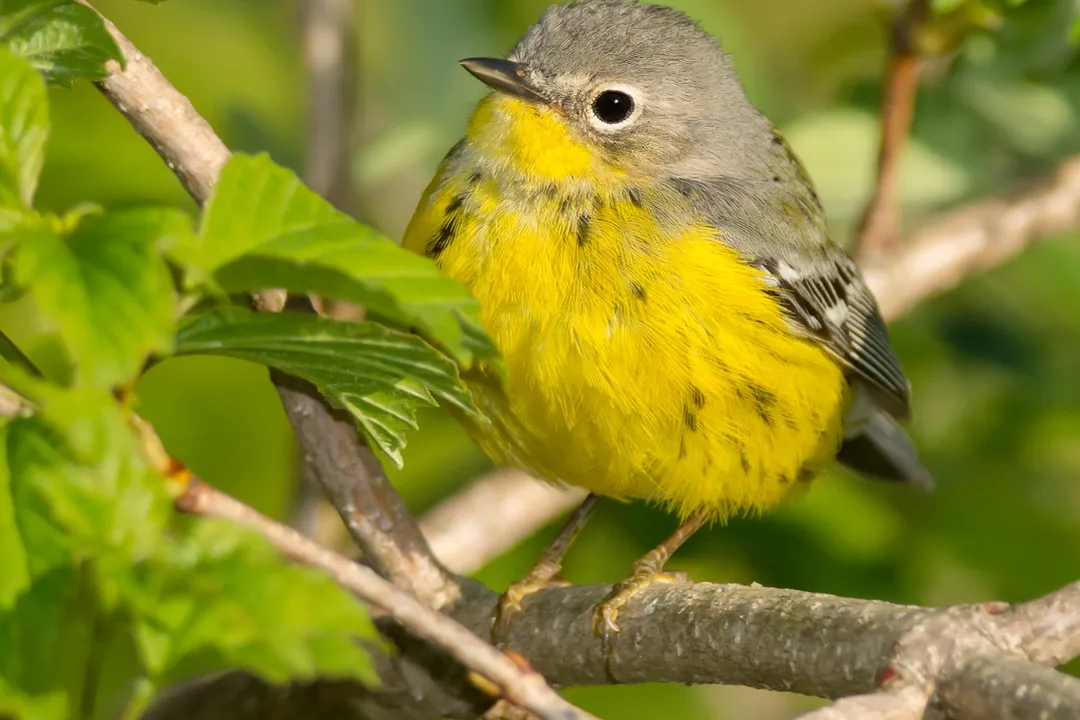
Regardless of sex or age, one feature remains remarkably consistent and should be a high-priority identifier: the presence of white spectacles, which are prominent white rings surrounding the eyes. [1][3] These white eye-rings are often described as looking like two small rings or arcs of white against the darker face feathers. [3] While the male has a thin black line running through the eye itself, which slightly breaks the spectacles, the overall effect is still a very noticeable white ring. [3] Even the dullest female or a young bird will usually display these spectacles, helping to distinguish it from similar yellow-breasted species that lack this distinct facial feature. [3] If you see a small, yellow-bellied bird near water in the right habitat, first check for those white eye-rings; if they are present, you have likely narrowed your focus to the Canada Warbler. [4]
When approaching identification, a simple mental three-point checklist can simplify the process, especially when light is poor or the bird is moving quickly: first, confirm the habitat preference (damp thicket); second, confirm the presence of white spectacles; third, assess the breast color—bright yellow with heavy black streaking points to a male, while duller yellow with minimal or no black points to a female or juvenile. [2][4] This sequence grounds the identification before getting caught up in judging the exact shade of gray on the back, which can be highly variable depending on light quality. [2]
# Song and Call
The vocalizations of the Canada Warbler are also distinctive, though perhaps not as melodious as some other warblers. [4] Its primary song is a high-pitched, rapid, and somewhat stuttering warble. [1][2] Descriptions often note that the song sounds a bit jerky or broken, sometimes ending with a sharp, emphatic chip or chew sound. [1][4] This rapid, high-trill delivery is one of the best ways to locate the bird before it is seen, especially when it is moving actively in dense cover. [2] When agitated or signaling location without singing fully, the bird will often give a sharp, distinct chip call note. [1][2] Learning this specific song—a rapid, trilling sequence ending in a distinct chip—can be as helpful as knowing the plumage details, especially since the bird spends so much time concealed in thick vegetation. [4]
# Preferred Coverts
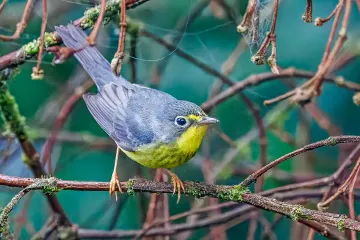
Habitat is a major clue for this species, moving the identification process from passive looking to active searching in productive locations. [4] Canada Warblers strongly prefer damp, dense, second-growth woodlands and thickets, often situated near water sources like streams or swamps. [1][2] They show a distinct preference for shrubby, brushy areas dominated by alder, willow, or hemlock. [2][4] Unlike some warblers that forage high in the canopy of mature forest, the Canada Warbler is typically found clinging to lower branches or actively moving through dense underbrush. [1] This preference for dense, low cover means that if you are birding in dry, open woods or high deciduous canopies, you are probably looking for the wrong species. [4] Finding them requires paying special attention to those moist, shrubby borders where the vegetation is thickest and hardest to penetrate visually. [2]
# Foraging Habits
Once you have located a Canada Warbler, observing how it feeds can solidify the identification and is a fascinating behavior in its own right. [1] This species is an extremely active forager, constantly gleaning insects and spiders from foliage. [1] They rarely stay still for long, moving with quick hops and energetic movements within the shrubs. [4] A common maneuver is hanging upside down from a twig or leaf stem while picking off prey, a behavior that helps them access insects that might be out of reach for more upright gleaners. [1][2] This constant, almost frantic, motion combined with the yellow/gray/black/white pattern is a strong indicator. If you see a small bird actively hopping, hanging inverted, and flashing yellow near a swampy edge, you are almost certainly watching a Canada Warbler going about its daily insect hunt. [2] They are known for their quickness, which often leads birders to only catch fleeting glimpses, making the bright yellow belly and white spectacles the most reliable flash marks. [4]
#Videos
Canada Warbler Identification | Spring Warbler Warm-up - YouTube
Related Questions
#Citations
Canada Warbler Identification - All About Birds
Canada Warbler | Audubon Field Guide
Canada Warbler Identification
Canada Warbler- Species At Risk in The Land Between
Canada Warbler Identification Tips - Facebook
Canada Warbler | State of Tennessee, Wildlife Resources Agency
Canada Warbler Identification | Spring Warbler Warm-up - YouTube
Canada Warbler (Cardellina canadensis) identification - Birda
Canada Warbler