What is the behavior of the Canada warbler?
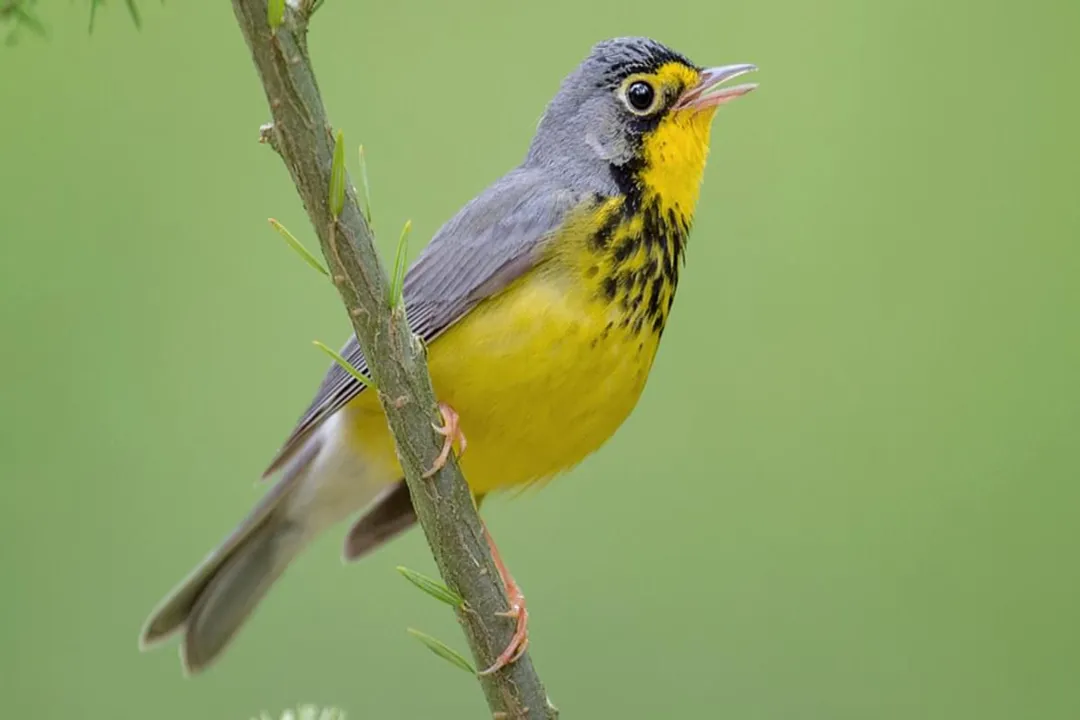
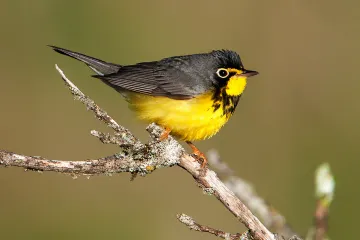
The Canada Warbler, a vibrant flash of yellow and gray against the deep green of the northern woods, exhibits a set of behaviors intrinsically tied to its specialized habitat preferences. Its appearance, particularly the male’s striking plumage featuring a bright yellow throat and a prominent "necklace" of black streaks, often precedes the realization of its presence, as it can be a relatively secretive breeder in the dense understory. Observing this species requires patience, focusing less on movement through the canopy and more on the intricate, near-ground activity where it spends a significant portion of its time feeding.
# Foraging Style
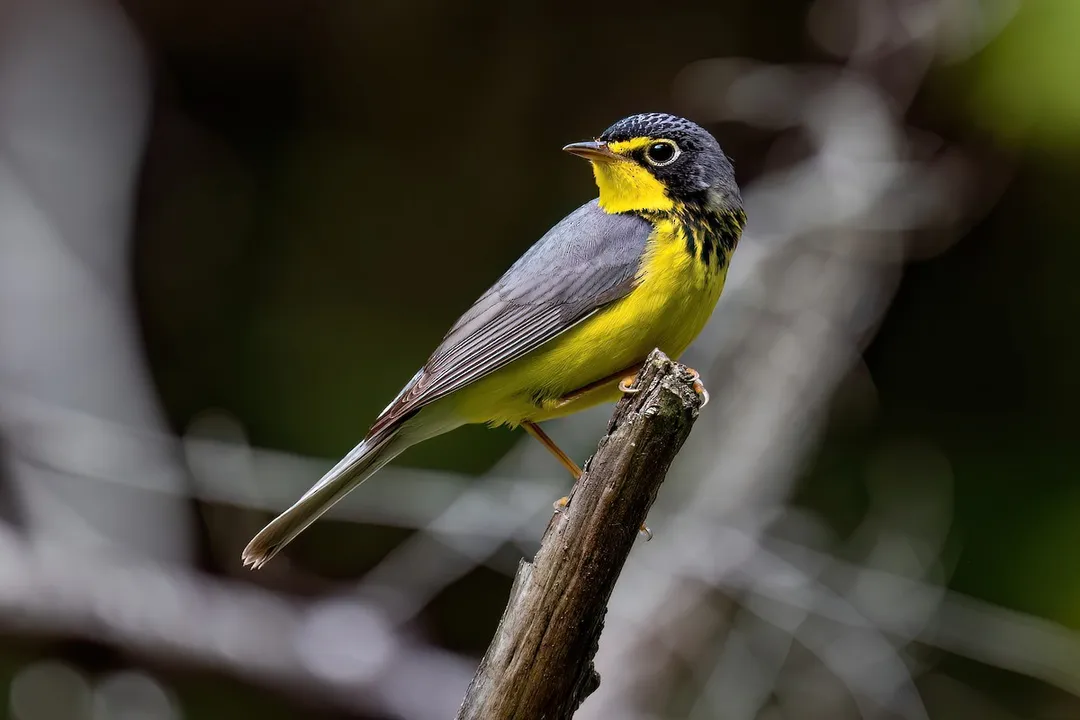
The Canada Warbler is known as an active and energetic feeder, constantly moving while searching for the small arthropods that constitute its diet. Its primary food source consists of insects and spiders gleaned from foliage or snatched from the air. A distinguishing characteristic of this species, noted by many field observers, is its frequent, jerky tail movement, often described as a constant tail-wagging or teetering motion while it perches or maneuvers through vegetation. This behavior seems to be a consistent trait across various activities, not just feeding.
The actual capture methods employed are varied, reflecting an adaptation to capturing prey in cluttered environments. The warbler frequently employs sallies, darting out from a stationary perch to intercept flying insects, a technique often called flycatching. After a sally, the bird usually returns to the same perch or one nearby. It also engages in gleaning, picking stationary insects directly off leaves and twigs. While often associated with the mid-story or lower canopy, Canada Warblers are also known to drop down to the forest floor to snatch prey, sometimes hovering momentarily before descending or maneuvering around low branches to reach obscured insects.
While many warblers specialize in canopy foraging, the Canada Warbler shows a strong affinity for the cluttered lower strata. The persistent tail movement observed while foraging in these dense, shaded areas might serve a function beyond simple restlessness; it could effectively flush out small, concealed spiders or hidden insects from the tangles of low shrubs, making them visible targets for the bird's quick sallies. This specialized low-level maneuvering distinguishes it from species that focus heavily on aerial pursuits in more open air.
# Vocal Display
Communication in the Canada Warbler revolves around a distinctive song used by males to establish and defend breeding territories and attract mates. The song itself is described as a high-pitched, rapid, and somewhat bubbly warble. It lacks the sharp clarity of some other warbler songs, often sounding slightly less precise, perhaps due to its context within dense forest acoustics. Males deliver this territorial song from various points within the forest structure, including mid-story branches or the upper canopy, particularly early in the breeding season.
Beyond the full song, the species uses several distinct calls. A common contact call is a sharp, short chip note. Another frequently heard vocalization is a soft, high-pitched seet sound. These simpler calls are essential for maintaining contact between mates or signaling general awareness within the territory, especially when the dense foliage might obscure visual contact.
# Nest Construction
The location and structure of the nest are critical components of the Canada Warbler's breeding behavior, reflecting its need for concealment and protection within the understory. Unlike some birds that build exposed nests high in open branches, the Canada Warbler typically places its nest low to the ground, often situated in a dense shrub, thicket, or low tree branches. Heights commonly range between 3 and 20 feet above the forest floor. The nest must be carefully hidden within the surrounding vegetation to shield it from predators.
The construction itself demonstrates a meticulous use of available materials. The structure is a delicate cup woven together using fine materials. Primary structural components include rootlets and plant fibers, while the exterior often incorporates mosses and bark strips. The interior lining is exceptionally fine, often composed of soft materials like animal hair or fine grasses, often bound together with spider silk, which lends elasticity to the structure. Both the male and female participate in the construction process, though specific roles are not always rigidly defined. Once the nest is complete, the female typically incubates the eggs, though the male remains nearby, defending the immediate area. Following hatching, both parents share the demanding task of provisioning the nestlings with numerous insects until they fledge.
# Migratory Travel
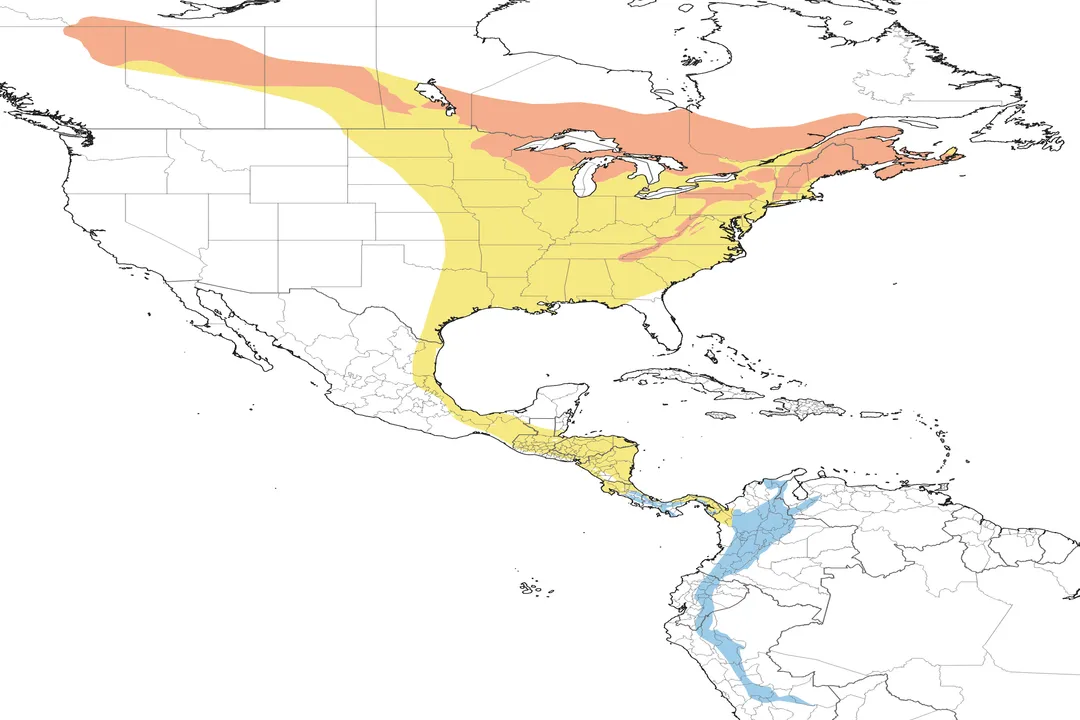
The life cycle of the Canada Warbler necessitates a significant seasonal relocation, moving between northern breeding grounds and tropical wintering sites. They breed across the vast coniferous and mixed forests of Canada, extending down into the northeastern United States, often preferring areas with moist soil and dense, shrubby undergrowth.
When migration occurs, these birds undertake a substantial journey south to Central America and northern South America. During both spring and fall migration, their habitat use often shifts slightly; they are frequently observed in dense shrub cover, riparian zones, and thickets, even if the surrounding forest is more open than their primary breeding habitat. This reliance on thick cover during migration offers crucial protection from predators and a place to refuel on the energy-intensive journey. The timing of migration is heavily influenced by local food availability and weather patterns, with the birds typically arriving on breeding grounds in late spring.
# Habitat Dependence
The behavior of the Canada Warbler is inextricably linked to its required environment. Throughout the breeding season, the ideal location is a mature forest, usually coniferous or mixed wood, situated near water sources such as streams or bogs. The defining characteristic of the breeding habitat, however, is the presence of a dense, low layer of shrubs and saplings—the understory. This dense vegetation serves multiple behavioral needs: it provides the necessary cover for nest placement, offers the low perches necessary for their characteristic foraging sallies, and creates the shaded, insect-rich microclimate they exploit. If you are trying to locate a singing male, paying close attention to the area where the canopy opens up slightly over a dense thicket often yields the best results, as they exploit the vertical gradient created by the dense shrub layer beneath taller trees. This dual requirement—mature trees for structure and dense undergrowth for security and foraging—makes their habitat surprisingly specific and sensitive to logging practices that remove the lower strata.
Related Questions
#Citations
Canada Warbler | Audubon Field Guide
Wilsonia canadensis (Canada warbler) - Animal Diversity Web
Canada Warbler - Mass.gov
Canada Warbler Overview, All About Birds, Cornell Lab of Ornithology
Canada Warbler - Southern Wisconsin Bird Alliance
Behavior - Canada Warbler - Cardellina canadensis
Bird of the Week: Canada Warbler - The National Wildlife Federation ...
Canada warbler - Illinois Department of Natural Resources
Canada Warbler - BWD magazine