How can you identify a sleeper shark?
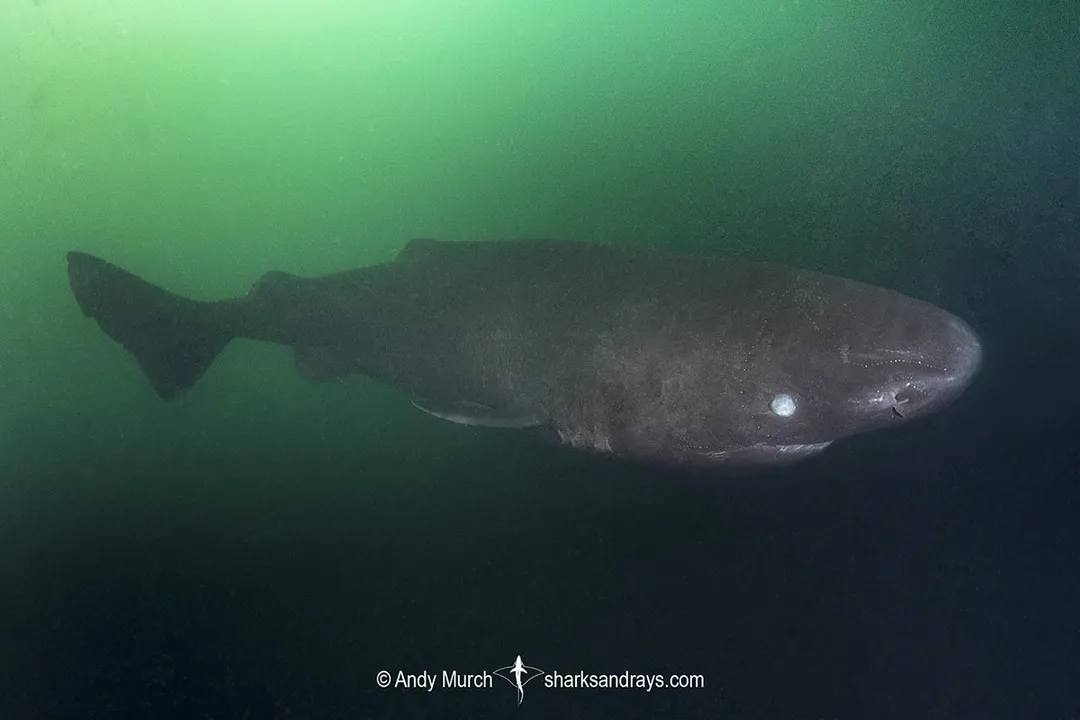
Identifying a sleeper shark, particularly the Pacific sleeper shark (Somniosus pacificus), presents a unique set of challenges because these creatures spend the vast majority of their lives shrouded in the deep, cold waters where sunlight rarely penetrates. [6] Their common name hints at their famously sluggish nature, often making them appear less like apex predators and more like slow-moving benthic residents. [4] When encountered, whether through specialized submersibles, incidental catch, or rare shallow-water sightings, careful examination of several key physical characteristics separates them from other deep-sea sharks.
# Body Shape
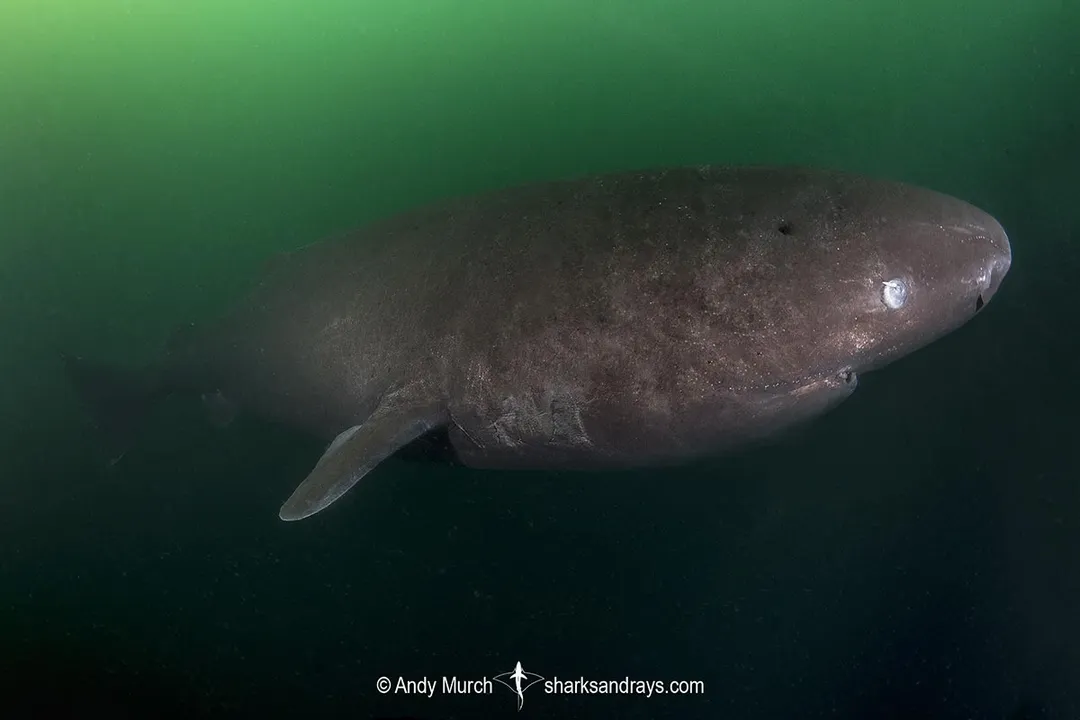
The general impression of a Pacific sleeper shark is one of substantial bulk. They possess a sturdy, heavy-set body shape typical of deep-water sharks. [8] Their coloration generally ranges from dark gray to nearly blackish brown across their back and sides. [5] This dark pigmentation serves as excellent camouflage in their low-light environments. [7] While size is variable, these sharks can grow quite large, with adults commonly reaching lengths up to 14 feet (4.3 meters). [5] However, historical or less verified reports suggest that some individuals might approach 24 feet (7.3 meters) in total length and weigh upwards of 1,500 pounds. [1][8] This considerable size contributes to their imposing presence when they are observed. [8]
# Fin Placement
The configuration of the fins is one of the most reliable methods for distinguishing the Pacific sleeper shark from its close relatives, specifically the Greenland shark, with which it shares a genus and similar habitat preferences. [4] Both dorsal fins on the Pacific sleeper shark are notably small relative to the shark’s overall body mass. [5] Crucially, these two dorsal fins are set far back on the body and are nearly equal in size. [1][8] The first dorsal fin is usually positioned over or slightly behind the pelvic fins. [1]
A more critical identifier when comparing S. pacificus to the Greenland shark is the anal fin. The Pacific sleeper shark possesses a very short anal fin that is situated distinctly far back from the second dorsal fin. [4] This separation creates a significant gap of clear space on the rear dorsal surface between the second dorsal fin and the anal fin. [4]
If one were to encounter a specimen, perhaps caught in a deep-sea net or examined quickly on a research vessel, remembering that spatial relationship is vital: a wide expanse of space between the rear dorsal structure and the anal fin strongly indicates S. pacificus. [4] In contrast, the Greenland shark has a longer anal fin positioned much closer to its second dorsal fin. [4] This distinction in the posterior fin arrangement is often the primary feature used by marine biologists to confirm species identification when visual confirmation of finer details is impossible. [4]
# Head Features
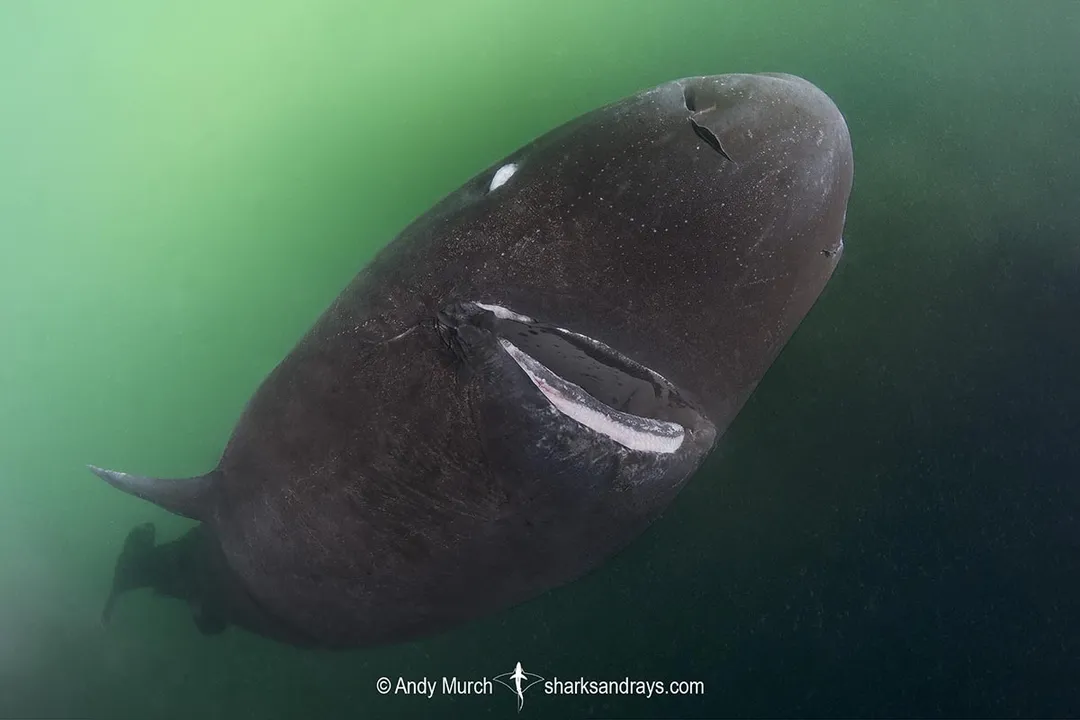
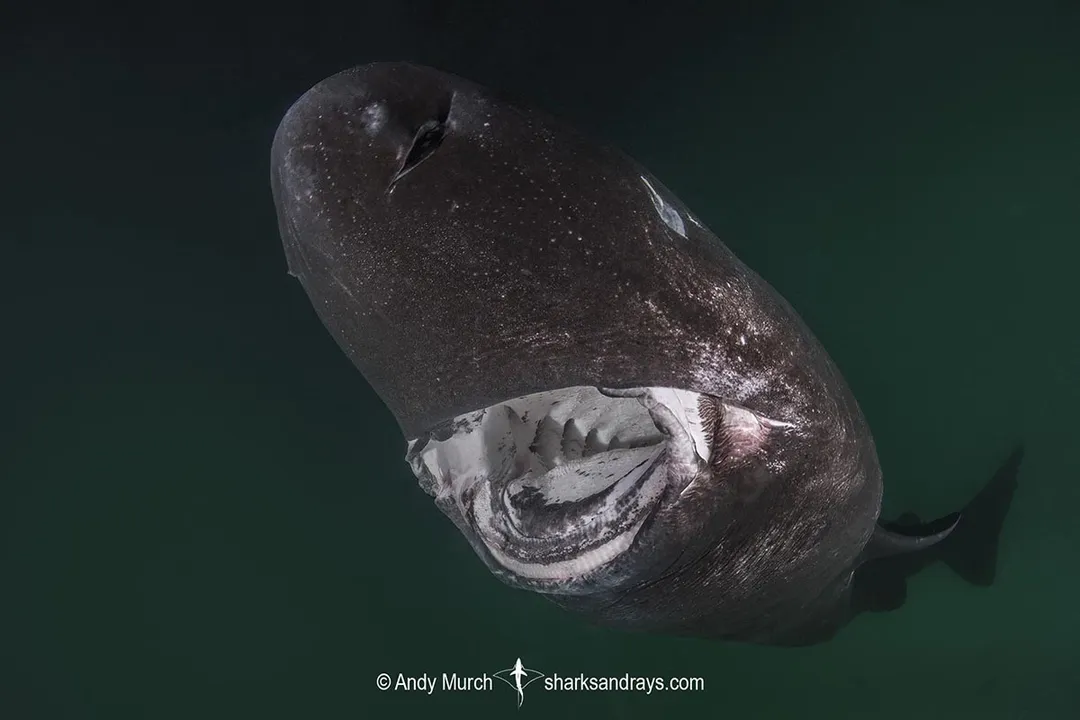
The head structure of the Pacific sleeper shark also offers distinguishing marks. They possess relatively small eyes for a shark of their size. [5] Furthermore, these eyes often feature a reflective layer at the back, known as the tapetum lucidum, which aids in gathering what little light penetrates the deep ocean. [2] When viewing the mouth, it appears relatively small compared to the overall size of the head. [5] While the teeth are numerous and small, another feature sometimes used for separation from the Greenland shark relates to the lower jaw teeth: Pacific sleeper sharks typically lack the tiny, pointed cusplets found on the lower jaw teeth of the Greenland shark. [4] Given that many encounters occur when specimens are brought aboard, understanding this subtle dental difference is critical for accurate museum or research cataloging, even if a diver would never get close enough to check. [4]
# Habitat Clues
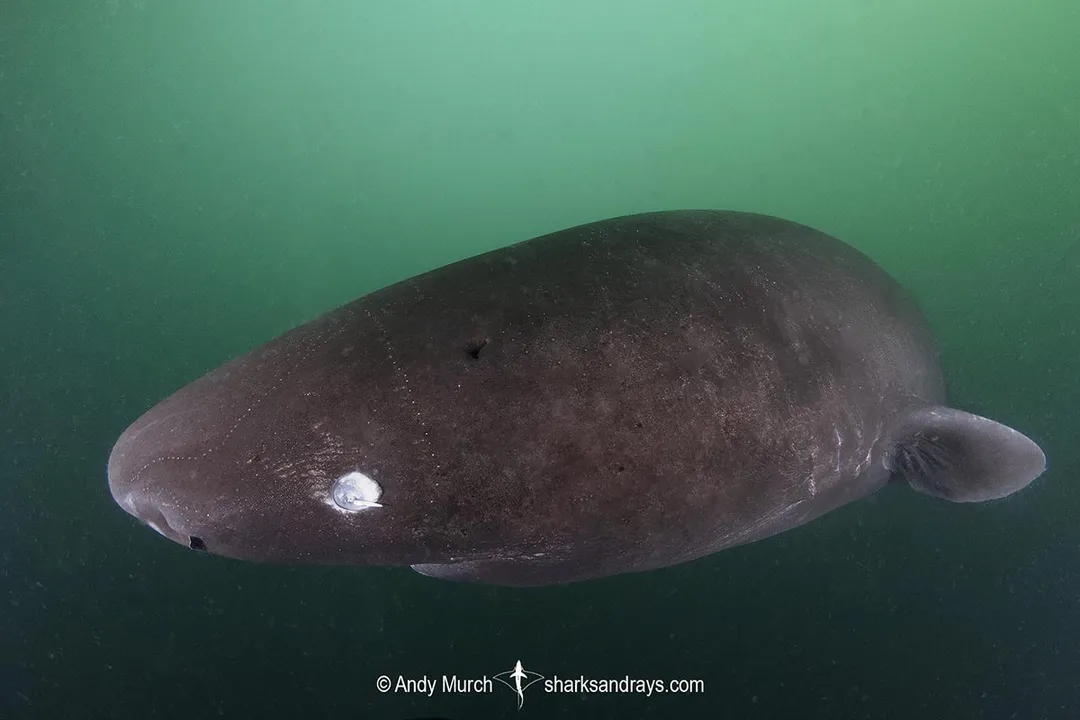
While not a direct physical feature of the shark itself, understanding its typical environment provides a context for identification probability. Pacific sleeper sharks are inhabitants of the cold, deep waters of the North Pacific Ocean. [2][7] They are often associated with the benthos—the bottom regions—of the continental shelf and slope. [6] Their presence at depths that can exceed 6,000 feet makes visual identification in the wild extremely rare. [6]
If you are observing an unidentified large, dark shark in the Arctic or North Atlantic, the probability points heavily toward a Greenland shark, as the Pacific species is geographically restricted to its ocean basin. [2][7] Conversely, if you are operating in the waters off British Columbia, Alaska, or down toward Baja California, the odds significantly favor the Pacific sleeper shark if the creature matches the morphological description. [1][7] The fact that they are sometimes found in shallower coastal waters, particularly near Alaska during certain seasons, makes them more accessible for study than their deeper-dwelling counterparts. [2][6]
# Slow Movement
The third key element of the "sleeper" moniker, besides their appearance, is their pace. Observers often describe these sharks as moving slowly or appearing somewhat lethargic when seen in deeper water or under controlled observation. [4] This slow speed is likely an adaptation to the energy conservation necessary in the cold, resource-scarce deep sea. [6] When you combine their dark color, their sluggish demeanor, and their preference for depth, it becomes clear why identifying them requires specialized knowledge rather than casual observation. [6] They are not known for fast pursuits but rather for opportunistic feeding on whatever comes within range. [2][7]
In summary, identifying a Pacific sleeper shark relies on a checklist of negative and positive physical traits: a dark, sturdy body; very small, equally sized dorsal fins set far back; a small mouth and eyes; and most importantly, a noticeable gap between the second dorsal fin and the short anal fin. [1][4][5] This careful comparison, especially against the Greenland shark, is the key to correctly placing an encounter within the Somniosus genus. [4]
Related Questions
#Citations
Pacific sleeper shark - Wikipedia
Awake and Hungry Sleeper sharks Not Culprits in Sea Lion Declines
Pacific Sleeper Shark - Somniosus pacificus - Sharks and Rays
What's the difference between a a Sleeper Shark and a Greenland ...
Pacific Sleeper Sharks, Somniosus pacificus
Getting to Know Pacific Sleeper Sharks | Wilson Center
Pacific Sleeper Shark Fish Facts - Somniosus pacificus - A-Z Animals
Somniosus pacificus (Pacific Sleeper Shark) - Animal Diversity Web
Pacific sleeper shark - Somniosus pacificus - Shark Research Institute