What is a fun fact about the Canada warbler?
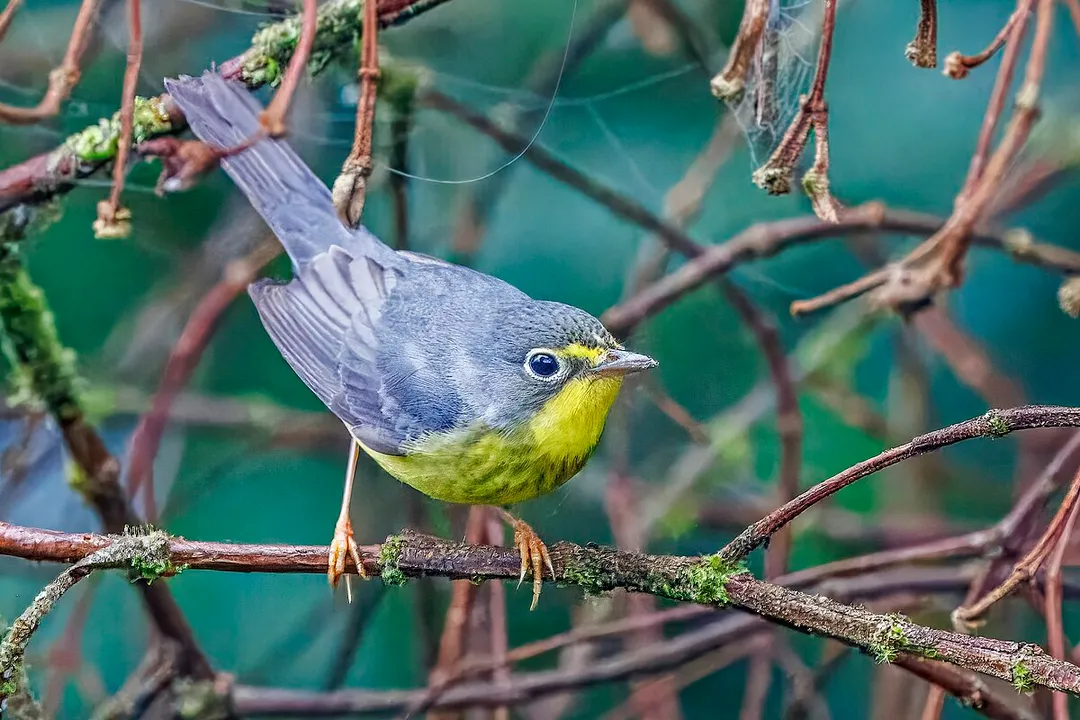
The Canada Warbler, Cardellina canadensis, presents a delightful visual paradox to the keen observer. While many warblers rely on subtle field marks or complex songs for identification, this species boasts a nearly immediate recognition factor, provided you can catch a glimpse of it. The truly fun fact about this little insectivore is its spectacular breeding plumage: a brilliant splash of yellow contrasted sharply by a ragged, streaked black bib or necklace across its breast and throat. [1][5] It is a bird that seems dressed for a formal occasion yet prefers to stay hidden in the dense, damp thickets of its northern breeding grounds. [1][9]
# Singular Markings
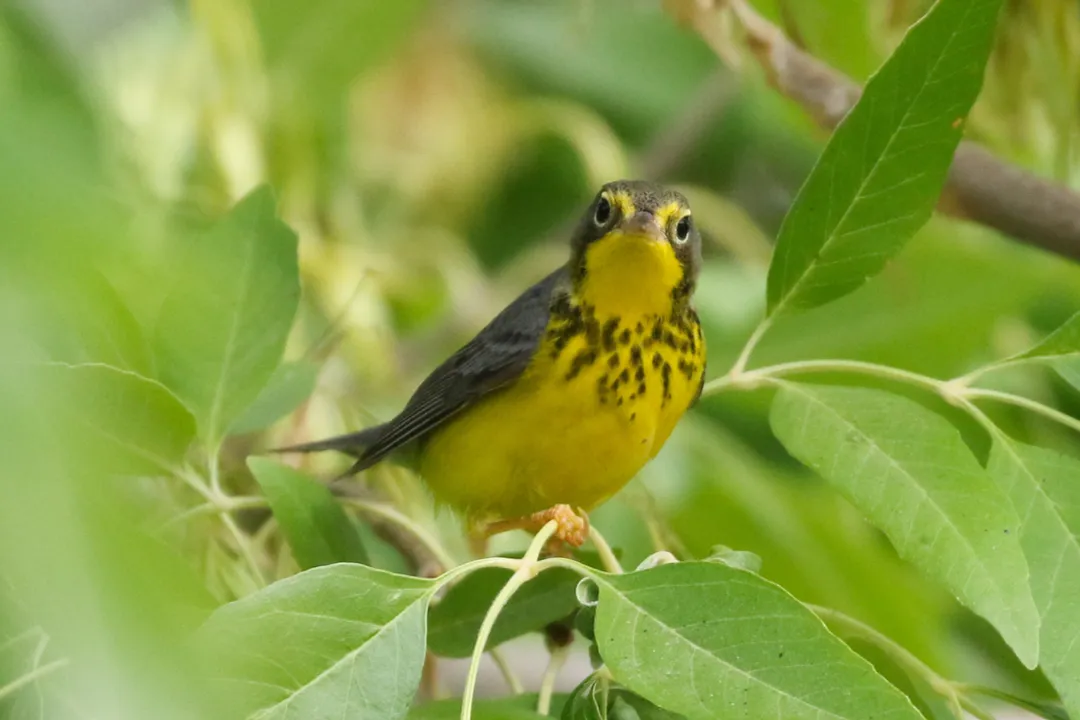
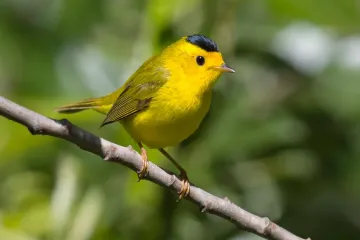
This striking pattern is most pronounced in the adult male during the breeding season. [5] Imagine a bird otherwise painted in bright, clean yellow—head, belly, and back—suddenly sporting a pattern that looks as if it were haphazardly splattered with charcoal or soot across its chest. [1] This bold black streaking over the yellow background is highly diagnostic, setting it apart from the similar but less ornamented Mourning Warbler. [1][9] Females and immatures are duller, retaining the yellow but often showing only faint or vestigial smudging where the male’s bib is fully formed. [5] The eye-ring, often described as white spectacles, adds another charming detail to its expressive face. [1][5] This combination of vibrant color and bold pattern makes the male an unmistakable jewel of the eastern North American forest understory during the summer months. [1]
# Feeding Style
Despite its flashy attire, the Canada Warbler is known for its rather secretive behavior, preferring to stay low to the ground, often within just a few feet of the forest floor. [1][3] Their feeding strategy reflects this preference for dense cover. They are active foragers, not content to simply sit and wait. [9] They frequently move through the leafy undergrowth, actively gleaning insects directly from the foliage. [1] However, they are also adept aerialists, often performing short, quick flights, or sallies, to snatch flying insects out of the air before returning to a perch within the dense shrubs. [1][9] This combination of gleaning and short-distance sallying means an observer might see a sudden flash of yellow and black darting out from a low bush and returning just as quickly to concealment. [9]
# Northern Home
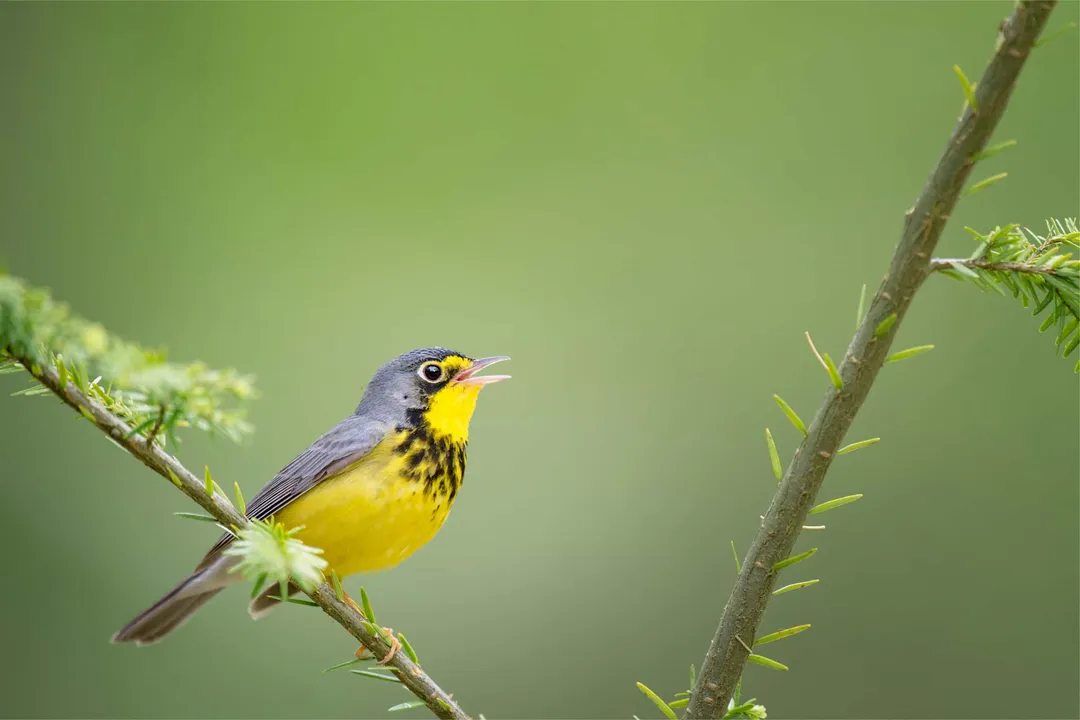
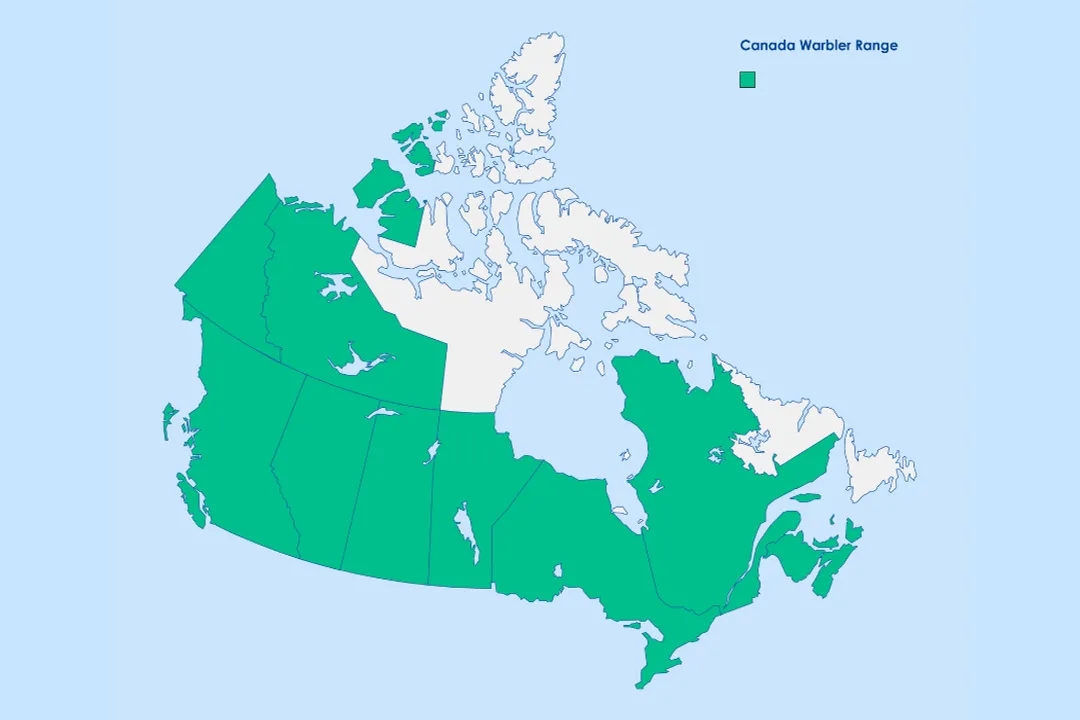
The primary location for observing this spectacle is during the breeding season, which takes the bird deep into the coniferous and mixed-wood forests of Canada and the northern United States. [1][6] They are especially partial to damp environments, often found near streams, swamps, or wet thickets. [1][3] In Canada, their breeding range stretches across much of the boreal forest region. [3] If you are looking for a Canada Warbler in the summer, thinking of high, dry mountain peaks will likely lead to frustration; they prefer the shaded, moist habitat close to the ground, where heavy shrubs provide excellent cover for nesting and protection from predators. [1][6] When the season turns, they undertake a significant migration, heading south, often traveling all the way to northern South America for the non-breeding winter months. [1][6]
# Status Concern
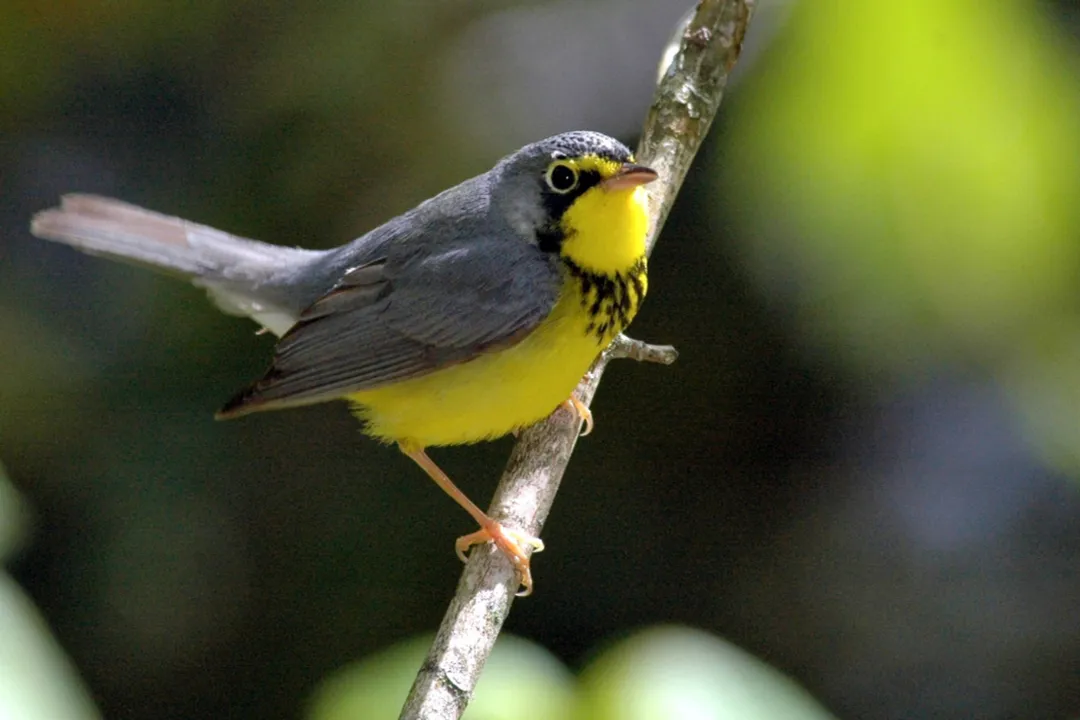
While its striking appearance makes it a sought-after sighting for birders—a feathered "bucket list" check—the very habitat it requires is facing increasing pressure, making its conservation status a serious matter. [3][2] The Canada Warbler is currently listed as Threatened under Canada's Species at Risk Act. [3][6] This designation is not due to direct persecution but rather the steady loss and degradation of the specific, dense understory habitat it depends on across its breeding range. [3] Forest thinning, changes in successional patterns, and the general fragmentation of mature forests all chip away at the required structure for successful breeding. [3]
# Visual Contrast
Birdwatchers often note the sheer difficulty of pinning down this vibrantly colored bird despite its brightness. The fact that such a strongly marked bird is often glimpsed only as a fleeting shape deep within shaded brush highlights an interesting behavioral adaptation. While the yellow and black contrast magnificently under direct sunlight, the bird seems instinctively drawn to the darkest parts of the lower canopy or shrub layer. [1] This might suggest that the male’s bright coloration serves less as camouflage and more as an intra-species signal that is deliberately deployed within visual clutter, perhaps signaling fitness to rivals or mates, rather than trying to hide entirely from aerial predators overhead. [5]
# Habitat Specificity
The survival challenge for the Canada Warbler hinges entirely on the structural complexity of the forest floor. Unlike some songbirds that thrive when forests are simply present, this species demands a specific layering of vegetation. [3] A forest dominated by a mature, open canopy with little mid-story growth offers little value to a Canada Warbler searching for a nesting site or low-level insect prey. [1] Therefore, managing a woodland for this species means actively preserving or promoting dense, shrubby growth at eye-level and below, even if that means allowing a degree of "messiness" that conventional timber management might seek to clean up. [3] This requirement for structural diversity places the bird in a conservation category where habitat quality—the vertical arrangement of plants—is arguably more important than simple habitat quantity. [3]
The bird’s reliance on this humid, shrubby edge means that any regional shift in water tables or increased dryness due to climate change could drastically alter its preferred tracts of woodland, putting even seemingly secure populations at risk. [6] Tracking the location of these "yellow necklaces" provides an immediate, tangible indicator of the health of the understory ecosystem in the northern breeding grounds. [3] Its presence signals a relatively intact, damp, and structurally rich piece of boreal or mixed forest environment, making it an excellent indicator species for that specific ecological condition. [9]
Related Questions
#Citations
Canada Warbler Overview, All About Birds, Cornell Lab of Ornithology
Canada Warbler Bird Facts - Cardellina canadensis - A-Z Animals
Canada Warbler
What are the key characteristics of the Canada Warbler? - Facebook
Bird of the Week: Canada Warbler - The National Wildlife Federation ...
Canada warbler - Wikipedia
Spring migratory birds: Canada Warbler
Canada warbler Facts for Kids
Canada Warbler - Southern Wisconsin Bird Alliance