How big do boelens pythons get?
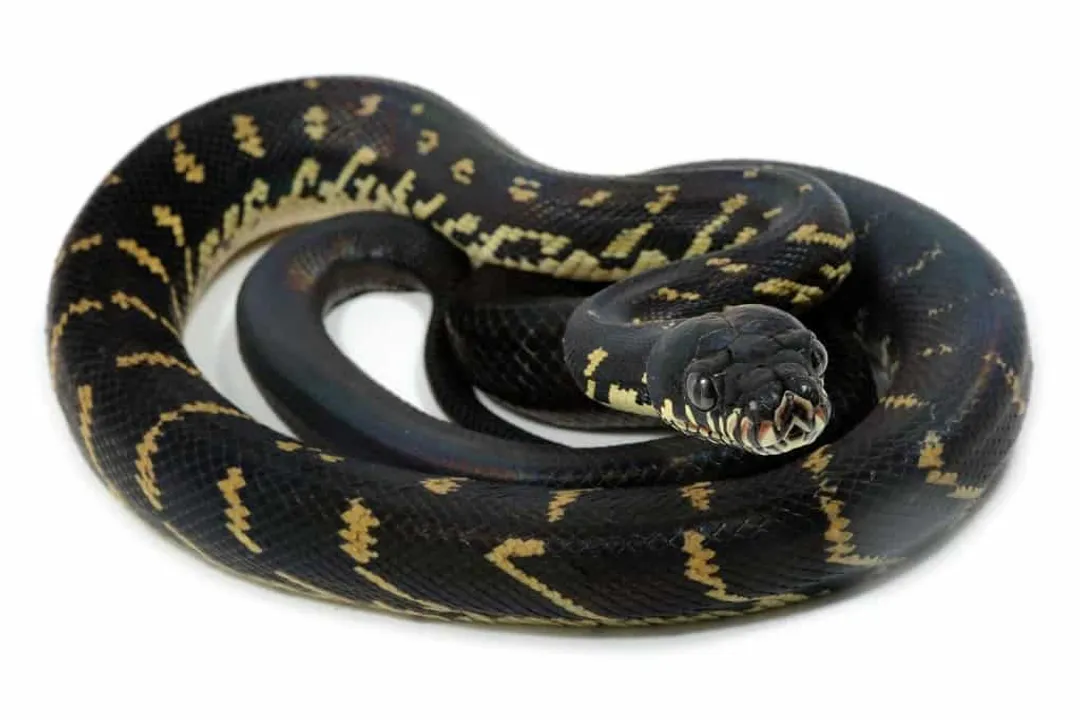
The Boelens python, Simalia boeleni, is a species often recognized for its stunning, iridescent black coloration overlaid with subtle yellow or creamy crossbands, making it a highly sought-after python in the reptile community. [1][9] While their beauty is widely discussed, the practical consideration of their mature size is paramount for any prospective keeper or admirer. Generally speaking, the Boelens python settles into the category of a medium-sized python when considering the broader spectrum of the python family. [1]
# Typical Measurements
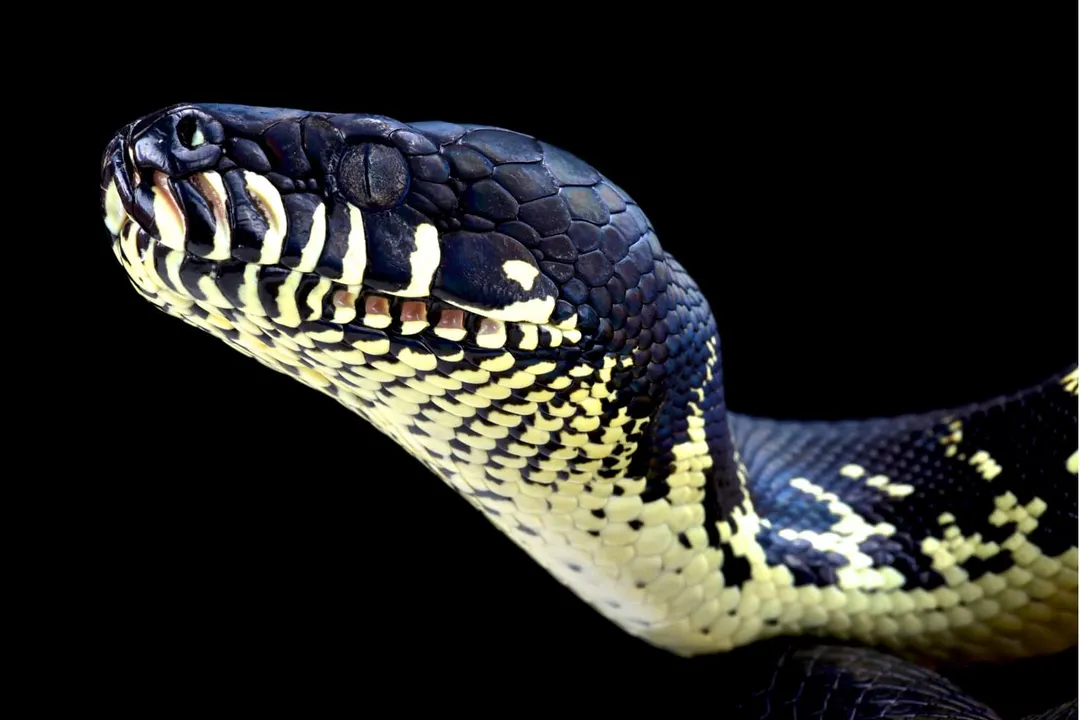
For the majority of Boelens pythons living in captivity, the expected length hovers quite consistently between 6 to 8 feet (1.8 to 2.4 meters). [2][4][8] This range represents the standard adult size encountered by most keepers and breeders. [4] Most descriptions place their average adult length around 2 meters (6.6 feet). [1] When comparing them to some of their more massive cousins, like the Reticulated Python, this places them firmly in a more manageable, though still substantial, size class. [9]
However, the upper limit of this species is decidedly longer than the average suggests. Reputable sources often cite the maximum recorded size for a Boelens python reaching approximately 3 meters (9.8 feet). [1][2] Mark O'Shea notes that they are usually seen reaching just under 2.5 meters (about 8 feet) in general observation. [7] This suggests that while 8 feet is common for a well-cared-for captive specimen, reaching nearly 10 feet is certainly within the species' genetic potential. [2][4]
# Size Comparison
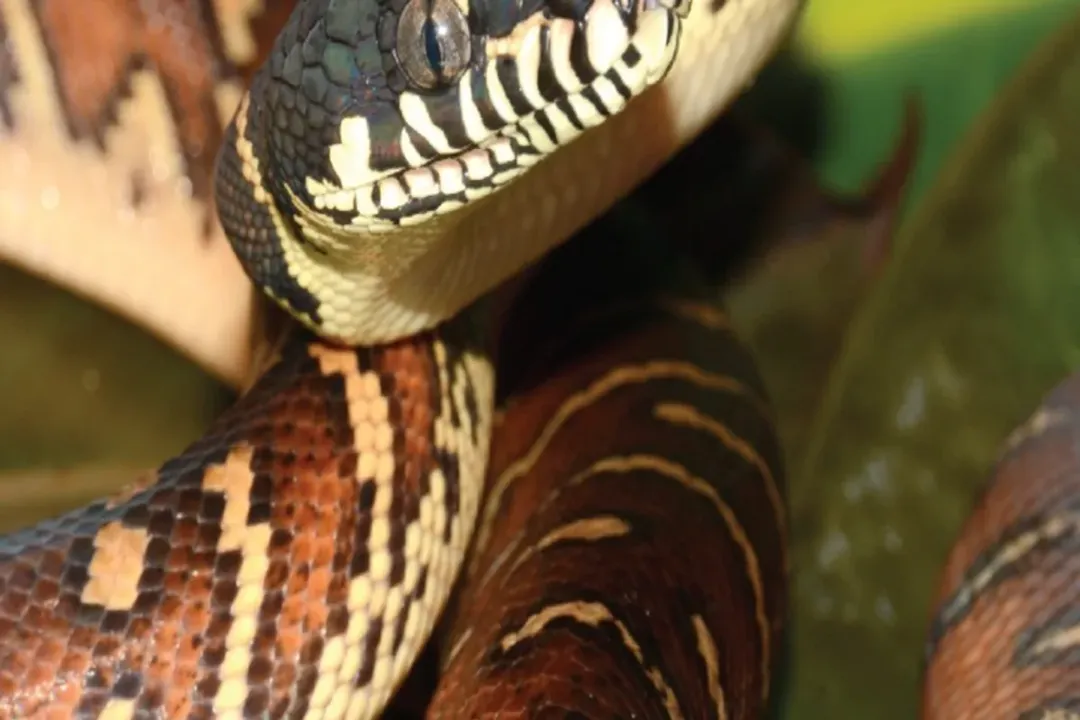
Understanding how large 6 to 10 feet truly is becomes clearer when placing the Boelens python in context with other snakes. For instance, it is frequently compared to the Children's Python (Antaresia childreni), but the contrast is stark; Boelens pythons are significantly longer and possess a more slender build. [9] While they share some visual similarities in terms of patterning or coloration with certain other New Guinea pythons, their overall dimensions are distinct. [9]
When keepers assess a snake's size, focusing purely on length can sometimes be misleading regarding overall mass or 'bigness.' A snake that is 7 feet long but very thin requires significantly different considerations than a 7-foot snake that is heavily muscled and thick-bodied. For the Boelens python, which is often described as being more slender than some other pythons of similar length, girth matters greatly when estimating space and handling requirements. [9] In this context, evaluating body mass relative to length—a sort of serpentine Body Mass Index—can be more informative than a tape measure alone. A healthy adult should display smooth, non-angular musculature down the length of its body, indicating it is receiving appropriate nutrition without becoming obese, which is crucial for longevity and mobility. [4] While specific weight standards for a "perfect" 7-foot Boelens are not universally established, a very thick, heavy specimen pushing 10 feet might weigh considerably more than a lean one of the same length, demanding more robust caging and handling support.

# Growth Factors
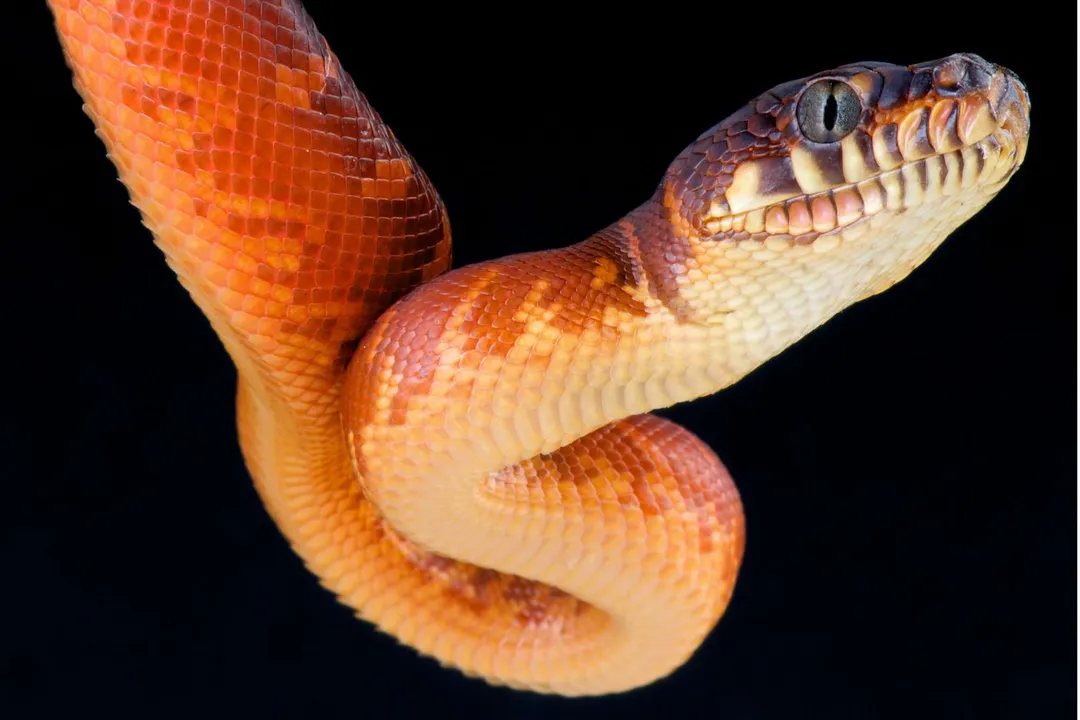
Several interconnected elements dictate whether a particular Boelens python will achieve the lower end of the size spectrum or push toward that 10-foot maximum. Heredity plays an undeniable role; just like in other animals, some snakes are genetically programmed to be larger than their littermates. [4] However, environmental factors often play an even more immediate role in realizing that genetic potential.
In captivity, the quality and consistency of diet are perhaps the most significant variables. [4] A diet rich in appropriately sized prey items, offered with consistent but not excessive frequency, allows for steady, healthy growth. Overfeeding, particularly at a young age, can lead to rapid weight gain that may strain the snake’s developing structure or predispose it to obesity later in life. [4] Conversely, chronic underfeeding will stunt growth, resulting in a smaller, lighter adult that never reaches its inherent potential length.
Geographic variation within the species in the wild might also contribute to size differences, though specific data comparing island populations might be less accessible than captive records. [1] In a captive setting, keepers must balance feeding schedules to promote the slow, steady growth typical of these snakes, which are not known for the incredibly rapid growth spurts seen in some other large constrictors. [4]
# Notable Extremes
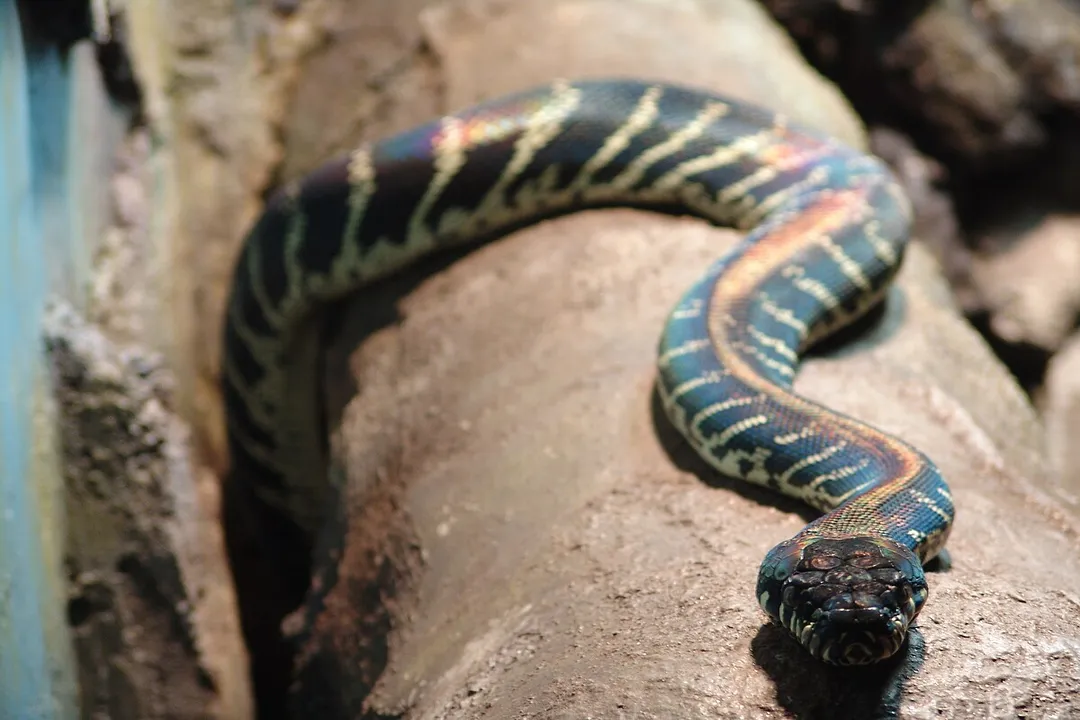
While the common reference points stop around 10 feet, there is one famous individual that significantly stretches this expectation: Champion, a male Boelens python residing at Zoo Atlanta. [3] Champion holds a notable place in herpetology circles, having reached an astounding length of 12 feet 7 inches (3.84 meters) and weighing in at 33 pounds (15 kg). [3]
This measurement of nearly 12.5 feet is substantially larger than the established maximum of 10 feet cited across other scientific and husbandry references. [1][2][4] Champion serves as an exceptional case study, demonstrating the absolute upper boundary of what a Boelens python can achieve, likely under ideal, long-term captive conditions that allowed for maximum genetic expression without the pressures or limitations found in the wild. [3] It is important to note that such individuals are exceedingly rare; keepers should plan husbandry based on the 6-to-8-foot average, understanding that an animal exceeding 10 feet is an outlier, albeit a spectacular one. [3][7]

# Enclosure Planning
Knowing the maximum potential size is not merely an academic exercise; it directly dictates responsible animal husbandry, especially concerning enclosure space. A snake requires an enclosure long enough to stretch out fully, ideally being able to utilize the entire length for thermoregulation and movement. [4]
If we operate under the assumption that a Boelens python could reach 10 feet, or even the slightly more conservative 8-foot length frequently cited, the corresponding enclosure needs to reflect that reality, not just the average hatchling size. [4][8] Many experienced keepers adhere to minimum guidelines that suggest an enclosure length equal to at least 2/3 or 3/4 of the snake's total length for comfortable housing. For an 8-foot snake, this means an enclosure floor space of roughly 5.5 to 6 feet long. If the snake reaches the 10-foot mark, the keeper must be prepared for a habitat requiring 7 to 7.5 feet of linear space. A good rule of thumb to apply when housing an animal whose final size is uncertain, but trending toward the upper end of the range, is to install an enclosure that accommodates the species' maximum known potential, adjusted slightly downward for practicality if the animal appears significantly less robust than the record holders. In the case of the Boelens, planning for an enclosure that is at least 6 feet long by 2 feet deep provides a good starting point for a juvenile, ensuring it won't immediately outgrow its home before reaching adulthood.
Furthermore, considering the species' tendency towards being more slender rather than overly bulky means that width and height are also important for climbing opportunities and maneuvering, even if length remains the primary dimension dictating the structure's footprint. [9] The necessity for secure, well-ventilated housing that can contain a powerful, climbing animal approaching 10 feet in length cannot be overstated when discussing responsible ownership of this gorgeous species. [4]
Related Questions
#Citations
Simalia boeleni - Wikipedia
Boelen's python Animal Facts - Simalia boeleni
The champion - Zoo Atlanta
Caring For The Boelen's Python - Reptiles Magazine
Simalia boeleni | Projectblackpython.org
Experience with Boelen's Pythons in America for Australian Reptile ...
Mark O'Shea - The Official Website
Boelen's Python | Saint Louis Zoo
Difference between Boelen's Python and D'Albertis' Python? : r/snakes