Is a Diamond Python a carpet snake?
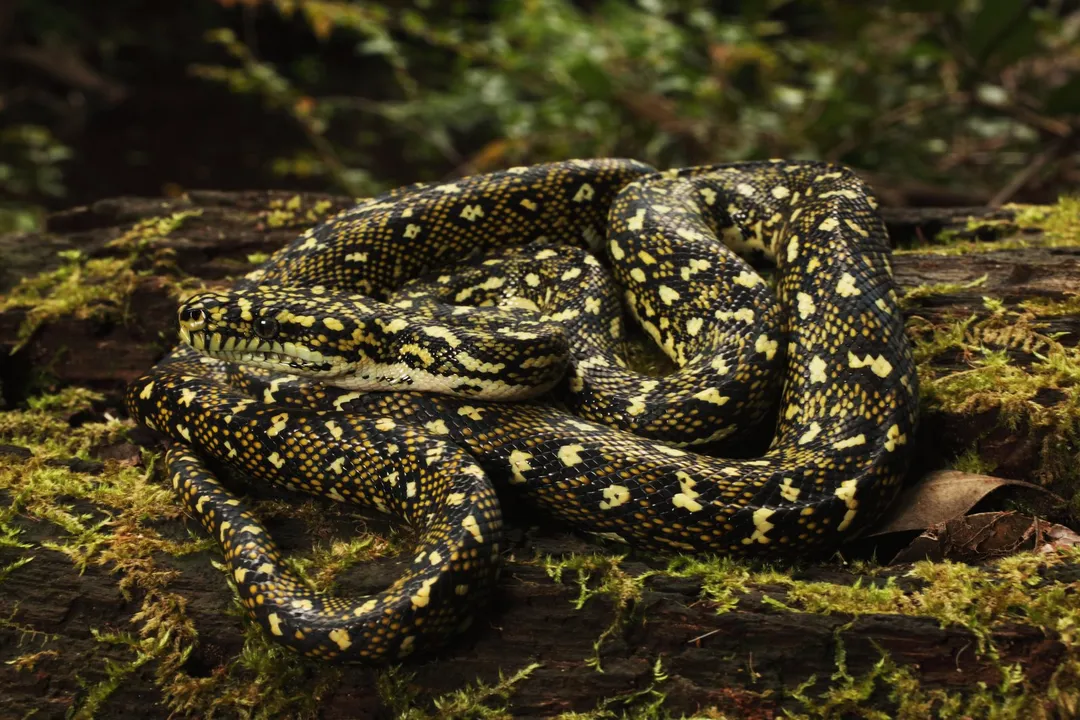
The Diamond Python is not merely related to a carpet snake; it is, scientifically speaking, a specific type of carpet python. This classification places the Diamond Python, known formally as Morelia spilota spilota, as a distinct subspecies within the broader species complex of the Carpet Python, Morelia spilota. Understanding this hierarchical relationship is key to appreciating the diversity of this group of snakes found across Australia. While the term "carpet snake" is often used loosely by the public to describe a range of non-venomous snakes in the region, experts place the Diamond Python firmly within that recognized group.
# Scientific Placement
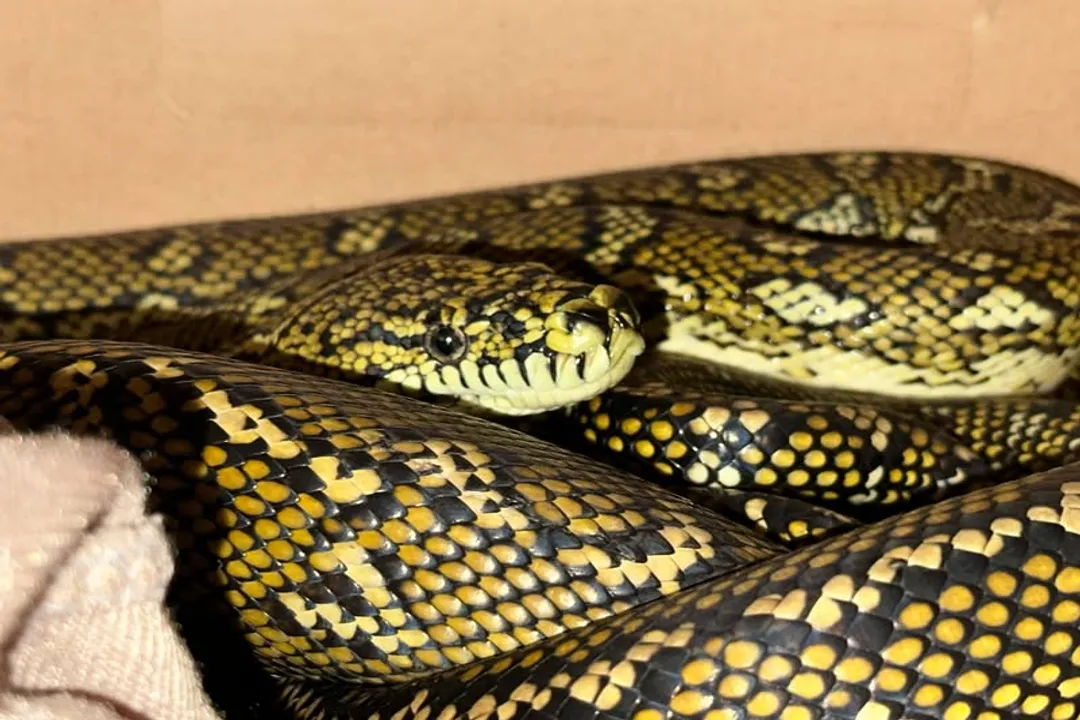
The scientific naming convention clearly shows this connection. The species name is Morelia spilota, and the third part of the trinomial nomenclature, spilota, denotes the specific subspecies. This means that all Diamond Pythons are Morelia spilota, but not all Morelia spilota are Diamond Pythons; there are several recognized subspecies that fall under the Carpet Python umbrella.
The Australian Museum confirms that the Diamond Python is one of the more well-known populations belonging to the Carpet Python species complex. This grouping acknowledges shared ancestry and characteristics across the different regional forms, even as they have evolved unique appearances based on where they live.
# Diamond Identity
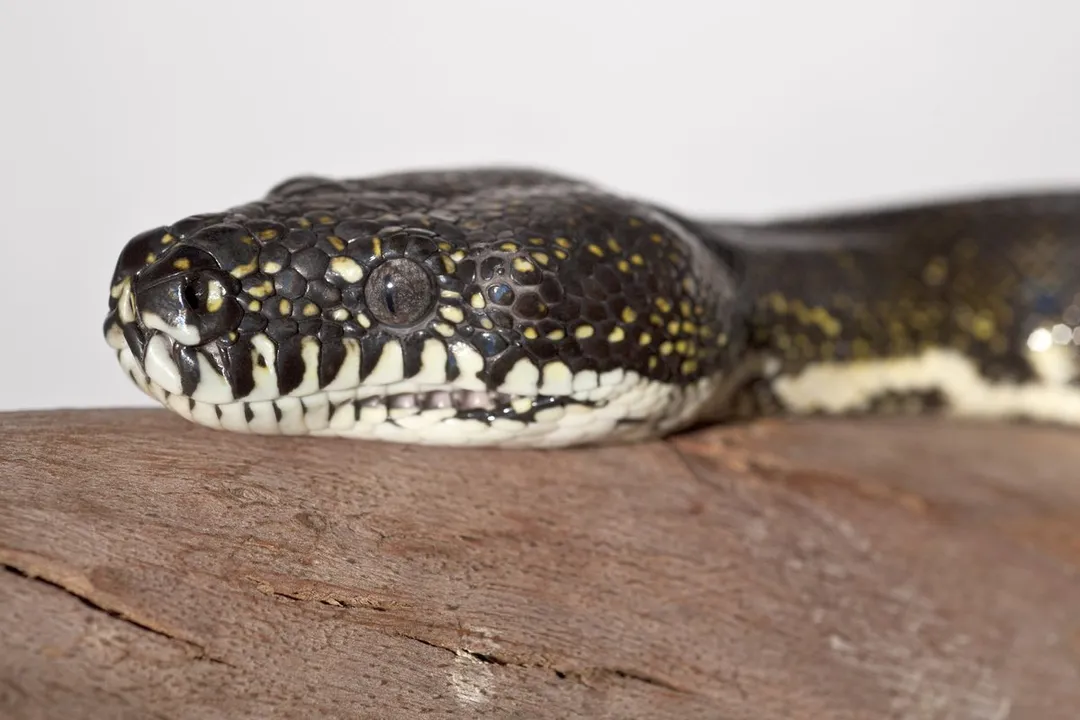
What sets the Diamond Python apart visually is its distinctive pattern. They typically possess a highly contrasted, striking appearance that often features a yellowish or creamy ground color overlaid with dark, irregular blotches or bands that resemble diamonds. This patterning is what gives the snake its common name.
These snakes are generally smaller than some other carpet python subspecies. While size can vary significantly based on location and individual health, Diamond Pythons found in areas like the Sydney Basin might average around two meters in length, though larger individuals certainly exist. Their appearance can sometimes be confused with other pythons, leading to common misidentification in the field. For instance, snake catchers operating near the NSW South Coast often encounter questions from the public distinguishing between a Diamond Python and what might be a Coastal Carpet Python (Morelia spilota mcdowelli) or another local variation.
# Carpet Scope
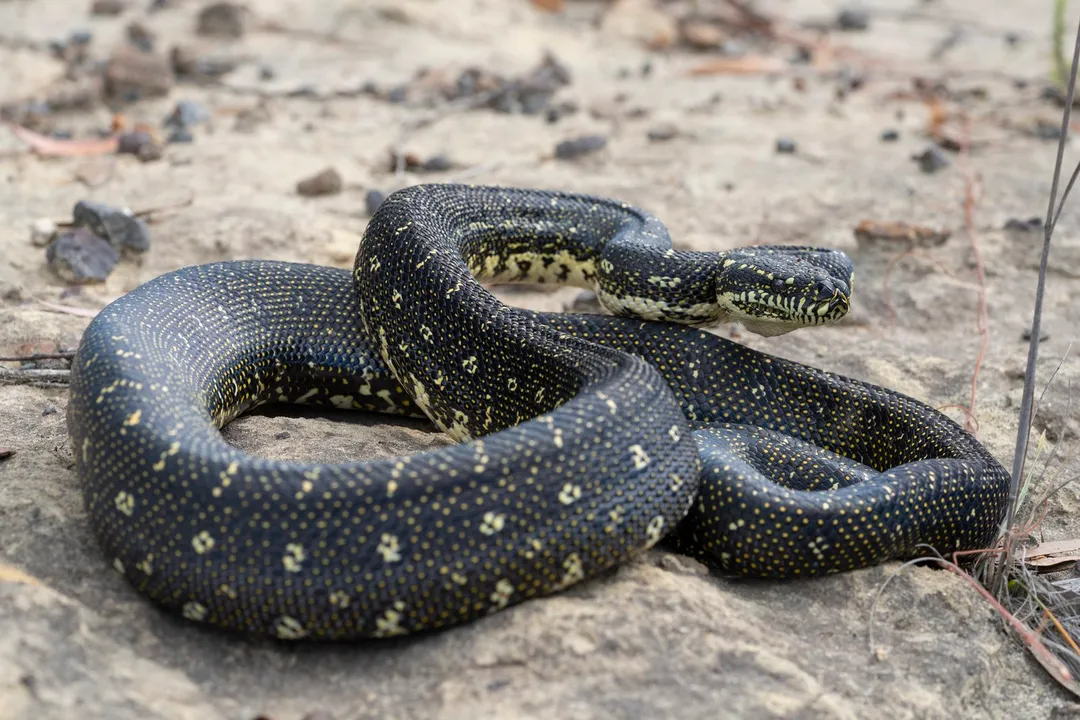
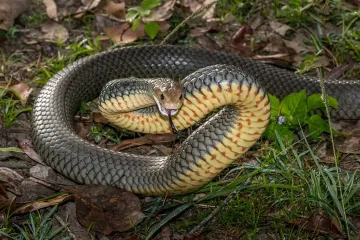
The term Carpet Python, or Carpet Snake, describes a species with a wide distribution across Australia, leading to significant variation among its members. Morelia spilota is a widely distributed species, and its various subspecies inhabit a vast range of environments, from tropical rainforests to drier woodlands. This wide geographical spread is the primary driver for the differences observed between populations.
Other recognized subspecies within the Morelia spilota group include the Coastal Carpet Python (M. s. mcdowelli), the Jungle Carpet Python (M. s. cheynei), and the Inland Carpet Python (M. s. reticulata). Each of these forms exhibits unique traits in terms of color, pattern complexity, and average adult size, tailored to its specific ecological niche. The Inland Carpet Python, for example, often displays a more reticulated, net-like pattern compared to the distinct diamond shapes of the spilota subspecies. Backyard Buddies notes that Carpet Pythons, in general, are non-venomous constrictors that play a role in controlling small mammal populations.
When we look at the spectrum of M. spilota, the Diamond Python occupies a specific, geographically defined slot, sharing the general characteristics of being a strong, agile, and generally terrestrial or semi-arboreal snake.
# Regional Differentiation
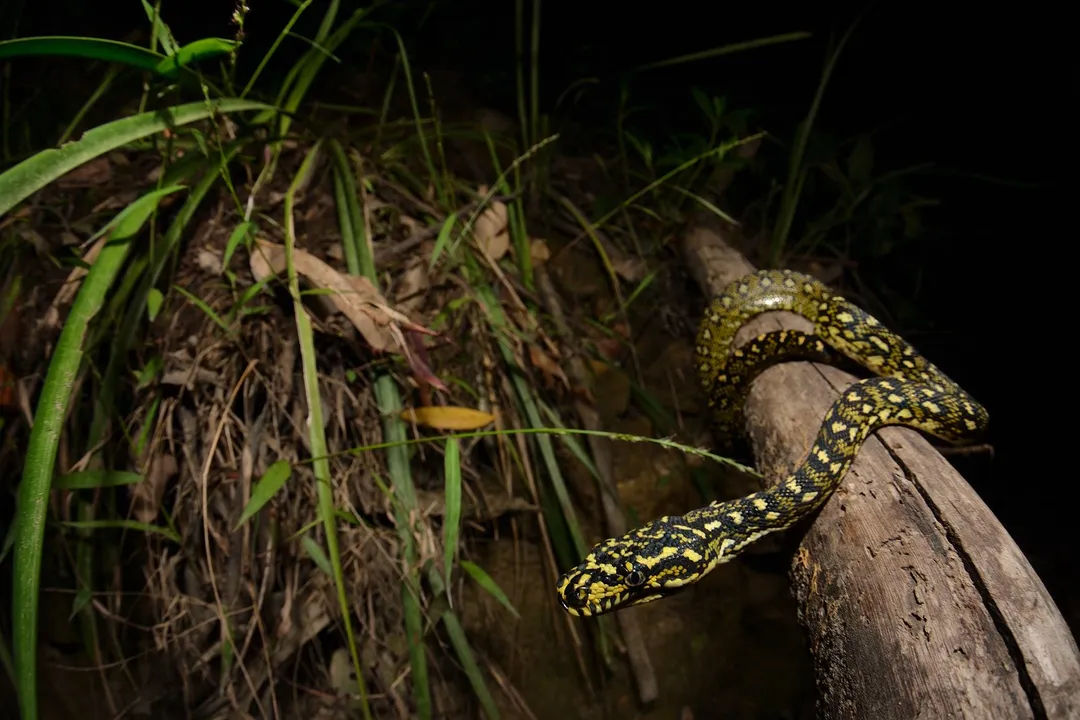
Geographical isolation has allowed these subspecies to diverge, which is why identifying which carpet snake you have found sometimes comes down to knowing where you found it. The Diamond Python (M. s. spilota) is primarily associated with the coastal regions of southeastern New South Wales, particularly around the Sydney area and extending southwards. The specific location where a snake is observed is often the first clue in confirming its identity, especially in regions where the ranges of different subspecies might meet or overlap, causing transitional or intermediate appearances.
For example, someone near Batemans Bay in NSW might post a picture online asking if their snake is a Diamond or a Carpet, reflecting the real-world ambiguity that arises from these closely related forms. A snake catcher observing a specimen in the rainforests of Northern New South Wales or Queensland might be looking at a Coastal or Jungle Carpet Python instead, which will have looser, more irregular patterning rather than the classic diamond checks. The general Carpet Python often exhibits a more variable background color, sometimes appearing darker brown or blackish, which can differ from the typically lighter base of the Diamond Python.
To better organize this complex relationship, considering the visual markers alongside the taxonomic status offers a clearer picture for both enthusiasts and researchers:
| Feature | Diamond Python (M. s. spilota) | General Carpet Python Complex (M. spilota spp.) |
|---|---|---|
| Taxonomic Rank | Subspecies | Species |
| Primary Pattern | Distinctive, creamy/yellowish "diamonds" on dark ground | Highly variable; reticulated, banded, or blotched |
| Typical Range | Coastal South-Eastern NSW (e.g., Sydney Basin area) | Wide distribution across much of mainland Australia |
| Ground Color | Often lighter, yellowish to tan base | Can range from light tan to very dark brown/black |
The subtlety between the different M. spilota forms means that even experienced observers need to compare the snake's markings against known subspecies distribution maps to be certain, which highlights why general terms like "carpet snake" often fail to capture the necessary detail.
# Behavior and Ecology
As members of the Carpet Python species, Diamond Pythons share fundamental behavioral traits. They are known for their intelligence and adaptability, which allows them to thrive in areas close to human habitation, such as suburban gardens and roof cavities. This proximity often leads to encounters with people, though they are not considered dangerous to humans unless provoked, as they are non-venomous constrictors.
Diamond Pythons, like their cousins, are excellent climbers and are frequently found resting in trees or along fences, waiting to ambush prey. Their diet generally consists of small mammals, birds, and occasionally reptiles. The ability to climb is a critical adaptation, particularly for the arboreal forms of the Carpet Python complex, and the Diamond Python retains this skill well.
One interesting observation when comparing the spilota subspecies to, say, the Jungle Carpet Python, is the perceived temperament difference, although this is heavily influenced by individual experience and whether the snake was captive-bred or wild-caught. While direct comparisons based solely on the provided data are limited, the general understanding is that interaction frequency in urban areas might lead to a slightly higher baseline of wariness in wild Diamond Pythons near Sydney compared to more isolated populations. Understanding the local snake catcher’s perspective is crucial here; they often note that handling history significantly shapes how a snake reacts, regardless of its genetic background.
# Identification Confidence
For the everyday person encountering a snake, deciding whether they are looking at a Diamond Python or just a generic Carpet Python often comes down to a visual assessment of pattern clarity. If the markings are crisp, symmetrical, and clearly form diamond shapes, the confidence leans heavily toward M. s. spilota, provided the location is within its known range of coastal NSW. If the pattern is highly irregular, stretched, or broken up into many smaller, less defined blotches, it is more likely another subspecies, such as the Coastal Carpet Python, which ranges further north.
It is worthwhile for anyone interested in local wildlife to familiarize themselves with the exact distribution maps published by Australian biological surveys. Simply knowing the general area where you are standing—for instance, whether you are south of Wollongong versus north of Brisbane—can dramatically narrow down the potential subspecies identification of any Morelia spilota seen. This geographical context acts as a necessary filter when the visual evidence alone is ambiguous.
For those interested in keeping these snakes as pets, the distinction between subspecies is far more critical than just a casual identification. Professional keepers and breeders must maintain strict lineage records, as hybridization between subspecies, though naturally rare in the wild, can occur in captivity and significantly alters the predictable traits (like adult size and temperament) expected of a purebred animal.
# Further Distinctions
While the Diamond Python is a Carpet Python subspecies, it's important not to confuse this scientific reality with the common vernacular sometimes used in the field. Some sources suggest that in certain regions, "Carpet Python" is used as a catch-all term for any M. spilota that isn't specifically identified as one of the more famous subspecies like the Jungle or Inland varieties. This conversational shorthand is where much of the confusion arises for the layperson. If a snake fits the general description of a Carpet Python—non-venomous, patterned constrictor—but lacks the specific diamond markings or is found outside the typical Diamond Python territory, it is often simply called a Carpet Python.
This linguistic variation means that while a herpetologist sees a strict biological hierarchy—Subspecies belongs to Species—a local resident might just see "Carpet" or "Diamond" as two separate, albeit similar, local snakes. This practical, localized naming system is often based on the most visible traits encountered locally, rather than strict adherence to the trinomial classification.
In summary, the answer is definitively yes: the Diamond Python is a Carpet Snake because it belongs to the Carpet Python species, Morelia spilota. It is distinguished from other Carpet Pythons by its specific geographic range and its highly recognizable, beautiful diamond-shaped markings. Appreciating the biodiversity within this single species complex reveals a fascinating study in how Australian reptiles adapt their appearance to fit their environment, even when separated by relatively small distances along the coastline.
#Videos
Diamond Pythons - Cold Weather Carpet Pythons - YouTube
Related Questions
#Citations
Morelia spilota spilota - Wikipedia
Diamond or carpet? [Bateman's Bay, NSW] : r/whatsthissnake - Reddit
Herp Queries: Carpet Python Or Diamond Python. What's The ...
What type of snake is this, carpet python or diamond? - Facebook
Diamond Python - The Australian Museum
Carpet Snake in Northeast NSW, Australia—Diamond Python
Coastal Carpet Python - Murwillumbah Snake Catchers
Diamond Pythons - Cold Weather Carpet Pythons - YouTube
Carpet Python - Backyard Buddies