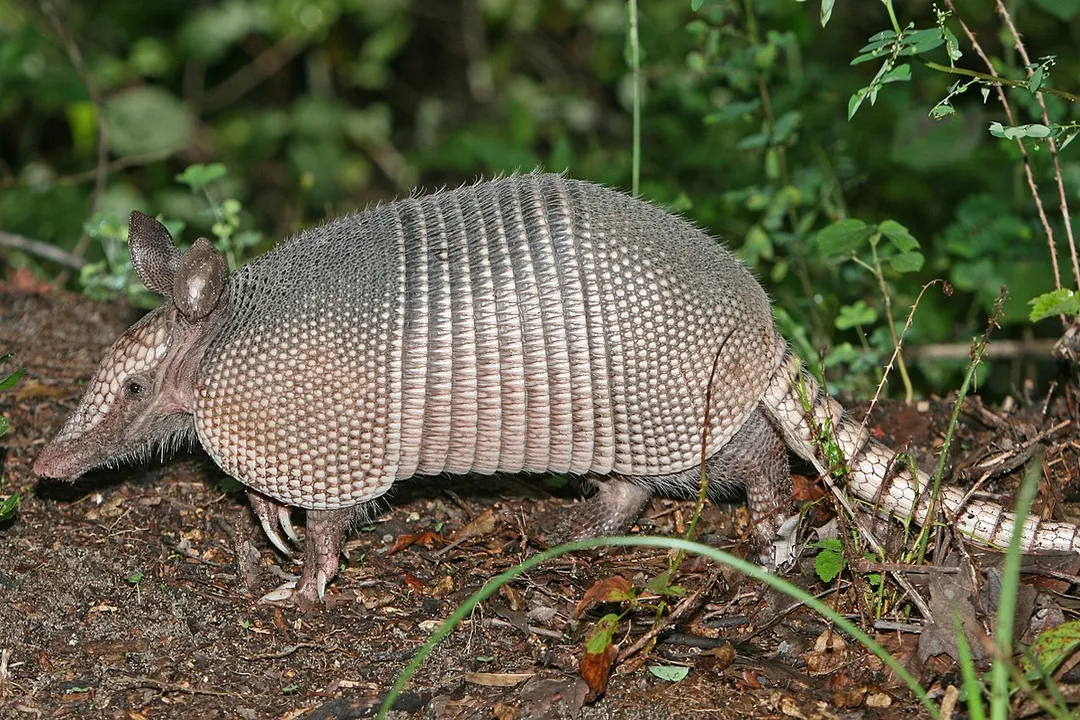
Why might the armadillo's integument (shell and sparse hair) suggest susceptibility to temperature changes?
Answer
The large surface area of the shell and sparse hair may make them more susceptible to rapid temperature fluctuations.
The presence of sparse hair and a large bony shell surface suggests they may be more susceptible to rapid temperature changes compared to fully furred animals, possibly explaining their preference for burrows.
Related Questions
What are the interlocking bony plates that form an armadillo's dermal armor called?How does the flexibility of an armadillo's shell compare to that of a turtle's shell?From which language is the word 'armadillo' derived, and what does it mean?Which species is recognized as the largest extant armadillo?What unique defensive adaptation is associated with the La Plata three-banded armadillo?What feature does the armadillo use its long, sticky tongue for?What characteristic distinguishes armadillo teeth from those of most other mammals?Why might the armadillo's integument (shell and sparse hair) suggest susceptibility to temperature changes?What is the primary physical tool armadillos use for digging extensive burrows?What is the typical number of movable bands found in the Nine-Banded Armadillo?Which species represents the extreme smallest size mentioned in the text?