What is the physical appearance of a cobra?
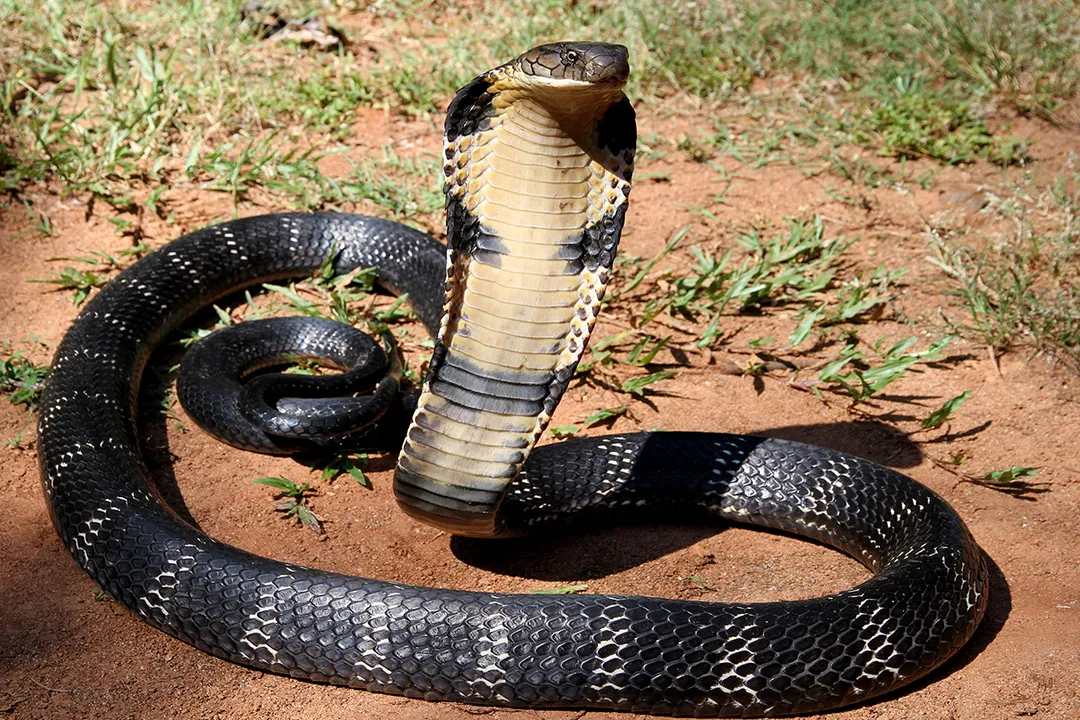
The image of a cobra rising up, hood spread wide, is instantly recognizable worldwide, symbolizing both danger and mystique in the reptile world. While the term "cobra" encompasses several species, the most frequently detailed physically is the King Cobra (Ophiophagus hannah), which presents an astonishing profile characterized by immense length and specialized defensive anatomy. [4][5] Understanding the physical appearance requires looking past the defensive posture to examine the snake’s natural resting form, coloration, and the unique scale arrangement that defines it.
# Extreme Length
When discussing the physical attributes of cobras, size is often the most staggering initial observation, particularly for the King Cobra. [3] These snakes hold the title of the world's longest venomous snakes. [3][4] A fully grown King Cobra can often reach lengths up to 18 feet (5.5 meters). [3][6] For context, this places them in an entirely different size category than many other elapids. [3] The San Diego Zoo notes that cobras generally are considered medium to large snakes, but the sheer scale of the longest species sets them apart. [1] This impressive length contributes significantly to their imposing presence, even when they are not actively threatening a perceived danger. [4]
# Skin Pattern
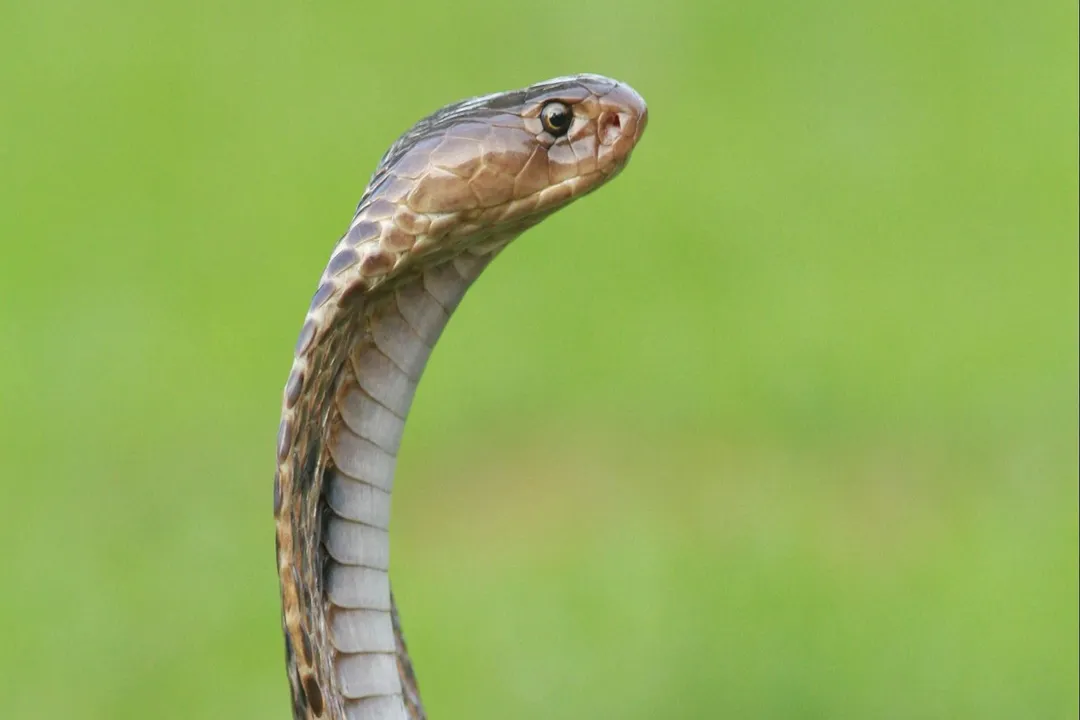
The visual appeal of a cobra is heavily influenced by its coloration and pattern, which surprisingly shows considerable variability depending on geography. [8] King Cobras can display a spectrum of base colors, ranging from olive-green and tan to darker shades of black. [3][6] These base colors are often overlaid with distinct markings. [8] Many specimens exhibit lighter bands or crossbands running down the length of their bodies, contrasting with the darker background. [3][6] Some individuals, particularly in certain regions, might appear nearly uniform black. [5]
It is worth noting that while many people associate cobras with the famous "spectacle" marking on the back of the head, this pattern is most prominently and consistently featured on the Indian Cobra (Naja naja), rather than being a universal feature of the King Cobra. [8] King Cobras are characterized more by the general banding pattern across the body and a specific scale arrangement on the head. [4][8]
# Neck Display
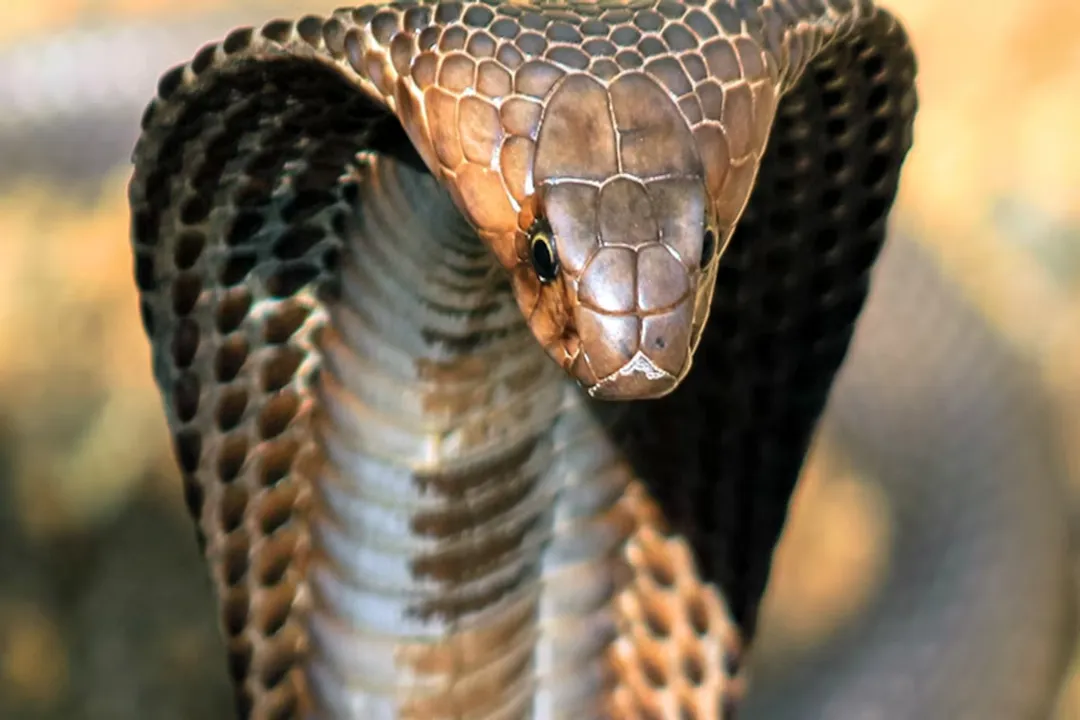
The defining physical characteristic of any cobra is undoubtedly the hood. [1] This feature is not a permanent structure but rather a remarkable piece of biological engineering deployed in moments of alarm or aggression. [1][5] The hood is created when the snake rears up its anterior body section—sometimes achieving nearly one-third of its total length off the ground—and flares out the elongated ribs located in its neck region. [1][5] This action dramatically increases the apparent width of the snake's head and neck, serving as a visual warning to potential predators or threats. [5]
The musculature and skeletal structure required to rapidly deploy and hold this display must demand significant metabolic resources. While most snakes conserve energy by moving slowly or resting, the sudden activation of the neck muscles and skeletal spreading to create the hood represents a brief, intense expenditure of power, likely reserved only for situations where the threat assessment is high enough to warrant such a dramatic risk of exposure. [1] King Cobras, in particular, tend to have a relatively longer and narrower hood shape compared to some of their broader-headed relatives. [4]
# Head Scales
The structure of the head itself offers specific identifying characteristics that aid herpetologists in classification. [4] King Cobras possess a set of nine large scales arranged on the top of their heads. [4][7] Perhaps the most crucial of these scales are the pair of large occipital scales located at the rear of the head. [4][8] These large scales help distinguish Ophiophagus hannah from many other cobra species found across Asia. [8] Furthermore, their dentition is specialized for venom delivery, featuring large, fixed fangs situated at the front of the upper jaw, capable of injecting potent neurotoxic venom. [4] Their eyes are notably large, contributing to good vision, which is an advantage for an active predator. [8]

# Body Form
Despite their extreme length, King Cobras are often described as being relatively slender for their overall size when compared to some other large, heavy-bodied snakes. [4] This build is highly adapted to their environment and predatory lifestyle. [8]
This comparatively slender body, relative to the massive length achieved, suggests an anatomy prioritizing speed and agility over sheer bulk or constriction power, which is less necessary given their reliance on venom. [4] In environments that might require climbing or maneuvering through dense undergrowth, a streamlined body form would allow the snake to move with greater efficiency, enabling quicker strikes or escapes, characteristics vital for an animal that can grow to such imposing dimensions. [8]
In summary, the physical appearance of this iconic cobra is a combination of impressive scale—maximum length, distinct regional coloration, and the iconic, yet temporary, flared neck display—all built upon a foundation of specialized head scales and a proportionally slender body structure. [3][4][8]
#Videos
Cobras for Kids | Learn all about these fascinating reptiles! - YouTube
Related Questions
#Citations
Cobra | San Diego Zoo Animals & Plants
Cobra | Venomous Snake Species & Characteristics | Britannica
King Cobra | National Geographic Kids
King cobra - Wikipedia
Cobras for Kids | Learn all about these fascinating reptiles! - YouTube
King Cobra Fact Sheet | Blog | Nature - PBS
King Cobra | Saint Louis Zoo
Ophiophagus hannah (Hamadryad, King Cobra) | INFORMATION
King Cobra: A Venomous Snake's Diet and Mating Rituals