What is the physical appearance of a sparrow?
When people speak of sparrows, they are often picturing a small, common brown bird seen hopping near city cafes or building nests under eaves. However, the world of sparrows is far richer than just that single familiar figure. While the term is loosely applied to many small brown birds, particularly in North America, a close look reveals significant variations in size, plumage patterns, and head markings that separate one species from another. [8] Distinguishing between a House Sparrow, a Song Sparrow, or a Field Sparrow, for instance, comes down to noticing subtle but critical details in their coloration and structure. [4]
# House Sparrow Look

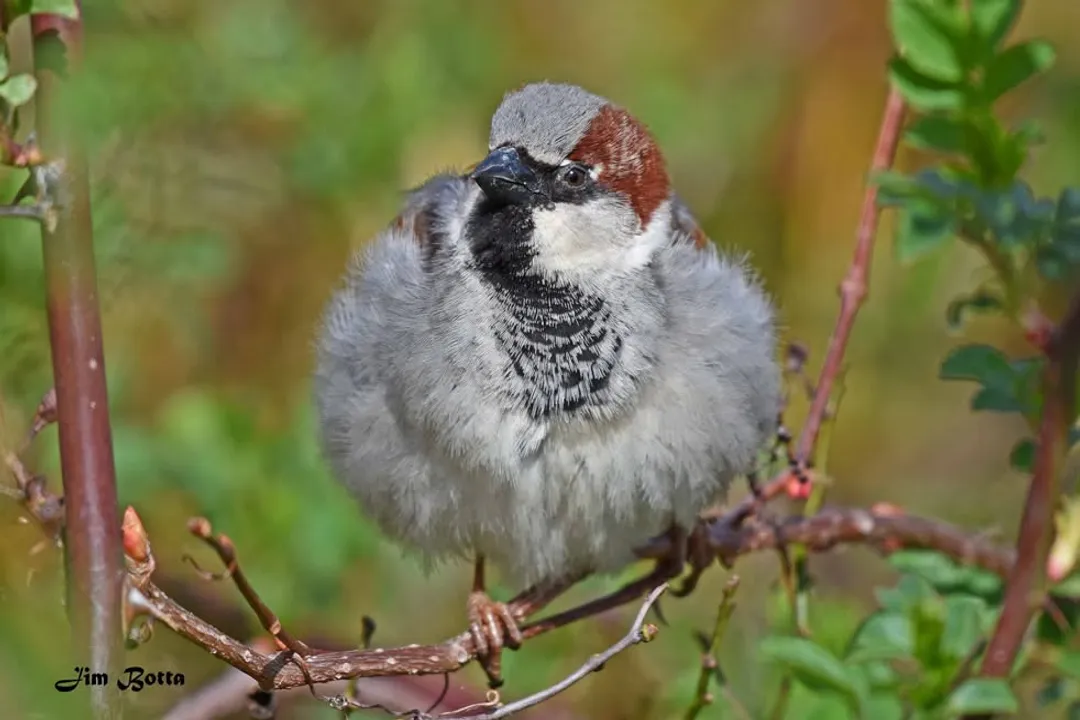
The House Sparrow (Passer domesticus) is perhaps the most widely recognized species globally, often associated with human settlements. [2][7] It is generally stocky and plump-looking, with a relatively short, thick bill suited for cracking seeds. [1] An average adult House Sparrow measures around 5.9 to 6.3 inches in length and weighs between 0.88 and 1.23 ounces. [2]
# Male Plumage
The male House Sparrow presents a much more striking appearance than its mate, showcasing distinct blocks of color. The head is capped with a gray crown, which contrasts sharply with the rich, chestnut-brown streak running from behind the eye back toward the nape. [1] Perhaps its most defining feature, particularly noticeable in good light, is the black bib or throat patch. This patch extends down the upper breast, and its size can actually be an indicator of social status or dominance within the flock. [1][2] Males also sport rufous or reddish-brown on the wings, often appearing as two prominent bars against the otherwise brownish back. The underparts are a plain, dingy gray. [1]
# Female Appearance
Female House Sparrows are decidedly less colorful, providing excellent camouflage. They lack the male’s black bib and gray crown. [1] Their plumage is generally a drab, streaky brown and buff color overall. [2] Look closely, and you will see a pale, buffy stripe running above the eye—a key feature to distinguish them from many other brown-streaked sparrows. [1] Their wings show less contrast than the male's, being duller brown overall, and their underparts are unstreaked pale gray or whitish. [2]
It's interesting to note that while the House Sparrow is often viewed as a single entity, its appearance is so tied to its urban environment that local populations can sometimes appear slightly more muted or, conversely, bolder in their markings depending on food availability and population density, a subtle form of localized adaptation that field guides don't always capture. [4]
# Song Sparrow Marks

Moving away from the often-introduced House Sparrow, native North American sparrows like the Song Sparrow (Melospiza melodia) exhibit a much more complex, streaked pattern that is crucial for identification. [6] If you see a small bird that seems entirely covered in brown and black streaks, you are likely looking at a true native sparrow, rather than the bolder House Sparrow.
# Streaking Patterns
The Song Sparrow is famous for its heavy, messy streaking across the breast and flanks. [6] While many small brown birds are streaked, the Song Sparrow’s pattern is characterized by these streaks converging in the center of the breast to form a noticeable, dark central spot or smudge. [4] This central spot acts like a bullseye, a reliable marker for identification when light conditions obscure other features. [6] The back and wings are dark brown with lighter, buffy streaks, providing excellent camouflage in brushy habitats. [6]
# Head and Bill Structure
Unlike the House Sparrow male’s clean blocks of color, the Song Sparrow’s head is heavily marked with streaks of black, gray, and reddish-brown, often appearing mottled. [6] It typically has a grayish eyebrow stripe, though it lacks the distinct, clean white or pale stripe seen on the female House Sparrow. [4] The bill on a Song Sparrow is relatively slenderer and more sharply pointed than the stout bill of the House Sparrow, suggesting a slightly different foraging strategy leaning more towards insects and softer seeds. [6] A Song Sparrow generally measures about 5.5 to 6.5 inches, similar in length to the House Sparrow, but often appears slightly leaner. [6]
# Field Sparrow Features

The Field Sparrow (Spizella pusilla) offers yet another variation on the small brown bird theme, often found in open, grassy areas or fields. [9] While still streaked, its appearance is generally softer and less aggressively patterned than the Song Sparrow.
# Soft Colors
Field Sparrows present a look that is arguably the palest of the common brown sparrows. They have grayish-buff underparts that are faintly washed with pale brown on the sides. [9] Their back is streaked, but the overall impression is lighter and less dark than a Song Sparrow. A key identifier for the Field Sparrow is the lack of a strong central breast spot; their streaking is much finer and more diffuse compared to the heavy markings of the Song Sparrow. [4][9]
# Unique Head Mark
What truly sets the Field Sparrow apart is its head pattern. It features a distinct, plain pinkish or flesh-colored bill that stands out against its plumage. [9] Furthermore, it possesses a conspicuous rufous (reddish-brown) cap on the crown, which is generally clean and unstreaked, setting it apart from the heavily marked heads of many other small sparrows. [4] They also exhibit a pale ring around the eye, giving them a slightly wide-eyed look. [9]
# Comparative Field Marks
To better appreciate the differences, it helps to compare these key structural and color elements side-by-side, which is what birders do instinctively in the field.
| Feature | House Sparrow (Male) | Song Sparrow | Field Sparrow |
|---|---|---|---|
| Overall Impression | Stocky, defined color blocks | Heavily streaked, dark | Pale, soft streaks |
| Breast Mark | Large black bib/patch | Prominent central dark spot | Faint, diffuse streaks; no central spot |
| Crown | Gray, often plain | Streaked brown/gray/rufous | Distinct, clean rufous/chestnut cap |
| Bill Color | Dark gray/black | Dark gray/black | Pinkish/flesh-colored |
| Eye Ring | Minimal/none noticeable | Varies, often indistinct | Pale, noticeable ring |
If you are observing a sparrow in an environment like a park or backyard, observing the structure of the markings, rather than just the color brown, is the fastest way to a preliminary ID. The House Sparrow’s blockiness (gray head, brown wings, black bib) is distinct from the streaky patterns of the native species. [1][6] When you see heavy, chaotic streaking that forms a dark center point, your focus should shift immediately to native sparrows like the Song Sparrow. [4] In an area where both House Sparrows and native sparrows congregate, you can often gauge the relative chunkiness of the House Sparrow; they frequently appear thicker, with a shorter tail, compared to the leaner profile of a Song or Field Sparrow. [2]

# Plumage Variation and Sexual Dimorphism
It is vital to remember that most North American sparrows exhibit sexual monomorphism, meaning males and females look very similar, making gender identification difficult unless you are familiar with the subtle cues in species like the Song Sparrow. [6] The House Sparrow is a notable exception in this local context, displaying strong sexual dimorphism where the male is far more colorful than the drab female. [1][2] This difference is a classic indicator: if the male and female of a species you are observing look vastly different, you are almost certainly looking at an introduced species like the House Sparrow, rather than a native Passerella or Melospiza species. [4]
For the monomorphic species, slight variations in size or the brightness of the streaks can sometimes suggest gender, but relying on plumage alone is risky. For instance, some Song Sparrows may show slightly broader streaks or richer tones seasonally, but the core pattern—heavy streaking converging at the breast—remains constant across both sexes. [6]
When attempting to identify any small brown bird, one helpful mental exercise is to strip away the color and focus only on line and shape. Notice how the light streaks run along the wing feathers—are they neat, thin lines creating sharp stripes, or are they fuzzy borders around dark centers? A neat, sharp striping pattern often points toward certain species, whereas a blotchy, messy look points toward others. [8] Understanding these subtle variations in feather edging—the difference between a clean feather margin and a fuzzy one—is often more useful than trying to name a specific shade of brown under variable light conditions.
# Size and Shape Cues
While we focused heavily on plumage patterns, physical appearance also encompasses overall shape and size, which can rule out candidates quickly. Generally, sparrows are small passerines, but even slight differences in bulk matter for identification. [1][2]
The House Sparrow, due to its stout build and short tail, often appears more compact or "chunky" than many native sparrows of a similar length. [2] Compare this to a species like the Song Sparrow, which, despite having a similar length, appears more attenuated, with a relatively longer tail that it often bobs when perched or hopping. [6]
The Field Sparrow, while sharing the slender profile, often appears slightly smaller overall than the House or Song Sparrow, reinforcing its delicate look. [9] Always use nearby objects or known local birds as a size reference if possible. A useful field trick, especially when watching sparrows forage on the ground, is to note their gait. House Sparrows often hop with both feet together, whereas many native sparrows, like the Song Sparrow, exhibit a more mixed hop-and-step pattern, subtly influencing how their body shape is presented to the observer. [6]
In summary, the physical appearance of "a sparrow" is a spectrum ranging from the boldly marked, chunky House Sparrow with its gray cap and black bib, to the intricately streaked Song Sparrow defined by its central breast spot, and the pale, pink-billed Field Sparrow crowned with solid chestnut. Recognizing which sparrow you are looking at means moving past the general category and dissecting the details of the head, the breast pattern, and the bill structure. [4][8]
#Videos
Learn to Identify 10 Common Sparrows! - YouTube
Related Questions
#Citations
House Sparrow Identification - All About Birds
House sparrow - Wikipedia
Learn to Identify 10 Common Sparrows! - YouTube
Recognizing Sparrows, Part 2: Sparrows with Unstreaked Breasts
House Sparrows Introduction and Characteristics in North America
Song sparrow - National Zoo
House Sparrow - Invasive Species Centre
Identification of 11 Sparrow Species: a Photographic Guide
Bird of the Week: Field Sparrow - Travis Audubon