What is the physical appearance of a ball python?
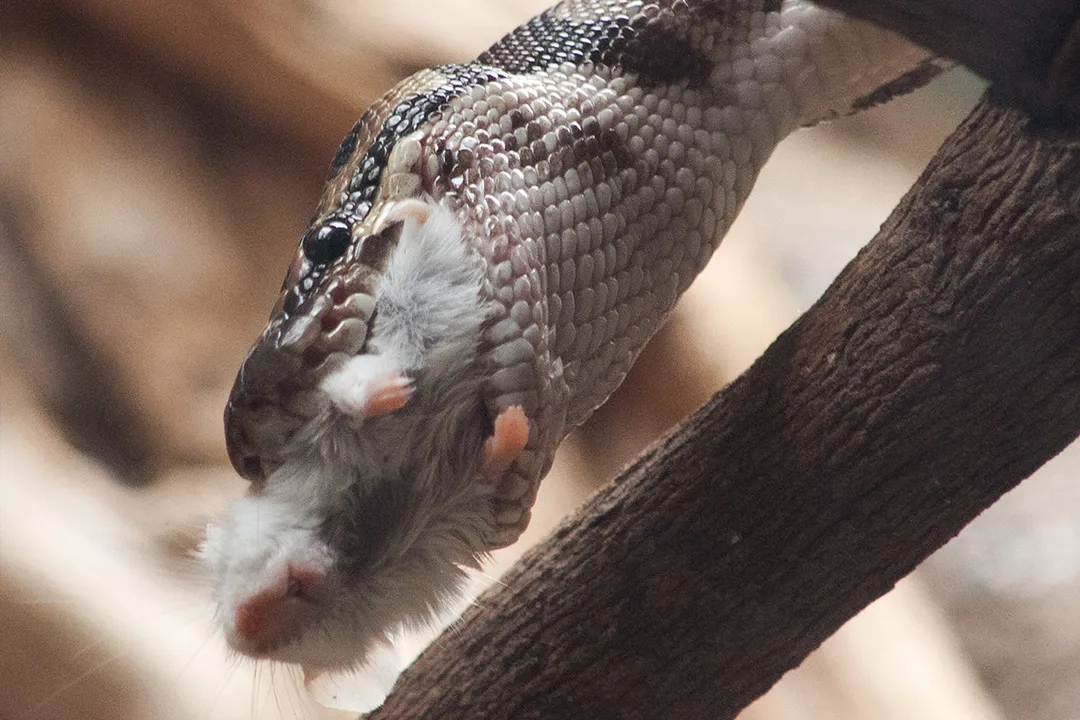
The physical characteristics of the Ball Python, scientifically known as Python regius, present a study in compact, heavy-set serpentine architecture. They are widely recognized in the pet trade for their manageable size and typically docile temperament, features intrinsically linked to their morphology. Generally, adult specimens measure between 3 and 5 feet in total length. However, it is common for females to attain slightly larger dimensions than their male counterparts. In terms of mass, a healthy adult might weigh approximately three pounds. This combination of moderate length and substantial girth gives them a notably stocky or heavy-bodied appearance when compared to many other snake species of a similar length. Their scientific name, regius, meaning "royal," is thought by some sources to reference their perceived regal appearance, perhaps tied to their pattern or historical significance.
# Size Build
When considering their stature, it's helpful to establish a baseline. While many people new to the species might see a juvenile snake in a pet shop and assume they remain small, the transition to the adult 3 to 5-foot range is gradual. For instance, observing a consistently large female might lead an enthusiast to expect a full 5-foot length, while a smaller male might only reach 3.5 feet. The overall impression given by a mature Ball Python is one of solidity. Their musculature is well-developed, which contributes to their tendency to curl tightly into a ball when resting or feeling threatened—a behavior that gives them their common name. This tight coiling capability is visually striking; a full-grown snake can condense its entire body mass into a sphere surprisingly small, often just large enough to conceal its head completely within the coils. This defensive posture highlights the relative breadth of their body diameter in relation to their length, a significant factor in their overall visual profile.
If we compare the typical mature size of a Ball Python to, say, a more slender corn snake, the difference in proportional mass becomes apparent. While a corn snake approaching five feet might appear long and whip-like, the Ball Python of the same length looks considerably thicker through the mid-body, giving it a more robust presence even when uncoiled and merely resting on a surface. This density is a key physical trait.
# Wild Pattern
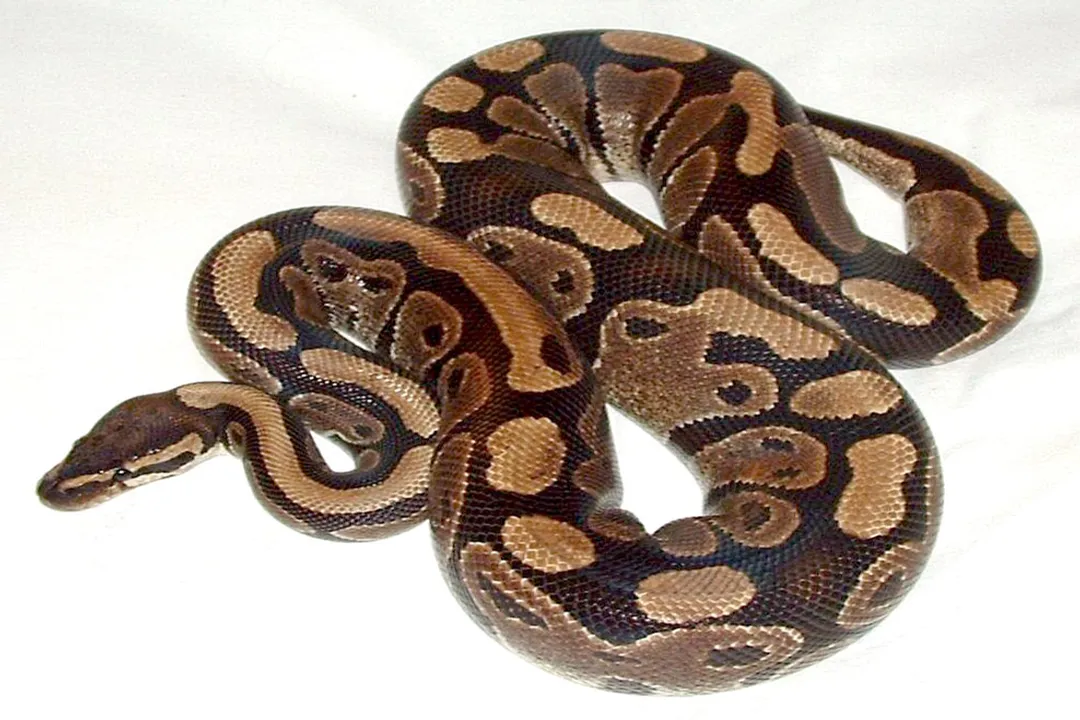
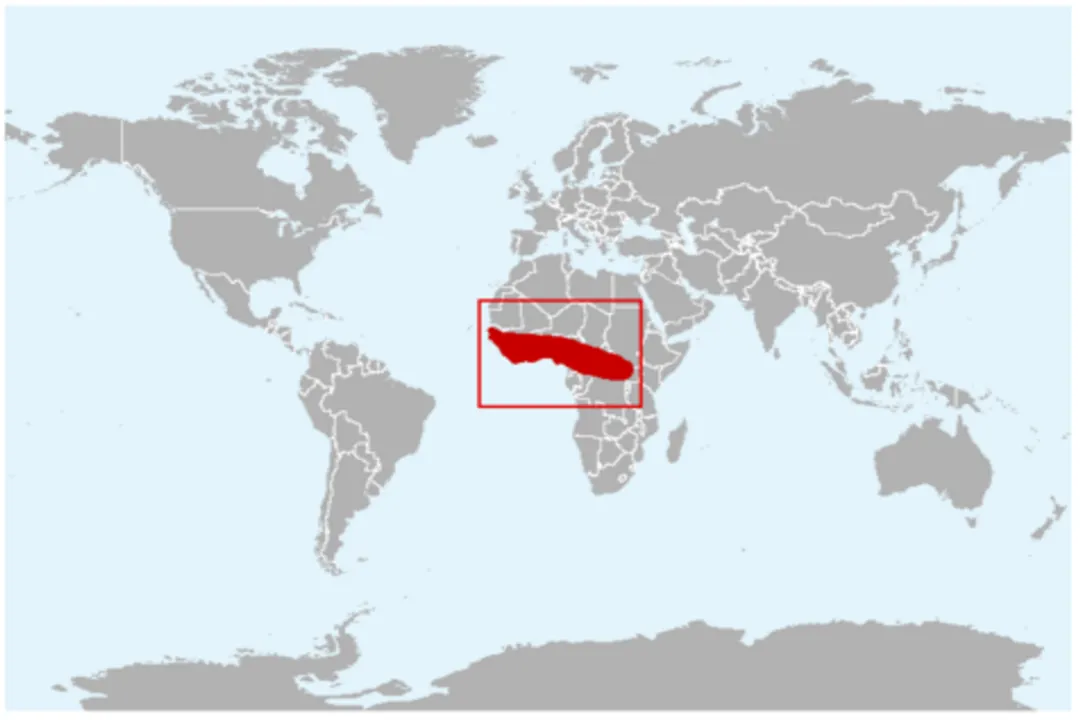
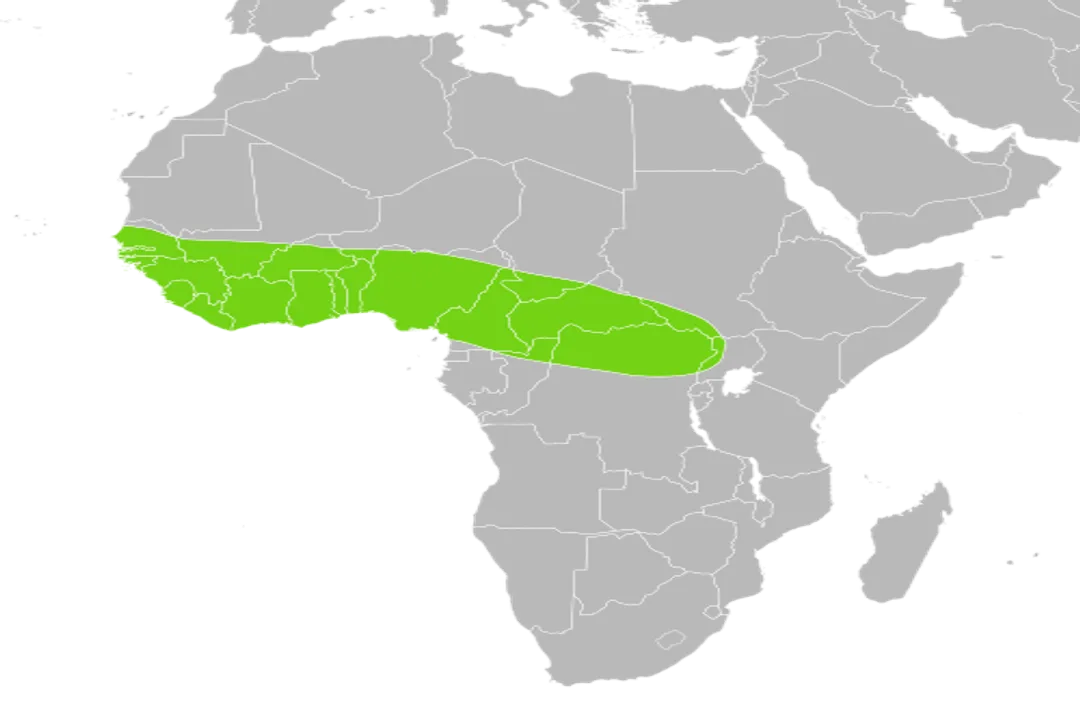
The appearance of a Ball Python in its native West and Central African grasslands and sparse woodlands is characterized by a specific, often beautiful, ground color overlaid with darker markings. The standard or "normal" color morph exhibits a background shade that typically ranges from light tan or yellowish-brown to a very dark, almost black-brown. Superimposed on this background are distinct, irregular dark blotches that often resemble somewhat rounded or stretched-out oval shapes. These blotches are usually dark brown or black and are bordered by a thin line of the lighter ground color, creating a striking contrast.
The ventral side, or belly, contrasts sharply with the dorsal pattern. It is generally black, sometimes dotted or irregularly marked with patches of white or yellow pigmentation. It is worth noting that the exact shade of the ground color can vary geographically, even among wild populations, suggesting subtle regional adaptations in pigmentation, though captive breeding has since magnified this variation exponentially. For a newcomer observing their first wild-type specimen, the pattern provides excellent natural camouflage against leaf litter and soil.
# Head Features
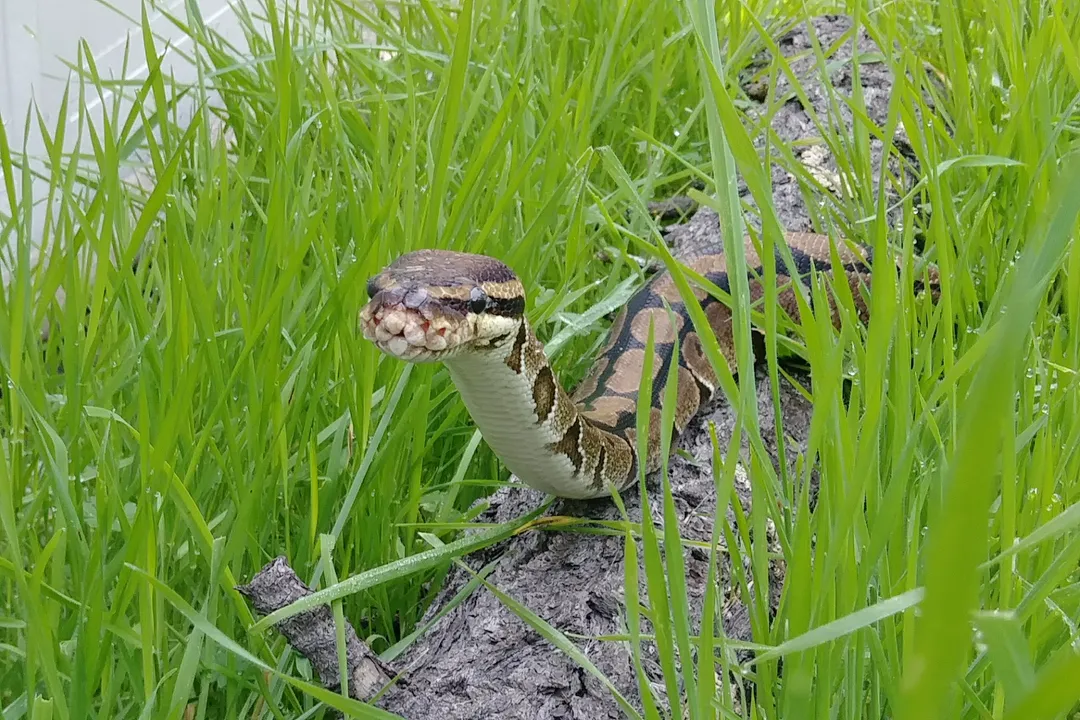
The head structure of the Ball Python is another defining aspect of its physical presentation. They possess a relatively small head when compared to the thickness of their neck and body. The snout is often described as somewhat blunt, contributing to their generally non-aggressive, almost rounded facial appearance when viewed head-on.
The eyes are another notable feature. Ball Pythons have relatively large eyes for a snake of their build, which can appear dark, almost black. The visible scales on the head are intricate, with the supraocular scales—the ones just above the eyes—often being slightly more pronounced. While their visual acuity is not their primary sense (relying more on chemoreception and thermoreception), the size and placement of the eyes give them a distinct look compared to snakes with smaller, more recessed eyes. Unlike some venomous snakes, the Ball Python’s pupils are round, which is a crucial distinction for identification, although examining eye characteristics should never be the primary method of distinguishing between harmless and dangerous species.
# Color Morphs
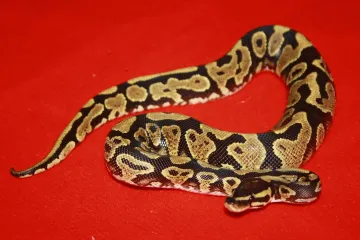
The true spectacle of the Ball Python’s physical appearance lies in the vast array of color variations, or "morphs," developed through selective captive breeding over decades. What began with the basic normal pattern has exploded into hundreds of genetically distinct looks that can dramatically alter the snake's presentation. These morphs affect the coloration, pattern complexity, pattern reduction, or the complete absence of certain pigments.
For example, the Albino morph involves a lack of melanin, resulting in snakes that lack black pigment entirely; instead, they display white or yellow coloration, often with red or pink eyes. Conversely, the Piebald (or Blue-Eyed Leucistic, depending on the exact recessive gene expression) morph involves significant pattern reduction, where large, clean patches of white or light coloration break up the normal pattern, sometimes leaving only small, isolated dark spots.
Other common morph categories include:
- Pastel: Often brightens the yellows and reduces the contrast in the dark markings.
- Fire/Super Fire: Can lead to incredibly clean, high-contrast animals with very minimal dark pigment intrusion on the flanks.
- Clown: A recessive trait that drastically alters the pattern, often leading to thinner, more intricate dorsal stripes and reduced side patterning.
The sheer diversity means that two snakes, both genetically Python regius, can look almost nothing alike externally. This selective breeding process, focusing purely on aesthetics, is what drives much of the interest in the species today, transforming a moderately patterned brown snake into something that can mimic bleached bone, vibrant gold, or anything in between. When assessing a specific snake's appearance, it is critical to know that the wild-type description only covers the ancestral look, not the majority of snakes kept as pets. The continued creation of designer morphs means that the physical "look" of the Ball Python is constantly being redefined by breeders.
# Texture and Scales
The surface texture of a Ball Python is smooth, typical of most pythons, lacking the heavily keeled (ridged) scales found on some other snake families. Their scales are overlapping and relatively small for their body size, giving the skin a sleek appearance. The presence and texture of these scales are essential for their thermoregulation and movement across substrates. While the overall body appears stocky, the skin itself is flexible, allowing for the extreme coiling behavior mentioned earlier. If you gently run a finger along the back of a healthy, well-hydrated Ball Python, you should feel this characteristic smoothness, which contrasts with the slightly rougher feel of the ventral scales, designed for grip during locomotion. This physical attribute contributes to their appeal as low-maintenance display animals, as their skin often appears polished under good lighting.
Related Questions
#Citations
Ball python - Wikipedia
Ball Python - Lehigh Valley Zoo
Ball (Royal) Python - Oakland Zoo
Ball Python - Honolulu Zoo Society
Ball Python | Franklin Park Zoo
Pet Spotlight | Ball Python Snakes | Appearance, Personality & Facts
Ball Python - Connecticut's Beardsley Zoo
Royal/Ball Python - Buffalo Zoo
[PDF] Ball (Royal) Python - Specialized Care for Avian & Exotic Pets