What is the physical appearance of armadillos?
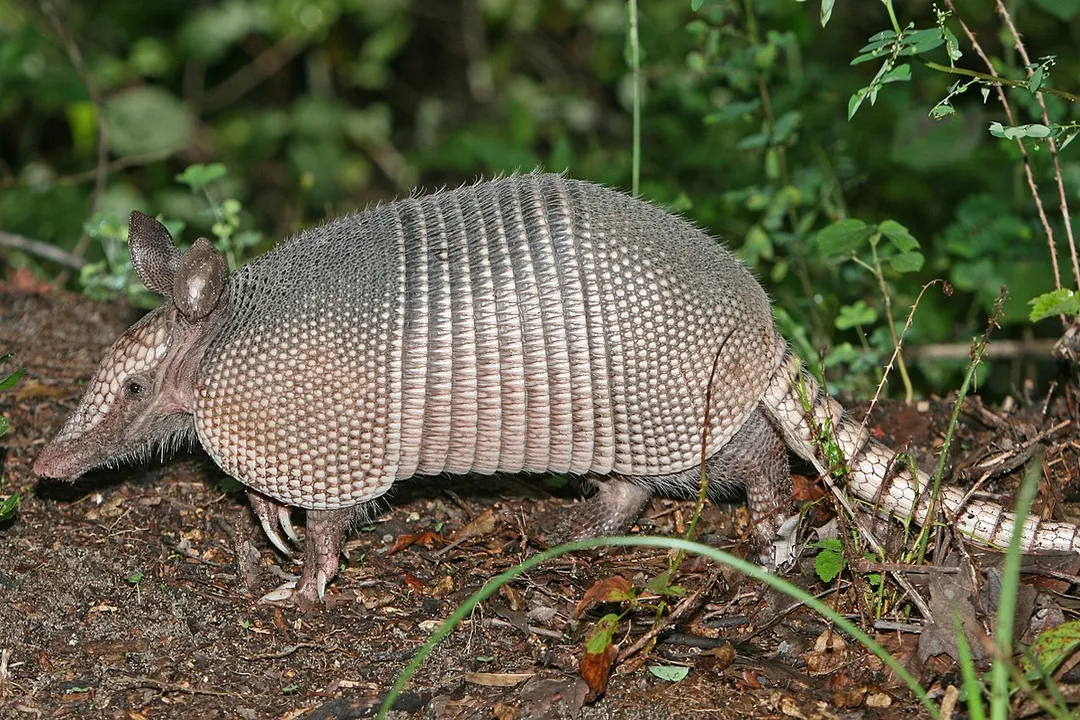
The armadillo presents one of nature’s most distinctive silhouettes, a walking testament to evolutionary armor plating. Looking like a miniature, walking tank, these mammals are instantly recognizable by the extensive bony shell covering their backs, a feature so unique that it defines their very name—derived from the Spanish word for "little armored one". While the general blueprint involves a carapace, the specifics of their physical presentation vary dramatically across the roughly 20 different species, ranging in size from smaller than a guinea pig to over four feet long.
# Carapace Structure
The most prominent physical characteristic is the dermal armor, or carapace, which is not a single shield but a mosaic of interlocking bony plates called osteoderms. These plates are embedded in the skin, forming a flexible yet highly protective covering over most of the animal’s body, excluding the undersides, the limbs, and the tip of the snout. This armor is formed from the dermis layer of the skin, providing a defense against predators. Unlike the shells of turtles, which are fused to the skeleton, the armadillo’s shell is part of its skin structure, allowing for some degree of movement.
The shell itself is composed of overlapping scales or scutes. In many species, this armor is divided into distinct sections. For instance, the upper part of the shell is often divided into larger, rigid shields over the shoulders and hips, separated by bands of smaller, movable plates across the middle section of the back. This structural arrangement is key to their locomotion and defense strategies. Considering this segmented design, it’s interesting to note how the flexibility provided by these bands contrasts sharply with the rigidity of the main shields. This layered, articulated system is less about offering an impenetrable, monolithic barrier, as seen in some other armored animals, and more about retaining mobility essential for foraging through dense undergrowth or burrowing [analysis point 1: structural engineering for mobility].
# Bands and Flexibility
The number of bands across the middle section of the back is a primary differentiator among species, which is reflected even in the common names, such as the nine-banded armadillo (Dasypus novemcinctus). This widely distributed species typically possesses nine movable bands separating the larger shoulder and pelvic shields.
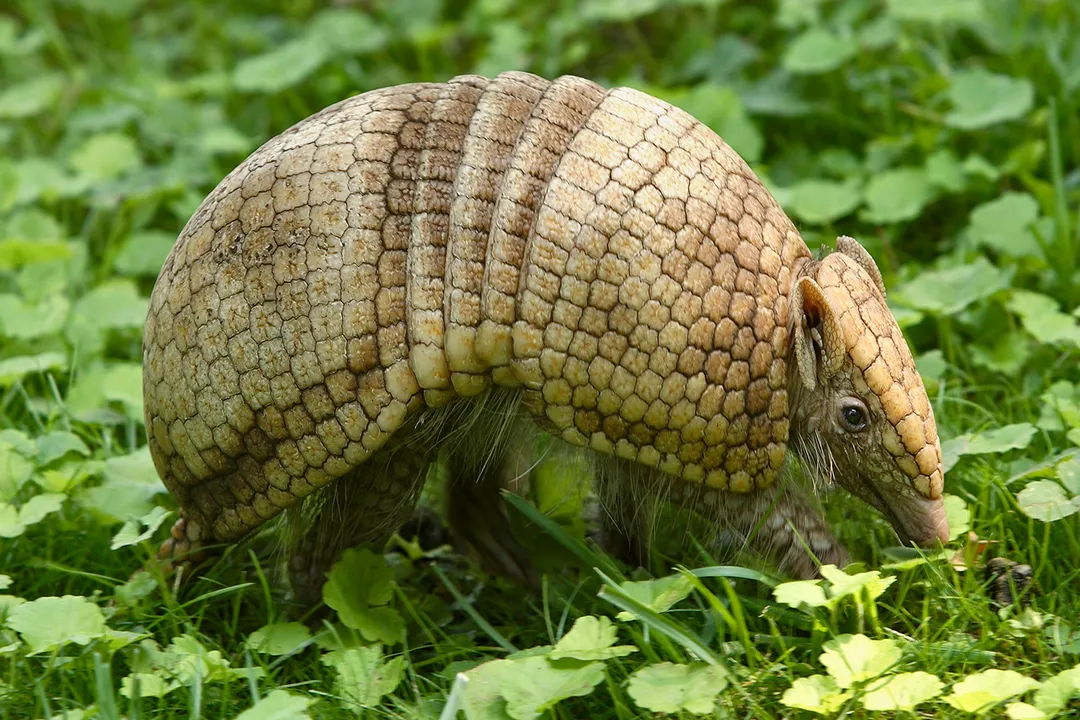
However, diversity is the rule here. For example, the La Plata three-banded armadillo (Tolypeutes minutus) is named for its three prominent, articulating bands. The smaller bands in the middle section act as hinges, allowing the animal to bend and contort its body for specific actions, most notably defense. While most species can curl slightly, the three-banded armadillos are famous for their ability to roll completely into a tight ball, effectively sealing themselves inside their bony armor by locking the edges of the bands together.
# Size Diversity
Armadillos exhibit remarkable variation in size, depending on the species inhabiting a particular region. The Giant Armadillo (Priodontes maximus) stands out as the largest extant species, potentially reaching lengths of over a meter (over 3 feet) and weighing up to 54 kilograms (about 120 pounds). These giants possess significantly thicker armor and much larger claws suited for digging into hard soil.
On the opposite end of the spectrum are the diminutive species. The Pink Fairy Armadillo (Chlamyphophorus truncatus), for instance, is the smallest, rarely exceeding 12 to 15 centimeters in length. This extreme range in scale, from creatures smaller than a rabbit to those rivaling a medium-sized dog, highlights the adaptive radiation this unique body plan has undergone across the Americas [synthesis point: comparison of size extremes].
# Head Features
The head of the armadillo is also noteworthy, usually covered in bony plates similar to the body armor, though sometimes the plates are less distinct or covered by leathery skin. They possess a long, tapering snout. This snout houses a long, sticky tongue, which they use expertly to probe crevices and extract insects and other small invertebrates from the soil.
Their ears are often large and prominent relative to their head size, though this varies by species. The Nine-Banded Armadillo is generally described as having relatively small ears. Sensory input relies heavily on their acute sense of smell, compensating for relatively poor eyesight.

# Limbs and Locomotion
Armadillos are terrestrial mammals built for powerful excavation. Their short, sturdy legs are equipped with strong claws, which are particularly long and robust on the front feet. These claws are the primary tools they use for digging extensive burrows, which serve as shelters from weather and predators. The Giant Armadillo possesses massive foreclaws that are almost shovel-like, capable of moving considerable amounts of earth quickly. Even the smaller nine-banded species can dig surprisingly fast, capable of excavating a burrow in minutes when alarmed.
While they walk on all four limbs, their gait is often described as a peculiar, shuffling waddle. Their short legs necessitate a low-slung posture close to the ground.
# Color and Covering
The coloration of armadillos is generally dull, featuring shades of brown, gray, or sometimes pinkish hues. The overall appearance of the shell is not uniform; while the bony plates are hard, the skin between them, particularly in the banded areas, is pliable and often covered with sparse, coarse hair.
The Nine-Banded Armadillo specifically is described as having grayish-brown or tan armor. It possesses a thick, leathery skin on its belly, and its fur is usually yellowish or whitish. This presence of hair, though sparse compared to fully furred mammals, is an important aspect of their insulation. When considering how much of their body is covered by bone versus skin and sparse hair, one gains insight into their thermal constraints. Unlike fully furred animals that can easily regulate heat in cooler environments, the large surface area of the shell and sparse hair covering likely makes them more susceptible to rapid temperature fluctuations, perhaps explaining why they favor burrows and warmer climates [analysis point 2: thermal biology hinted at by integument].
The La Plata Three-Banded Armadillo also presents a brownish coloration, though its armor can appear paler or more yellowish brown. The species Dasypus septemcinctus is noted for having seven bands, possessing light brown to yellowish fur on the underside.
# Nine-Banded Profile
Since the nine-banded armadillo is perhaps the most familiar, its specific look deserves emphasis. Adults typically measure about 12 to 17 inches long, excluding the tail, and weigh between 5.5 and 12 pounds. Their tail is covered in rings of small bony scales. The head is long, with a pointed snout. They possess small eyes and moderately large ears, which are usually a distinguishing feature. Their legs are short, and their front feet are armed with three long claws, perfect for digging up insects in the loose soil common in places like Texas. Their appearance allows them to blend reasonably well into grassy or woodland environments due to their muted coloration.
# Three-Banded Contrast
To better appreciate the variety, comparing the nine-banded species with the three-banded species helps highlight the specialized adaptations in appearance. The La Plata three-banded armadillo is smaller than the nine-banded species, typically weighing around 2.5 to 3.5 pounds. Its most striking visual difference, beyond the band count, is its defense posture. While the nine-banded armadillo often flees or digs when threatened, the three-banded species' armor is specifically adapted for curling into a nearly perfect sphere—an impressive feat of biomechanical engineering tied directly to the structure of those three main bands.
# Comparative Summary of Appearance Traits
To illustrate the differences in physical manifestation across the group, a look at how some key traits vary can be helpful:
| Feature | Nine-Banded Armadillo | Giant Armadillo | La Plata Three-Banded Armadillo |
|---|---|---|---|
| Band Count | Typically Nine | Variable, large shields dominate | Three prominent bands |
| Size (Length) | 12–17 inches (body) | Over 1 meter (3+ feet) | Smaller, around 2.5–3.5 lbs |
| Claws | Long claws, good for digging | Massive foreclaws | Strong, suitable for burrowing |
| Defense Posture | Runs or digs | Digs rapidly, less known for rolling | Rolls into a complete, tight ball |
The sheer structural variations, from the full-body protection of the larger species to the specialized ball-defense configuration of the three-banded kind, demonstrate that the shared concept of "armored mammal" encompasses a wide array of physical solutions to similar environmental pressures [synthesis point: diversity of armor application].
# External Features
Beyond the armor, other external features complete the armadillo's look. Their tails are generally elongated and covered with bony rings or scutes, offering less flexibility than the trunk section of the shell. The muzzle, as noted, is long and sensitive, essential for finding subterranean food sources.
Their eyes are small, and while they do have teeth, they are unique among mammals because these teeth lack enamel. Though not strictly an external appearance feature in the visual sense, the structure beneath the armor dictates much of their body shape and movement—they are built low to the ground, emphasizing digging over running long distances. The combination of their stout legs, low profile, and protective shell gives them a look that is distinctly separate from other terrestrial insectivores, marking them as evolutionary specialists in armored excavation [summary point]. Their appearance serves a dual purpose: protection from predators while maintaining the necessary physical shape for a life spent primarily underground or close to the soil surface.
Related Questions
#Citations
Armadillo - Wikipedia
Armadillo - San Diego Zoo Animals & Plants
Nine-banded Armadillo | Oklahoma Department of Wildlife ...
La Plata three-banded armadillo - National Zoo
armadillo - Students | Britannica Kids | Homework Help
Dasypus septemcinctus (seven-banded armadillo) | INFORMATION
[PDF] Nine-banded Armadillo (Dasypus novemcinctus) - Michael T. Mengak
Nine-Banded Armadillo - Cosley Zoo
Nine-banded Armadillo (Dasypus novemcinctus)