Why does the *Thelotornis* genus lack the bulk seen in similarly sized, non-venomous species?
Answer
They are agile hunters relying on stalking rather than crushing power
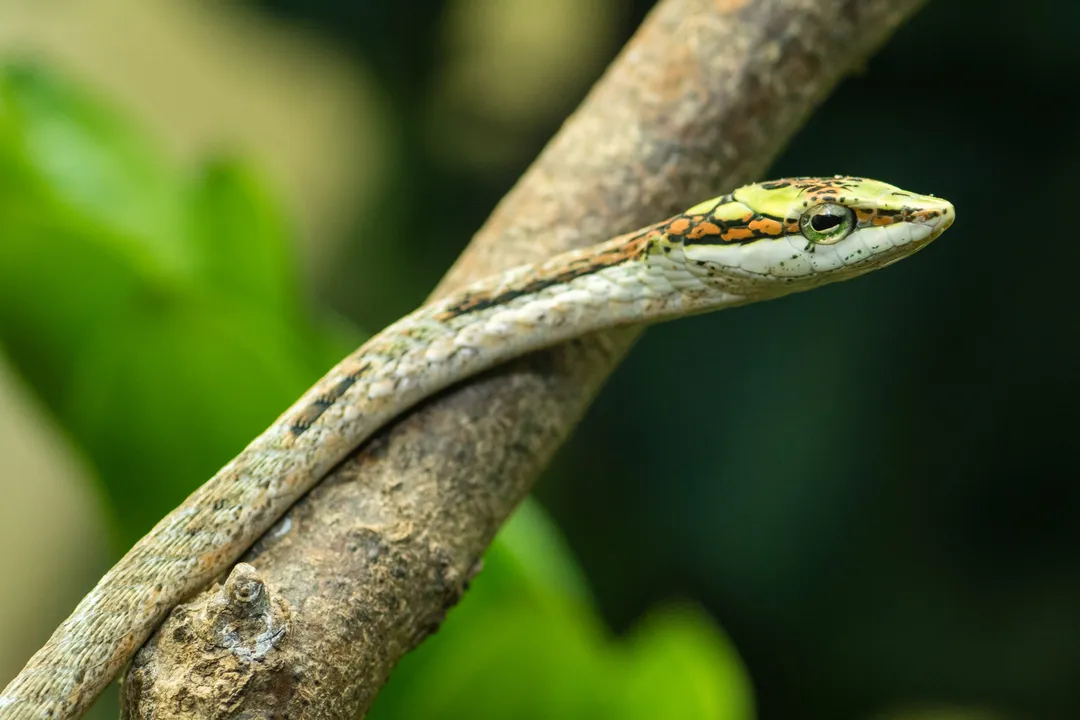
The lack of mass is directly tied to their lifestyle as agile hunters that stalk prey in the branches, unlike ambush predators relying on sheer crushing power.
Related Questions
What is the typical adult length range for most specimens of the *Thelotornis* genus?What is the maximum recorded length cited for some twig snake accounts?What is the defining physical characteristic of the twig snake regarding its size profile?Which species is sometimes cited as having a greater capacity to reach the upper end of the length spectrum (approaching 1.8 meters)?Why does the length of a twig snake often seem deceptive to observers?Why does the *Thelotornis* genus lack the bulk seen in similarly sized, non-venomous species?What factor can cause confusion regarding the precise length measurements cited by different field guides?For practical purposes in the field, what is considered a safe assumption for the length range of a mature twig snake individual?Is the venom potency of the twig snake directly correlated with achieving its maximum physical size?What ecological niche is the moderate length and slenderness of the twig snake perfectly suited for?