How big can a chicken snake get?
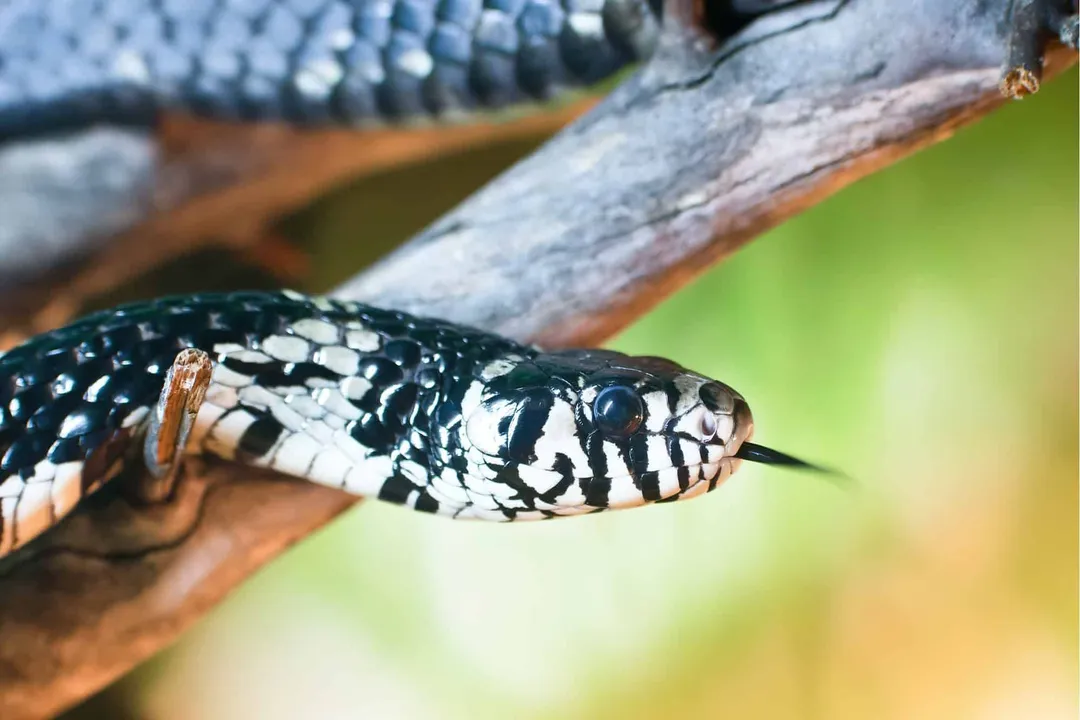
The moniker "chicken snake" carries a certain ominous ring for poultry keepers, immediately suggesting a creature capable of infiltrating coops and raiding nests. This common name is applied to several species of North American rat snakes, most frequently the Black Rat Snake (Pantherophis obsoletus complex) or the Gray Ratsnake (Pantherophis spiloides) depending on the region. When trying to gauge the potential threat or simply satisfy curiosity, the immediate follow-up question revolves around size: just how large can these reptiles actually become?
# Typical Lengths
Most people’s experience with rat snakes puts them in a range that is certainly substantial but not gargantuan. Generally speaking, the chicken snake is considered one of the longer snakes found in many parts of the eastern United States, but they are not typically among the heaviest or most massive species. For the average adult specimen encountered in the wild, especially those successfully raiding chicken coops, lengths often fall between three and five feet. An individual measuring five feet is a mature, well-established snake that has likely survived several seasons.
In areas where the Gray Ratsnake is prevalent, their average size might lean toward the slightly smaller end of that spectrum compared to the larger Black Rat Snakes found elsewhere, though their maximum potential is often similar. It is important to note that length measurements can sometimes vary slightly based on how the measuring method is standardized across different natural history surveys, but these ranges provide a reliable baseline for what an average adult looks like.
# Maximum Records
While the three-to-five-foot range describes the norm, the species is capable of achieving truly impressive lengths, pushing them into the category of very large, non-venomous snakes in North America. Official records and historical accounts frequently cite maximum lengths approaching seven feet, and in rare, exceptional cases, specimens nearing eight feet have been documented. These giants are the outliers—the snakes that have managed to find plentiful food sources, evade predators (including human intervention), and survive long enough to reach their full growth potential.
It is fascinating to consider the conditions that allow a snake to reach these exceptional dimensions. While general statistics provide averages, the difference between a four-foot snake and a seven-foot snake represents years, perhaps decades, of successful foraging and environmental stability. A local environment that offers a consistent supply of rodents, birds, and eggs, without significant competition or human interference, is the likely incubator for these record-breakers. When we discuss the size of a chicken snake, we are really discussing a spectrum: the common, successful forager versus the rare, ancient giant that defies the odds.
# Species Differences
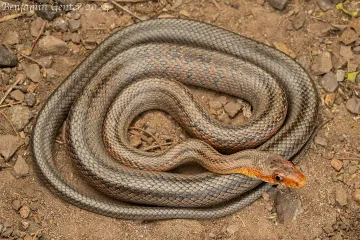
The term "chicken snake" is not exclusive to one scientific designation, which naturally leads to size variance. The Black Rat Snake, often recognized by its glossy black coloration as an adult, is frequently referred to by this common name. Conversely, in regions like Tennessee, the Gray Ratsnake is often the primary species earning the title. While both are excellent climbers and known for predating on fowl or eggs, their maximum recorded sizes can show minor divergences.
For instance, in describing the Gray Ratsnake, specific regional reports might focus on a typical maximum around six feet. Meanwhile, other accounts of the broader Black Rat Snake complex might push that maximum slightly higher. From a practical standpoint for a landowner, however, these subtle scientific distinctions are less important than recognizing the behavior: any large Pantherophis species found near a coop is likely capable of reaching eggs or hatchlings, regardless of whether it is scientifically classified as "black" or "gray" in that specific location.
# Climbing Ability
The size of the chicken snake is inherently linked to its reputation in poultry keeping. Their length provides the necessary reach, but it is their specialized physique and behavior that make them so effective at targeting nests. Rat snakes are renowned for their climbing skills; they are adept at ascending trees, barns, and, critically, the walls of chicken coops. They achieve this primarily through constriction along the substrate, using their scales to grip rough surfaces—a method that works surprisingly well on wood or textured siding.
A snake that is five or six feet long can easily navigate the internal rafters of a standard coop or climb a lattice barrier to reach an elevated nesting box. Their body length allows them to stretch across multiple supports or uncoil to reach a nest that a shorter snake simply could not access.
If you are assessing a snake's ability to access a specific nest height of, say, four feet off the ground, a snake that is five feet long has a much higher probability of success than a juvenile measuring two feet, even if the juvenile is equally skilled at climbing. The reach afforded by the greater length translates directly into access to more potential food items within an enclosed structure.
# Practical Size Assessment
When observing a snake around your property, it can be useful to move beyond just the extreme maximums and consider what the girth tells you about its feeding success, as this is a subtle indicator often overlooked in general descriptions of length. While a seven-foot snake grabs headlines, a shorter snake that is noticeably thick or heavy-bodied may represent a more immediate or successful predator in the local ecosystem.
Consider this comparison: a four-foot snake that is relatively thin might primarily be consuming mice and small rodents. However, a three-foot-long snake that has a very substantial girth—a diameter approaching that of a grown man's thumb or larger—suggests it has recently consumed something large, perhaps an adult bird egg or even a newly hatched chick, which it must then digest slowly. While the longer snake has greater potential reach, the thicker snake demonstrates current successful predation on larger fare. In the context of protecting small chicks, the bulkier, shorter snake might pose a more immediate, sustained threat to the immediate clutch than a long, lean individual still building up its reserves. This difference in body condition—length versus girth—is a key factor in how well-fed and dominant a snake is within its territory.
Ultimately, whether a chicken snake measures four feet or seven, its classification as a rat snake means it possesses the instinct and physical capability to exploit poultry environments. The significant size these creatures can attain simply underscores why understanding their habits, rather than just measuring their length, is the most effective approach for proactive management around livestock.
Related Questions
#Citations
Chicken Snake Animal Facts - Spilotes pullatus
Gray Ratsnake | State of Tennessee, Wildlife Resources ...
Is the Chicken Snake a Friend or Foe to Farmers?
How big can Grey Rat Snakes get and can size indicate age?
Chicken Snake Facts & Photos
Rat Snake
Snakes in the Coop - Murray McMurray Hatchery Blog