How big do hook-nosed sea snakes get?
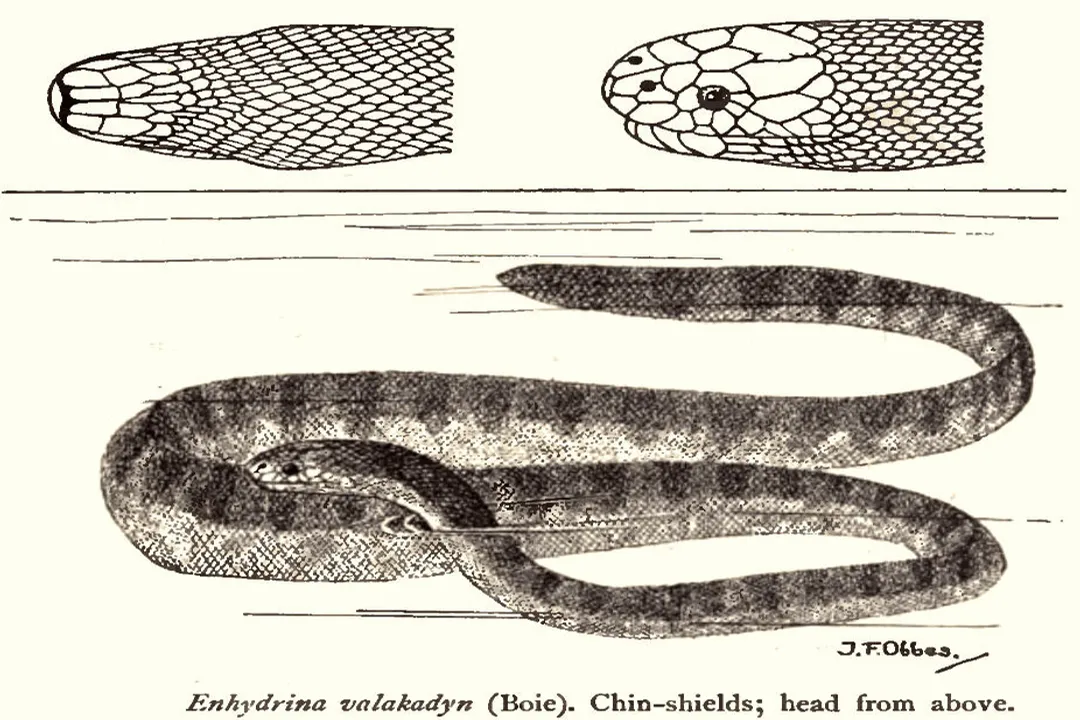
The hook-nosed sea snake, known scientifically as Hydrophis schistosus or sometimes Enhydrina schistosa, presents a fascinating study in marine reptile variability, particularly when one attempts to pin down a definitive maximum size. It is a highly venomous creature found across the tropical Indo-Pacific, infamous for being implicated in a significant portion of serious sea snake bites and resulting fatalities. While the potency of its venom is often the primary focus of concern, the physical dimensions—how large these animals actually get—tell an interesting story about maturity, habitat, and measurement standards across different studies.
# Defining Dimensions
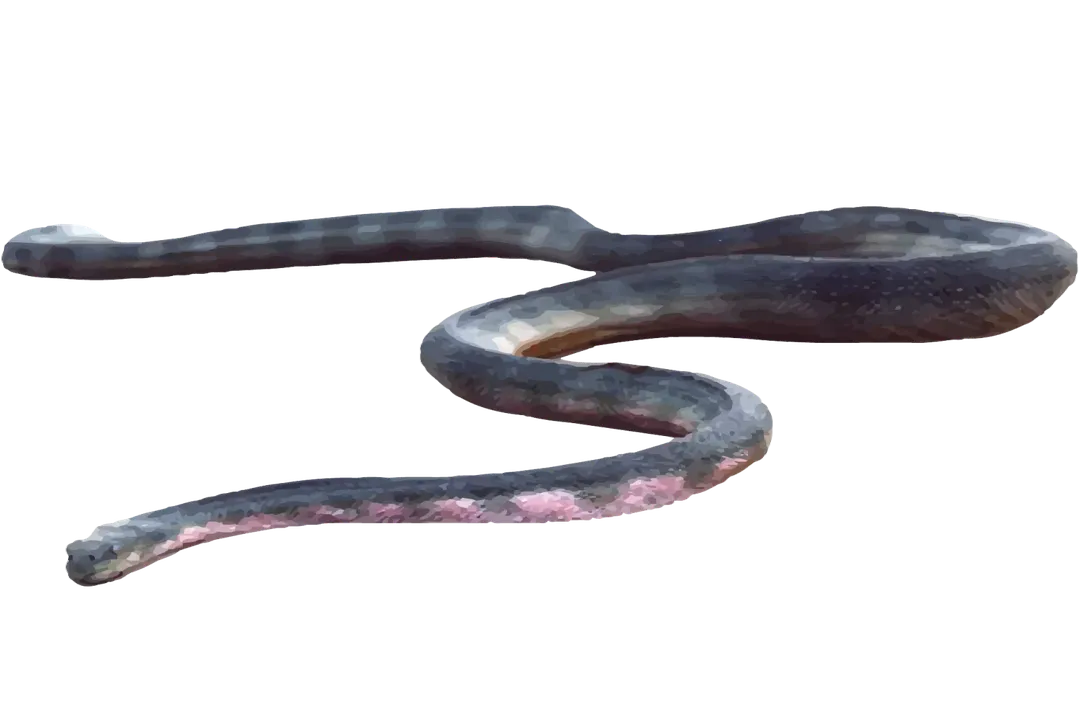
When discussing the size of H. schistosus, it is essential to recognize that reports vary, leading to a range that requires careful synthesis. This snake is generally described as a large-sized species within its family. Adult specimens are stout-bodied, possessing a body that is slender towards the front but distinctly compressed along the posterior half. The unique snout, which gives the snake its common name, is formed by a rostral scale that is longer than it is broad and curves downward, giving it that characteristic beak-like appearance.
Reports on the typical adult length cluster around the one-meter mark, but the upper limits show significant deviation. Several sources indicate that the average size hovers around 90 cm, while others suggest a more common range between 100 to 120 cm. Breaking this down further, one assessment notes that adults typically measure between 1 to 1.2 meters (3.3 to 4 feet), and another states the average size as 4 to 5 feet long, translating to about 1.2 to 1.5 meters. This consistency around the 1.2-meter mark for an "average" or "typical" adult suggests that many individuals encountered fall within that bracket.
# Maximum Size Records
The real divergence appears when researchers report the absolute maximum recorded length. Some data indicates that these snakes can reach up to 1.5 meters (5 feet), while other accounts suggest they can grow as large as 1.9 meters. In contrast, a specific listing from SeaLifeBase reports a maximum total length (TL) of 140 cm for males or unsexed specimens, with a common length listed at 110 cm TL. This variation—from a documented maximum of 1.4 meters to a reported maximum of 1.9 meters—highlights a potential discrepancy in measurement protocols or perhaps reflects geographical size dimorphism that remains unconfirmed in this data set. If a specimen truly reaches 1.9 meters, it significantly exceeds the 1.4-meter maximum reported elsewhere, suggesting either extremely robust growth in certain isolated populations or a measurement bias in older records.
If we look at a specific breakdown provided for one specimen, the measurements offer a different perspective on total length: the length of the head and body was recorded as 1110 mm (111 cm), with the tail measuring 190 mm (19 cm). Adding these two components together results in a total length of 130 cm (1.3 meters). This particular example falls squarely within the common or slightly above-average range reported, rather than approaching the extreme upper limits cited. This suggests that while the potential for massive individuals exists in the species' overall data set, the structural breakdown for a moderately sized snake already accounts for a respectable length.
# Growth and Maturity Benchmarks
Understanding the full growth potential of the hook-nosed sea snake requires looking at when they reach reproductive age, as length at first maturity is a firm biological marker. For this species, the length at first maturity (Lm) has been documented with a minimum of 47 cm, a maximum of 101.5 cm, and an average of 74.5 cm.
This data gives us an interesting window into their life progression. If the minimum length for sexual maturity is just under half a meter (47 cm), and the average adult length is around 90 cm, it implies that many individuals attain reproductive capability relatively early in their potential lifespan. Conversely, the fact that maturity can extend to over 101.5 cm suggests that growth rates are highly variable, or that environmental pressures strongly influence when an individual becomes reproductively active. Consider that a female reaching maturity at 101.5 cm is already in the common size range reported by other sources (100-120 cm), meaning she has achieved what many others consider a standard adult size while merely entering her reproductive phase. This disparity implies that snakes reaching the 1.5-meter or 1.9-meter milestones must live considerably longer or inhabit an area promoting exceptional growth.
The contrast between the maturity length and the maximum length also informs our understanding of the species' demographic structure. If an individual is capable of reaching, say, 180 cm, and maturity begins around 75 cm, that represents a massive potential size increase of over 100 cm after reaching reproductive age. This extended post-maturity growth phase is a characteristic often associated with species that have relatively long lifespans in stable environments, suggesting that the environment dictates size as much as genetics in this highly adaptable marine species.
# Size Implications for Ecology and Risk
The physical dimensions of H. schistosus are intrinsically linked to its ecological role and its notoriety regarding human interactions. A snake averaging 90 cm to 1.2 meters is substantial enough to make a powerful impression, especially considering its highly potent venom. The average venom yield per bite is noted to be approximately 7.9–9.0 mg. While the exact relationship between length and venom yield is not explicitly detailed in the summaries, a larger snake generally possesses larger venom glands and potentially delivers a greater quantity of the toxic cocktail.
This snake is particularly known for causing the majority of fatalities among sea snake bites. A relatively modest bite from an average-sized individual, yielding around 8 mg of venom when the lethal human dose is estimated at only 1.5 mg, makes size secondary to potency in determining immediate danger. However, larger individuals, potentially those reaching the upper end of the 1.4-meter to 1.9-meter range, might be capable of dry bites or possessing larger venom reserves, which shifts the risk profile from a single lethal dose to the potential for massive envenomation. Observing a snake nearing the two-meter mark would undoubtedly change a field observer's assessment of the inherent risk, even if the toxicity per milligram remains constant.
# Coloration and Size Perception
While not a direct measurement of length, the coloration patterns of the hook-nosed sea snake interact with the perception of its size. Juveniles are often described as olive or grey with prominent black transverse bands. These bands are broader in the middle of the body. As the snake matures, the coloration tends to become more uniform grey above, with whitish sides and underside. The bands on adults, if present, are wider than the paler interspaces. This loss of contrast and banding in large adults, as they become a more uniform dark grey, can make a long snake appear more streamlined and perhaps less imposing than a similarly sized banded juvenile, where every segment is clearly demarcated. In murky coastal waters or estuaries—the preferred habitat for this species—a uniformly colored, large snake might be harder to spot or judge in size than one displaying high-contrast banding.
# Brood Size and Size Continuation
The reproductive strategy also provides context for how the population sustains its size profile. H. schistosus is ovoviviparous, meaning the young develop inside the mother and are born live. A brood can contain between 4 to 9 young ones, although one source suggests they can give birth to up to 30 young each time they breed. Even with the lower estimate of 4 to 9 neonates, the presence of live young means the new generation enters the water fully formed and capable of swimming, ready to immediately begin hunting fish and crustaceans. If a female producing a 30-young brood is itself one of the larger specimens, that single birth event introduces a significant number of individuals that must quickly grow from their neonate size to the 47 cm maturity threshold. The survival rate of these many young must be relatively low, as suggested by the observation that only a small proportion survive to adulthood, which helps explain why the population remains stable despite the high potential for large individuals.
The diverse size documentation—from 90 cm averages to 190 cm possibilities—suggests that the hook-nosed sea snake population is not uniform in its growth trajectory across its entire Indo-Pacific range. It is plausible that populations inhabiting resource-rich estuaries, which offer consistent prey like catfish and shrimp, develop much faster and attain greater final lengths than those in slightly more oligotrophic offshore reef areas. The fact that DNA studies have provisionally separated Australian and New Guinean populations, now identified as Enhydrina zweifeli, from H. schistosus due to genetic differences, further supports the idea that size variations seen across the broader historical range might be artifacts of grouping distinct, though closely related, species. For the true H. schistosus, the size range is likely more constrained by geography and resource availability than the broader historical records suggest.
Ultimately, while the maximum size of the hook-nosed sea snake is open to interpretation—swinging between 1.4 meters and an exceptional 1.9 meters—the standard expectation for an adult encountering the snake in its primary range around the Indian subcontinent or Southeast Asia remains firmly in the 1.0 to 1.2-meter bracket. This typical size, combined with its dangerously potent venom, solidifies its status as one of the marine reptiles demanding the greatest respect.
Related Questions
#Citations
Hydrophis schistosus - Wikipedia
hook-nosed sea snake (Hydrophis schistosa)
Hook-nosed Sea Snake (Enhydrina schistosa) - World For Nature
Beaked Sea Snake (Enhydrina schistosa)
Hook-Nosed Sea Snake Facts & Photos | Wowzerful
Beaked sea snake (Hydrophis schistosus) - Thai National Parks
Hydrophis schistosus, Beaked sea snake - SeaLifeBase
Beaked Sea Snake | The Great Animal Wiki - Fandom