What is another name for a twig snake?
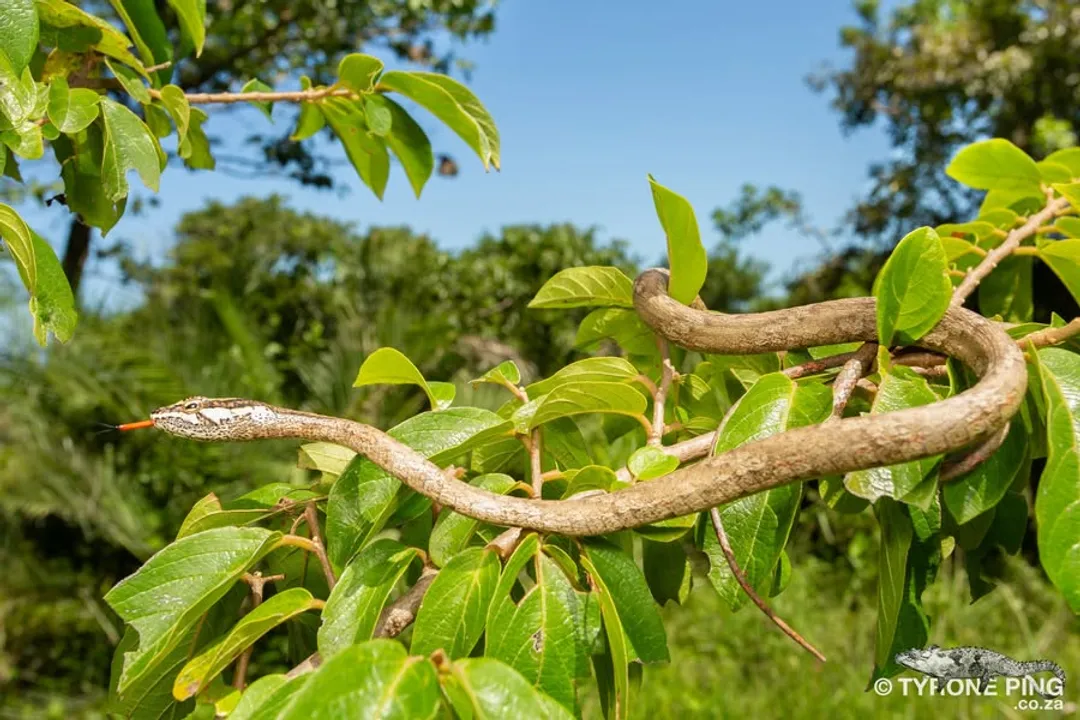
The term "twig snake" often prompts a search for its official or alternative appellation, as this common name perfectly describes its remarkable ability to disappear into its environment. [1] However, among herpetologists and snake enthusiasts, the animal known colloquially as the twig snake is more formally recognized under several scientific and regional names, primarily falling under the genus Thelotornis. [5] The most immediate and widely accepted alternative name, especially when discussing African species, is the Vine Snake. [1][3] This name emphasizes its arboreal nature and the way it moves through vegetation, often resembling a thin, dangling vine. [6]
# Scientific Names
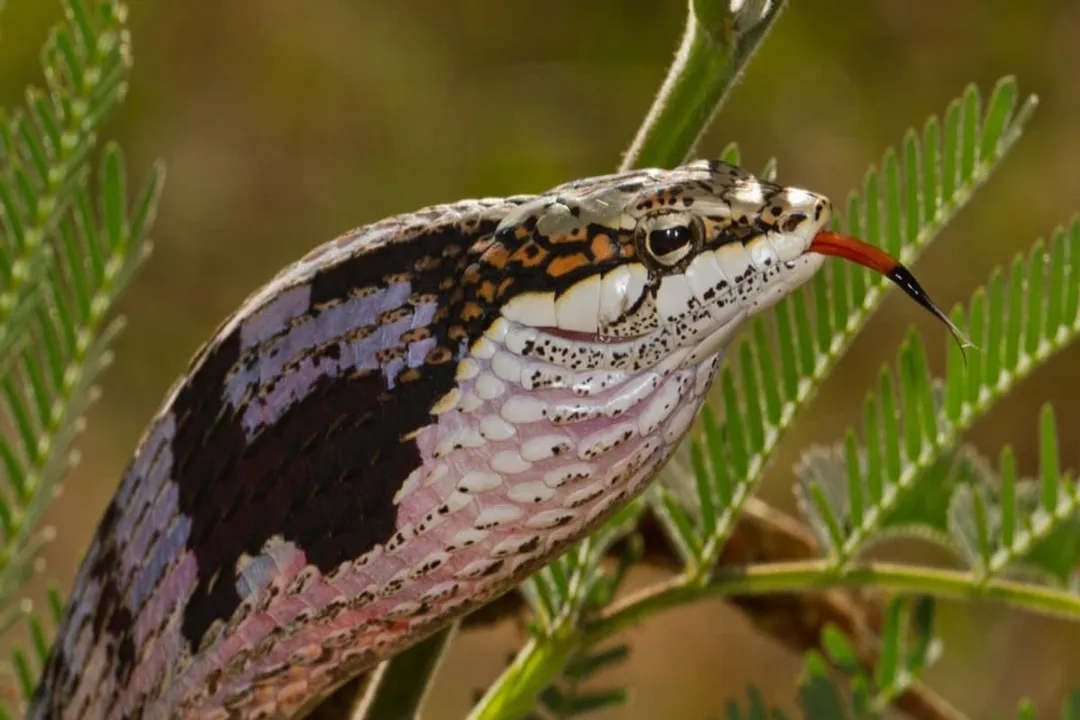
The complexity surrounding the twig snake’s identity stems from its genus, Thelotornis, which encompasses several distinct species that are frequently grouped under the general "twig snake" or "vine snake" banner. [5] For instance, the species found in Southern Africa is often specifically designated as Thelotornis capensis, also known simply as the Southern Vine Snake. [6][2] This species is quite well-documented in regional guides. [6] Contrastingly, another recognized member of this group is Thelotornis kirtlandii, which also shares the common description of being a twig snake. [5] Furthermore, database listings indicate the presence of Thelotornis mossambicanus within the Reptile Database ecosystem, further illustrating the taxonomic breadth encompassed by a single common name. [9] Understanding these scientific distinctions is important because venom potency and specific habitat preferences can vary slightly between these closely related species. [1][2]
# Physical Structure
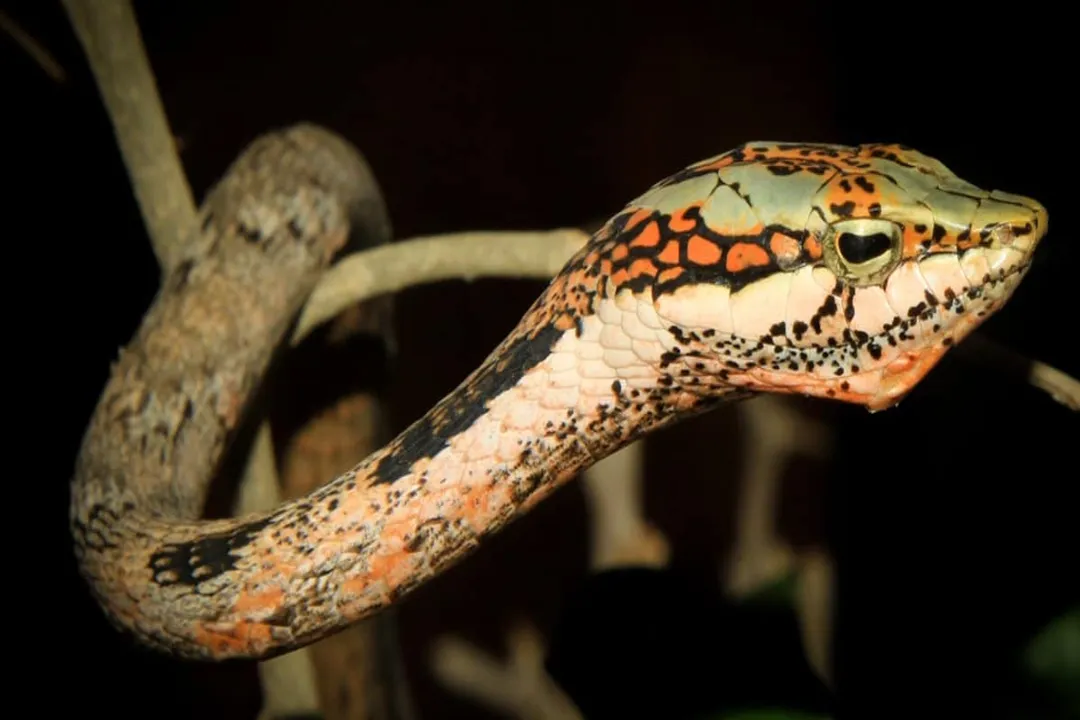
The physical description of the twig snake is inseparable from its alternative names. They are characterized by an exceptionally slender body and a remarkably long neck. [1][6] This morphology is critical to its lifestyle. When observed in its natural setting, a twig snake can easily be mistaken for a dead stick or vine hanging from a branch, a camouflage ability that is among the best in the reptile world. [1][6][3]
A key feature for identification, especially when one can safely observe the head, involves the eyes. Twig snakes possess large eyes that are laterally positioned, giving them excellent binocular vision, which is essential for an arboreal hunter. [2] Another telltale sign, though often difficult to spot in the field, is the presence of horizontal pupils. [2] This shape differs from the round or vertically slit pupils seen in many other snakes and is a characteristic shared with other highly visually dependent species. Adult lengths are typically modest, often reaching around 1 meter (about 3 feet). [2] Their coloration typically involves mottled patterns of browns, greys, and sometimes greens, perfectly matching the bark and foliage they inhabit. [6]
# Dangerous Potency
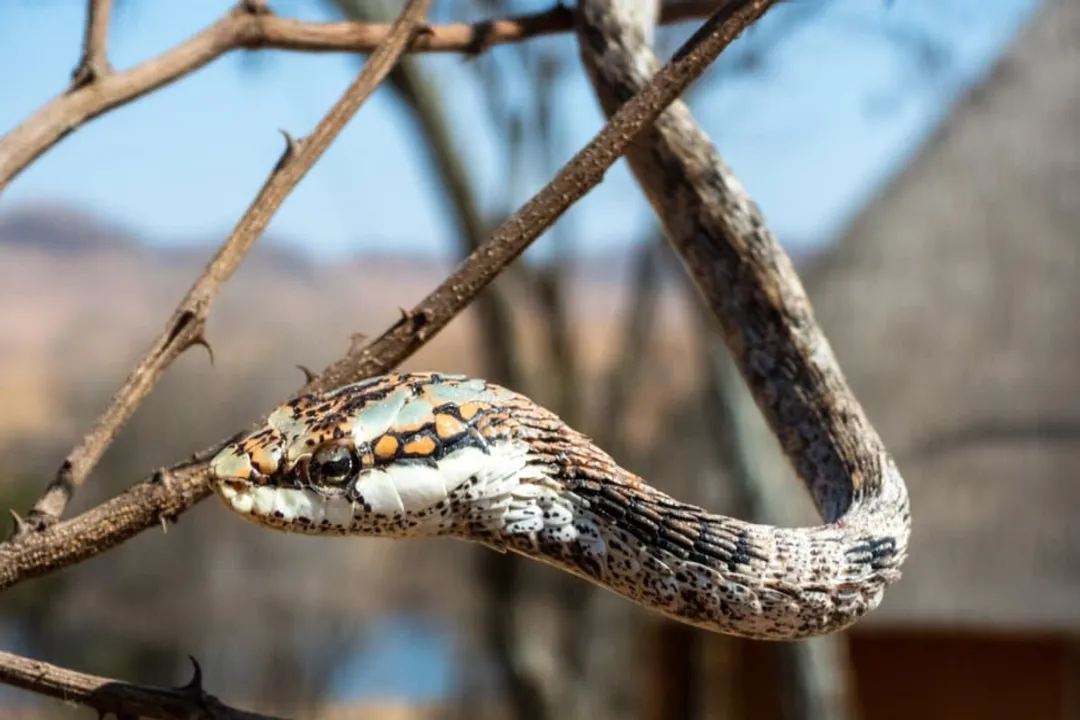
Despite their delicate appearance and often shy nature, the alternative names mask a significant medical risk. The twig snake, regardless of whether one calls it a vine snake or uses its species designation, is venomous. [1][2] They are classified as rear-fanged snakes, technically known as being opisthoglyphous. [1][2] This means their fangs are located towards the back of the upper jaw, unlike the fixed, front-facing fangs of elapids (like cobras) or vipers. [2]
This dental arrangement historically led to a dangerous underestimation of their threat level. [1] While the physical mechanics of delivering a large dose are more complex than with front-fanged snakes, the venom itself is potent. It is primarily hemotoxic, meaning it attacks the blood system, causing issues like internal hemorrhaging, localized swelling, and potentially severe coagulopathy (disruption of blood clotting). [1][2] Fatalities, while rare, have been recorded, underscoring the serious nature of any bite from a Thelotornis species. [2] This duality—a fragile appearance hiding potent toxins—is a fascinating and worrying aspect of this group of reptiles.
# Locomotion and Habits
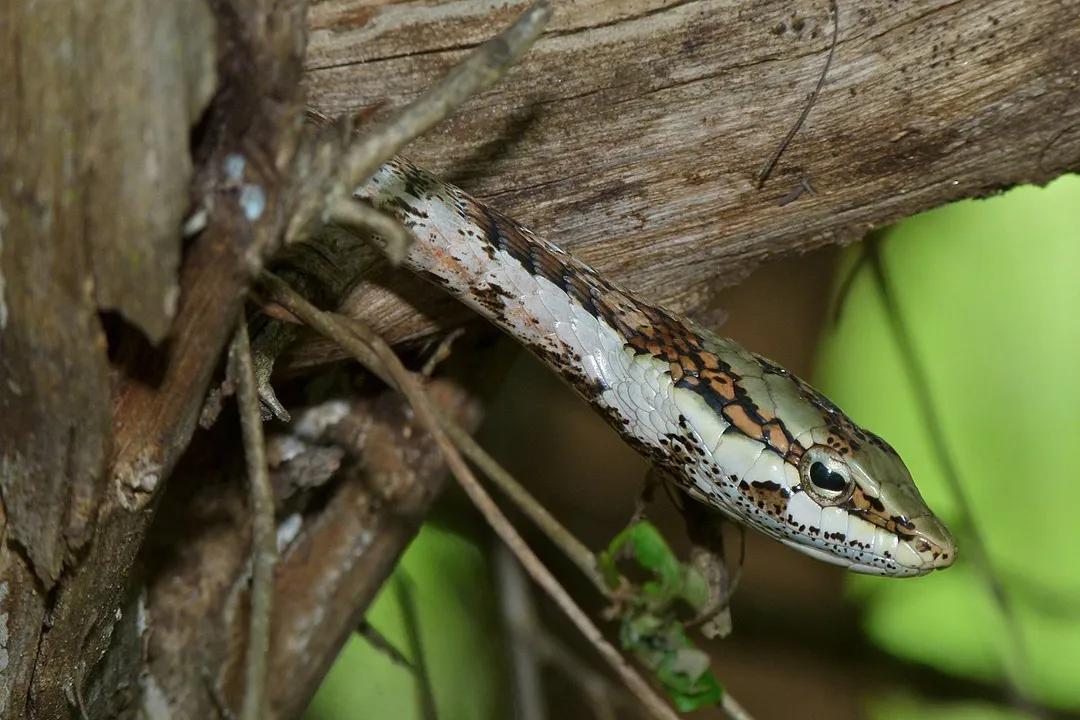
The movement patterns of the twig snake are integral to how it earns its names. When moving slowly, they often maintain a somewhat stiff posture, enhancing the twig resemblance. [1] In contrast, when moving with purpose or climbing, they adopt the sinuous, flexible motion characteristic of a vine. [3] This arboreal lifestyle means they spend the majority of their time in trees and shrubs, rather than on the ground. [6]
They are generally considered to be nocturnal or crepuscular hunters, being most active during the twilight hours or at night. [2] This reduced visibility during their active period further contributes to the low number of documented encounters and bites, as they are less likely to be seen or disturbed during the day when most human activity occurs. [2] Their diet primarily consists of lizards and frogs, which they ambush using their superb camouflage. [1][6]
# Contextualizing Local Identifications
The confusion surrounding the exact name of the twig snake is a common issue across regions where these snakes occur in Africa. [6] For example, in South Africa, the local common name might shift based on the specific province or even neighborhood. [3] While some sources clearly define T. capensis as the Southern Vine Snake, [6] field observations and casual reports might use "twig snake" generically for any Thelotornis encountered. [3] This is where applying a bit of contextual knowledge is helpful. If a snake is observed in the southern part of the continent, possessing the vine-like behavior and rear fangs, it is highly probable it belongs to the capensis complex, even if the observer simply calls it a twig snake. [2][6]
One interesting aspect of their distribution relates to the species overlap. The distinct ranges of T. kirtlandii, T. capensis, and T. mossambicanus mean that simply seeing a snake that looks like a twig snake is not enough to confirm its exact species without geographical context or precise morphological examination. [5][9] For example, while one species might be prevalent in coastal bushveld, another might dominate drier inland areas. [6]
To provide a clearer picture of the classification confusion that necessitates knowing "another name," consider this summary derived from the various sources:
| Common Name Group | Scientific Genus/Species Example | Primary Locality Hint | Key Feature |
|---|---|---|---|
| Twig Snake | Thelotornis spp. | Broad African distribution | Cryptic camouflage [1] |
| Vine Snake | Thelotornis spp. | Broad African distribution | Arboreal movement [3] |
| Southern Vine Snake | Thelotornis capensis | Southern Africa | Specific species designation [6] |
| Kirtland's Vine Snake | Thelotornis kirtlandii | Varies | Distinct species recognized [5] |
This table illustrates that "Vine Snake" acts as a synonym for the genus Thelotornis, while the specific species names offer finer detail within that synonym group. [5][6][9]
When dealing with potentially venomous snakes in the wild, relying solely on a common name like "twig snake" or even "vine snake" can lead to misidentification or underestimation of risk. It is the combination of the rear-fanged structure, the slender build, and the arboreal habit that defines the danger associated with this genus. [1][2]
The efficiency of this animal’s camouflage provides an interesting case study in evolutionary pressure. When an animal relies so heavily on visual deception for survival—both to avoid predators and to secure prey—the morphological adaptations become extremely specialized. The twig snake is not just generally brown; its scales and pattern often mimic the texture of bark or dry woody material with remarkable fidelity. [1] This level of specialized cryptic morphology suggests a low-energy, ambush predation strategy relying almost entirely on unsuspecting prey moving into its immediate striking zone, a calculated risk given the energy expenditure required for movement in the canopy. [1][6]
Another important consideration when discussing these names relates to conservation and public perception. In many communities, any long, thin snake that is not clearly identifiable might be labeled with the most memorable name—the "twig snake." This generic labeling can sometimes hinder targeted conservation efforts that might need to focus on one specific, locally threatened Thelotornis species over another, as protection might be afforded to the common name but not the scientifically distinct, yet visually similar, relative. [6]
For instance, an observer in a location known for T. capensis might encounter a specimen and correctly identify it as a Southern Vine Snake. [6] However, an individual a few hundred kilometers north, encountering a T. kirtlandii, might use the term "twig snake" interchangeably, leading to anecdotal confusion in local wildlife reporting or databases like citizen science platforms. [5] The consistency in reporting the genus Thelotornis across various data points, even when common names diverge, is what helps researchers map the true distribution and variability within this complex group. [5][9]
The subtle differences between these species, such as slight variations in head shape or scale counts, are usually only apparent to experts. [2] For the general public or even an intermediate enthusiast, recognizing the snake as a member of the Thelotornis genus—i.e., knowing it is a Vine Snake or Twig Snake—is the most crucial piece of knowledge, as it immediately cues the necessary caution regarding its significant venom. [1][2]
When someone asks for another name for a twig snake, the answer is inherently layered. It is Thelotornis, it is the Vine Snake, and depending on the exact locale and specific appearance, it could be T. capensis, T. kirtlandii, or T. mossambicanus. [5][6][9] The most direct, non-scientific synonym remains the Vine Snake, which serves as a functional alternative descriptor across its range. [3]
#Videos
The Deadly Twig Snake (Thelotornis capensis capensis) - YouTube
The Cryptic Twig Snake (Thelotornis capensis) | Herping South Africa
Related Questions
#Citations
Twig snake - Wikipedia
Southern Vine Snake - African Snakebite Institute
Thelotornis capensis capensis, the Highly Venomous Twig Snake of ...
The Deadly Twig Snake (Thelotornis capensis capensis) - YouTube
Bird Snake (Thelotornis kirtlandii) - iNaturalist
Twig Snake - Thelotornis capensis - A-Z Animals
Southern Vine Snake Thelotornis capensis | Kloof Conservancy The ...
Thelotornis mossambicanus (BOCAGE, 1895) - The Reptile Database