How big are twig snakes?
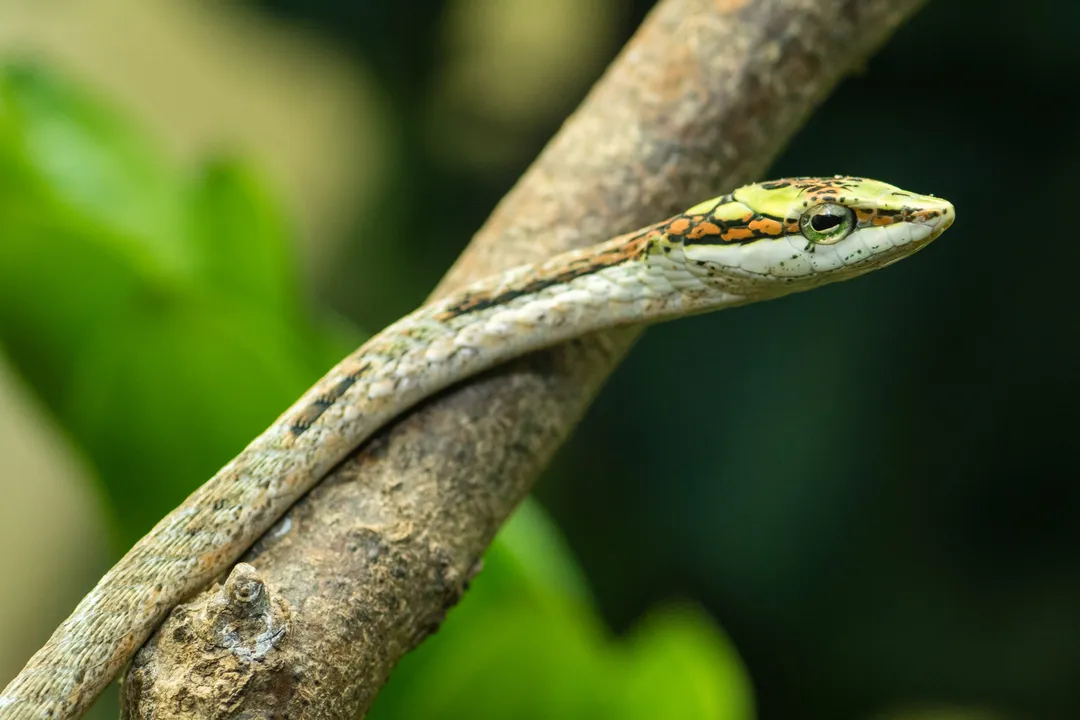
The size of the twig snake, often more infamous for its potent venom than its physical stature, can be somewhat misleading when considering its dangerous reputation. These reptiles are masters of camouflage, relying on their slender build and coloration to mimic dead twigs or vines, which naturally makes people underestimate their potential reach. Generally speaking, these snakes are of medium length, though their appearance can make them seem shorter or longer depending on how they are positioned within their arboreal surroundings. [1][4]
# Adult Measurements
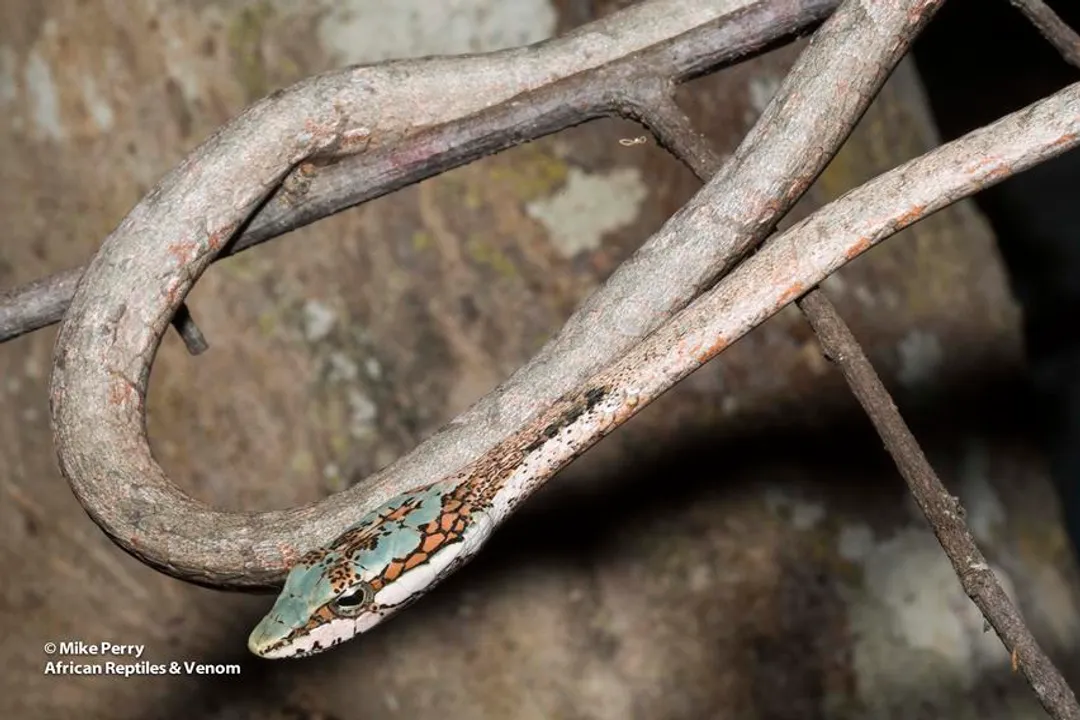
Most sources indicate that the Thelotornis genus, which encompasses the various twig snake species, reaches mature lengths that place them squarely in the mid-sized category for African snakes. [1][3] A typical adult specimen often measures somewhere in the range of to (approximately to ). [1][5] However, records exist that push the upper limits significantly further. Some accounts cite maximum recorded lengths reaching up to (nearly ). [1][3] It is important to note that while is a notable length, this maximum size is relatively small when compared to some of the truly giant constrictors found on the continent. [3]
The sheer length cited by different field guides can sometimes cause confusion, as the precise measurement often depends on whether the measurement is taken from a living, alert specimen or a preserved one, which can contract slightly. [1] For practical purposes in the field, expecting a snake in the range is a safe assumption for a mature individual. [4]
# Species Comparison
The term "twig snake" is often used broadly, encompassing at least two primary species, the Cape twig snake (Thelotornis capensis) and the Forest vine snake (Thelotornis kirtlandii or related forest species). [1][2][8] While they share remarkable similarities in morphology and behavior, their size profiles can show slight variations, though the overlap is significant. [1]
The Cape twig snake, frequently encountered in southern African regions, is often described as being slightly smaller on average than its forest-dwelling relatives, though the difference is often negligible in casual observation. [2] Conversely, the Forest vine snake, which tends to inhabit lusher, more humid environments, is sometimes cited as having a greater capacity to reach the upper end of the length spectrum, potentially hitting those records more frequently. [1][8] The distinction between the species regarding size is not as pronounced as the differences in habitat or certain subtle features of the head or scales, meaning one cannot reliably gauge the exact species based on size alone. [1]
| Species Group | Typical Adult Range (Approx.) | Maximum Reported Length (Approx.) | Primary Habitat Association |
|---|---|---|---|
| Cape Twig Snake | Savannah, woodland | ||
| Forest Vine Snake | Dense forest, thicket | ||
| [2][1][8] |
When looking at these measurements, an interesting pattern emerges regarding their overall mass. A snake of this genus is incredibly slender, lacking the bulk or girth of a common non-venomous species of the same length, such as a mild-mannered Python relative or a large Grass Snake. [4] This lack of mass is directly tied to their lifestyle; they are not ambush predators relying on sheer crushing power, but rather agile hunters that stalk prey in the branches. [1]
# Body Slenderness
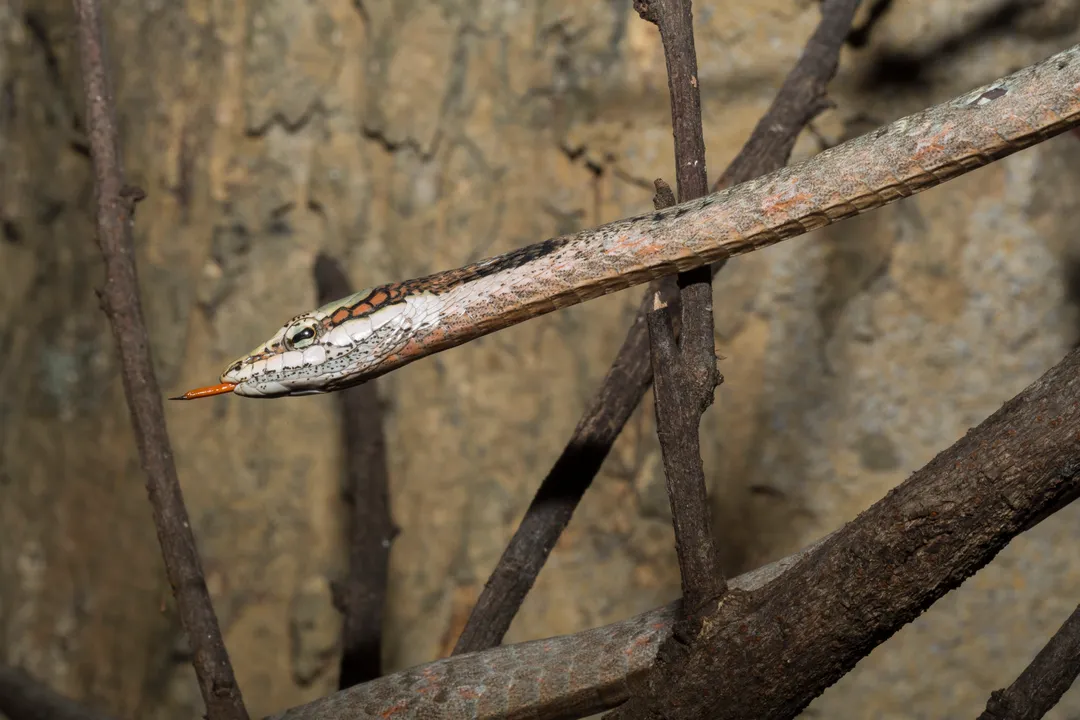
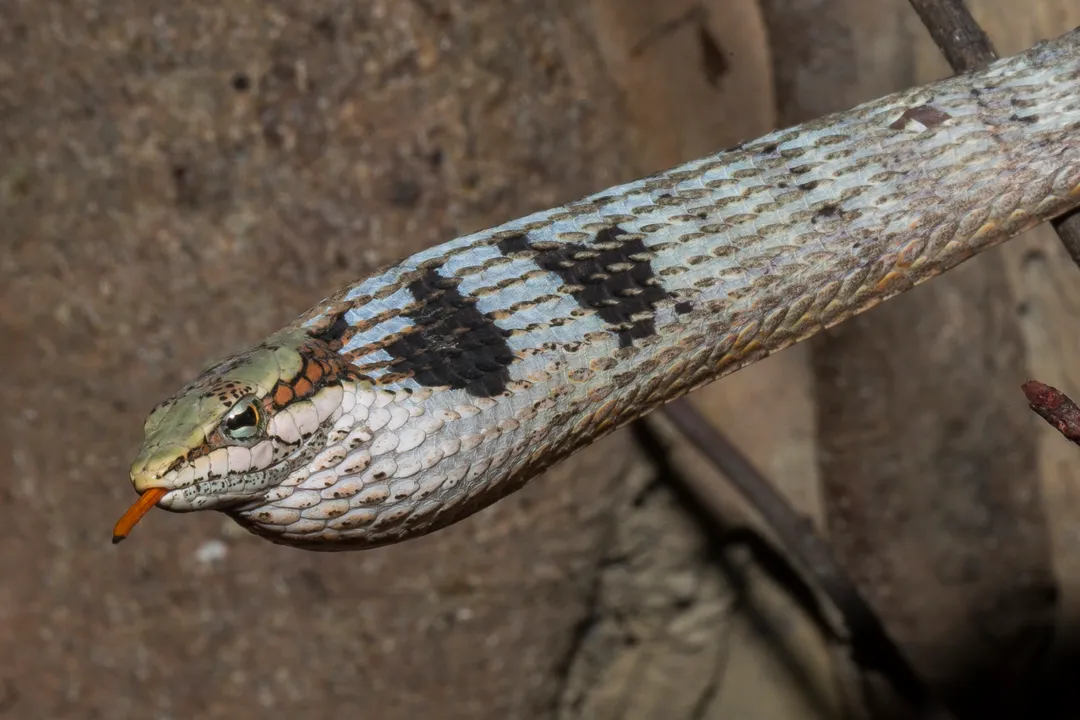
The defining characteristic of the twig snake's size isn't its length, but its girth, or lack thereof. [4][9] Their bodies are exceptionally thin, giving them a rope-like appearance. [4] This extreme slenderness, combined with their irregular, often broken-patterned coloration, is what makes their length so deceptive. A twig snake moving through foliage can easily be mistaken for a stray vine, and its thin profile makes it appear much shorter than it actually is when partially obscured. [1][9]
If you were to place a vine snake next to a similarly sized, thick-bodied cobra, the visual difference would be stark. The viperine snakes often have a relatively heavy build for their length, whereas the Thelotornis species maintains a very uniform, delicate diameter for most of its body length. [1] This narrow build means that an observer might only notice the snake when it is nearly fully extended or when it lifts its head, which it often does in a characteristic, almost hesitant manner when investigating its surroundings. [5]
It is this disproportionate length-to-diameter ratio that likely contributes to their elusive nature and subsequent under-reporting in casual sightings. A casual observer might estimate the length of a partially hidden snake based on the visible girth, leading to an underestimation of the total animal present. [4]
# Size in Context
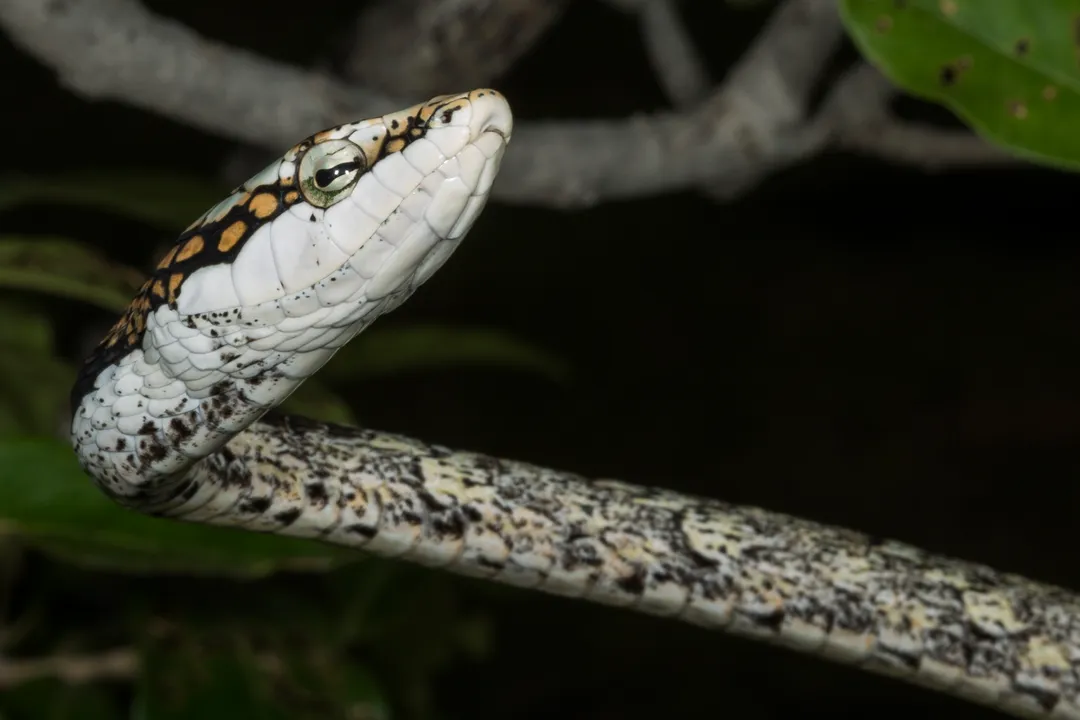
Understanding the size of the twig snake is best done by placing it within its ecological role, rather than just comparing it to other snakes. Their moderate length is perfectly suited for an arboreal existence in dense shrubbery or tree canopies, allowing them to navigate tight spaces where heavier, bulkier snakes would struggle. [1][5]
When an encounter occurs, especially in areas where they are common, it is more useful to be aware of the potential for length rather than relying solely on the visible thickness. For instance, in regions like the Lowveld or certain humid woodlands where these snakes thrive, one should always assume that any thin, branch-like structure hanging in the lower canopy, stretching over , warrants caution, regardless of how much of it is hidden. [2] Because they spend significant time off the ground, people frequently encounter them by reaching into branches or dense bushes, situations where the snake's full length is suddenly presented at an inconvenient height. [5] This contrasts sharply with terrestrial species, where threats are usually visible along the ground plane.
The venom yield and potency are not directly correlated with absolute size in this case; a young, smaller individual still possesses medically significant venom. [2] Therefore, while the maximum length might approach , the effective danger zone is present across the entire mature size range, from upwards. [3] The snake’s survival strategy relies on avoiding detection through perfect size-specific mimicry, not on overwhelming an adversary with sheer bulk.
Related Questions
#Citations
Twig snake - Wikipedia
Cape Twig Snake - Sedgwick County Zoo
Thelotornis kirtlandii (Forest Vine Snake, Bird ... - Animal Diversity Web
Twig Snake - Thelotornis capensis - A-Z Animals
Vine or Twig Snake - African Reptiles & Venom
This Southern Twig/Vine snake, (Thelotornis capensis) measured in ...
Twig Snake Facts & Photos | Wowzerful
Twig Snake | Weird n' Wild Creatures Wiki - Fandom