Which threatened amphibian, heavily dependent on shallow water for metamorphosis, forms a critical part of the SFGS diet?
Answer
California Red-Legged Frog (CRLF)
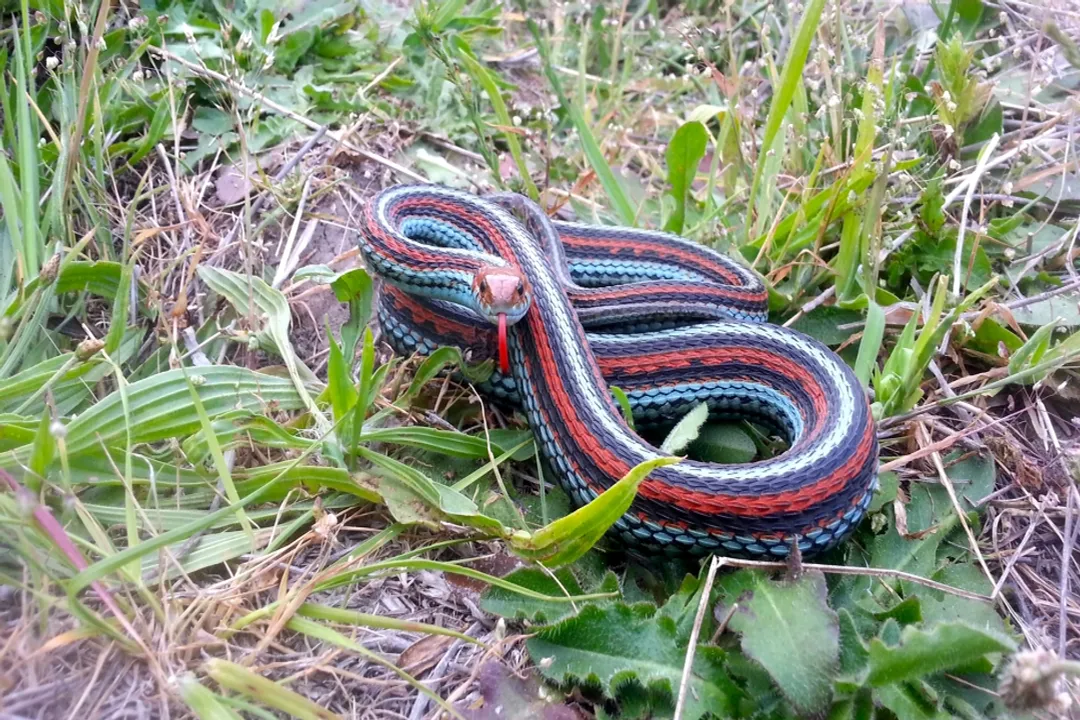
The specialized diet of the San Francisco garter snake is intrinsically linked to the availability and health of local aquatic ecosystems. The snake relies heavily on amphibians as prey, and the California Red-Legged Frog (CRLF), which is itself a threatened species, constitutes a major component of this diet. For the garter snake to successfully capture its preferred prey at the necessary life stages, specifically metamorphosing frogs, the freshwater habitat must meet stringent requirements, including shallow edges, ideally less than 5 cm deep, present between May and July to facilitate access to these vulnerable prey items.
Related Questions
When was the San Francisco garter snake officially listed as endangered by the U.S. Fish and Wildlife Service (FWS)?How many known significant populations of SFGS currently remain across its fragmented habitat?What specific type of underground refugia do San Francisco garter snakes utilize for winter hibernation and summer dormancy?Which threatened amphibian, heavily dependent on shallow water for metamorphosis, forms a critical part of the SFGS diet?What minimum adult census target, maintained across 10 populations, does the 1985 Recovery Plan aim for before considering the SFGS recovered?According to demographic simulations, what is the recommended duration for releasing head-started juveniles into a single subpopulation to maximize viability?What dual threat is posed to the SFGS ecosystem by the presence of non-native American bullfrogs?What specific visual characteristics make the San Francisco garter snake prone to illegal poaching for the pet trade?What is the ideal shallow water depth, measured in centimeters, required near pond edges for SFGS foraging between May and July?Which two specific open space preserves are mentioned as actively supporting SFGS populations while also being managed as cattle ranches?