How many known significant populations of SFGS currently remain across its fragmented habitat?
Answer
Six
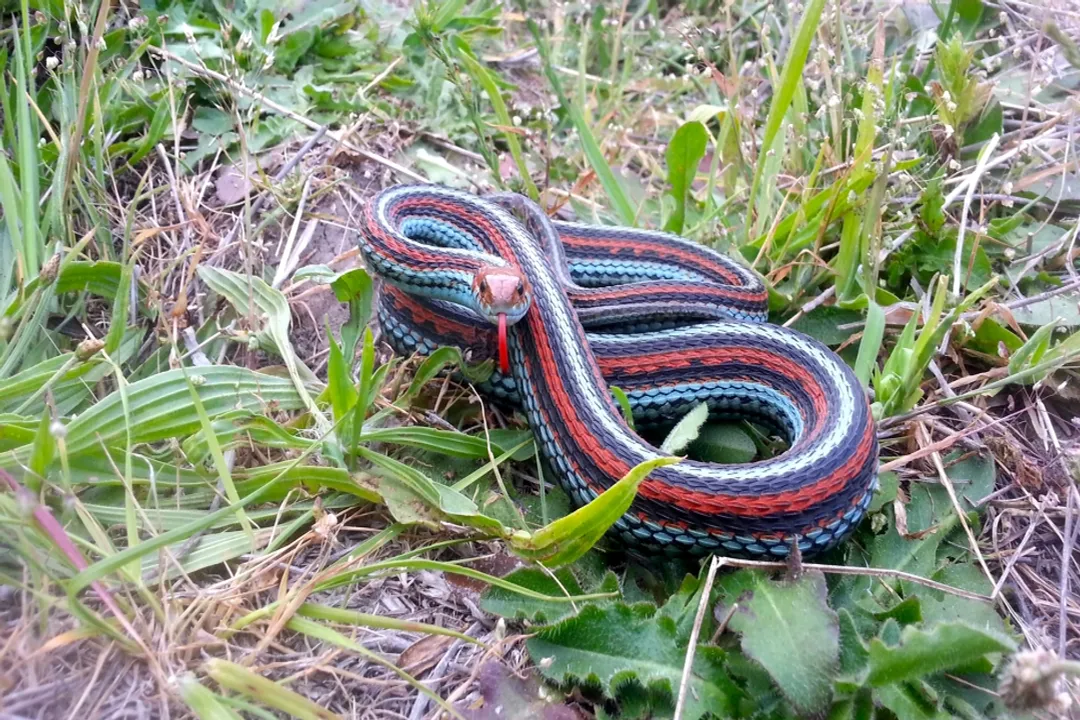
The decline in the range of the San Francisco garter snake is most starkly illustrated by the drastic reduction in the number of distinct reproductive groups. Historically, there were documented to be as many as 65 'permanent' reproductive populations situated across the peninsula where the species historically ranged. However, current reports indicate a severe contraction of this distribution, with only six known significant populations persisting today. Furthermore, it is noted that at least four of these remaining six populations have unfortunately experienced population declines in recent decades, emphasizing the precarious state of the subspecies.
Related Questions
When was the San Francisco garter snake officially listed as endangered by the U.S. Fish and Wildlife Service (FWS)?How many known significant populations of SFGS currently remain across its fragmented habitat?What specific type of underground refugia do San Francisco garter snakes utilize for winter hibernation and summer dormancy?Which threatened amphibian, heavily dependent on shallow water for metamorphosis, forms a critical part of the SFGS diet?What minimum adult census target, maintained across 10 populations, does the 1985 Recovery Plan aim for before considering the SFGS recovered?According to demographic simulations, what is the recommended duration for releasing head-started juveniles into a single subpopulation to maximize viability?What dual threat is posed to the SFGS ecosystem by the presence of non-native American bullfrogs?What specific visual characteristics make the San Francisco garter snake prone to illegal poaching for the pet trade?What is the ideal shallow water depth, measured in centimeters, required near pond edges for SFGS foraging between May and July?Which two specific open space preserves are mentioned as actively supporting SFGS populations while also being managed as cattle ranches?