What is a fierce snake?
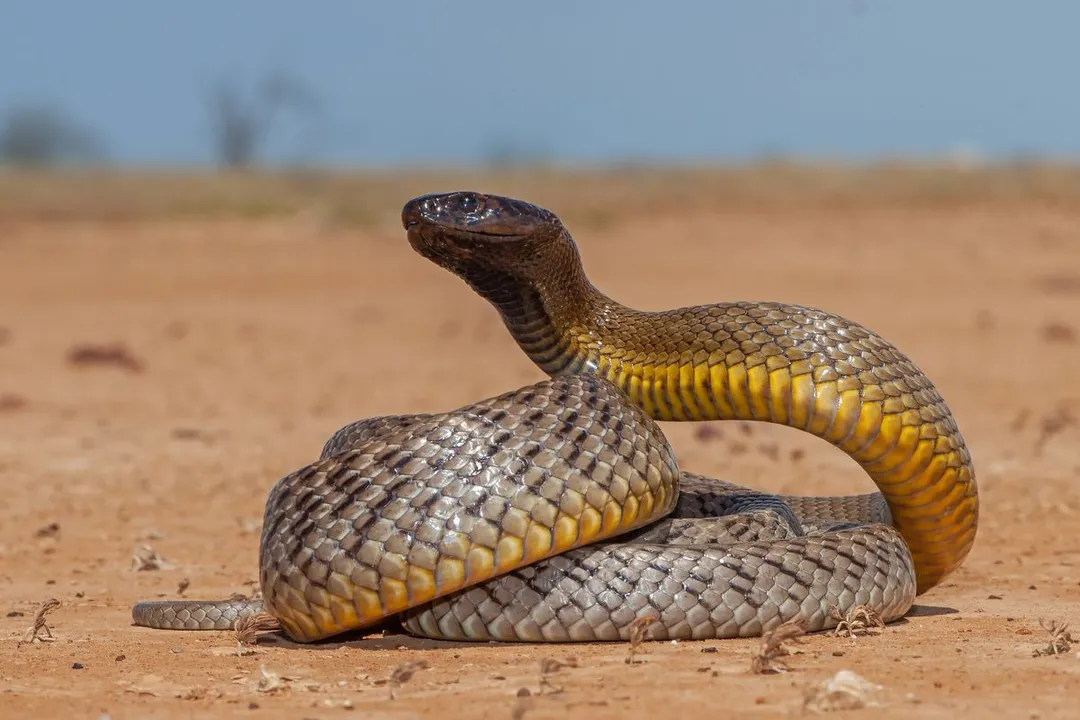
The creature often referred to as the "fierce snake" is scientifically known as the Inland Taipan (Oxyuranus microlepidotus), a reptile whose reputation is built almost entirely upon the sheer toxicity of its venom, which ranks as the most potent of any snake globally based on tests in mice. [1][7][10] Despite its fearsome internal chemistry, its common name might suggest a constant aggression that is not always reflected in its real-world interactions, making its classification a study in contrasts between inherent capability and actual disposition. [4]
# Scientific Names
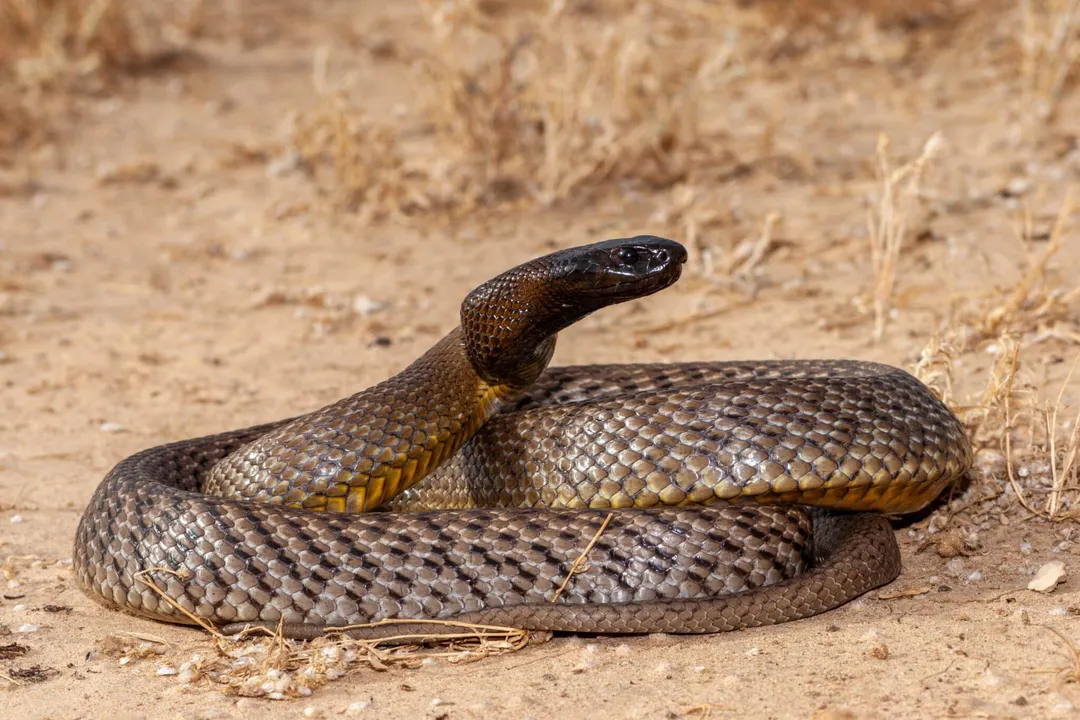
The Inland Taipan has a scientific lineage that shows some historical revision. It was once classified under the genus Parademansia, specifically as Parademansia microlepidota. [1] However, it is now firmly established in the genus Oxyuranus, sharing this classification with the Coastal Taipan, which is an altogether different, though also highly dangerous, species. [1] Its specific epithet, microlepidotus, translates roughly to "small scales," a descriptive term that belies the massive physiological impact of its bite. [1] Understanding its scientific identity helps distinguish it from its more frequently encountered coastal cousin. [10]
# Potent Venom
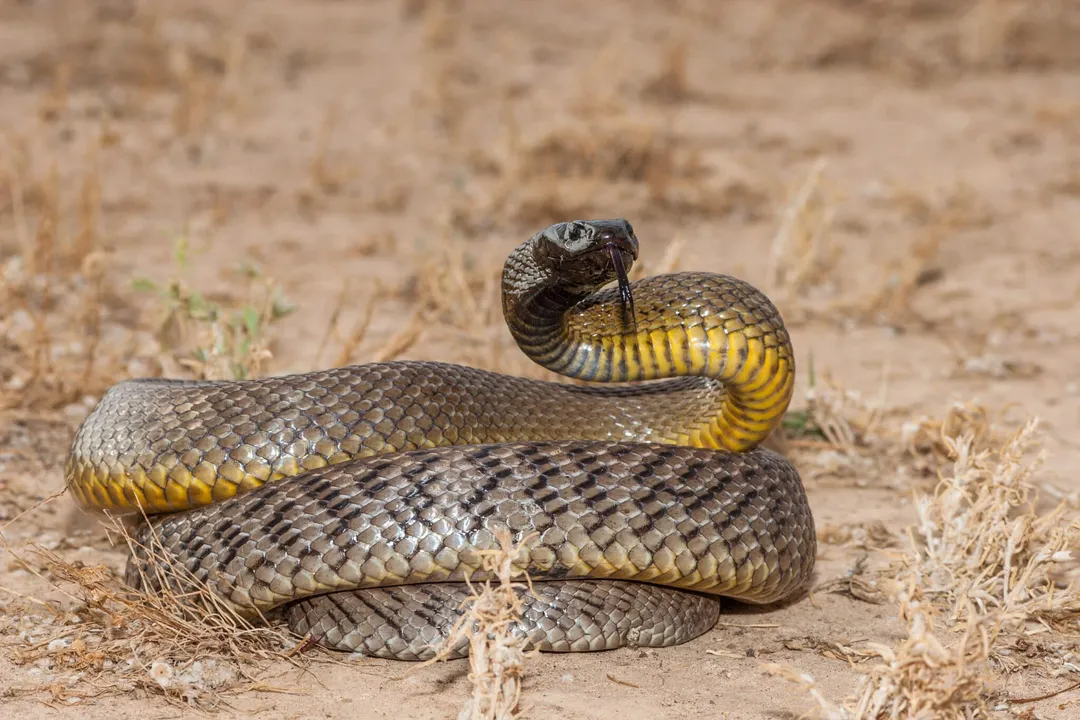
The primary reason this snake garners such intense attention lies in its venom's extreme toxicity. Measured by the median lethal dose (), the Inland Taipan's venom is unmatched by any other terrestrial snake. [1][7] This venom is a sophisticated cocktail, primarily consisting of potent neurotoxins that attack the nervous system, alongside hemotoxins that damage blood vessels and tissues, and procoagulants which can interfere with the body's ability to clot blood. [1]
The quantity delivered in a single bite is as alarming as its toxicity. It is estimated that a single successful envenomation could contain enough venom to cause numerous human fatalities, though exact figures vary depending on the estimation method. [1][3] Given that it is a terrestrial, fossorial (burrowing) snake, its method of delivering this potent dose is highly efficient when it chooses to strike. [2] The venom targets various systems, causing rapid symptoms that necessitate immediate medical intervention involving specific antivenom. [1]
# Physical Traits

Despite being the world's most venomous snake, the Inland Taipan is not necessarily the longest or stoutest. [1][2] It is considered a medium-sized snake, typically growing to lengths of around $1.8$ meters, although some specimens have been recorded approaching $2.5$ meters. [2] Its build is relatively slender compared to some of its bulkier relatives. [1]
Coloration is a notable feature, showing significant variation that often correlates with the ambient temperature and the season. [2] During the cooler winter months, the snake often displays a darker coloration, ranging from deep olive-brown to almost black, which aids in absorbing warmth from the sun, a necessity for a diurnal reptile in a harsh environment. [1][2] As the weather warms into summer, the snake tends to lighten, taking on straw-yellow or light brown hues. [2] Some observers note that the final color can be influenced by the color of its prey, giving it a degree of camouflage specific to its current diet. [2] Its head is often distinctly darker than the rest of its body. [1]
# Habitat Range
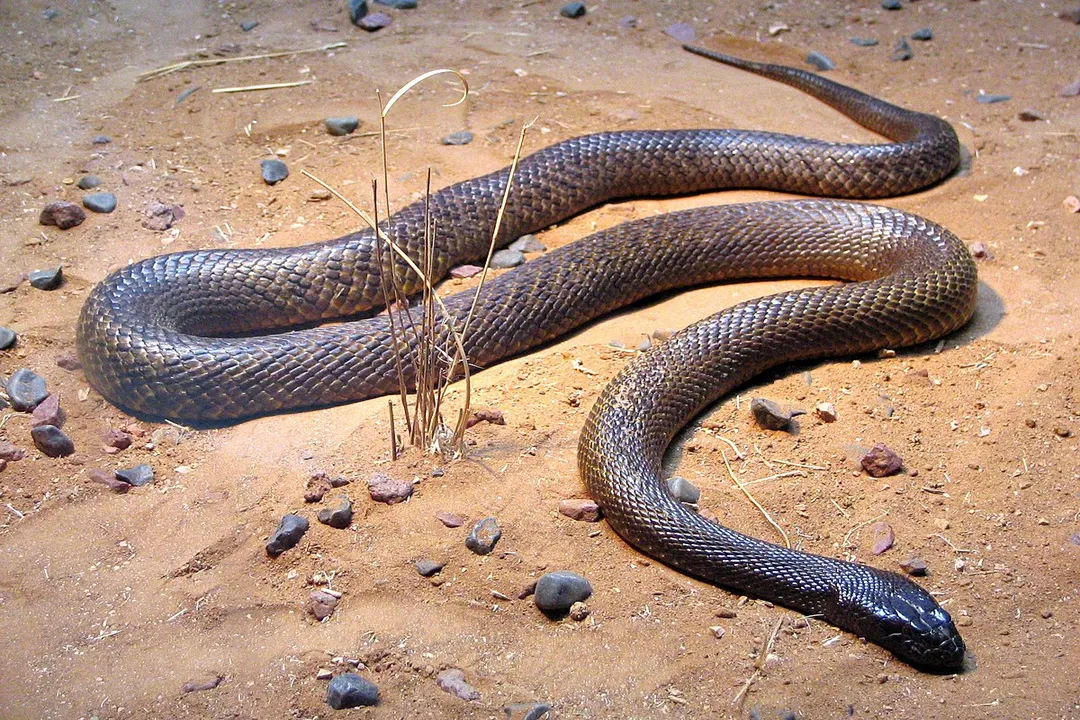
The distribution of the Inland Taipan is highly specific, confined to the remote, semi-arid black soil plains of central eastern Australia. [1][2][10] Its known range centers around the border regions of Queensland, South Australia, and the Northern Territory. [1][2] This habitat is characterized by dry clay pans and cracking floodplains. [2]
This snake demonstrates a strong preference for soil that allows for the creation of deep fissures, cracks, and burrows. These features are critical not just for shelter from extreme temperatures but also for resting, shedding, and potentially ambushing prey. [2] It is important to recognize that its preferred habitat is sparsely populated by humans, which drastically reduces the chance of accidental encounters. [1][4] This geographic isolation is a key factor in its overall safety profile for the general public.
# Hunting Style
The diet of Oxyuranus microlepidotus is remarkably specialized, which is unusual for snakes that often exhibit generalist feeding habits. [1][10] The Inland Taipan feeds almost exclusively on mammals, with the Long-haired Rat (Rattus villosissimus) making up the vast majority of its caloric intake. [1][2] In some areas, they might occasionally consume other small mammals or birds, but the dependency on the rat is pronounced. [10]
This specialization creates an ecological dependency. The Long-haired Rat populations often boom and bust in response to rainfall and subsequent vegetation growth across the black soil plains. [1] When rat numbers are high, the Taipan population is sustained; conversely, when the rat populations crash, the Taipan faces severe food shortages. [2] The evolutionary pressure here is intense: to secure a meal that might only be reliably available seasonally, the snake developed venom powerful enough to ensure immediate incapacitation, minimizing the chance of a struggle that could result in injury to the snake or the loss of the prey item. [1] This contrasts sharply with ambush predators that rely on speed or constriction; the Taipan relies on chemical warfare. [2]
# Behavior Defense
Contrary to the implications of the name "fierce snake," this reptile is generally described as shy, retiring, and hesitant to engage with threats. [1][4] Its primary instinct upon detecting a perceived danger is to retreat into its burrow or flee the area quickly. [1] Its preferred activity time is diurnal, meaning it is active during the day, especially in cooler weather, allowing it to see threats coming better than a nocturnal snake might. [1]
However, when cornered, provoked, or unable to escape—for example, if its retreat is blocked—the Inland Taipan will defend itself aggressively. [1][4] In this defensive posture, it may raise the front third of its body off the ground, forming a taut 'S' shape, poised to strike repeatedly. [1] Because it is terrestrial and typically close to the ground, any defensive strike is usually aimed at the lower legs of an approaching animal or person. [1]
# Conservation Status
The conservation outlook for the Inland Taipan is mixed, depending on the region. While it is not globally endangered, its status within specific Australian states reflects local pressures. [5] In New South Wales (NSW), for instance, the Inland Taipan is formally listed as a Threatened Species. [5]
The pressures leading to this status are often linked to human activity within or adjacent to its specialized habitat. Habitat degradation, agricultural practices that alter the unique black soil plains, and the potential decline in its primary prey source, the Long-haired Rat, all pose threats to localized populations. [5] Because the snake relies on such a specific, albeit vast, environment, fragmentation or disturbance of these clay plains can have significant long-term effects on their ability to breed and feed successfully. [2] Conservation efforts, therefore, often focus on preserving the integrity of the black soil ecosystems where these snakes thrive. [5]
# Rarity Danger
The danger posed by the Inland Taipan is intrinsically linked to the rarity of human contact. Weighing the extreme potency of the venom against the infrequency of encounters presents a fascinating paradox in risk assessment. [1][4] If one were to plot a matrix of venom toxicity versus geographical accessibility, the Inland Taipan occupies the quadrant of Extreme Toxicity / Extreme Remoteness.
Unlike the more widely distributed and human-proximate Coastal Taipan or Eastern Brown Snake, the Inland Taipan lives in regions far removed from major population centers. [1][10] This combination of behavior—being reclusive and preferring to flee—and geography—being in the remote Australian interior—means that documented bites are exceptionally rare. [4] An analysis of venom ecology suggests that this potent defense mechanism evolved primarily for securing large, sporadic prey, not for defense against large mammals, making its defensive display an infrequent, though highly consequential, event. [1][2]
When considering what an outdoor enthusiast or researcher should know about these snakes, the practical takeaway is an emphasis on awareness rather than fear mongering. If you are exploring the remote black soil regions of central Australia, understanding the snake’s habitat—those deep fissures in the clay—is far more useful than simply knowing the value. [2] Never place hands or feet near cracks or under rocks without looking first, especially during warmer daylight hours when the snake is most active. [1] Because antivenom is available, prompt medical evacuation is the critical factor in any potential incident, but the best management strategy remains respectful avoidance of its habitat. [6] The fierce snake remains a remarkable example of evolutionary specialization in one of the planet's harshest environments.
#Videos
How Dangerous is the World's Most Venomous Snake? - YouTube
Related Questions
#Citations
Inland taipan - Wikipedia
Inland Taipan - The Australian Museum
Inland Taipan / Fierce Snake - Australia Zoo
How Dangerous is the World's Most Venomous Snake? - YouTube
Fierce Snake - profile | NSW Environment, Energy and Science
Inland Taipan | Taronga Conservation Society Australia
The Inland taipan (O. microlepidotus) is the most venomous snake in ...
It's over 2 metres long and has enough venom in one bite to kill 100 ...
Discover the Deadly Beauty of the Inland Taipan - Billabong Sanctuary
Fierce snake | reptile - Britannica