When distinguishing sexual characteristics, what feature typically develops on mature males that is longer than in females?
Answer
Interopercular spines
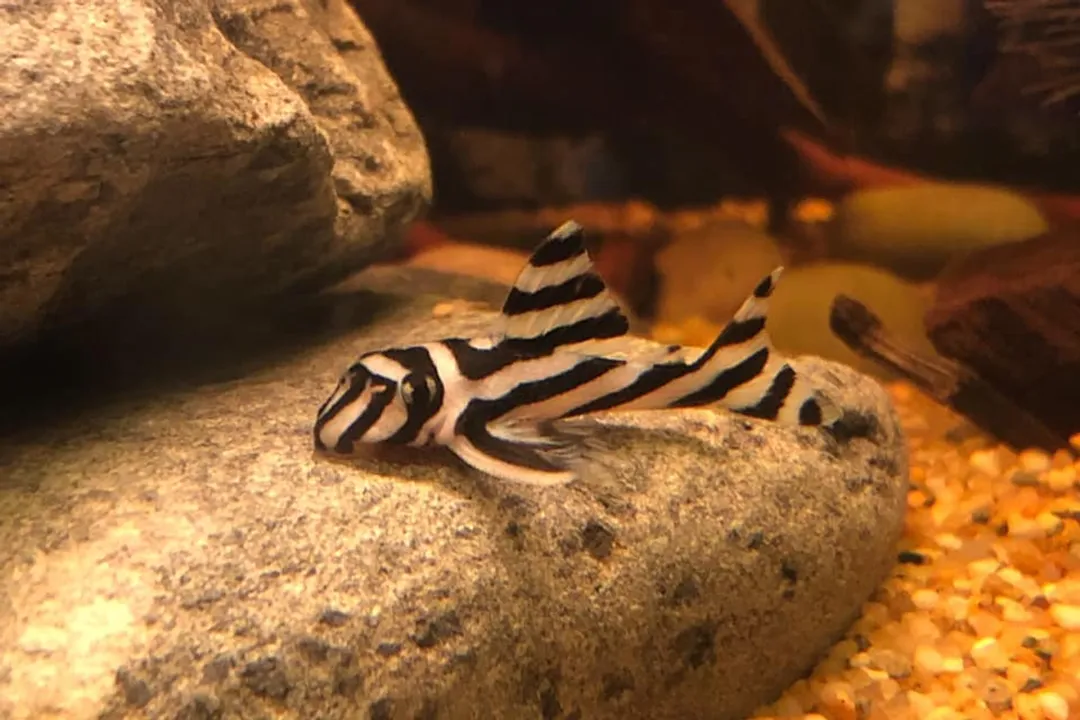
Mature Zebra Plecos exhibit clear sexual dimorphism, meaning males and females display noticeable differences upon close inspection. While both sexes possess these structures, mature males develop longer interopercular spines, which are the small, bristle-like protuberances located on the cheek area near the operculum (gill cover). Furthermore, males generally possess a wider head structure when viewed from above compared to females. Females, by contrast, tend to adopt a shorter and visibly plumper body shape, a characteristic that becomes especially pronounced as they approach spawning readiness.
Related Questions
What is the defining visual characteristic leading to the 'Zebra' designation for this small catfish?Which L-number is primarily associated with the original and most sought-after *Hypancistrus zebra*?What physical deviation in striping distinguishes the L098 variant from the typical L046 form of *Hypancistrus zebra*?What is the reported maximum adult length range for the true *Hypancistrus zebra* (L046/L098) in an aquarium setting?When observing a healthy Zebra Pleco from above, what specific feature regarding the body structure indicates proper development behind the pectoral fins?What physical indicator suggests a Zebra Pleco has been feeding well and is not suffering from malnutrition?What is the healthy shape characteristic of the caudal fin, or tail fin, on a well-developed Zebra Pleco specimen?When distinguishing sexual characteristics, what feature typically develops on mature males that is longer than in females?What subtle coloration is often noted in the eyes of a healthy Zebra Pleco, although it can be difficult to confirm visually?What is the scientific classification attributed to the L129, known as the Colombian Zebra Pleco?