What were the dual primary reasons for the widespread commercial and agricultural persecution of the species?
Answer
Damage to crops and the high value of their brightly colored feathers for the millinery trade.
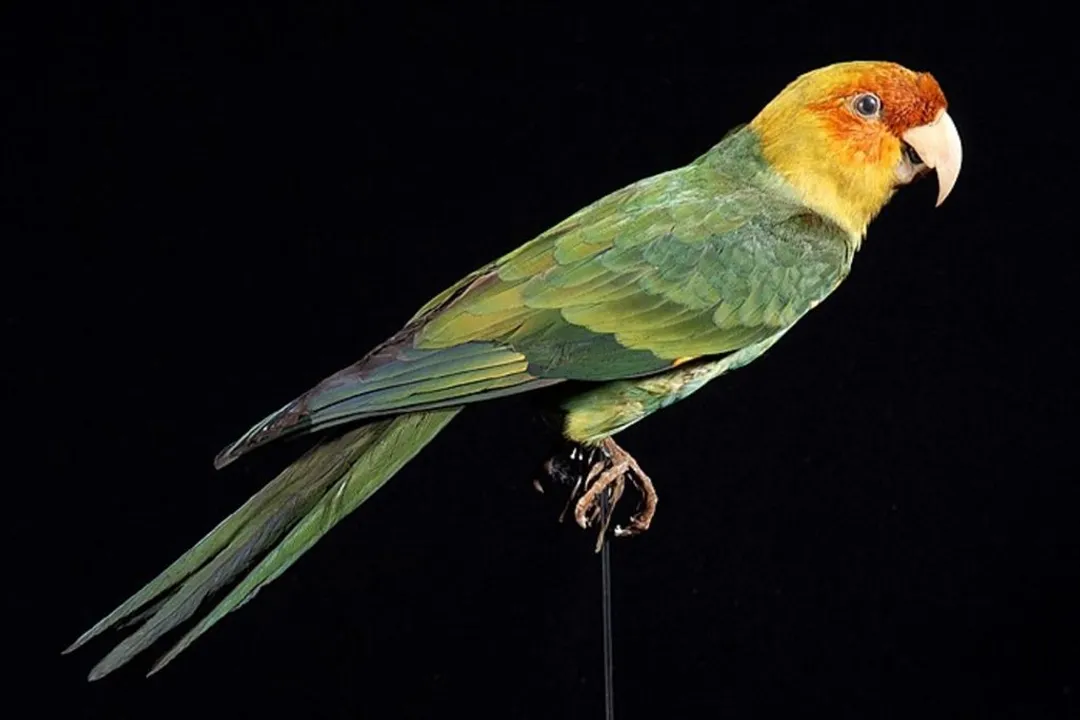
The decline was driven by farmers shooting them for damaging crops and the commercial exploitation by the millinery trade desiring their brightly colored feathers.
Related Questions
What unique distinction did the Carolina parakeet hold among North American birds?What specific colors characterized the male Carolina parakeet's head and chest plumage?Based on recent analysis, how far north might the historical range of the species have extended?How did the parakeet's gregarious social structure negatively impact its survival during persecution?What staple foods did the Carolina parakeet primarily consume?What type of environment did the parakeets generally prefer for their habitat?What conflict arose between the parakeets and agricultural settlers?When was the last known wild sighting of the Carolina parakeet generally estimated to have occurred?What were the dual primary reasons for the widespread commercial and agricultural persecution of the species?What date marks the official extinction of the Carolina parakeet species?