What is unique about the Kiskadee bird?
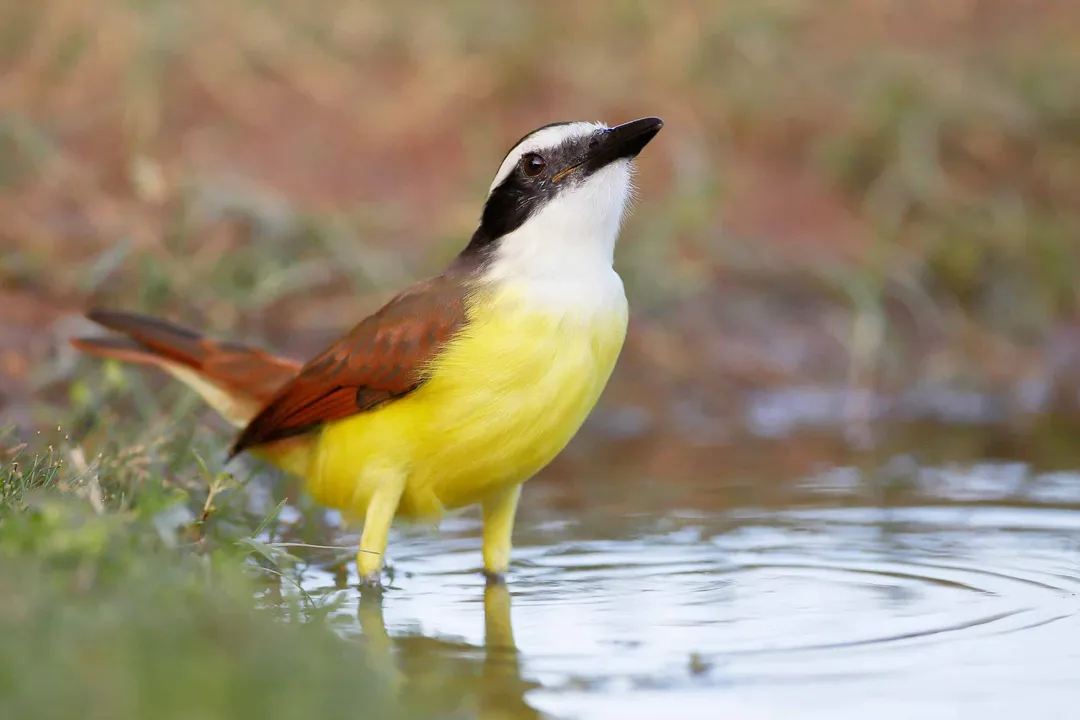
The Great Kiskadee is an unmistakable presence in its varied habitat, instantly recognized by its vivid coloration and its utterly demanding vocal performance. [1][4] This bird belongs to the tyrant flycatcher family, Tyrannidae, but it often defies the quiet, insect-snatching stereotype associated with many of its relatives. [7][2] Its uniqueness stems from a combination of striking visual markers, an unusually broad diet for a flycatcher, and the specific, aggressive methods it employs to secure its meals. [7][5] Observing a Kiskadee is less about spotting a shy flicker of movement and more about encountering an energetic, conspicuous avian character that announces its arrival loud and clear across the landscape. [4]
# Striking Look
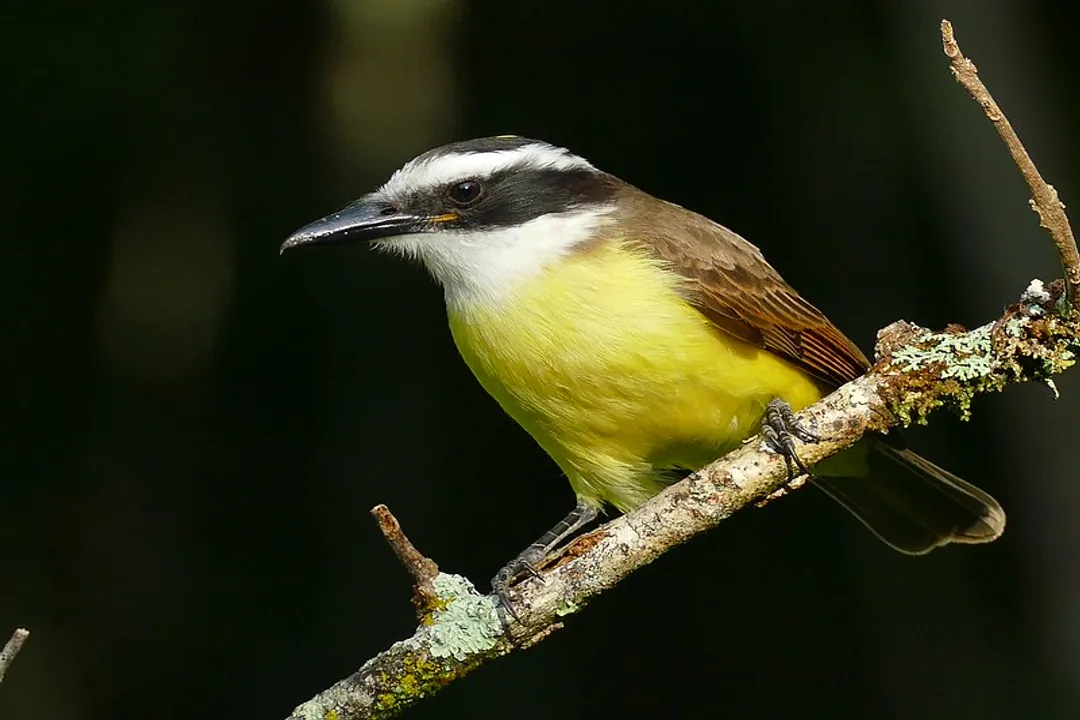
The visual presentation of the Great Kiskadee sets it apart immediately. It is a relatively large flycatcher, often described as bulky, but it is the contrast in its plumage that draws the eye. [1][2] The bird sports a bright yellow belly that extends up to its breast, providing a brilliant splash of color against the more subdued yellows and browns found on its back and wings. [1] Perched against the green foliage, this under-coloring is highly noticeable. [3]
However, the head is perhaps the most architecturally defined feature. The Kiskadee wears a bold black line that runs right through its eye, creating a dramatic masked effect. [1][2] This sharp black stripe is bordered above by a conspicuous white stripe, sometimes referred to as a supercilium, which acts like a bright highlight, framing the dark eye patch. [1][3] This combination of black mask and white border makes its facial expression seem intense and alert. [2] Add to this a sturdy, dark, and somewhat oversized bill relative to many other flycatchers, and you have a bird that looks built for action rather than subtle maneuvering. [1][5] The overall effect is one of alertness and confidence, perfectly matching its vocal reputation. [4]
# Signature Song
If the appearance captures attention, the sound demands it. The Kiskadee is famous for its loud, insistent call, which gives the bird its common name. [4][5] The sound is frequently transcribed as a clear, sharp “Kiskadee! Kiskadee!” or sometimes a “Pee-a-wee!”. [1][6]
This vocalization is not a soft chirp or a delicate warble; it is a persistent, resonant whistle or scolding note that carries a significant distance. [5][1] In areas where they are common, the incessant calls can become the background auditory signature of the habitat. [5] Unlike some birds whose calls are only heard during mating or territorial disputes, the Great Kiskadee is known to call frequently throughout the day, advertising its presence and perhaps establishing dominance over feeding territories near water sources. [5] This powerful voice ensures that even if one misses the flash of yellow, the Kiskadee’s presence is readily confirmed by ear. [6]
# Dietary Habits
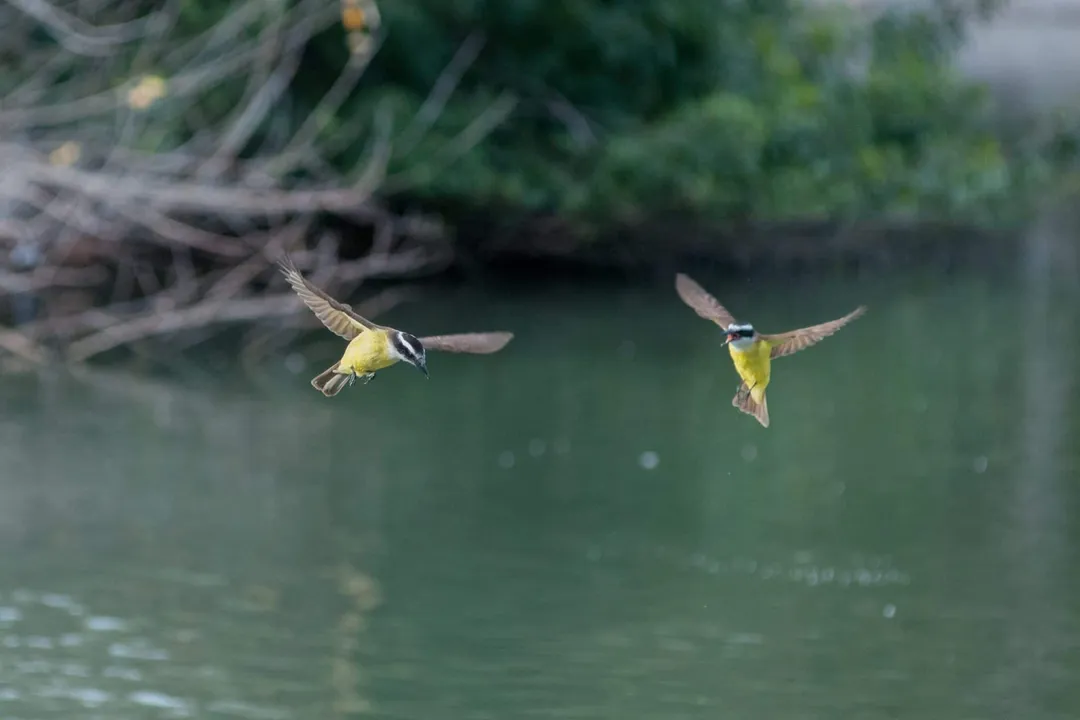
What truly sets the Great Kiskadee apart within the Tyrannidae family is its willingness to consume prey much larger and more diverse than what the typical flycatcher attempts. [7] While many flycatchers specialize in snatching small, flying insects mid-air—the classic aerial hawking behavior—the Kiskadee incorporates a much broader menu into its diet. [6]
Its diet includes a wide array of arthropods, such as large insects and spiders, but it readily expands this to include small fish, amphibians like frogs, and even small lizards or snakes. [5][9][2] Furthermore, they are known to consume seeds and fruits, making them opportunistic omnivores when the opportunity arises. [1][5] This flexibility is quite unusual for a bird generally categorized as a flycatcher.
To illustrate the contrast in foraging focus, consider how a few common flycatchers compare to this powerhouse:
| Bird Family Member | Primary Foraging Strategy | Typical Prey Focus |
|---|---|---|
| Typical Tyrant Flycatcher | Aerial hawking, perch-and-pounce | Small flying insects (flies, gnats) [7] |
| Great Kiskadee | Aerial hawking, ground/water sallies, robbing | Large insects, fish, amphibians, fruit [5][7] |
Analyzing the Kiskadee's varied diet suggests it functions ecologically less like a specialized, aerial insectivore and more like a generalist predator or a small kingfisher in many environments. [7] This broad adaptability, spanning from the air to the water's edge and even to fruit-bearing trees, likely explains its wide distributional success across the Americas, from the southern United States down into parts of South America. [2][5] A bird that can shift its primary food source based on availability is much more resilient than one dependent on a single type of prey. [1]
# Unique Technique
The Kiskadee’s approach to handling larger prey is another defining feature, displaying a determined, almost aggressive modification of typical flycatcher behavior. [7] When the Kiskadee successfully captures prey—particularly something slippery like a small fish or an agile frog—it often does not consume it whole right away. [5]
Instead, the bird employs a technique sometimes described as fish-dunking or beating. [7] The bird will carry the prey to a hard, rough surface, such as a rock, a branch fork, or even pavement, and repeatedly strike the victim against it. [5][7] This serves several practical purposes: it may stun the creature further, break up tougher exoskeletons, or, most critically, allow the bird to reposition the prey item so it can be swallowed headfirst, minimizing the danger of spines or sharp appendages catching in the throat. [5]
Considering the energy expenditure required to repeatedly strike larger prey against a perch, the Kiskadee's technique is a high-investment foraging strategy. [7] For an insectivore, this level of preparation for a meal is unusual; it suggests a calculated risk/reward assessment when capturing prey that exceeds its immediate swallowing capacity, perhaps maximizing caloric intake from high-value targets like small fish or vertebrates. [9] This behavior highlights a practical application of specialized behavioral adaptation built upon a generalist dietary foundation. [7]
# Range and Habitat
The Great Kiskadee has an extensive range that reflects its adaptability. In North America, populations are most reliably found in southern Texas, particularly in areas along the Rio Grande Valley, although they occasionally wander further north as vagrants. [5][1] Their primary distribution stretches through Mexico, Central America, and into northern and central South America. [2]
They favor habitats that offer both open space for hunting and proximity to water, though they are not strictly restricted to aquatic margins. [1] You often find them perched conspicuously on prominent branches, utility wires, or fence posts overlooking open ground or water bodies—perfect vantage points for spotting terrestrial or aquatic movement below. [4][5] They are common in open woodlands, semi-open country, parks, and along streams and rivers, showing a preference for areas where a clear line of sight to the ground or water is possible. [1][2] This ability to thrive in environments near human settlement, provided suitable foraging structure is present, is another factor contributing to their conspicuous nature. [5]
The Kiskadee's success is intrinsically linked to its ability to exploit various resources within these varied environments, from the dense woodlands of the tropics to the scrubbier river edges of Texas. [2] They are active and bold, rarely remaining hidden for long, ensuring that anyone looking for them has a good chance of finding them perched in plain view, ready to sound off their familiar, loud declaration. [4]
Related Questions
#Citations
Great Kiskadee | Audubon Field Guide
Great kiskadee - Wikipedia
Great kiskadee Facts for Kids
Bentsen-Rio - The Great Kiskadee, a bright and energetic bird with a ...
GREAT KISKADEE | The Texas Breeding Bird Atlas
How to Know the Birds: No. 22, The Common Kiskadee
Great Kiskadee: Unconventional Flycatcher - BirdNote
5 (and a half!) things you didn't know about the Great Kiskadee
Great Kiskadee Bird Facts - Pitangus sulphuratus - A-Z Animals