What unique sensory adaptation allows the Turkey Vulture (Cathartes aura) to locate fresh carcasses, often surpassing sight-reliant scavengers?
Answer
An excellent sense of smell
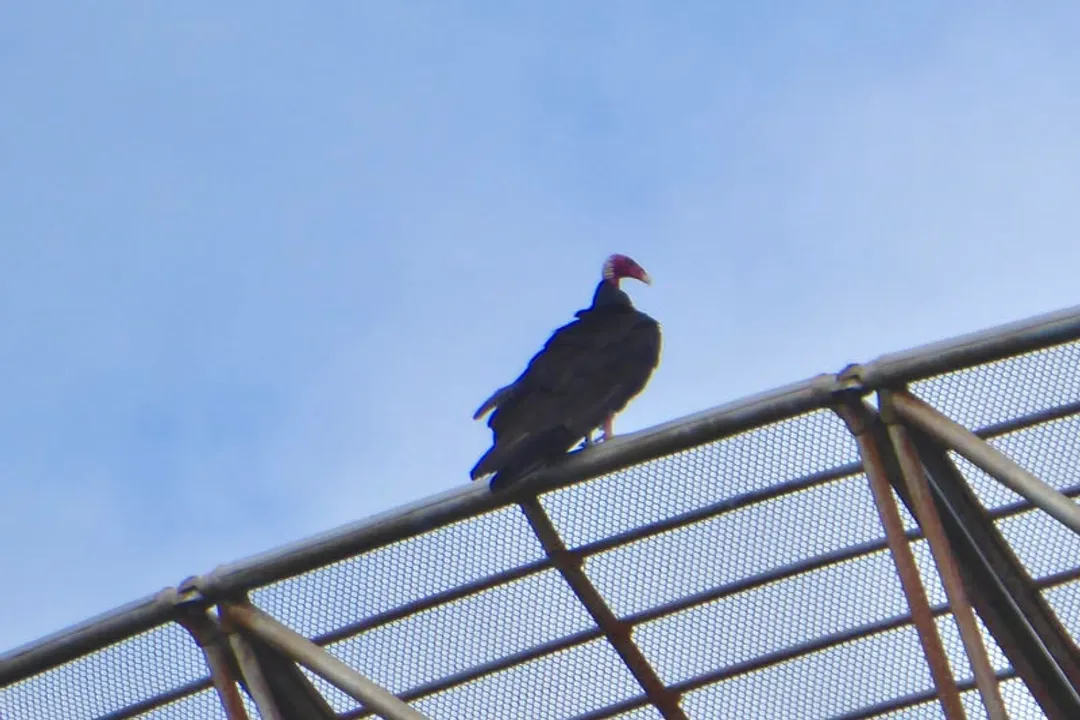
The Turkey Vulture (*Cathartes aura*) possesses a highly developed and acute sense of smell, which is virtually unparalleled among birds. This olfactory prowess is a crucial adaptation that allows this New World Vulture to successfully locate fresh carcasses, even when they are hidden from view beneath forest canopy or are otherwise missed by scavengers that rely solely on sight to locate food sources. This superior sense of smell directs them efficiently to their next meal across their broad habitat range.
Related Questions
What family classification distinguishes the Turkey Vulture (Cathartes aura) from the Red-headed Vulture (Sarcogyps calvus)?What is the conservation status assigned to the Asian Red-headed Vulture (Sarcogyps calvus)?What specific flight posture, often displayed by the Turkey Vulture (Cathartes aura), involves holding wings in a slight V-shape?Which veterinary drug, when consumed via carcasses, has caused a drastic population plummet for the Red-headed Vulture (Sarcogyps calvus)?What is the fundamental biological reason both vulture types lack feathers on their heads when consuming carrion?How does the head coloration of an adult Turkey Vulture (Cathartes aura) compare to that of its juveniles?What distinguishing plumage feature is present on the neck of the Red-headed Vulture (Sarcogyps calvus) but is absent in the Turkey Vulture (C. aura)?What unique sensory adaptation allows the Turkey Vulture (Cathartes aura) to locate fresh carcasses, often surpassing sight-reliant scavengers?Where is the Turkey Vulture (Cathartes aura) frequently seen, contrasting with the primary range of Sarcogyps calvus?How is the head skin texture of the Red-headed Vulture (Sarcogyps calvus) described when contrasted with the Turkey Vulture's head?