What type of dog is a Flat-Coated Retriever?
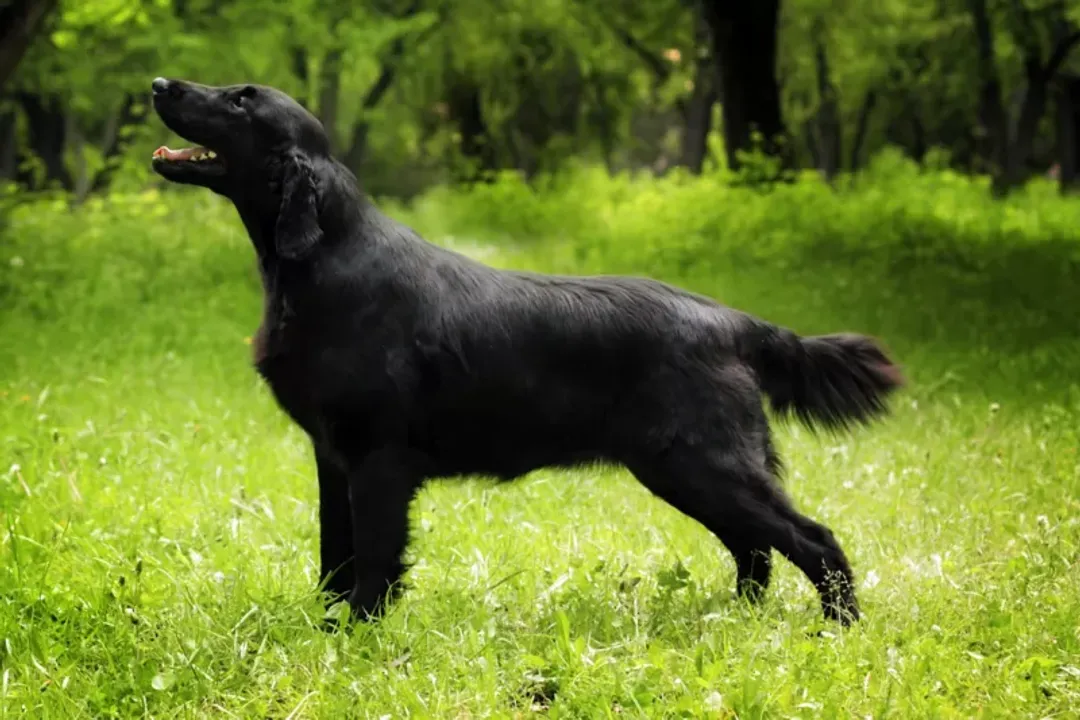
The Flat-Coated Retriever is instantly recognizable by its sleek, medium-length coat and its perpetually cheerful disposition, often leading many to nickname them the "Peter Pan" of the dog world because they seem to retain their youthful exuberance for so long. [3] This breed belongs firmly to the Sporting Group, a classification that speaks directly to its historical purpose as a capable and versatile hunting companion. [1] Bred primarily for retrieving shot game, both on land and in water, the Flat-Coat embodies enthusiasm, intelligence, and an unwavering desire to please its handlers. [1][4][8]
# Breed Lineage
The history of the Flat-Coat traces back to Great Britain, where they were developed primarily in the 19th century. [5] Their creation involved mixing native water dogs with other retrieving breeds to create a dog that could work effectively across varied terrain and water conditions. [8] They share ancestry with several other popular retrieving breeds, but the Flat-Coat was specifically refined to possess its characteristic smooth, flat coat, distinguishing it from the Curly-Coated Retriever. [5] For many years, they were considered the premier gun dog in England, prized for their combination of biddability and stamina in the field. [8] Although their numbers dipped significantly after World War II, dedicated breeders worked to maintain the lines, ensuring the breed retained its natural retrieving instincts and joyful nature. [1][5]
# Physical Markers
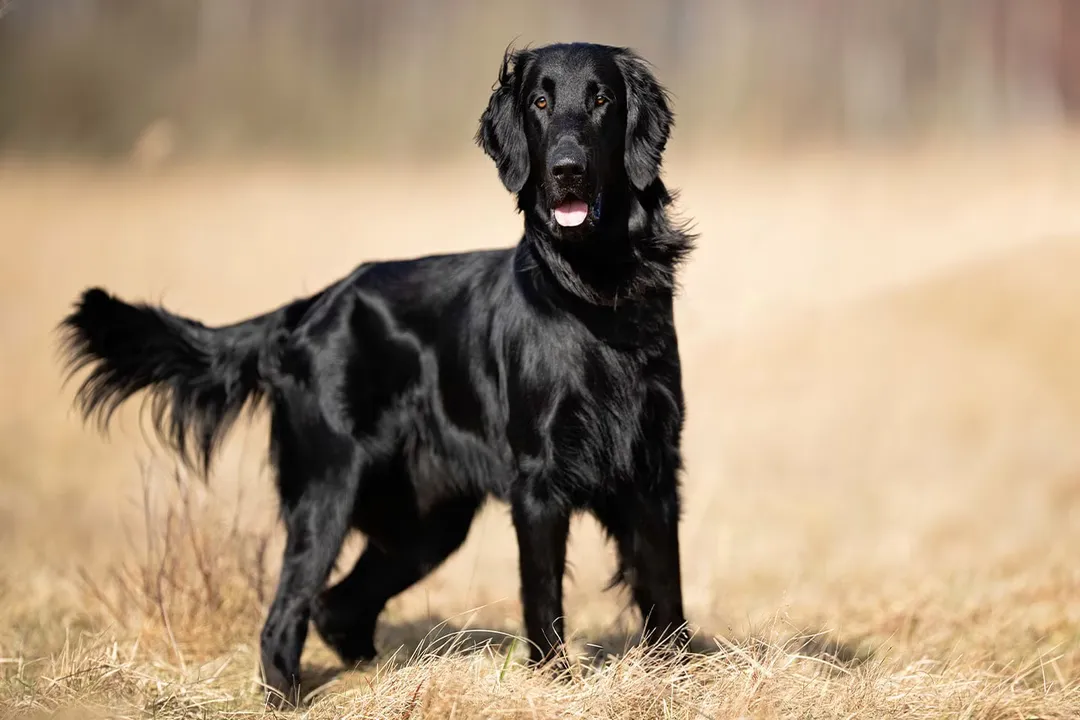
When observing a Flat-Coat, several physical characteristics stand out. They are medium-to-large dogs, typically standing between 21.5 to 24.5 inches at the shoulder and weighing between 60 and 70 pounds, though individuals can vary. [1][6] The overall impression should be one of balance and power, built for endurance rather than sheer bulk. [5]
# Coat Structure
The coat is perhaps the most defining feature, hence the name. It should be dense and flat, lying close to the body, offering protection against the elements without being overly heavy or curly. [1][2][5] Feathering—longer hair—is expected on the back of the legs, the chest, the belly, and the tail. [5] Though the coat is long, it is not overly complicated to maintain compared to some other sporting breeds, provided regular care is given. [2]
# Coloration
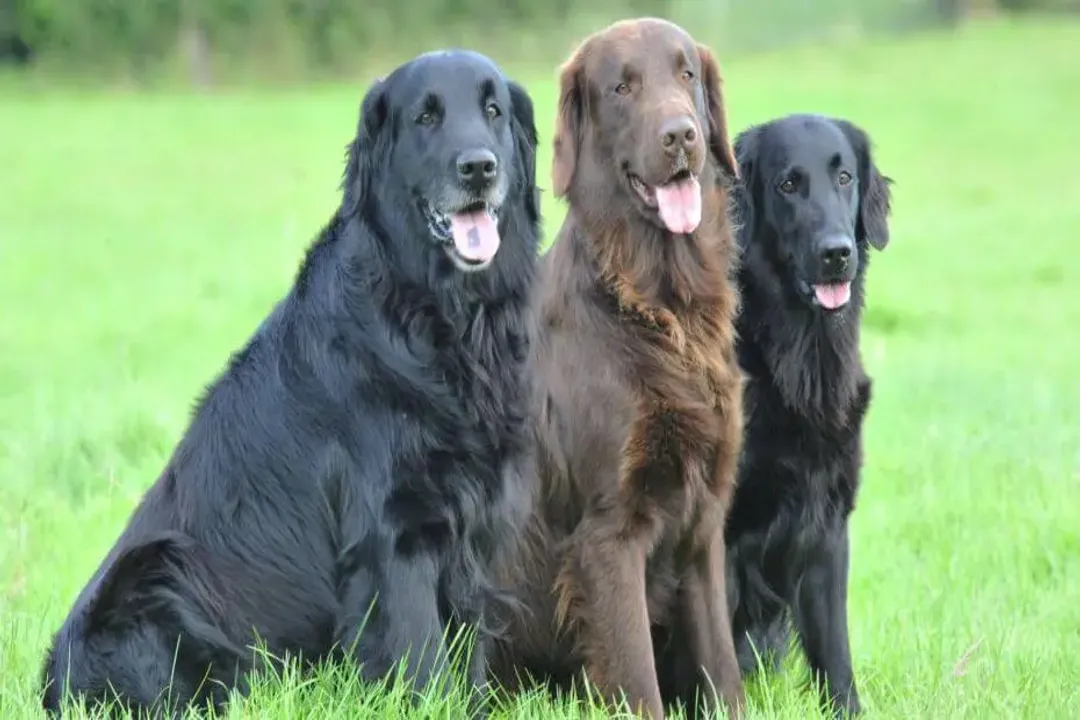
Flat-Coats come in only two recognized colors: solid black or solid golden (often referred to as liver by some enthusiasts). [1][5] The golden shade can range from a pale, creamy hue to a rich, dark reddish-gold. [1] Regardless of the base color, the nose leather, eye rims, and pads of the feet should match the coat color—black noses for black dogs, and brown/liver noses for golden dogs. [5]
# Head Shape
The head of the breed is also noteworthy. It is described as being long and well-chiseled, with a moderately defined stop. [5] The eyes are dark brown and convey an intelligent, warm, and eager expression, which often mirrors their personality. [1][5]

# Temperament Profile
The core appeal of the Flat-Coated Retriever rests squarely on its temperament. They are widely known for their lightheartedness and almost unending puppy-like enthusiasm, earning them the moniker "Peter Pan". [3]
# Affection and People Focus
These dogs are intensely people-oriented. A Flat-Coat truly thrives when integrated into family life and is happiest when involved in whatever the household is doing. [4] They form deep bonds with their families and are generally wonderful with children, though their exuberant nature requires supervision with very small toddlers until they learn better control. [1][4] They tend to be friendly toward strangers, which often disqualifies them from being effective guard dogs, as they are more likely to greet an intruder with a wagging tail than suspicion. [6]
# Energy and Drive
As dogs bred to work all day in the field, their energy requirements are significant. [4] They need substantial daily exercise, far more than just a short stroll around the block, to keep them happy and mentally sound. [1][8] This high drive makes them excellent candidates for dog sports such as agility, obedience, and, naturally, field trials. [1][4] They possess a strong desire to retrieve, a trait that remains strong throughout their lives. [8]
Their sensitivity means that harsh training methods do not work well; instead, they respond best to positive reinforcement and consistency. [1][4] They are intelligent and quick to learn, making training enjoyable when using fair methods. [4]
# Daily Management
Owning a Flat-Coat requires a commitment to their exercise and mental needs, balanced against their relatively straightforward grooming requirements.
# Exercise Needs
Because they are so eager to work and play, owners must dedicate time every day to vigorous activity. [4] This isn't just about burning physical energy; it’s about engaging their minds. A simple, long game of fetch in a securely fenced yard, or dedicated training sessions, can satisfy much of this need. [8] If their physical and mental outlets are neglected, a Flat-Coat can easily become frustrated or develop undesirable habits stemming from boredom. [6] When considering a Flat-Coat, prospective owners must honestly assess whether they can provide several hours of focused activity daily, especially during the breed’s long adolescence. [3]
# Grooming Routine
Compared to some other long-coated breeds, the Flat-Coat’s grooming is relatively manageable. They do shed, though perhaps not as profusely as a double-coated breed like a Golden Retriever, and regular brushing is necessary to keep the flat coat free of mats and tangles, particularly in the feathering. [2] A weekly brushing session is usually sufficient to remove dead hair and distribute natural oils. [1] They do not typically require professional clipping or scissoring; the goal is to maintain the natural texture and length described in the breed standard. [5]
One practical consideration for owners whose dogs spend time in brushy areas or water is that the smooth coat can sometimes pick up burrs or debris more easily than a curlier coat might shed them. Therefore, a thorough post-outing check is wise, especially in the longer feathering areas. [2]
# Health Snapshot
The Flat-Coated Retriever is generally considered a hardy and relatively sound breed, often enjoying a lifespan ranging from 10 to 12 years. [6] However, like all purebreds, they are predisposed to certain inherited conditions that responsible owners and breeders screen for. [6][8]
Key areas of concern, according to veterinary resources, include:
- Orthopedic Issues: Hip and elbow dysplasia are possibilities, where the joints do not form correctly, leading to mobility issues later in life. [6]
- Eye Conditions: Certain inherited eye problems, such as Progressive Retinal Atrophy (PRA), can affect vision over time. [6]
- Tumors: While they are not commonly associated with an overwhelmingly high rate of cancer compared to some other large breeds, certain types of tumors, particularly mast cell tumors, have been noted within the breed lines. [6][8] Regular veterinary check-ups are essential for early detection.
For those anticipating ownership, choosing a puppy from breeders who perform the recommended health clearances—like OFA evaluations for hips and elbows and current eye certifications—is the best way to welcome a healthy companion. [6]
# Integrating the Enthusiast
Bringing a Flat-Coat into a household means welcoming an active, devoted, and perpetually joyous member whose main goal is to be with you. They are sensitive partners that read human emotions well, which makes them excellent companions for active families or individuals who enjoy outdoor pursuits like hiking, swimming, or running. [4]
Since they are so intelligent and people-driven, their mental engagement is as critical as their physical exercise. A bored Flat-Coat, even if physically tired from a long run, might resort to nudging, pawing, or excessive vocalization to demand attention. This means that simply taking them to the dog park isn't enough; they need structured engagement where they are asked to think and problem-solve alongside you. [4]
Furthermore, prospective owners should be prepared for the characteristic "mouthiness" often seen in retrieving breeds during their adolescent phase, which can stretch well into their third or fourth year. This behavior is their natural way of interacting—carrying things around—and it requires channeling rather than suppression. Providing appropriate, durable chew toys and redirecting the carrying instinct into structured retrieval games, where they learn to hold gently and release on command, is a much more effective approach than trying to stop the instinct altogether. [8] This redirection ensures their natural retrieving drive becomes an asset in training rather than a source of mild chaos around the house. [8]
# Quick Comparison: Flat-Coat vs. Other Retrievers
While they share the "Retriever" title with breeds like the Labrador and the Golden Retriever, the Flat-Coat has distinct differences that set it apart in temperament and maintenance.
| Feature | Flat-Coated Retriever | Labrador Retriever | Golden Retriever |
|---|---|---|---|
| Coat Type | Long, flat, fine feathering | Short, dense, water-resistant | Medium-long, wavy or flat |
| Energy/Maturity | Retains puppy energy longest (often 3-4 years) [3] | Energetic, but typically settles younger | Energetic, settles moderately quickly |
| Grooming Needs | Regular brushing for feathering [2] | Minimal brushing required | Regular, often heavier brushing needed |
| Primary Drive | Highly focused on retrieving and pleasing owner | Focused on retrieving and food/play | Focused on retrieving and companionship |
In summary, the Flat-Coated Retriever is a high-energy, highly affectionate breed designed to be a working partner and devoted family companion. [1][4] They ask for commitment in terms of time and activity, but they repay that investment with unmatched loyalty and an infectious zest for life. [3] They are best suited for homes where they can be fully integrated into daily activities, both inside and out. [4]
#Videos
Dog Breed Video: Flat Coated Retriever - YouTube
Related Questions
#Citations
Flat-Coated Retriever - Dog Breeds - American Kennel Club
Flat-Coated Retriever Dog Breed Information | Purina UK
The Peter Pan of the Sporting Group, the forever-young Flat-Coated ...
Flat-Coated Retriever Breed: Characteristics, Care & Photos | Chewy
Breed Standard - Flat-Coated Retriever Society of America
Flat Coated Retriever - Breed Info – Happy Tails Veterinary Clinic
Dog Breed Video: Flat Coated Retriever - YouTube
Flat-Coated Retriever - All About Dogs | Orvis
Flat-Coated Retriever Dog Breed - Hill's Pet Nutrition