Is a red neck snake poisonous?
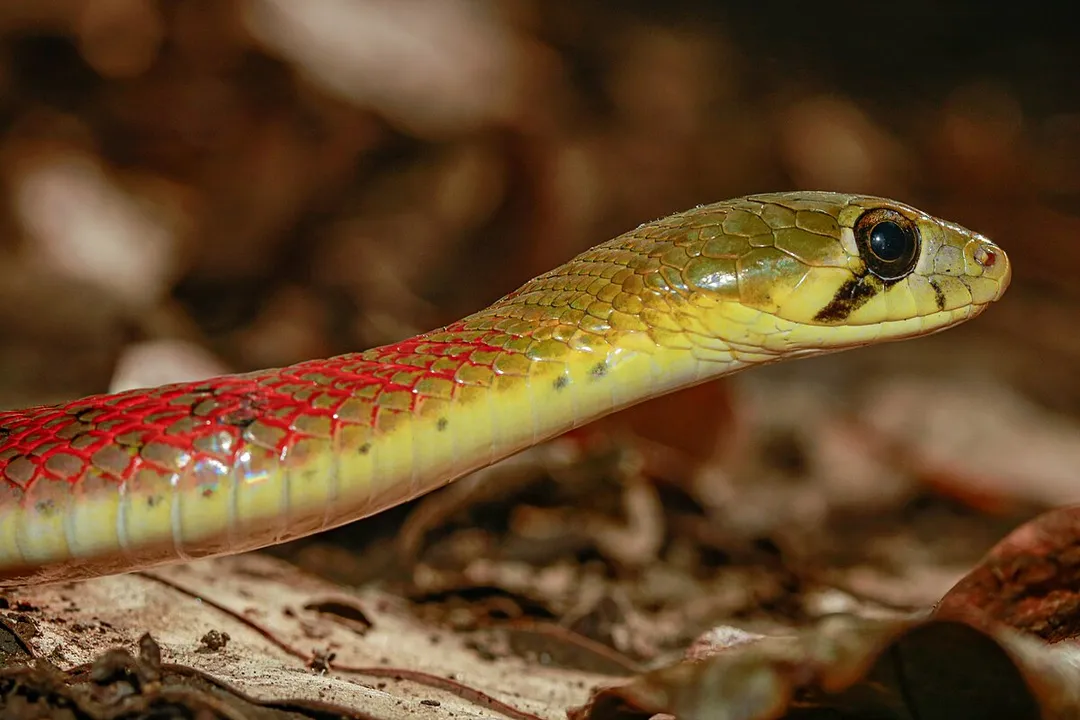
The snake often referred to as the "red neck snake" is most commonly identified as the Red-Necked Keelback, scientifically known as Rhabdophis subminiatus. [2] The primary concern surrounding this reptile revolves around its defensive capabilities, specifically whether it is merely venomous or if it possesses another layer of protection. To address this accurately, it is helpful to first understand the creature's appearance and distribution, as confusion with other species can lead to misidentification and incorrect assumptions about danger. [3]
# Appearance
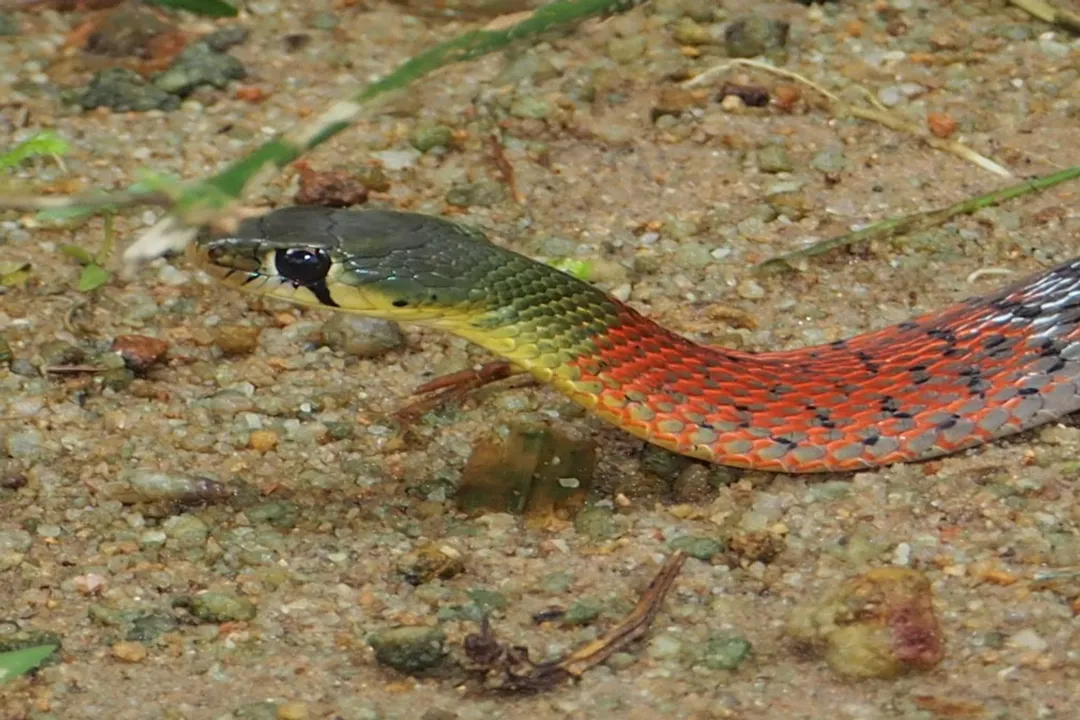
Visually, the Red-Necked Keelback is striking, especially due to the coloration that gives it its common name. While the body color can vary significantly, often appearing olive green, brown, or black, the area around the neck is frequently marked with bright hues of red, orange, or yellow. [2] This contrasting neck band is a major identifying feature, though it may not be prominent on every specimen, which can complicate field identification. [3] Like other keelbacks, they possess keeled scales, meaning each scale has a ridge running down the center, giving the skin a rougher texture compared to smoother-scaled snakes. [4] In specific locations, like Hong Kong, the snake is recognized for this distinctive feature. [4][8]
# Geographic Range

The distribution of Rhabdophis subminiatus spans a significant portion of Asia. Its habitat includes areas across Southeast Asia, Southern China, Taiwan, and large islands such as Java, Borneo, and Sumatra. [2] This wide range means people in diverse regions might encounter them, though local knowledge of their presence is always important. For example, they are found in Bali [7] and are a known species in Hong Kong. [4][8] They tend to prefer moist environments and are often observed near water sources like streams, marshes, or rice paddies. [2]
# Dual Threat
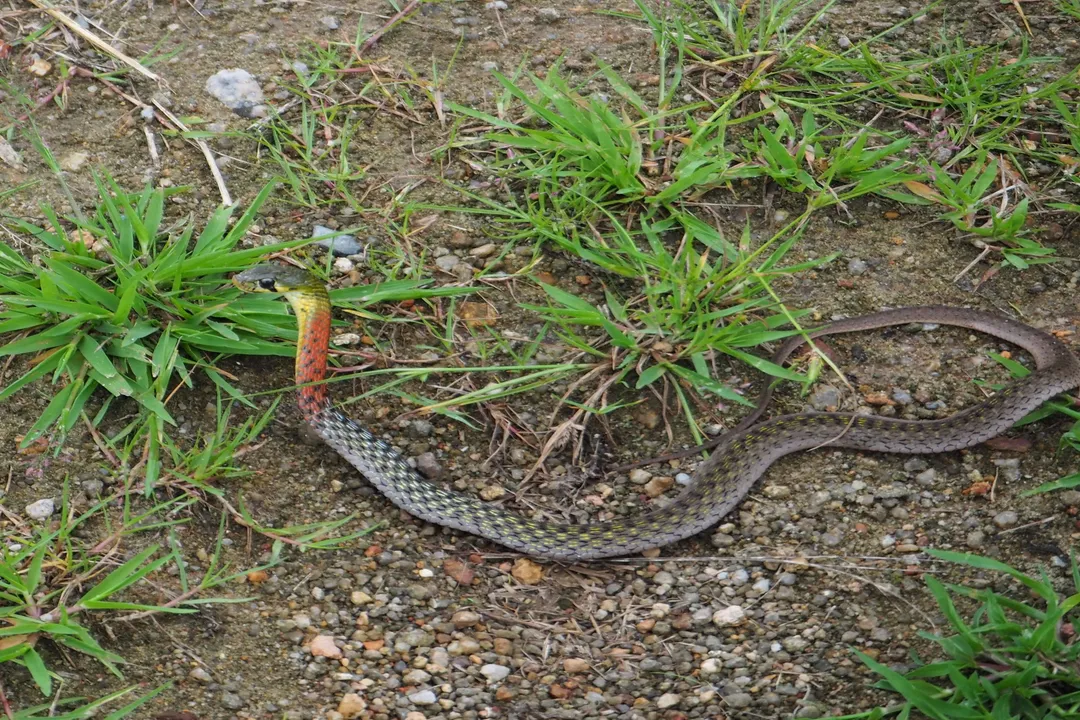
The most important distinction for anyone encountering this snake is the dual nature of its defense mechanism. When people ask if a red-necked snake is "poisonous," they are often seeking to understand the severity of the threat. In biological terms, this specific snake is frequently characterized as both venomous and poisonous. [4][7][8] This duality sets it apart from many other snakes whose primary defense is solely venom injected via fangs.
To clarify this, it helps to recall the basic difference: venom is actively injected (like a bite from a pit viper), whereas poison is typically ingested or absorbed through contact. [5] The Red-Necked Keelback exhibits capabilities in both areas, making it a creature that commands significant respect and distance. In Hong Kong, for instance, it is cited as the region's only snake possessing both venomous and poisonous characteristics. [8]
# Venom Delivery
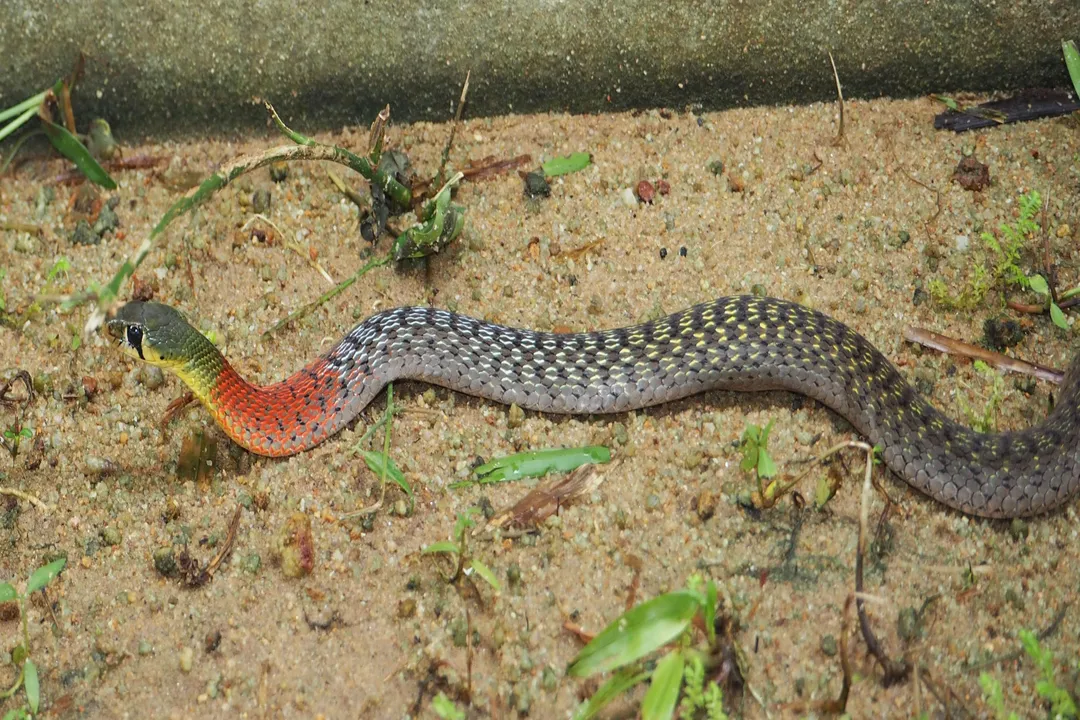
As a venomous animal, the Red-Necked Keelback is equipped to inject toxins. However, it is not generally considered to possess large fangs typical of highly dangerous species. Reports often indicate that they possess small, grooved teeth located towards the rear of the mouth. [4] While bites can cause localized pain, swelling, and systemic effects, the method of venom delivery—less efficient fang placement—often means the risk is sometimes perceived as lower than snakes with long, front-facing hypodermic-style fangs. [8] Nevertheless, any bite from a venomous snake should be treated seriously, as venom toxicity is a biological reality regardless of fang size. [5]
# Poisonous Defense
The poisonous aspect of this snake is fascinating and highlights a specialized evolutionary adaptation. The bright coloration around the neck, while perhaps serving as a warning (aposematism), is directly linked to its ability to sequester toxins from its diet. The prominent, enlarged glands located on the back of the neck are capable of secreting substances that are toxic if they enter the body through consumption or contact. [7]
This means that a predator attempting to eat the snake, or even a person handling it carelessly and subsequently touching their mouth or eyes, could be exposed to toxins that the snake has actively acquired from what it has eaten. This mechanism relies on diet, meaning the potency can fluctuate based on what the snake has consumed recently. This is a clear example of how toxins can be acquired rather than just produced internally for injection. [5] It is crucial to recognize that even if one avoids a bite, the contact hazard remains significant due to this poison secretion. [4]
If we were to map out the potential risks versus typical snakes, it provides an interesting comparison. A common cobra is purely venomous (injected). A poison dart frog is purely poisonous (acquired/secreted, ingested/absorbed). The Keelback presents a hybrid scenario where the defense is two-pronged: immediate, active threat via bite (venom) and passive, acquired threat via contact or consumption (poison). [5] Thinking about a local encounter, if you see this snake near a pond where it feeds on amphibians or fish, you should assume its neck glands are fully stocked with defensive compounds, even if it seems sluggish or calm. [2]
# Safety Protocols
Given the known hazards, the most sensible approach when encountering a Red-Necked Keelback, especially in areas like Hong Kong or Bali, is non-interaction. [7][8] The fact that handling is explicitly discouraged in regions where this snake is well-studied underscores the potential danger. [7]
If you suspect you have encountered one, especially if it displays its neck markings, maintaining a significant distance is paramount. [3]
Here is a basic set of guidelines for safe observation:
- Do Not Approach: Treat any unfamiliar snake with caution. If you see the distinctive coloring, stop immediately. [4]
- Never Handle: Because of the dual threat, do not attempt to pick up, relocate, or interact with the snake, regardless of how docile it appears. [7] The rear-mouth venom delivery can still happen during a defensive strike, and skin contact risks exposure to the poison glands. [5]
- Educate Others: If you are with people unfamiliar with local herpetology, point out the snake from a safe distance and explain its dual defense strategy so they understand the need for caution. [1]
For field observers or hikers, understanding that many snakes camouflage well, but the Rhabdophis subminiatus often announces itself with a warning display, is helpful. When the neck is flared, it is a clear, visible signal of its defensive capabilities, whether by showing the potential for a venomous bite or advertising the absorbed poison located there. [6] It is a creature that effectively shouts a warning through its coloration before any physical defensive action is taken. Being aware of this visual cue allows for a proactive retreat rather than a reactive scare.
Related Questions
#Citations
Red-Necked Keelback Snake: Venomous and Poisonous ...
Rhabdophis subminiatus
Red Neck Keelback - Rhabdophis helleri
Venom, Poison, or Both? - Nick's Wild Life
By far one of the coolest snakes I have ever found!! This red ...
Red Necked Keelback Snake - Venomous Snake in Bali
The Red-necked Keelback: Hong Kong's Only Venomous and ...