What type of vulture has a red head?
The sight of a vulture is often associated with dark, ominous silhouettes soaring high above, but among these essential scavengers, several species sport remarkably bright, featherless red heads, instantly setting them apart from their somber cousins. This striking characteristic is not confined to a single region; rather, it appears on different birds living on separate continents, suggesting that bare, colored skin serves a similar, practical purpose for raptors specializing in carrion consumption across the globe.
# American Resident
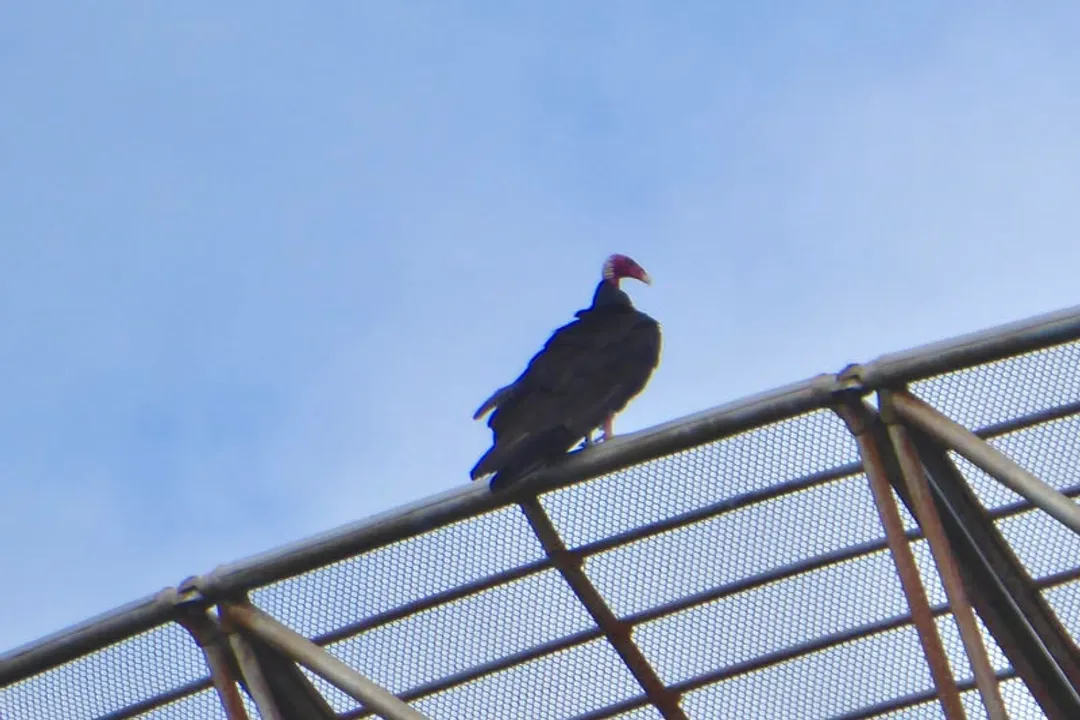
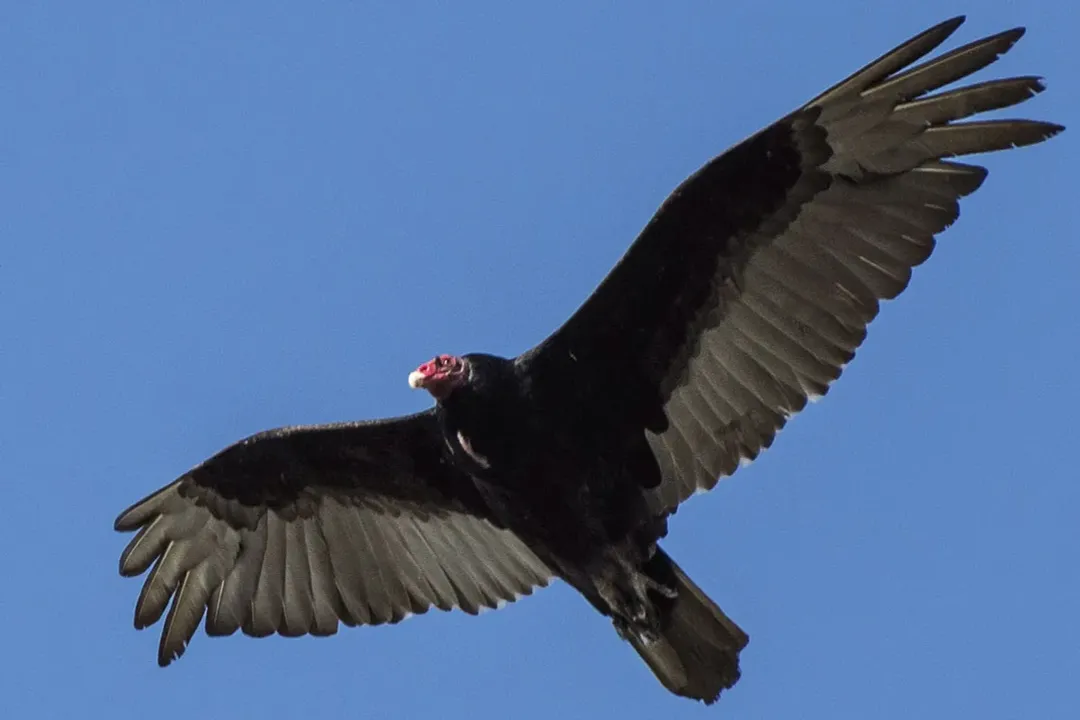
In North and South America, the most recognizable red-headed scavenger is the Turkey Vulture (Cathartes aura). This bird is frequently seen throughout the United States, Mexico, and into South America, often soaring with its wings held in a slight V-shape, a posture known as a dihedral. The head of an adult Turkey Vulture is a distinctive, unfeathered reddish-pink to bright red. Juveniles, by contrast, possess dusky gray or black heads, which gain their characteristic coloration as they mature. Their flight style is another giveaway; they often wobble slightly in the air, contrasting with the Black Vulture, which has a steadier wingbeat.
The Turkey Vulture’s habitat range is broad, making it a common sight in open country, forests, and even suburban areas where food sources might be present. Their reliance on an excellent sense of smell to locate fresh carcasses—a sense virtually unparalleled among birds—allows them to find food where sight-reliant scavengers might overlook it.
# Asian Specialist
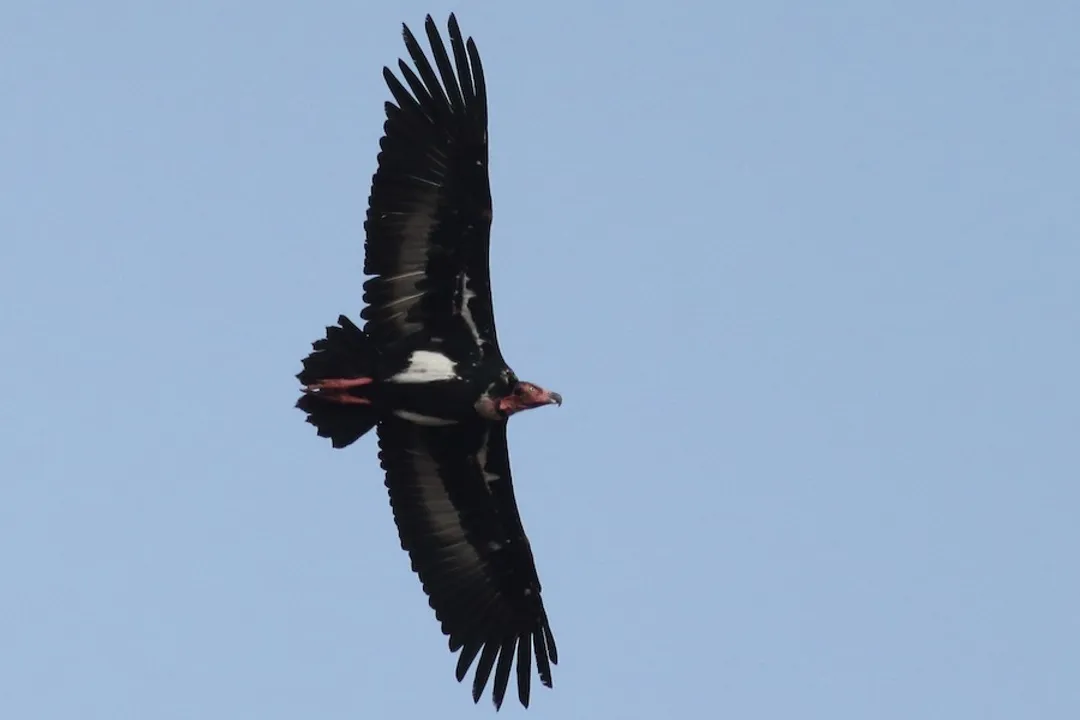
Across the Indian subcontinent and into Southeast Asia, a different bird bears the name Red-headed Vulture (Sarcogyps calvus). This species presents a dramatically different profile than its New World counterpart. While its head is indeed red, it is often described as more purplish or crimson, and the skin texture appears markedly different, often looking wrinkled or knobby. The body plumage of the Red-headed Vulture is predominantly black, contrasted by a white ruff of feathers around the neck, a feature absent in the Turkey Vulture.
The range for Sarcogyps calvus covers countries like India, Nepal, Bangladesh, Thailand, and others in that region. Unfortunately, this striking Asian species faces a severe crisis. Unlike the relatively common Turkey Vulture, the Red-headed Vulture is listed as Critically Endangered. Its populations have plummeted drastically, largely due to poisoning from feeding on carcasses treated with veterinary drugs, particularly diclofenac, which is lethal to vultures.
# Contrasting the Colors
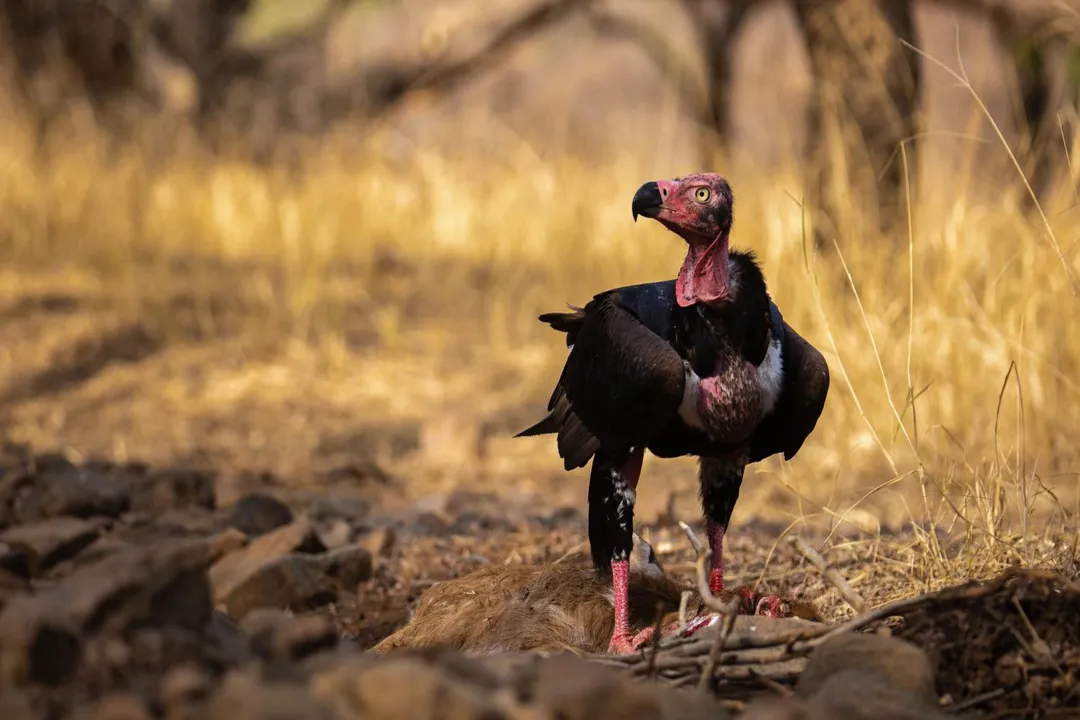
While both birds feature red on their heads, the context and species background are entirely different. The Cathartes aura is a New World Vulture, belonging to the Cathartidae family, whereas the Sarcogyps calvus belongs to the Old World Vulture group (Accipitridae).
| Feature | Turkey Vulture (C. aura) | Red-headed Vulture (S. calvus) |
|---|---|---|
| Family | New World Vulture (Cathartidae) | Old World Vulture (Accipitridae) |
| Head Color (Adult) | Pinkish-Red to Bright Red | Crimson to Purplish-Red |
| Head Skin | Relatively smooth | Knobby, wrinkled appearance |
| Neck Plumage | No distinct ruff | Prominent white feathered ruff |
| Primary Range | Americas | South and Southeast Asia |
| Conservation Status | Least Concern | Critically Endangered |
One interesting observation when studying these two species together is how geographically separated their adaptations are. The Turkey Vulture often needs to warm up quickly in the cooler mornings of North America to become airborne, soaring efficiently on thermal currents. The bare skin, regardless of specific purpose, certainly aids in this process. In contrast, the Red-headed Vulture in tropical Asia deals with intense, consistent heat, suggesting its featherless head serves more as a sanitary tool than a thermoregulatory one.
# Biology of Bare Skin
The fundamental reason both types of vultures lack feathers on their heads relates directly to their profession: scavenging. When a vulture feeds deep inside the carcass of an animal, its head and neck become heavily soiled with blood, fluids, and decaying matter. Feathers in this area would be nearly impossible to keep clean, providing a perfect breeding ground for dangerous bacteria and parasites.
The bare skin allows the vulture to clean itself more effectively. Furthermore, exposure to direct sunlight—UV radiation—helps to sterilize the skin after feeding. For the Turkey Vulture specifically, after a morning spent soaring, individuals often adopt a pose with their wings spread wide and heads tilted toward the sun, which is thought to aid in both drying and disinfecting the head skin. The color itself—the red pigment—may also play a subtle role in filtering harmful UV rays or signaling health and dominance, though hygiene remains the primary driver.
If you observe a Turkey Vulture soaring on a chilly morning, you might notice it holds a more upright posture than when it’s actively hunting, perhaps trying to maximize solar gain on its exposed crown to raise its core temperature sufficiently for flight. This behavioral adaptation, combined with the physical feature of the red head, illustrates a deep evolutionary link between environment and morphology.

# A Note on Identification
For birders in the Americas, confusing the Turkey Vulture with the Black Vulture (Coragyps atratus) is common, but the head color is the easiest differentiator—the Black Vulture has a dark gray or black head. However, confusion can arise when looking at immature Turkey Vultures, as their gray heads can resemble a Black Vulture from a distance. Paying attention to the flight silhouette—the dihedral 'V' shape versus the flat wings—is often more reliable than head color alone when viewing a distant bird with a dark head.
It is also important to note that common naming can sometimes overlap. While Sarcogyps calvus is formally the Red-headed Vulture, in some older literature or casual contexts, you might encounter confusing terminology, but the two distinct groups remain geographically separated.
# Conservation Concerns
The differing fates of these two red-headed birds highlight significant global challenges in conservation. In the Americas, the Turkey Vulture is thriving, a testament to its adaptability to various human-altered landscapes, even though they occasionally face persecution due to misconceptions about their role.
In Asia, the situation for the Sarcogyps calvus is dire. The widespread use of non-steroidal anti-inflammatory drugs (NSAIDs) in livestock farming, specifically diclofenac, has decimated vulture populations across the continent. When vultures consume the carcass of an animal treated with this drug, it causes kidney failure, leading to death. This ecological disaster has led scientists and conservationists to focus intense efforts on creating veterinary drug bans and establishing safe breeding programs to prevent the complete disappearance of this magnificent species, whose bright head could otherwise become just another historical footnote. The vibrant red of this particular vulture is therefore not just a biological feature, but a symbol of current conservation urgency.
Related Questions
#Citations
Red-headed vulture - Wikipedia
Turkey Vulture Identification - All About Birds
The Turkey Vulture has a red head. - Facebook
Red-headed Vulture Sarcogyps calvus - eBird
Why Do North American Vultures Have Either Red Or Black Heads?
Why do turkey vultures have red heads? - Bay Nature
Turkey Vulture | Oklahoma Department of Wildlife Conservation
Red-headed vulture (Sarcogyps calvus) - Thai National Parks
Red-headed Turkey Vulture - Audubon Prints Art Gallery