What unique dental structure characterized Thylacoleo's killing mechanism?
Answer
Two enormous, vertically-aligned upper and lower premolars
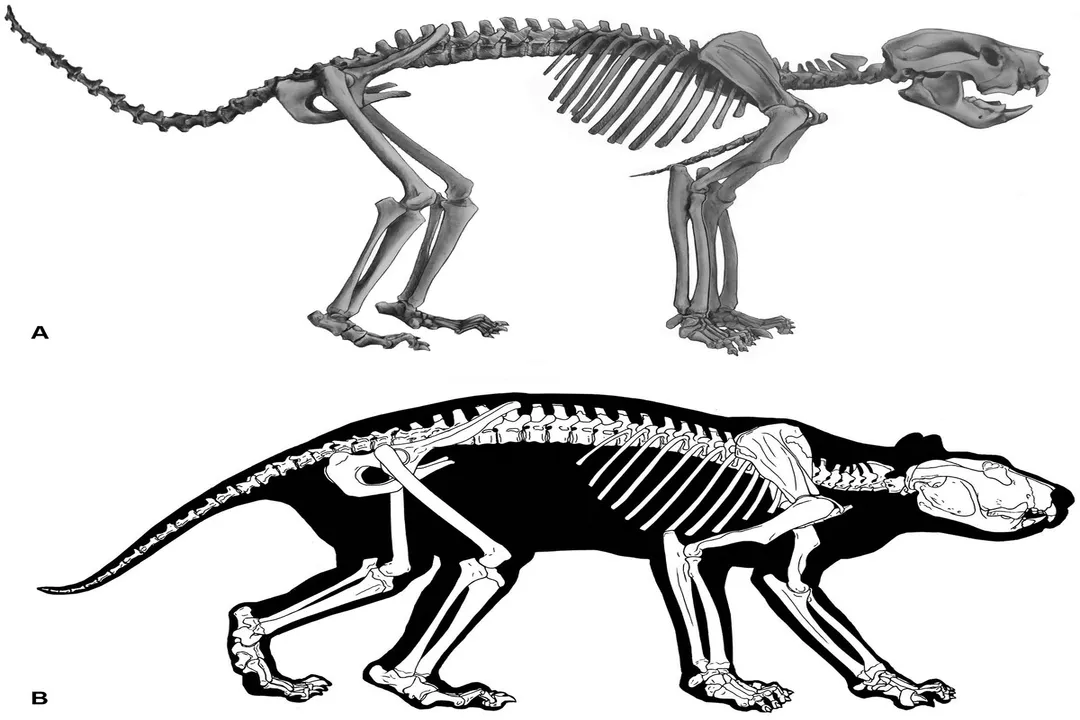
The most compelling anatomical evidence against Thylacoleo being a cat is found in its dentition. While true cats possess specialized, blade-like cheek teeth known as carnassials used for shearing meat off bone, Thylacoleo featured two massive premolars in both its upper and lower jaws. These teeth functioned more akin to powerful bone-crushing shears or bolt-cutters. This robust structure suggests a feeding strategy that involved delivering immense crushing force, likely enabling the creature to crack open bone to access nutrient-rich marrow, a behavior uncommon among the Felidae family.
Related Questions
To which mammalian order did Thylacoleo carnifex belong taxonomically?What unique dental structure characterized Thylacoleo's killing mechanism?What evolutionary concept explains Thylacoleo's feline appearance despite being unrelated to cats?What distinctive feature is suggested for Thylacoleo's forelimbs that aided in grasping prey?What period of geological time did Thylacoleo carnifex inhabit before its extinction?What is the approximate time frame for the disappearance of Thylacoleo carnifex?Which modern animal is Thylacoleo evolutionarily closer to than the true lion, Panthera leo?What did the genus name Thylacoleo translate roughly to, reflecting its historic misidentification?What characteristic of Thylacoleo's dental work did it share with rodents?What is the nature of the evidence linking Thylacoleo to modern 'Phantom Cat' sightings?