What distinctive feature is suggested for Thylacoleo's forelimbs that aided in grasping prey?
Answer
Opposable thumbs
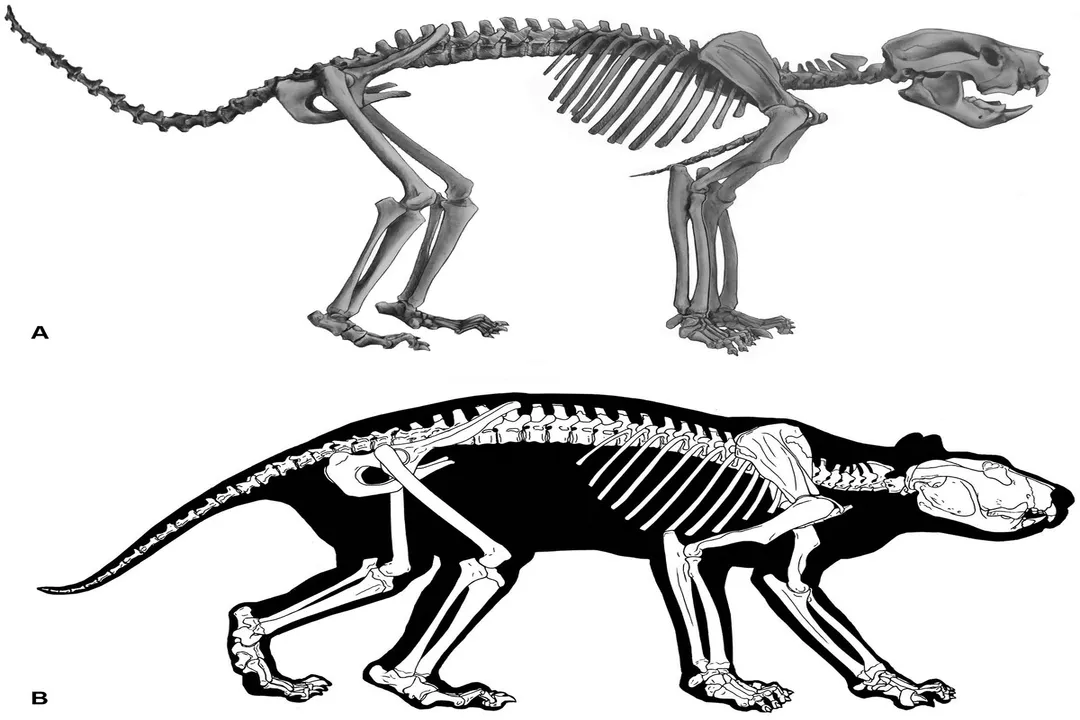
While Thylacoleo likely possessed retractable claws similar to cats on its forelimbs, its anatomy suggests a fundamentally different method of securing prey. Paleontological inference suggests that the creature had opposable thumbs on its front paws. When combined with its claws, this anatomy points toward a strong grappling ability, potentially allowing Thylacoleo to climb or hold onto struggling victims with tremendous securing strength, contrasting with the primarily striking and grasping action of a true cat's paws.
Related Questions
To which mammalian order did Thylacoleo carnifex belong taxonomically?What unique dental structure characterized Thylacoleo's killing mechanism?What evolutionary concept explains Thylacoleo's feline appearance despite being unrelated to cats?What distinctive feature is suggested for Thylacoleo's forelimbs that aided in grasping prey?What period of geological time did Thylacoleo carnifex inhabit before its extinction?What is the approximate time frame for the disappearance of Thylacoleo carnifex?Which modern animal is Thylacoleo evolutionarily closer to than the true lion, Panthera leo?What did the genus name Thylacoleo translate roughly to, reflecting its historic misidentification?What characteristic of Thylacoleo's dental work did it share with rodents?What is the nature of the evidence linking Thylacoleo to modern 'Phantom Cat' sightings?