How do I tell if my cat is a Norwegian Forest Cat?
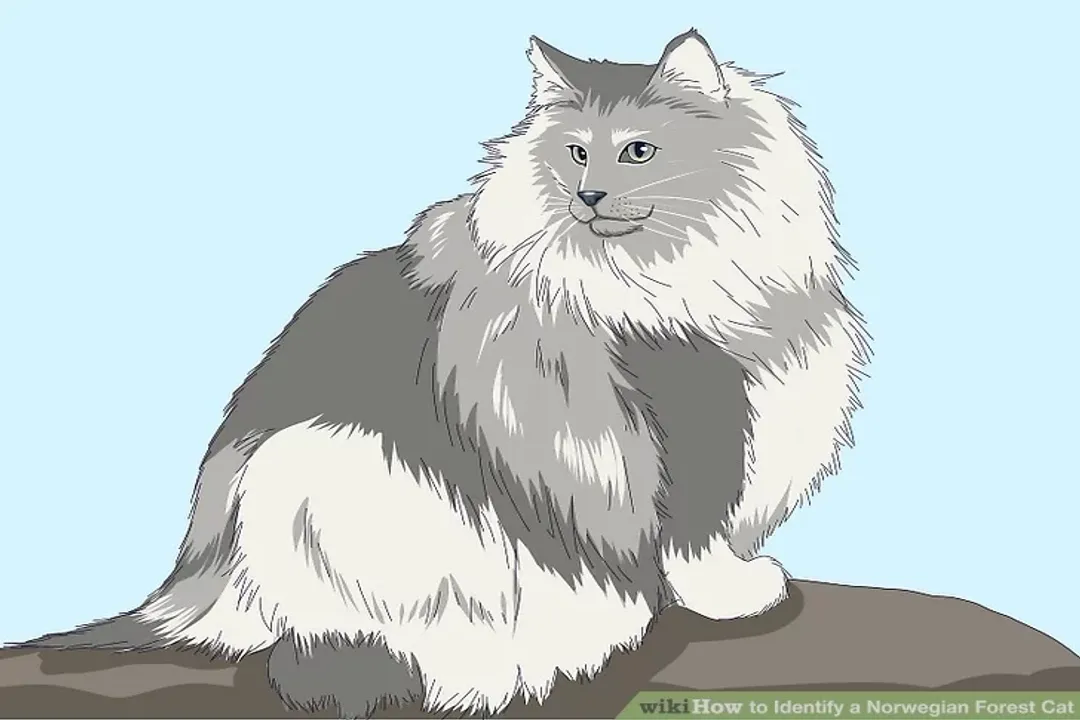
This realization that your fluffy companion might be something special, like a majestic Norwegian Forest Cat—often called a Wegie—is exciting, but confirming it without official pedigree papers can be tricky. [4] Since most cats found in shelters or as strays are generally domestic longhairs, spotting a purebred or a mix requires a careful look at specific physical and behavioral traits that set the Norwegian Forest Cat apart from other large, furry breeds. [1][3][4] The only definitive way to know for sure if a cat is a purebred is via DNA testing or pedigree confirmation, but examining key features can certainly point you in the right direction. [4]
# Physical Markers
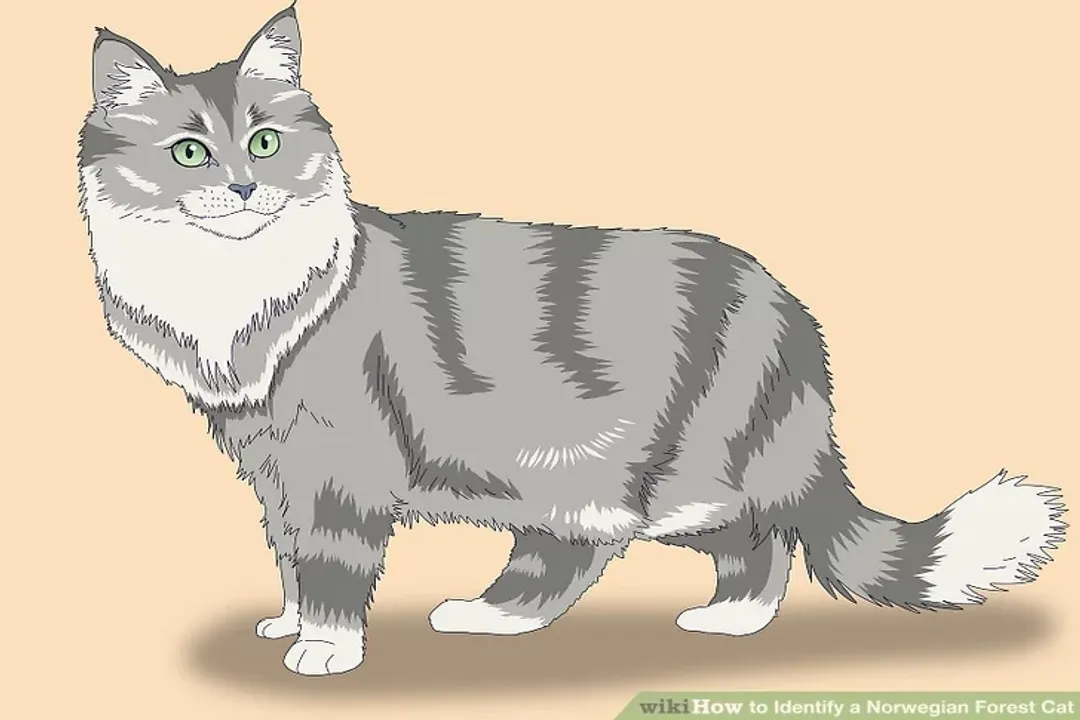
The Wegie is a natural breed, perfectly adapted to the harsh Scandinavian climate, which is reflected strongly in its build and coat. [5] These cats are known for being large, strong, and muscular. [4][5]
# Size and Build
The sheer size of a potential Wegie is often the first indicator. Males typically weigh between 4.5 to 9 kg (10 to 20 lbs), while females are generally smaller, ranging from 3.6 to 8 kg (8 to 18 lbs). [3][4] It is important to note that they are slow to mature, often not reaching their full adult size until they are up to five years old, so a large young cat is a good sign. [4] Their body is long and sturdy, with heavy bones and muscular legs. [4] A defining characteristic noted by enthusiasts is that their hind legs are longer than their front legs, contributing to their excellent climbing ability. [4]
# The Double Coat
The coat is perhaps the most famous feature. Norwegian Forest Cats possess a double-layered coat that is long, thick, and water-repellent, developed to withstand the cold. [4][5]
- Texture and Density: The top coat is glossy and long, while the undercoat is dense and woolly, providing excellent insulation. [5] When bathing one, you might notice how water-resistant the fur is, making it challenging to soak completely. [4]
- Seasonal Changes: This coat changes significantly with the seasons, becoming particularly dense in the winter, often including a pronounced mane or ruff around the neck and chest area. [4] Shedding will increase noticeably as spring approaches. [4]
- Tail and Tufts: They sport a long, bushy tail with hair that seems to grow in every direction. [4] Look closely at the ears; desirable traits include ear tufts (or Lynx tips) and long ear furnishings (the hair growing inside the ear). [4] While lynx tips are seen on many longhaired cats, they are characteristic of the breed. [1]
# Head and Face Structure
When comparing a potential Wegie to a breed like the Maine Coon, the head shape is a key differentiator. [1]
- Shape: The Wegie head is distinctively triangular, ideally forming an equilateral triangle shape. [4] This is often paired with a straight profile from the tip of the nose up to a slightly rounded forehead. [4] A square or round head is usually considered a defect in the standard. [4]
- Eyes: Their eyes are described as large and almond-shaped, set obliquely, lending them an alert expression. [4] Common eye colors include green, gold, or copper, though blue eyes can occur, especially in white cats. If your cat's eyes appear more round, it might lean closer to Maine Coon features.
# Weight Comparison Note
It's wise to be cautious about weight alone. While Wegies are large, an owner discussing a potential mix noted that a cat labeled as a Norwegian Forest Cat might simply be a "domestic long hair" or be confused with a Maine Coon based on size alone. [1][3] Furthermore, an apparent large size can often be an illusion created by their extreme fluffiness. [3][4] If your cat appears huge, consider that some descriptions suggest they are often mistaken for being overweight when they are simply very heavily coated due to their heritage in cold climates. [3]
# Personality Traits
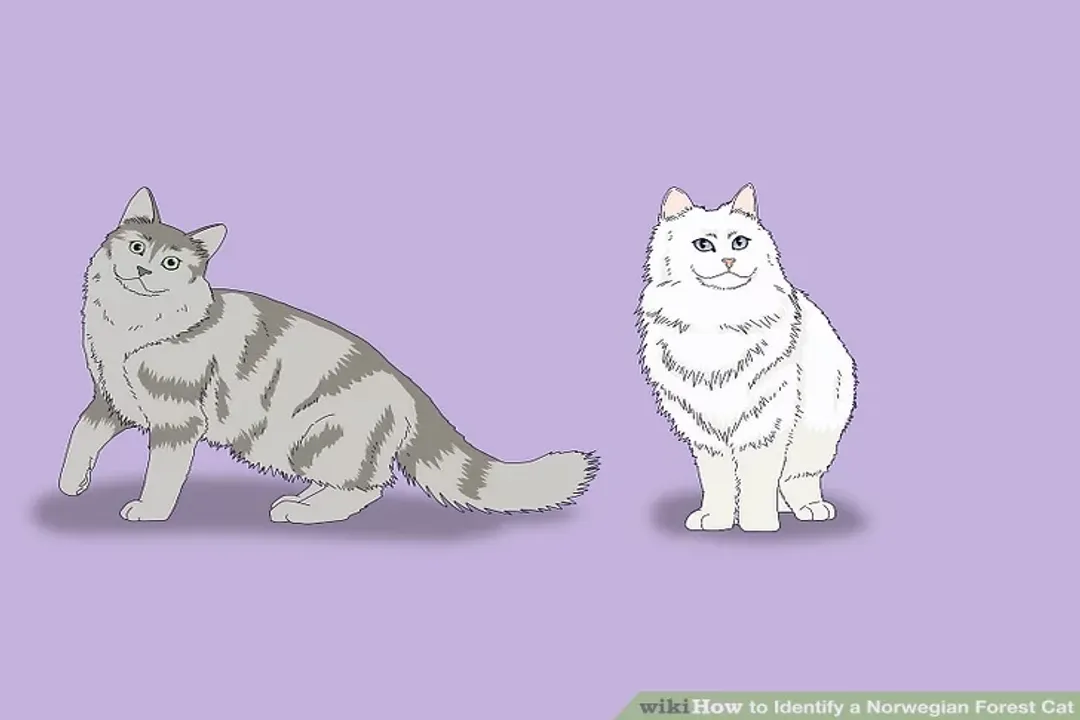
While physical attributes offer strong clues, personality and behavior can also align with the breed standard, though it must be stressed that every cat is an individual, and environment plays a huge role in temperament. [4]
# Temperament and Affection
Wegies are generally considered affectionate yet independent. [4] They enjoy being near their humans, often following them around, but they might prefer sitting near you rather than constantly demanding lap time. [4] They are known for being mild-mannered and often get along well with children and other pets, displaying dog-like tendencies such as greeting you at the door. [4]
# Activity and Intelligence
These cats have a moderate activity level punctuated by short bursts of energy, often linked to their hunting drive. [4]
- Climbing: With those strong claws and longer hind legs, Norwegian Forest Cats are superb climbers and agile jumpers. [4][5] If your cat naturally gravitates toward the highest point in the room—the top of the cat tree or a tall shelf—this is a strong indicator.
- Hunting: Their instincts remain sharp. They enjoy stalking toys as if they were real prey, often becoming very excited during play sessions, especially involving lights like a laser pointer. [4] They can also be quite territorial, enjoying a daily patrol of their domain. [4]
# Water Enthusiasm
A highly suggestive behavioral trait is a positive association with water. The Norwegian Forest Cat is one of the few breeds that genuinely enjoys water, possibly due to their water-resistant coat. [4] If your cat shows an unusual interest in running faucets, attempts to join you in the shower, or enjoys splashing, this aligns with the Wegie profile. [4]
# Distinguishing Look-Alikes
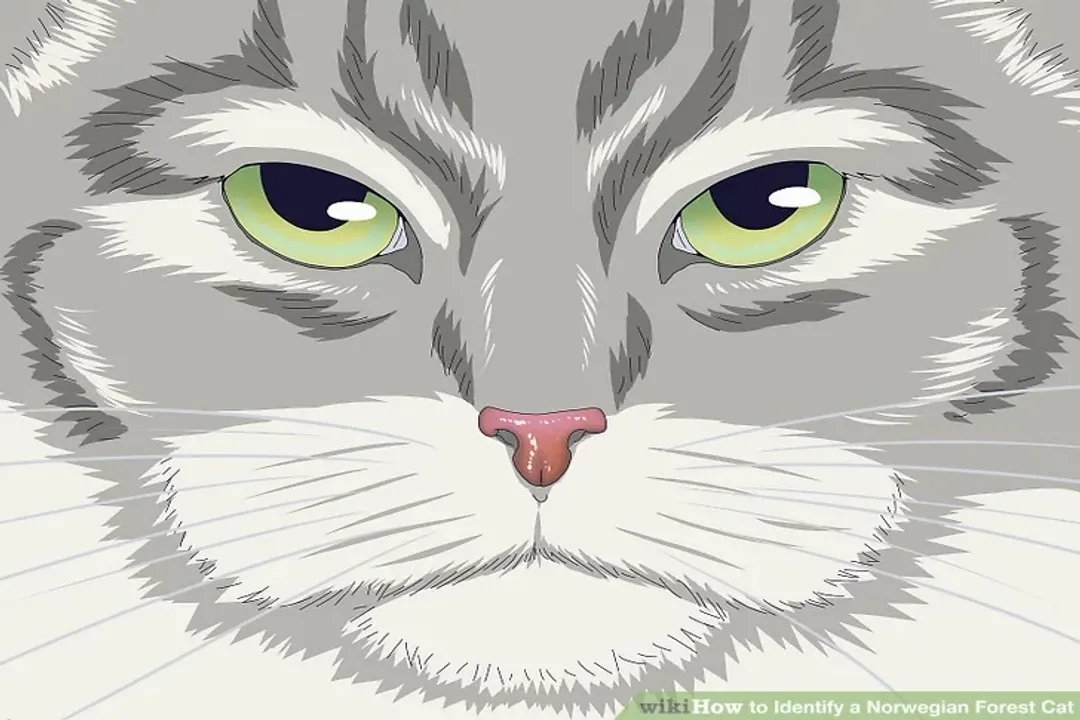
For many owners of non-pedigreed cats, the main confusion arises between the Norwegian Forest Cat, the Maine Coon, and sometimes the Siberian. [1]
# Versus Maine Coon
The comparison is common because both are large, longhaired "forest cats" from North America and Scandinavia, respectively. Key differences often cited include:
- Head Shape: Wegies have a distinctly triangular head with a straight profile, whereas Maine Coons tend toward a more wedge-shaped head with pronounced, almost hexagonal structure and higher cheekbones. [1]
- Eyes: Wegie eyes are almond-shaped, while Maine Coon eyes are often described as round.
- Ruff/Mane: While both have ruffs, Maine Coons are often noted for having a very obvious, pronounced mane. [1]
# Versus Siberian
The Siberian, also originating in a cold climate, shares the semi-long, dense, water-repellent coat, leading to their frequent confusion. Distinguishing them comes down to subtle details:
| Feature | Norwegian Forest Cat (Wegie) | Siberian Cat |
|---|---|---|
| Head Shape | Almost equilateral triangular | Softly rounded |
| Profile | Long and straight | Gentle concave slope from forehead to nose |
| Body | Long and muscular; hind legs slightly higher | Barrel-shaped |
| Coat | Double coat; always has a mane | Triple coat (includes a middle coat) |
| Color | Pointed patterns (like Siamese) are forbidden | Colorpoint patterns (Neva Masquerade) are allowed |
Remember that while breed standards exist, a mix might only carry a few of these traits, such as the large size or the lynx ear tips, without displaying all the others. [1]
# What to Do Next

If you suspect your cat has Norwegian Forest Cat heritage, recognizing the traits is the first step in appreciating their unique needs. [4] If you are considering getting a purebred, seeking out reputable breeders who provide health certifications and use established breeding programs is essential. Many breeders will not allow kittens to go to new homes until they are 12 to 16 weeks old to ensure proper socialization.
If you have a rescue cat whose background is unknown, look at their nutritional needs through the lens of their heritage. A cat with this background is an obligate carnivore requiring a diet high in animal protein (ideally 50% or more), with low carbohydrates (less than 3%). [4] Even if your cat is a mix, understanding the dietary needs common to natural, large forest breeds—focusing on quality meat and fish—can help maintain their muscle mass and keep their gorgeous coat healthy. [4] For example, ensuring adequate animal fat (up to 20%) is necessary for cell integrity and nutrient transport. [4]
For a cat exhibiting many of these traits, the best approach is to meet their specific needs. If they are an excellent climber, provide vertical space. If they are social, ensure they get interactive play time, perhaps indulging their natural stalking behavior with appropriate toys. [4] While breed identification through DNA panels for cats is less established than for dogs, some companies offer tests that can compare your cat against broad geographic origins, which might give you a hint about European ancestry, though these are generally considered more useful for health profiling in non-pedigreed animals. [1] Ultimately, whether your cat is 100% Wegie or a charming domestic longhair with a touch of northern mystique, knowing their likely characteristics helps you provide the best possible home. [1]
#Videos
Maine Coon Vs Norwegian Forest Cat - How To Identify Them
Related Questions
#Citations
Norwegian Forest cat tabby mix—learn to recognise a Wegie
is my cat a Norwegian forest cat? - Reddit
Cat Scanner - Is your cat a Norwegian Forest Cat? - Siwalu Software
Maine Coon Vs Norwegian Forest Cat - How To Identify Them
How to Identify a Norwegian Forest Cat - wikiHow Pet
are my cats part maine coon or norwegian forest cat? - TheCatSite
Siberian vs Norwegian Forest cat - The Little Carnivore