What type of food source might woodlice turn to opportunistically if preferred leaf litter is scarce or soil is dry?
Answer
Soft new plants
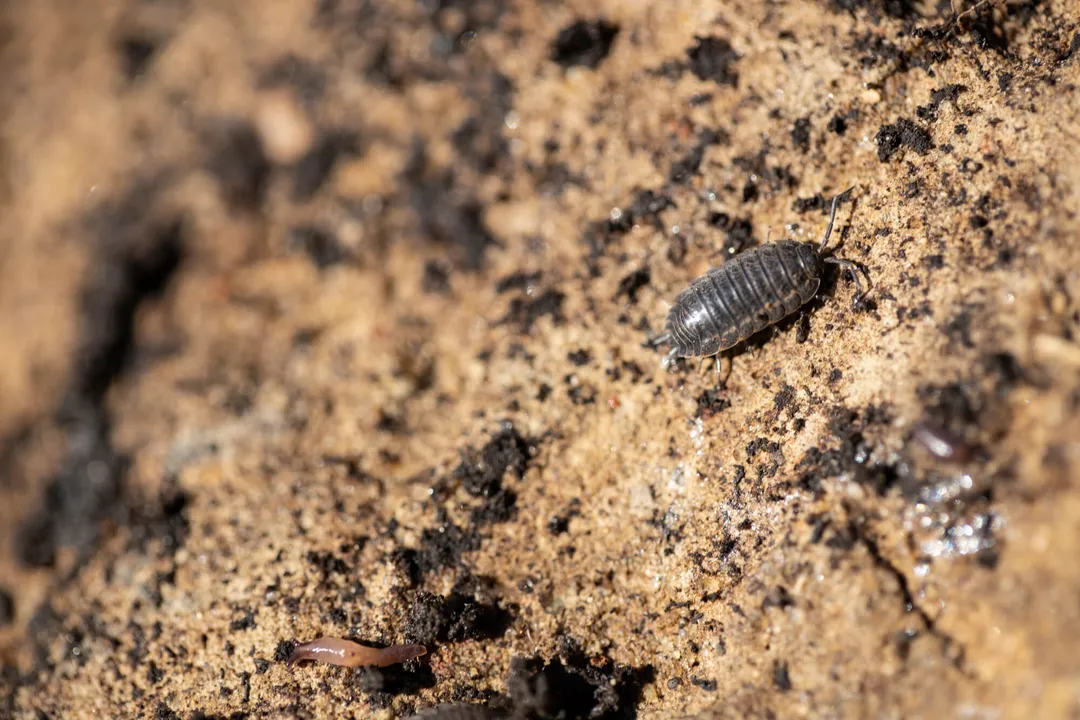
While woodlice are primarily detritivores, they display opportunistic feeding behaviors when their standard dietary resources become scarce or when environmental conditions, such as exceptional dryness, limit access to high-moisture decay sources. In garden settings, this leads them to consume soft new plants, seedlings, or the tender tissues of vegetable starts. They are not actively preying on living matter but rather exploiting easily accessible food sources that provide high moisture content when the steady supply of decaying wood and leaves dries up. Providing fresh vegetables like carrots or zucchini can serve as a proactive supplement to prevent this nibbling behavior.
Related Questions
What group of arthropods are terrestrial crustaceans (woodlice) relatives of, rather than insects?What category do woodlice firmly belong to due to primarily consuming dead and decaying organic matter?What complex structural material, abundant in wood and leaves, are woodlice specialized in breaking down?What readily available food source accumulating on the forest floor forms the foundation of a woodlouse’s diet?What essential mineral must woodlice actively supplement their diet with for exoskeleton maintenance?Why is hard, fresh wood generally indigestible, meaning woodlice thrive only where rot has begun?What type of food source might woodlice turn to opportunistically if preferred leaf litter is scarce or soil is dry?What common item, often sold for birds, is consistently recommended as a calcium supplement for keeping woodlice cultures?What is the fundamental ecological function solidified by the woodlice's habit of consuming cellulose in wood and leaves?Why might woodlice be found near soft new plants in drier, disturbed environments rather than dense forests?