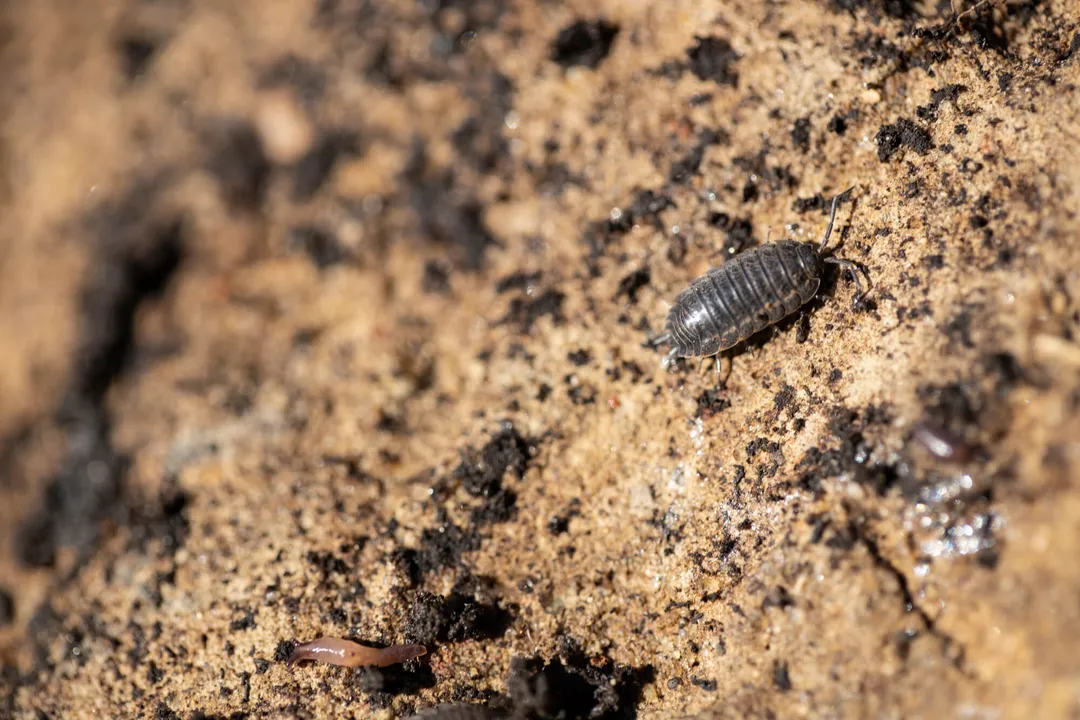
Why might woodlice be found near soft new plants in drier, disturbed environments rather than dense forests?
Selective pressure shifts toward opportunistic feeding when preferred food is scarce
The environment dictates the feeding behavior observed in woodlice populations. In regions characterized by dense, consistently damp forests, the abundance of preferred food sources like decaying wood and leaves means the woodlice rarely need to seek alternatives. However, in drier or disturbed environments, selective pressure changes. When the steady supply of decay dries up or becomes less available, the need for moisture and sustenance forces them to exploit easily accessible, high-moisture alternatives, which leads them to consume the succulent tissues of soft new plants. Thus, their congregation site acts as a mobile bio-indicator reflecting the current state of decomposition and moisture levels in their immediate surroundings.