What sugary secretion do yellow crazy ants acquire by "farming" sap-sucking insects?
Answer
Honeydew
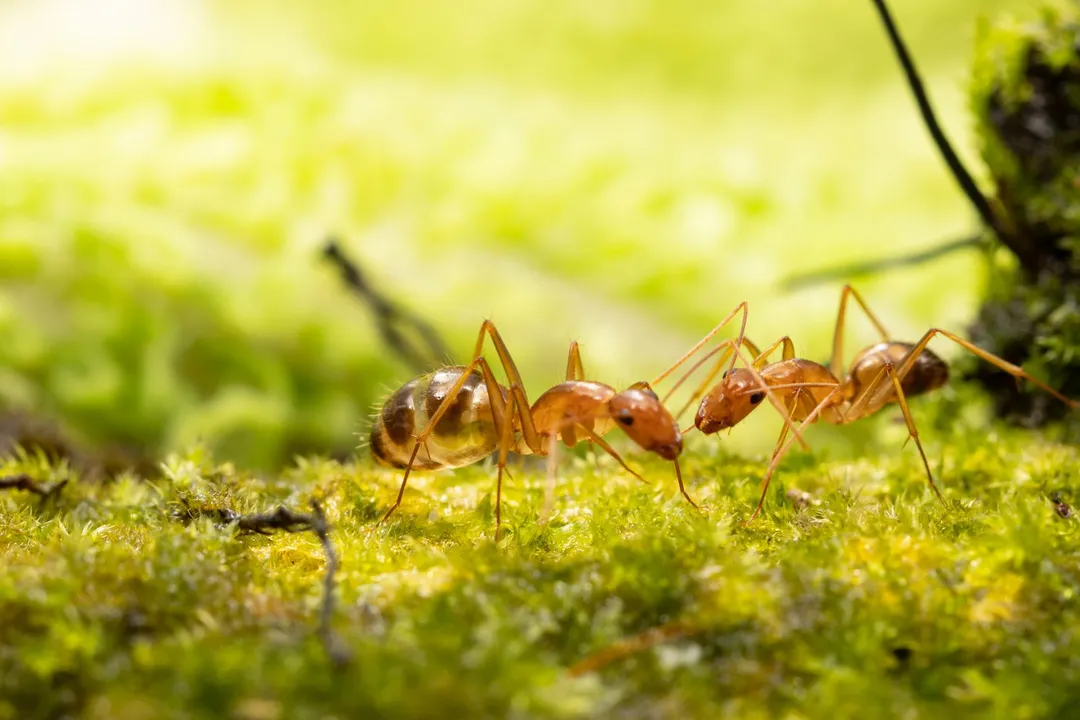
Yellow crazy ants engage in a specialized, detrimental form of agricultural management concerning native vegetation by protecting and tending to sap-sucking insects such as aphids and scale insects. The benefit derived from this symbiotic relationship for the ants is the acquisition of a sweet, sugary substance excreted by these insects, which is known as honeydew. In exchange for protection from their natural predators, the farmed insects provide this resource to the ants. This management activity stresses or outright kills the host native plants, fundamentally altering the local landscape structure and depleting essential resources required by other native species that are not part of this destructive farming cycle.
Related Questions
How does *Anoplolepis gracilipes* differ from the Argentine ant regarding size ratios?What term describes the yellow crazy ant's system featuring multiple fertile queens?What is the maximum reported density for yellow crazy ant supercolonies per hectare?Which South American countries constitute the native range of *Anoplolepis gracilipes*?What fauna populations have been severely impacted by yellow crazy ants on Christmas Island?What sugary secretion do yellow crazy ants acquire by "farming" sap-sucking insects?What specific types of equipment are yellow crazy ants known to swarm, causing electrical issues?Which traditional control method is often ineffective against yellow crazy ant supercolonies?What must effective yellow crazy ant control strategies focus on to eliminate reproductive capacity?Why are *Anoplolepis gracilipes* described using the "crazy" moniker regarding their movement?What primary vector facilitated the global expansion of *Anoplolepis gracilipes*?