What structural group do native US dangerous snakes like rattlesnakes belong to, unlike the King Cobra?
Answer
Pit vipers.
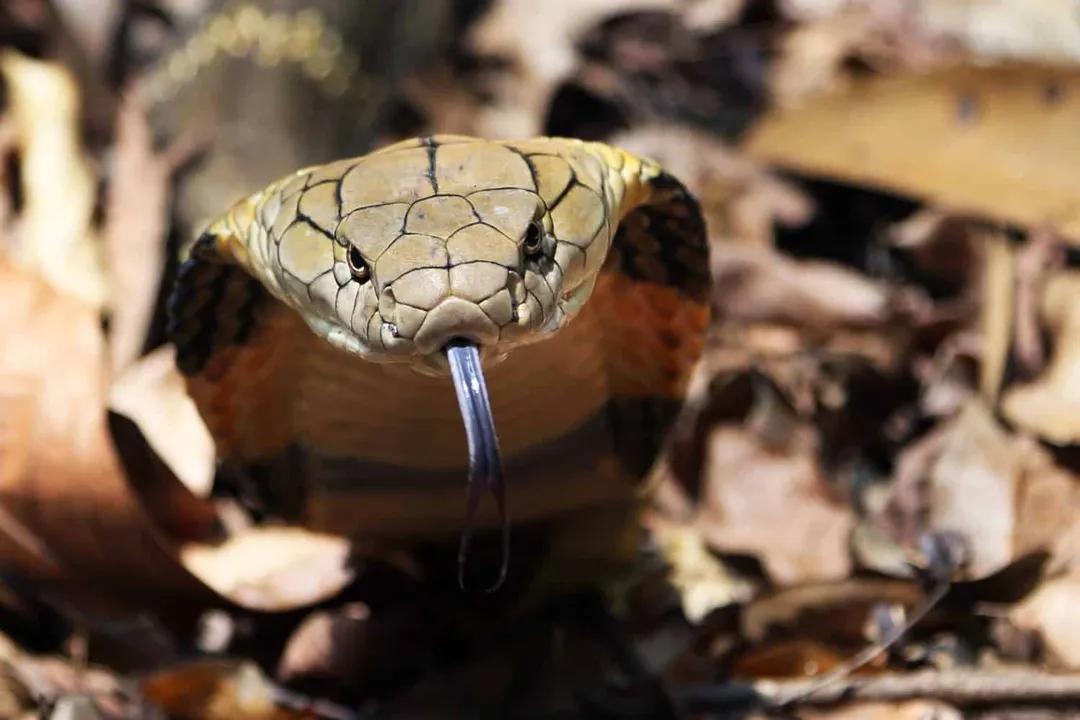
Native dangerous snakes frequently encountered in the US, such as rattlesnakes, copperheads, and cottonmouths, belong to the pit viper group. This classification is structurally and venom-wise distinct from the King Cobra (*Ophiophagus hannah*), which is part of the Elapidae family, sharing classification with true cobras. While both groups are venomous, their morphology, delivery mechanisms, and the specific cocktail of toxins (hemotoxins versus neurotoxins being a common differentiator) are fundamentally different.
Related Questions
What characteristic defines the Ophiophagus hannah dietarily?Does any US state naturally have a wild, established King Cobra population?What maximum recorded length has been attributed to exceptional King Cobra specimens?What is the key effect of the neurotoxic venom delivered by a King Cobra bite?Which geographical region constitutes the native distribution range for the King Cobra?Besides evergreen forests, what other specific native habitats do King Cobras thrive in?What operational complexity limits the concentration of King Cobras in facilities outside Asia?In the United States, King Cobras are found in which two main categories of captivity?What dictates the population density of King Cobras in their native Asian territories?What structural group do native US dangerous snakes like rattlesnakes belong to, unlike the King Cobra?