Are tiger snakes a type of cobra?
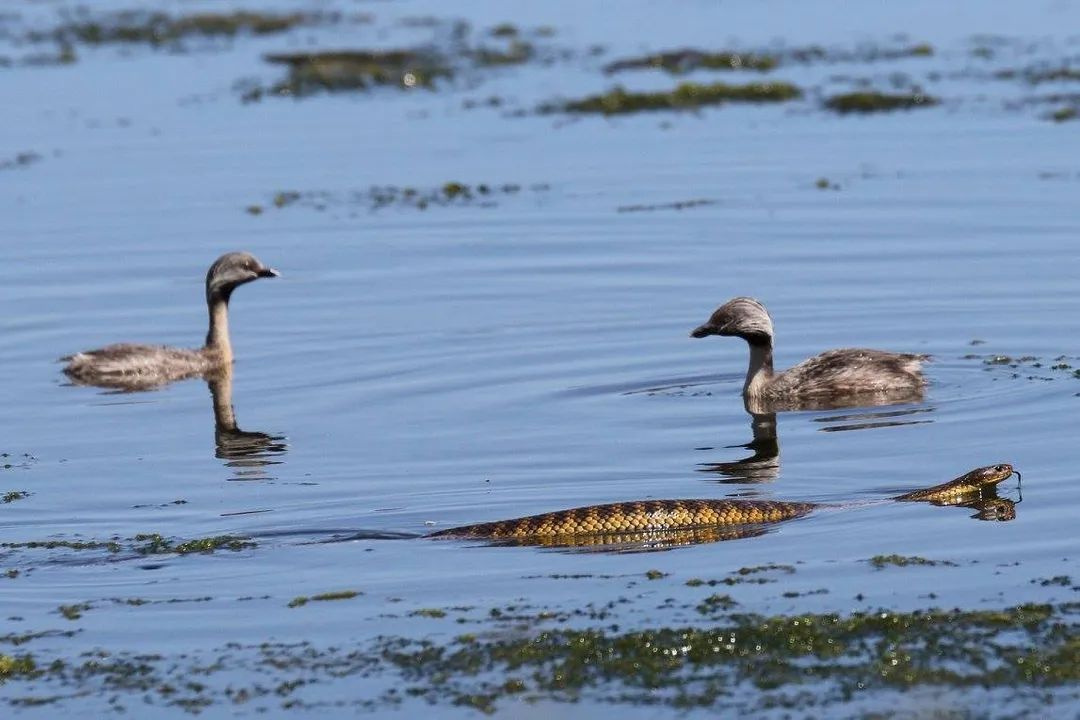
The question of whether the tiger snake belongs to the cobra lineage often arises because both groups carry reputations for potent venom, but scientifically, the relationship is one of distant family rather than direct descent. While both the tiger snake and the cobra share a significant taxonomic connection, they are distinct genera within the same larger snake family. The tiger snake, scientifically known as Notechis scutatus, is firmly entrenched in the Australian ecosystem, representing one of the continent's most medically significant reptiles. [1][2] To understand their shared space, one must look at their classification: both belong to the family Elapidae. [1][2][5]
# Elapid Kinship
The Elapidae family groups together many of the world's most dangerously venomous snakes, including cobras, kraits, mambas, and Australian elapids like the tiger snake. [1][5] Snakes in this family are characterized by having relatively short, fixed front fangs that deliver venom through a direct injection, as opposed to the hinged fangs found in vipers. [2] This shared ancestry means that the biochemical mechanisms producing their toxins have deep evolutionary roots, but it does not automatically classify one as a subset of the other. It is similar to how a lion and a domestic cat are both felines, but one is certainly not a type of the other; they belong to different genera, Panthera and Felis, respectively. [5] The tiger snake, Notechis scutatus, falls under its own distinct genus within this formidable family. [5]
# Genus Separation
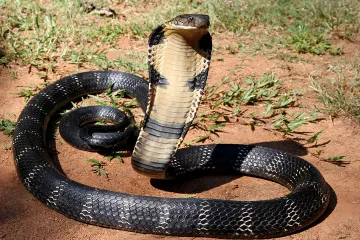
The primary reason a tiger snake is not considered a type of cobra lies in their distinct genus classification. Cobras belong primarily to the genus Naja, while the tiger snake is Notechis. [5] This separation at the genus level signifies a significant evolutionary divergence, even within the Elapidae family. A hallmark physical feature that immediately distinguishes many cobras—though not all—is the ability to flatten their neck ribs to form a characteristic hood when threatened. [1] Tiger snakes do not possess this capability. When agitated, a tiger snake might flatten its neck slightly, creating a somewhat wider appearance, but it never forms the distinct, intimidating hood associated with true cobras. [4]
This structural difference highlights their separate evolutionary paths. While both groups developed highly effective venom delivery systems, the morphological expressions of their defense mechanisms are clearly divergent. [1][4] It is important to note that the term "tiger snake" itself can sometimes cause confusion due to common naming conventions, as there are multiple snakes globally that might carry similar common names, though Notechis scutatus is the focus of venom and identification literature in Australia. [9]

# Appearance Traits
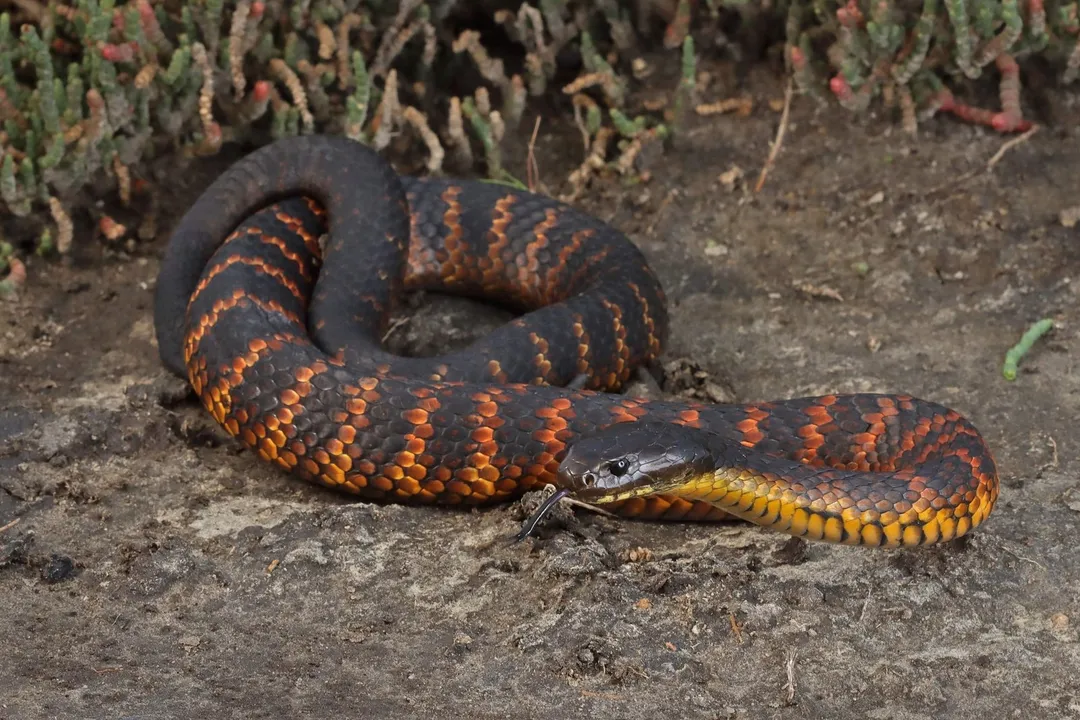
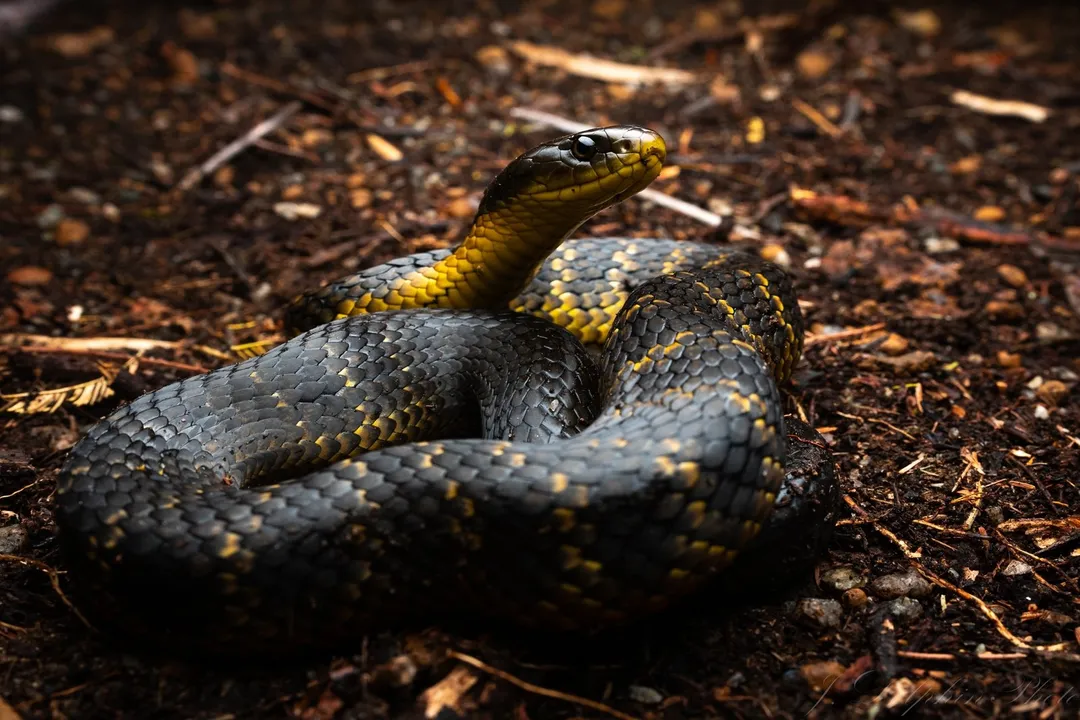
Tiger snakes exhibit remarkable variability in coloration, which is likely why they earned their name, though this variation can sometimes complicate field identification. [4][6] They are heavy-bodied snakes, typically reaching lengths between 1 to 2 meters, though exceptional individuals can grow longer. [4] Their coloration is highly variable; they can be banded or plain, and the colors can range from black, brown, olive-green, to yellow or even orange, often with darker cross-bands that may be faint or highly distinct. [1][6] Some descriptions note that the intensity of the banding can sometimes be related to the environment or age of the snake. [6]
For instance, a population inhabiting a specific marsh area might present a darker, more uniform brown, whereas a drier, more exposed rocky habitat might yield snakes with prominent dark and light banding. [4] This phenotypic plasticity is a fascinating area of study in herpetology, suggesting adaptability to various Australian microclimates. [6] By contrast, while cobras also show color variation, the Naja genus is universally recognized by the hood structure, which is absent in Notechis. [1] Observing the overall body shape and the lack of a hood is the quickest way for a non-expert to separate them visually, regardless of the specific color pattern. [4]
# Venom Danger
Both tiger snakes and cobras are known for possessing extremely potent neurotoxic venom, which contributes significantly to their notoriety. [1][4] However, the actual danger posed by a tiger snake to humans is geographically distinct. Tiger snakes are endemic to southern Australia, including the mainland, Tasmania, and some surrounding islands. [2][4] If someone were researching snakes in Asia or Africa, they would be dealing with cobras or other elapids, not Notechis scutatus. [8]
The venom of the tiger snake is one of the most toxic among Australian land snakes, primarily containing presynaptic and postsynaptic neurotoxins, procoagulants, and coagulants. [1][4] Bites are a serious medical emergency requiring immediate antivenom administration. [4] In terms of sheer toxicity measurements, such as the (Lethal Dose 50%) scores derived from laboratory studies, the tiger snake ranks among the world's most dangerous snakes. [1] It is worth noting that the potency can vary slightly between subspecies or regional populations of Notechis scutatus, adding another layer to their toxicology profile. [8] When comparing danger levels, it is easy to conflate "most toxic venom" with "most dangerous snake" globally, but the actual risk to a person is a function of venom toxicity and the likelihood of an encounter. [4] A snake with highly toxic venom that rarely interacts with people poses less overall risk than a snake with moderately toxic venom found frequently in populated areas.
# Range Facts
The geographical separation provides a clear, non-taxonomic reason why a tiger snake is not a cobra: they occupy different continents. [2][4] Tiger snakes are strictly Australian reptiles. [2] Their distribution covers southern Australia, from the eastern coast of New South Wales, through Victoria, to South Australia, and across to Western Australia, as well as Tasmania. [4][6] They thrive in various habitats, including woodlands, swamps, and grasslands, and are often found near water sources. [2][4] Their adaptability has led them into areas where human development intersects with their territory, such as in the suburbs of Melbourne. [3]
It’s an interesting ecological divide: the Naja genus (cobras) is predominantly found across Africa and Asia, while the Notechis genus is exclusively Australasian. [8] This biogeographical split solidifies their status as entirely separate evolutionary branches, despite the shared venomous heritage within Elapidae. Considering their proximity to human habitation, a small but important piece of localized safety advice for residents in areas like Melbourne involves recognizing that tiger snakes are often active during warmer months and may frequent garden sheds or compost heaps if cover is available. [3] Unlike some snakes that immediately retreat, if cornered or surprised, a tiger snake will readily defend itself, emphasizing the need for caution when working outdoors in known habitats. [3]
# Habitat Insights
One observation often made by wildlife professionals working in southeastern Australia is that the tiger snake’s reliance on water bodies means that habitat fragmentation—the creation of roads or housing developments that dissect wetlands—often forces these snakes into artificial corridors or residential gardens as they move between hunting grounds. [3][4] This behavior increases the human-snake interaction rate, making awareness of their presence crucial, far more so than worrying about an actual cobra wandering in from a flight or shipping container. If you are in Australia, the snake concern is Notechis; if you are in India or Africa, the concern shifts toward Naja. [8]
# Taxonomy Quick View
To keep the distinction absolutely clear, one can examine their taxonomic placements side-by-side:
| Rank | Tiger Snake (Notechis scutatus) | Cobra (Representative Naja species) |
|---|---|---|
| Family | Elapidae | Elapidae |
| Subfamily | Hydrophiinae (Sea snakes and their relatives) | Elapinae |
| Genus | Notechis | Naja |
| Primary Range | Australia | Africa, Asia |
| Key Feature | Stout body, variable banding, no hood | Hood-forming ribs present |
The classification shows they separated at least at the subfamily or genus level, well before reaching the species designation. [5] Their shared family membership is the entirety of their close relationship. [1][2] For anyone seeking to learn about snakes, recognizing this difference between family similarity and specific type is foundational to accurate reptile knowledge. [5]
# Identification Tips
For those unfamiliar with Australian reptiles, the sheer variety of venomous snakes can be overwhelming. When encountering a snake in southern Australia, knowing to look for key Notechis traits, rather than cobra traits, is essential for safety. Look for the combination of a relatively heavy build, the absence of the hood, and patterns that fit the description of being banded, blotched, or uniformly colored in earth tones. [4][6] The scales on the dorsal side are usually keeled, giving them a slightly rough texture, though this is difficult to see from a distance. [4]
In areas like the Yarra Valley or other parts of suburban Melbourne, sightings are often tied to local water sources or abundant prey like frogs. [3] A valuable heuristic for someone living in these regions is to assume any stout, relatively large snake encountered near water is potentially a tiger snake unless clearly identified otherwise, rather than wasting time debating if it might be a cobra, which is ecologically impossible in that location. [2][3] This approach prioritizes safety based on known regional fauna.
Ultimately, the tiger snake holds its own place in the annals of venomous snakes. It is not a subordinate or subordinate type of cobra; it is a geographically and taxonomically separate member of the Elapidae family, commanding respect due to its highly toxic properties and close proximity to human habitation in its native Australian range. [1][4]
Related Questions
#Citations
Tiger snake | venomous, Australian, dangerous | Britannica
Tiger snake - Wikipedia
Urban Vipers 11: Tiger Snakes in Melbourne
Tiger Snake - The Australian Museum
Tiger Snake (Notechis scutatus) - iNaturalist
tiger snake - Students | Britannica Kids | Homework Help
[PDF] Tiger Snake - Wildlife
Eastern Tiger Snake - African Snakebite Institute
r/todayilearned on Reddit: TIL that the Asian tiger snake is the only ...