What states do kangaroo rats live in?
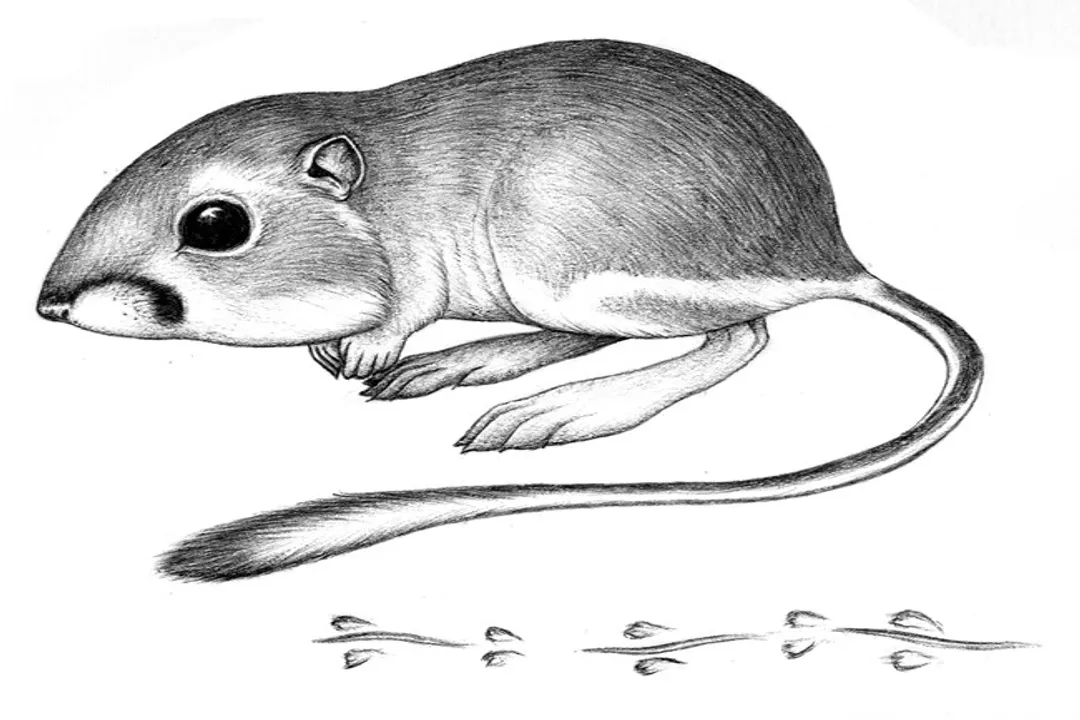
The fascinating world of the kangaroo rat involves a distribution profile heavily skewed toward the arid and semi-arid regions of North America, though pinpointing which states host them requires looking closer at specific species. These nocturnal rodents, famous for their bipedal locomotion and incredible water conservation abilities, are not found uniformly across the American West, but rather tucked into specific ecological pockets. [1][3] Their presence is less about state borders and more about soil composition, elevation, and rainfall averages within those states. [7]
# Westward Reach

Kangaroo rats, belonging to the genus Dipodomys, are primarily creatures of the United States and Mexico, thriving in environments characterized by sparse vegetation and sandy or loamy soils essential for their complex burrow systems. [1] While the general range covers a broad swath of the intermountain West, the Great Plains, and the deserts of the Southwest, the exact state listing depends entirely on which of the numerous species you are tracking. [3] For instance, finding any kangaroo rat is highly likely in states like California, Nevada, Utah, Arizona, New Mexico, and Texas, where desert scrub and arid grasslands dominate large areas. [5] However, their range extends north into states like Idaho, Wyoming, and Colorado, and east into Nebraska and Oklahoma, showcasing a significant breadth across the central and western halves of the US. [9][3]
# California Concentrations
Perhaps the most localized and critically important habitat for a single species is found within California. The Giant Kangaroo Rat (Dipodomys ingens) is a prime example of extreme geographic restriction. [2] This species is endemic, meaning it is found nowhere else in the world, strictly inhabiting the grasslands of California's Central Valley. [2][6] This makes California the only state where this particular, federally listed species resides. [2] The historical range of the Giant Kangaroo Rat has shrunk considerably due to agricultural conversion, confining them to small, fragmented areas within the valley floor. [6]
It is worth noting the stark contrast here: while California hosts the federally endangered Giant Kangaroo Rat, other, more widespread species might also be present in the state's diverse landscapes, such as the species found in the Mojave Desert regions. The plight of D. ingens underscores that being present in a state is not always synonymous with a secure population; for this species, the state boundary defines its entire existence. [2]
# Plains Dwellers
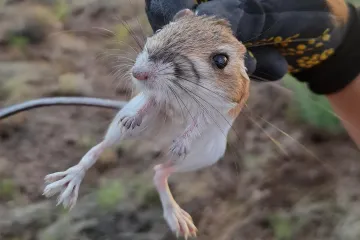
Moving eastward, the distribution map shows significant populations, particularly in states bordering the Great Plains. Nebraska, for example, is home to kangaroo rats, notably Ord's Kangaroo Rat (Dipodomys ordii). [9] In Nebraska, these rats are typically found in the drier, sandier soils of the sandhills region, demonstrating the crucial link between geology and species presence. [9] They are an established part of the fauna in the western parts of the state. [9]
Similarly, Texas hosts kangaroo rat populations. [5] The wildlife department points out their presence, often associating them with the sandy soils of the western and south-central portions of the state. [5] The presence of kangaroo rats in Texas often involves species adapted to the rugged terrain and arid conditions prevalent there, showcasing regional specialization within the broader genus.
Considering the distribution of a common species like Ord's Kangaroo Rat further illustrates the geographical spread. Utah is another key state where D. ordii is documented. [8] Its presence in Utah confirms the species' adaptation to the Basin and Range topography found throughout the Intermountain West. [8]
When comparing the known habitats, we can observe a pattern where specialized species (like the Giant in California) occupy very small, intensive areas, while generalists (like Ord's) inhabit numerous states across the interior West and Plains. [3]
| Species Example | Primary State Habitat (Known) | Ecological Context | Federal Status (Example) |
|---|---|---|---|
| Giant Kangaroo Rat | California (Central Valley) | Highly restricted grassland [2] | Endangered [2] |
| Ord's Kangaroo Rat | Nebraska, Utah | Sandhills, Basin and Range [8][9] | Generally Least Concern [1] |
| Texas Kangaroo Rat | Texas (Western/South-Central) | Arid, sandy areas [5] | Varies by specific species |
This geographical segregation suggests that even within a state, the microhabitat—specifically the texture of the soil suitable for excavation and seed storage—is a more immediate requirement than the state line itself. [7] A patch of perfect sandy loam in a Nebraska sandhill might support a robust population, while an adjacent field of heavy clay soil, even a few miles away, would likely remain barren of them. [7] This microhabitat dependence often means that local experts or state wildlife agencies have a much clearer picture of where populations exist than broad, state-level maps might suggest.
# Intermountain Habitats
The vast, often high-elevation, arid areas between the Rockies and the Sierra Nevada mountains are prime kangaroo rat territory. Utah is a clear example. [8] The documentation for Ord's Kangaroo Rat in Utah shows they prefer drier areas with sparse vegetation, often found on benches, plains, and mesas across the state. [8] This indicates that elevation differences within the state are less prohibitive than soil conditions.
The presence of kangaroo rats within National Parks like Death Valley, which spans parts of California and Nevada, further illustrates their adaptation to extreme desert environments. [4] In places like Organ Pipe Cactus National Monument, which is in Arizona, kangaroo rats are known inhabitants of the rocky bajadas and open flats. [4] This confirms Arizona as a state where various species thrive in the harsh Sonoran Desert climate. [4]
The extent of their range across these states—California, Nevada, Utah, Arizona, New Mexico, Colorado, Wyoming, Idaho, Texas, Nebraska, and Oklahoma—points to a strong evolutionary linkage with the geological history of the western United States, which created these dry basins and plateaus. [3] They are masters of minimizing water loss, a trait essential for surviving the often unpredictable precipitation patterns across this wide area. [1]
# Survival Niche
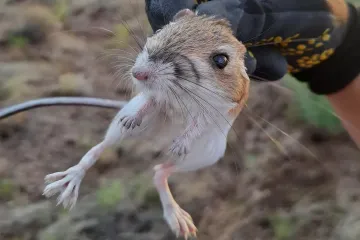
The reason these specific states become habitats lies in their biology. Kangaroo rats are famously bipedal, hopping on their hind legs, which is an energy-efficient way to traverse open, barren ground in search of seeds. [1] They are almost entirely dependent on the seeds of grasses and forbs for both nutrition and moisture; they can meet nearly all their water requirements metabolically from oxidizing the dry seeds they consume. [1]
This specialized diet and lifestyle create a necessary feedback loop: they need arid land with open areas for foraging, but they need specific soil conditions for their deep, intricate burrows, which protect them from predators like owls and snakes, and from extreme temperature fluctuations. [3][7] A state might have the right climate, but if the soil is too rocky or too fine (like heavy clay), the rats simply cannot establish the necessary underground infrastructure. This explains why one might find them only in specific counties within a large state like Colorado or Wyoming, rather than uniformly across the entire state landmass. [3]
For instance, imagine a hypothetical situation where a single species exists in both eastern Oregon and western Kansas. The climate zones might share some characteristics, but the underlying substrate—the volcanic ash soils of Oregon versus the deep loess deposits of Kansas—will dictate where the successful colonies establish themselves. [1] The state name gives the general location, but the soil type offers the precise address.
# Summary of Presence
To summarize the states that host kangaroo rats based on documented species ranges:
- California: Hosts specialized species like the Giant Kangaroo Rat. [2]
- Texas: Supports various species adapted to its western arid regions. [5]
- Nebraska: Home to Ord's Kangaroo Rat in the western sandhills. [9]
- Utah: Another key state for Ord's Kangaroo Rat and likely others in its basin habitat. [8]
- Arizona, Nevada, New Mexico, Colorado, Wyoming, Idaho: All fall within the broader, interconnected distribution map of several Dipodomys species across the Intermountain West and Great Plains. [3]
The pattern is clear: from the highly restricted Central Valley of California to the expansive grasslands of the Great Plains, kangaroo rats occupy the arid, seed-rich landscapes of the American West and Southwest. Their conservation status varies wildly depending on the state and the species, ranging from the urgent needs of the Californian endemic to the more stable populations found in states like Nebraska or Utah. [2][9] Recognizing their specific requirements—especially soil type and seed availability—is essential for understanding why they inhabit one state and not its neighbor, or why they might vanish from seemingly suitable terrain within a single county. [7] Their survival is a testament to remarkable biological adaptation to some of North America's harshest, driest environments.
Related Questions
#Citations
Kangaroo rat - Wikipedia
Giant Kangaroo Rat (Dipodomys ingens) | U.S. Fish & Wildlife Service
[PDF] Kangaroo Rats - Prevention and Control of Wildlife Damage
Kangaroo Rat - Organ Pipe Cactus National Monument (U.S. ...
Bounding After Texas Kangaroo Rats
Dipodomys ingens (giant kangaroo rat) - Animal Diversity Web
"Kangaroo Rats" by Volney W. Howard Jr. - UNL Digital Commons
(species) dipodomys ordii - Utah Natural Heritage Program Field ...
Nebraska's Kangaroo | Nebraskaland Magazine