Why does king cobra eat snakes?
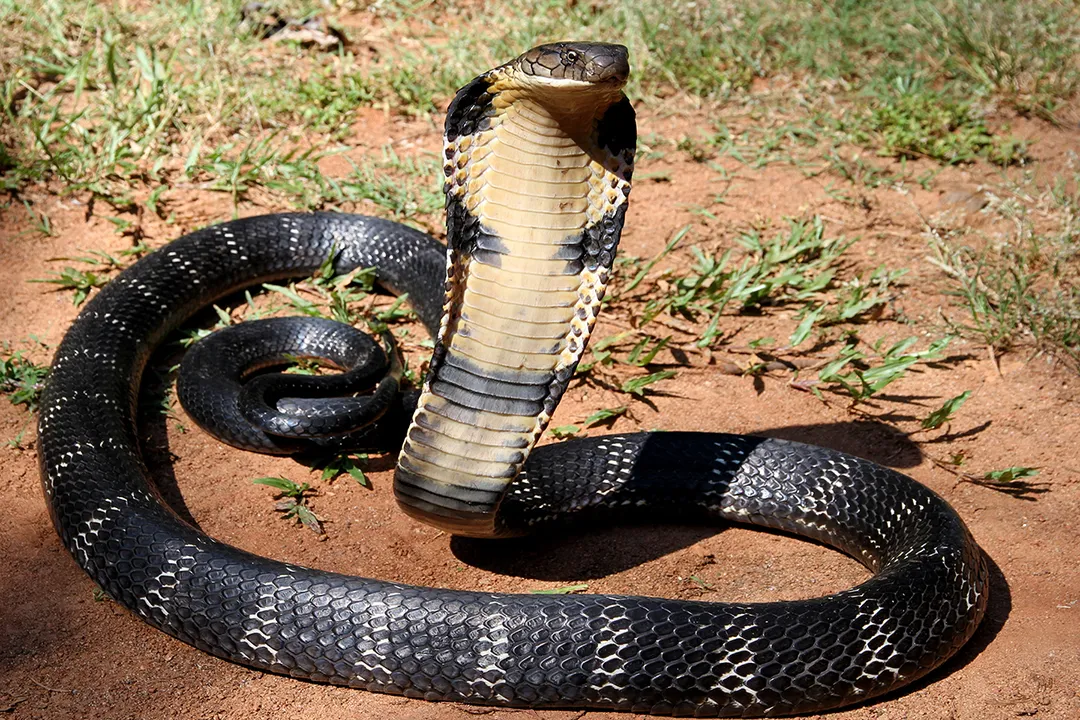
The serpentine realm holds few creatures as instantly recognizable or feared as the king cobra, Ophiophagus hannah. This magnificent reptile commands attention not just for its imposing size—it is the world’s longest venomous snake—but for its highly specialized diet. Its very scientific name, Ophiophagus, translates roughly to "snake-eater," a direct testament to the creature's dominant dietary preference. Unlike many generalist predators in the reptile world, the king cobra has honed its predatory skills almost exclusively toward consuming other snakes, a habit that defines its ecological role in the forests of South and Southeast Asia.
# A Specialist Diet
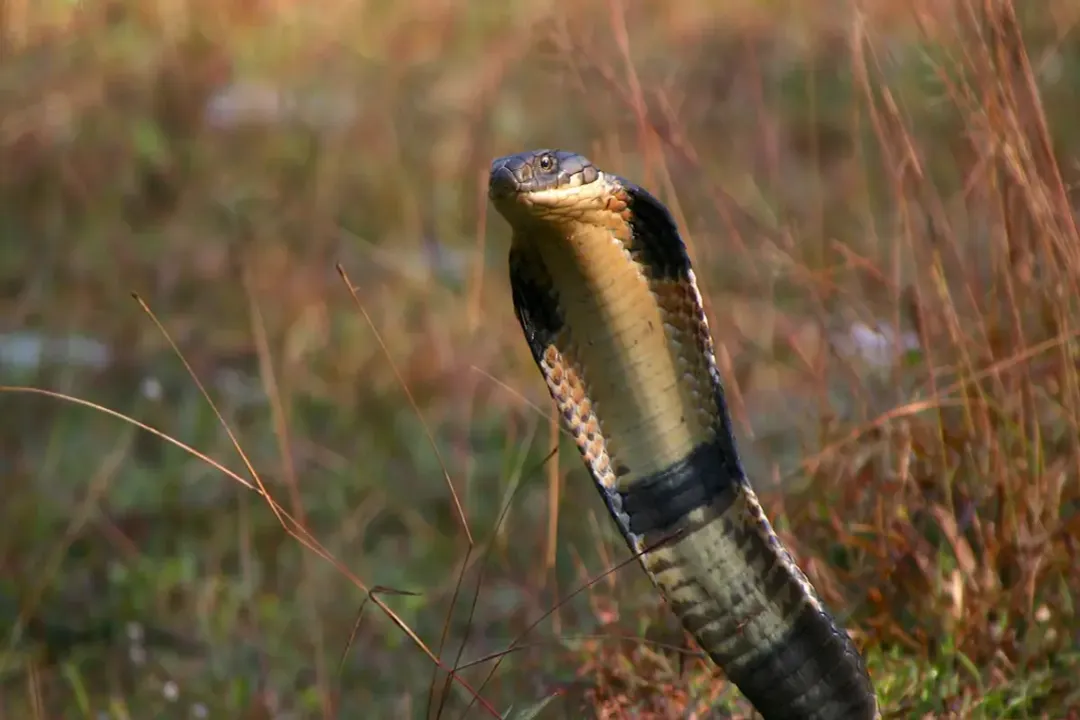
The preference for ophiophagy—the habit of eating snakes—is not merely a passing phase for the king cobra; it is the foundation of its existence. While some large constrictors or other venomous species might occasionally consume reptiles like lizards or even small mammals if hungry enough, the king cobra exhibits a marked selectivity. It actively seeks out other snakes, sometimes even tackling prey larger than itself. The scale of this specialization is remarkable when you consider the vast array of other potential food sources available in its environment.
The primary sustenance for the king cobra comes from a variety of other snake species found within its habitat. This menu can include pythons, rat snakes, cobras, and kraits, depending on the region and the size of the king cobra making the hunt. For instance, observations have documented king cobras entering the nests of other snakes to secure a meal, sometimes consuming several individuals in one feeding session. This suggests that the hunting strategy is highly adapted to locating and infiltrating snake retreats.
# Prey Selection Nuances
While the epithet "snake-eater" is accurate, it is important to approach the concept of dietary exclusivity with a degree of ecological realism. In nature, strict adherence to one food source can be perilous when availability fluctuates. Although other snakes form the core of its diet, the king cobra is opportunistic when necessary. If its preferred prey is scarce, an adult king cobra is known to consume other vertebrates, such as large lizards, and occasionally other small animals. Lizards, particularly larger varanids, have been noted as alternative meals. However, this deviation from its norm usually only occurs out of necessity, perhaps when the predator is young, or during periods of environmental stress.
When considering the sheer volume of venom this snake carries—enough to potentially kill several adult humans—one might wonder why it doesn't focus on larger, mammalian prey. When analyzing the cost versus the energy return, the specialized nature of the king cobra’s digestive system and venom profile suggests that processing snakes is, for them, the most efficient caloric delivery system. While other vertebrates are abundant, successfully subduing large, potentially dangerous prey requires significant energy expenditure and carries a high risk of injury. Snakes, despite carrying their own defense mechanisms, offer a predictable, high-protein return that has shaped the cobra's entire evolutionary trajectory.
# Feeding Mechanisms
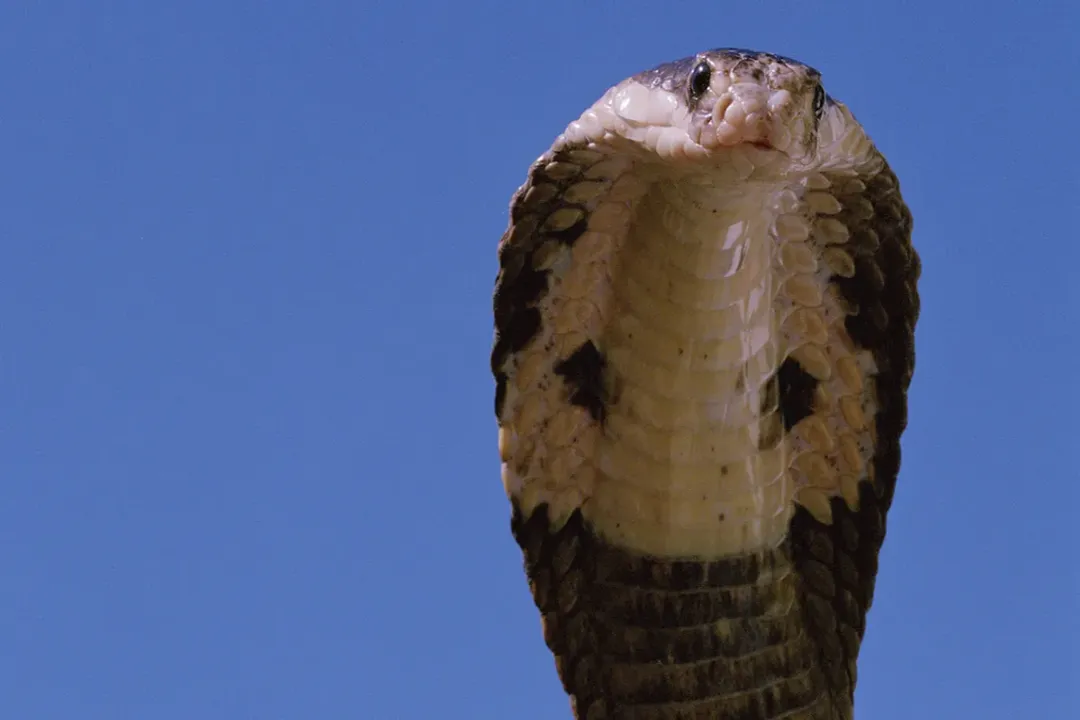
The sheer act of consuming another snake, often one of considerable length, requires specialized physical capabilities. King cobras, like most snakes, possess highly flexible jaws that allow them to swallow prey considerably wider than their own heads. Once a target is located and successfully envenomated and killed, the king cobra begins the slow process of ingestion, using the muscles in its jaw and throat to draw the prey in piece by piece. In footage of these events, the process can look incredibly drawn out, with the cobra’s body molding itself around the rigid form of its meal.
Their venom is potent and fast-acting, primarily neurotoxic, which serves to quickly incapacitate prey that might otherwise fight back severely. This rapid neutralization is key, as struggling prey—especially another large snake—poses a significant threat of puncture wounds or constriction that could prove fatal to the cobra. The efficiency of the venom delivery is perhaps as critical to their dietary success as the mechanical ability to swallow the resulting carcass.
# Intraspecific Predation
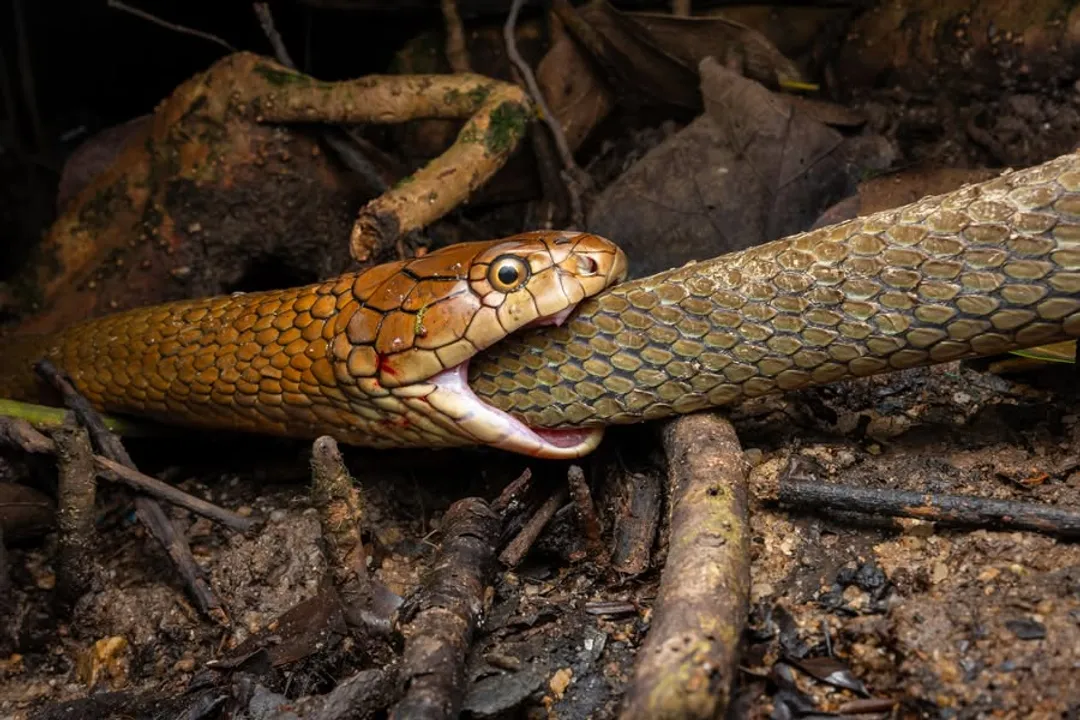
A particularly intense aspect of the king cobra’s diet involves cannibalism, or eating members of its own species. This type of predation, known as intraspecific predation, is not unheard of in the animal kingdom, and for the king cobra, it adds another layer to its "snake-eater" reputation. While the primary diet consists of different snake species (heterospecific predation), sometimes a king cobra will consume another king cobra.
The circumstances surrounding cannibalism are often contextual. It is suggested that in environments where food is scarce, this behavior becomes more likely. Furthermore, there have been documented instances where one mate has consumed the other shortly after mating, which is a grim reality in species where strong pair-bonding is absent post-reproduction. This behavior highlights the raw survival instinct that overrides social bonds when resources are tight, reinforcing the idea that the king cobra operates under a strict, predatory hierarchy where size often dictates who survives.
# Niche and Ecology
The king cobra’s reliance on other snakes places it in a unique ecological niche. In many Asian forest ecosystems, snakes are a significant component of the food web, and the king cobra acts as a critical regulator of snake populations. By preying heavily on other snakes, they help maintain the balance between various reptilian populations. The specialized nature of their predatory behavior indicates a long evolutionary history tied directly to the abundance of their preferred meal.
Observing these events in the wild, or through documented field recordings, provides valuable data on local prey distribution. For instance, discussions among herpetology enthusiasts often note that the snakes chosen for consumption are frequently non-venomous species or smaller venomous snakes. This suggests that while the king cobra possesses the capacity to hunt dangerous adults, juvenile or sub-adult cobras might heavily rely on easier-to-catch, non-venomous species until they achieve the size and strength necessary to successfully tackle larger, more experienced venomous adults, indicating a progression in diet tied directly to the predator's own development. This dietary shift based on the predator's size offers a natural timeline for understanding their ecological impact—from localized regulation of smaller reptiles to top-down control over entire snake communities as they mature.
The king cobra’s preference is deeply ingrained, making it a highly specialized predator whose survival is intrinsically linked to the health and population size of the snakes sharing its territory. It remains one of the planet’s most fascinating examples of evolutionary focus, where a predator has dedicated its entire being to conquering its own kind’s rivals.
#Videos
Why King Cobra Eats Other Snake? - YouTube
Related Questions
#Citations
A King Cobra entering a nest to kill and consume a Spectacled ...
King Cobra: A Venomous Snake's Diet and Mating Rituals
Ophiophagus - the snake eater. The diet of the king cobra is mostly ...
Would a king cobra eat something else besides another snake if it ...
Why King Cobra Eats Other Snake? - YouTube
King cobra - Wikipedia
Evolutionary Anomalies: Killing and Eating Your Kind
How King Cobra Maintains Its Reign - The New York Times